Textiles-Waste water
From dyeing soft water to ZLD, we provide end-to-end water management for textile mills. Reduce costs, ensure compliance & enable recycling. Global remote support.
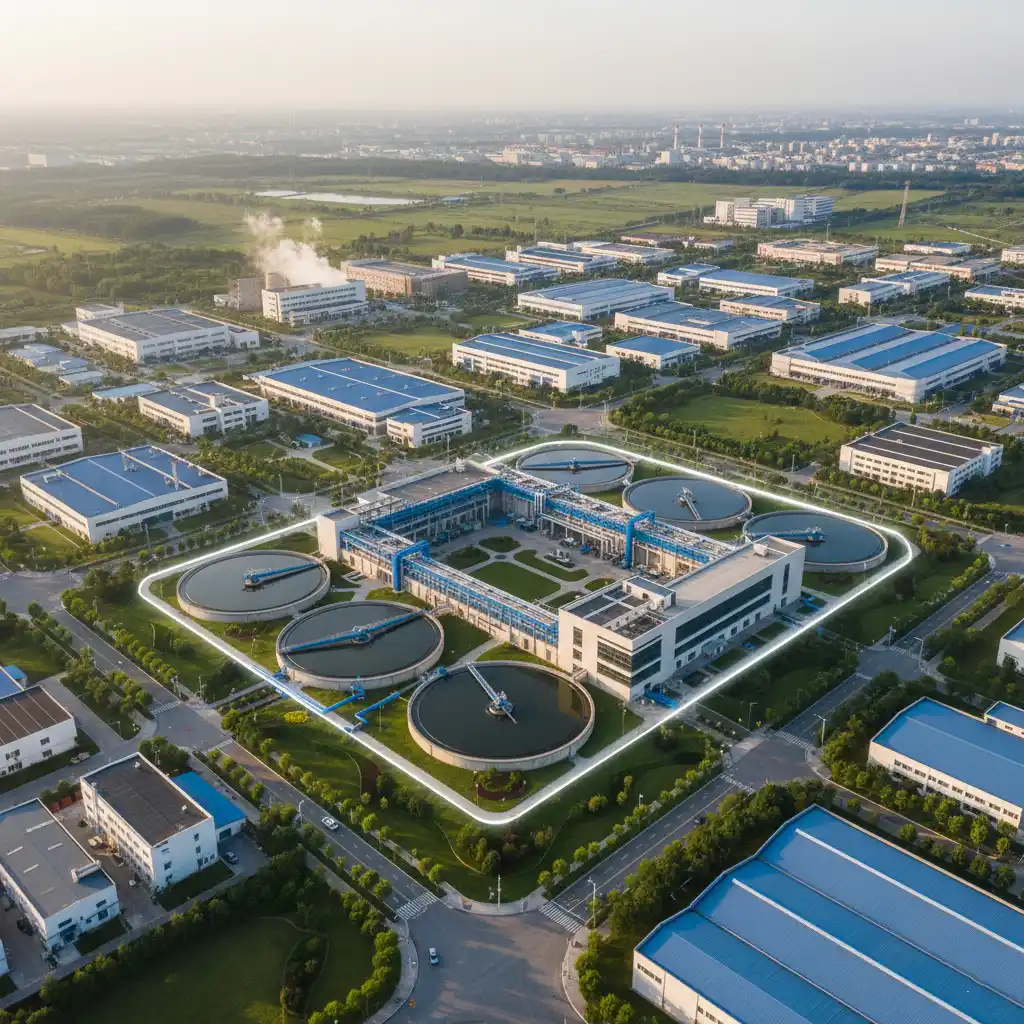
Centralized Wastewater & Water Recycling Plants
Economies of scale for textile clusters. We design build operate centralized treatment plants for parks, ensuring compliance & reuse for all tenants.
Key Features:
- Dual Pipeline Network: Separate collection networks for highly contaminated streams (e.g., dye baths) and less contaminated streams (e.g., cooling water) to optimize treatment.
- Advanced Treatment Core: Houses the major physico-chemical, biological, and membrane systems.
- Water Recycling Hub: Can produce and supply high-quality recycled water back to tenants for non-potable uses.
- Centralized Monitoring: A unified control center oversees all inflows, treatment processes, and final discharge/compliance.
For Tenants
- Lower per-unit treatment cost.
- Reduced capital investment and operational headache.
- Guaranteed compliance support.Access to cheaper recycled water.
For Park Management
- Stronger green certification and marketing appeal.
- Simplified regulatory oversight.
- Attracts environmentally conscious tenants and brands.
- Creates a new utility revenue stream.
For the Environment
- Optimal treatment efficiency.
- Enables collective water reuse and ZLD.
HERO® Process for Textile Water Reuse | Achieve >90% Recovery
Break through the salt barrier. The HERO® process uniquely conditions challenging textile wastewater, allowing Reverse Osmosis to achieve recovery rates over 90%.
How It Works (Step-by-Step):
- Softening: Removes scale-forming cations (Ca²⁺, Mg²⁺).
- Degasification: Strips CO₂, which increases water pH in the next step.
- pH Elevation: Raising the pH (to ~10-11) converts all silica and alkalinity to soluble forms, and keeps organics dispersed.
- High-Efficiency RO: The conditioned water now allows the RO system to operate at exceptionally high recovery (>90%) with minimal scaling or fouling potential.
Benefits For Our Clients
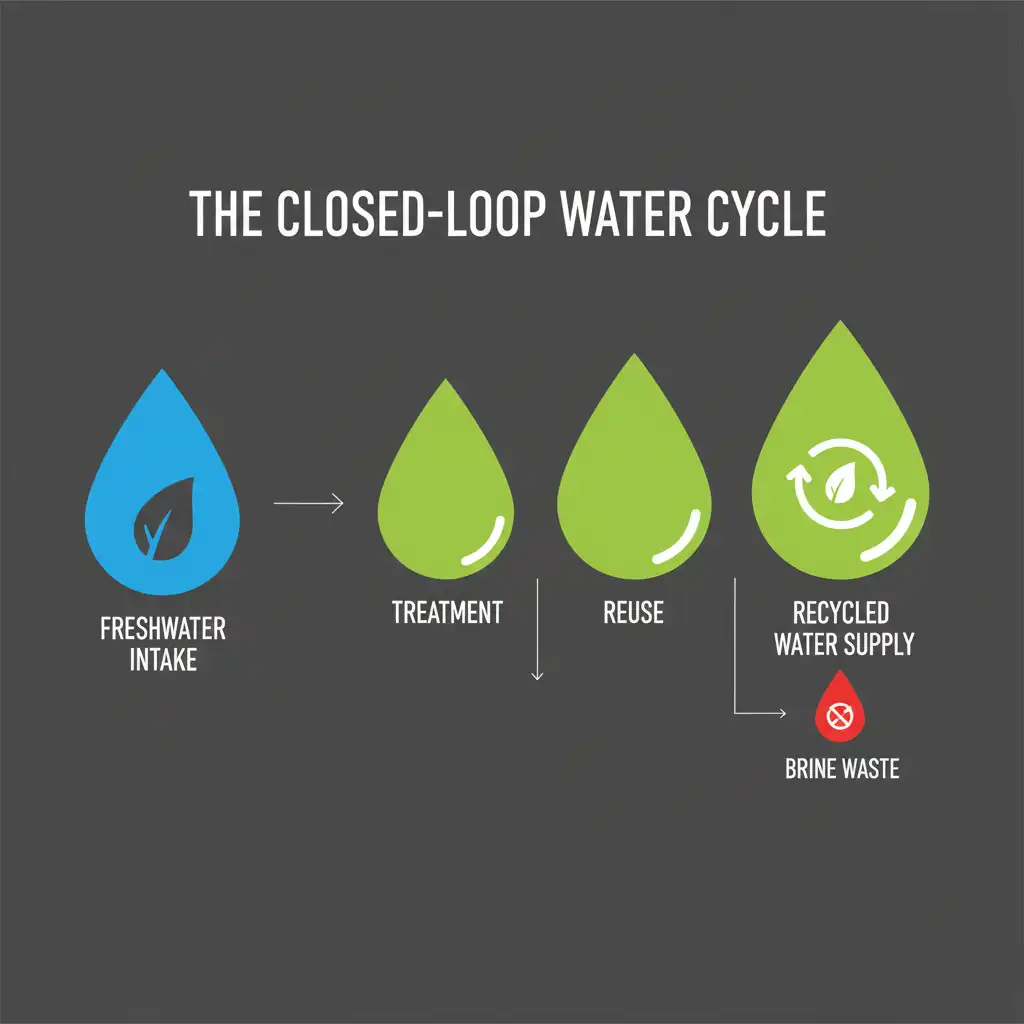
- Dramatically Reduce Freshwater Intake: Achieve 70-90%+ overall water recovery, slashing procurement costs.
- Minimize Waste for ZLD: A smaller brine volume drastically reduces the size and cost of downstream evaporators/crystallizers.
- Lower RO OPEX: Reduced scaling extends membrane life by 2-3x and cuts cleaning chemical and energy costs.
- Fast ROI: Typically 2-4 years based on water and sewer cost savings.
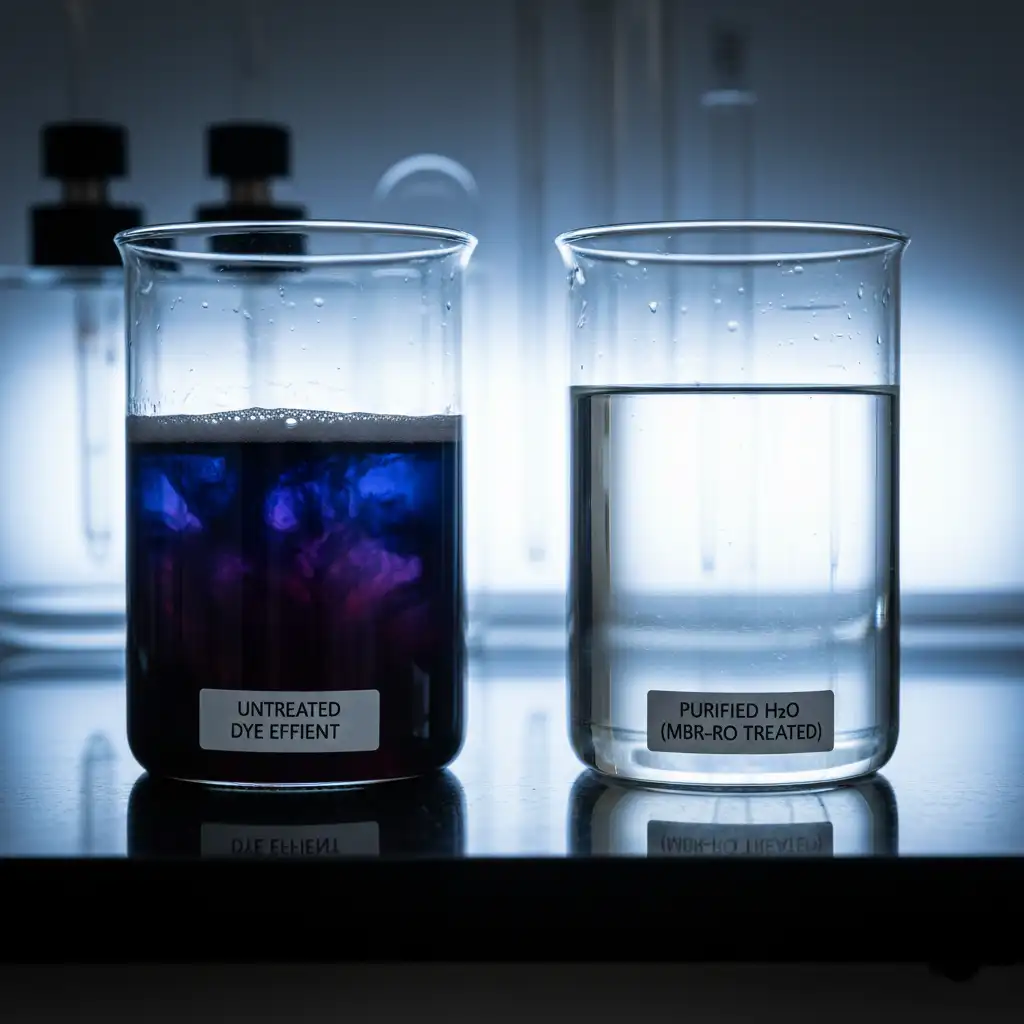
Textile Wastewater Decolorization & Treatment
Tackle high-color, high-COD textile effluent. Our oxidation & biological systems achieve >95% decolorization & stable compliance.
Textile wastewater composition changes with every batch. Our Mole Cloud™ platform uses real-time colorimetric and COD sensor data to automatically adjust oxidant dosing and process parameters. This ensures optimal treatment efficiency at all times and prevents chemical overuse.
Main Advantages:
- Guaranteed Compliance: Consistently meet local discharge limits for color, COD, and BOD.
- Reduced Sludge Production: Chemical conditioning and oxidation can reduce biological sludge yield by 15-30%.
- Lower Chemical Costs: AI-driven dosing optimization saves 10-25% on coagulants and oxidants.Protected Downstream Biology: Pre-treatment prevents toxicity shocks, ensuring stable biological plant operation.
Enhanced Physico-Chemical Primary Treatment
Optimized coagulation-flocculation systems using smart, remotely adjusted chemical dosing to remove colloidal particles, a portion of the color, and reduce the load on downstream biological stages.
Catalytic Advanced Oxidation Processes (AOP)
We deploy Ozone/UV, Fenton-based, and catalytic wet oxidation technologies. These processes generate powerful hydroxyl radicals (*OH) that break the complex chromophore and aromatic structures of dyes into simpler, biodegradable compounds.
Resilient Biological Treatment
Following oxidation, we implement robust biological systems (e.g., specialized MBBR, Extended Aeration) designed to handle the conditioned effluent, ensuring complete removal of residual organics and nutrients.
Zero Liquid Discharge (ZLD) for Textiles
ZLD plants are complex. Our Mole Cloud™ platform provides a unified view of the entire train—from pre-treatment membranes to the crystallizer. We monitor critical parameters, optimize energy consumption, and provide remote operational support to ensure stability and safety 24/7.
Our Integrated ZLD Process
- Pre-treatment & Membrane Concentration: Utilizing our HERO® and other RO technologies to recover 85-92% of the water and pre-concentrate the brine. This minimizes the volume sent to thermal stages, saving massive energy.
- Thermal Evaporation: Employing energy-efficient Mechanical Vapor Recompression (MVR) evaporators to further concentrate the brine into a saturated slurry. MVR technology reuses latent heat, making it far more efficient than traditional boilers.
- Crystallization: Processing the slurry in a crystallizer to form solid salt crystals. We explore opportunities for salt segregation to produce higher-purity, potentially salable by-products (e.g., Glauber’s salt).
- Solid-Liquid Separation & Handling: Dewatering crystals and packaging solids for safe disposal or potential resource recovery.
Benefits For Our Clients
- Minimized Thermal Load: Maximizing membrane pre-concentration reduces evaporator size and energy use by 40-60%.
- Corrosion-Resistant Materials: All thermal components are constructed from high-grade alloys (e.g., duplex stainless steel, titanium) to handle aggressive textile brines.
- Automated & Scalable: Modular design allows for future expansion.
Request More Information
Contact Molewater for more information on available solutions.