3000LPH Pharmaceutical Purified Water System Exported to Guatemala
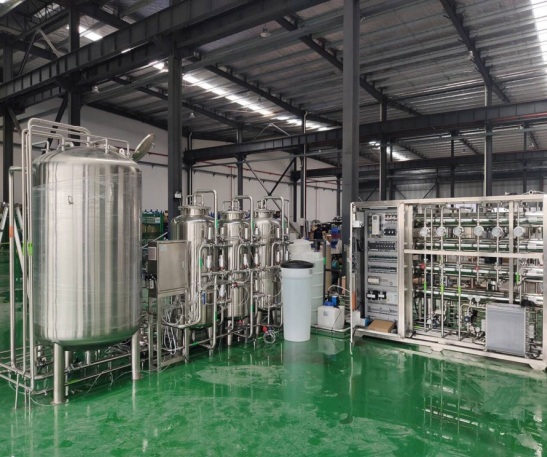
A pharmaceutical enterprise in Guatemala sought help from Molewater on the website to upgrade its original pharmaceutical purified water system and solve problems such as insufficient capacity and water quality fluctuations of the original water supply system. After receiving the user demand form from the customer, Mole’s engineers designed a 3-ton/hour pharmaceutical purified water system. After communication with the customer, the design was further optimized considering the customer’s production site issues, and finally gained high recognition from the customer.
Project challenges
High water quality compliance requirements: It needs to meet both local Guatemalan GMP regulations and USP standards. The produced water must achieve “conductivity ≤1.3μS/cm (25℃), total organic carbon ≤500ppb, purified water microorganisms ≤100CFU/mL, endotoxin ≤0.25EU/mL”, and the original equipment cannot stably meet the standards.
High operation and maintenance costs and pressure: The original equipment has a low degree of automation, requiring special personnel to monitor water quality daily. Moreover, the RO membrane is frequently clogged due to insufficient pretreatment, resulting in an annual operation and maintenance cost of over 50,000 Quetzales.
Process flow
Pretreatment unit: Adopting multi-media filter to remove suspended solids and turbidity in water, activated carbon filter to adsorb residual chlorine and organic pollutants, water softener to reduce inlet water hardness and prevent scaling risks, plus a 5-micron precision filter for terminal pretreatment. This unit can extend the service life of core components.
Reverse osmosis unit: Adopting double-stage reverse osmosis + EDI configuration + UV sterilization + terminal microfiltration filter process to remove over 99% of ions and organic substances, and the produced water resistivity can reach above 15MΩ・cm. UV sterilization ensures that microbial indicators meet the standards, and terminal filtration guarantees no particulate residue in the produced water.
Circulation unit: Adopting “closed-loop pipeline + electric heating disinfection system” to avoid secondary pollution of the pipeline.
Project achievements
After the system was put into use, the pharmaceutical enterprise received good feedback on drug production compliance and operational efficiency.
100% water quality compliance: The produced water continuously meets USP and local Guatemalan GMP standards. Third-party testing shows that conductivity, TOC, microorganisms, endotoxins, and other indicators are stably within the qualified range, and the product successfully passed the certification of the Guatemalan drug regulatory authority.
Controllable operation and maintenance costs: The system has a high degree of automation and only requires daily remote inspections. The pretreatment unit effectively extends the service life of the RO membrane, and the annual operation and maintenance cost is reduced to 45,000 Quetzales, a decrease of 62.5% compared with the original system.
Adaptation to hospital intelligent management: Water quality data is real-time connected to the system, and the production records of each batch of drugs can be traced through the quality control platform, which has passed the inspection of the drug regulatory authority.