15 TPH Ultrapure Water System for a New Materials Enterprise in Shaanxi, China
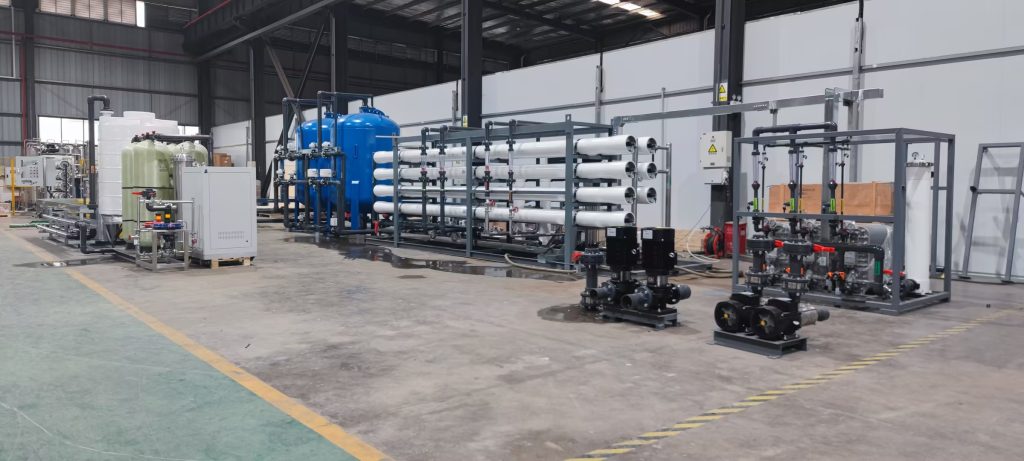
This 15T/H ultra-pure water system is a core water treatment device designed for the field of high-purity water production in new materials. With the core process of “pretreatment + double-stage reverse osmosis + EDI + polishing”, it efficiently removes ions, organic matter, particles and other pollutants from the raw water. The produced water quality can reach the standard of electronic-grade ultrapure water with a resistivity of ≥18.2MΩ · cm and a TOC of ≤10ppb, meeting the strict water requirements of high-end production processes. This helps enterprises enhance product purity and production stability, while reducing the procurement cost of high-purity water sources.
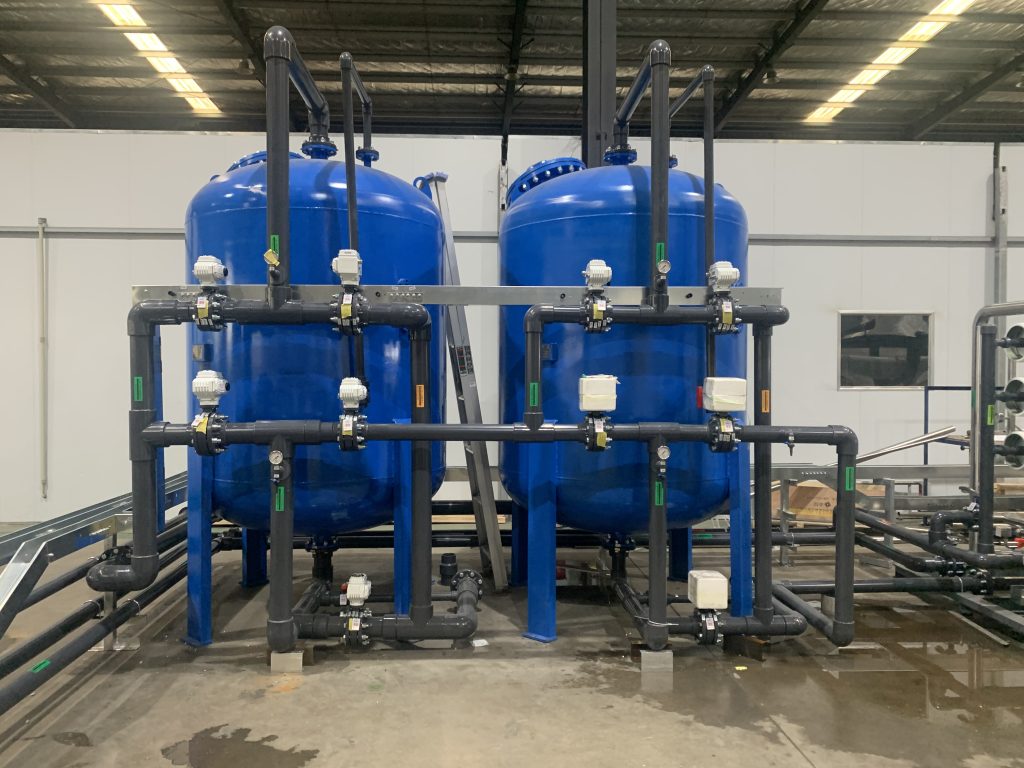
Pretreatment unit: This equipment uses multi-media filters to remove suspended solids, sand and other impurities, activated carbon filters to remove off-color, off-odor, free chlorine and organic matter, and scale inhibitors are added to prevent pipeline scaling.
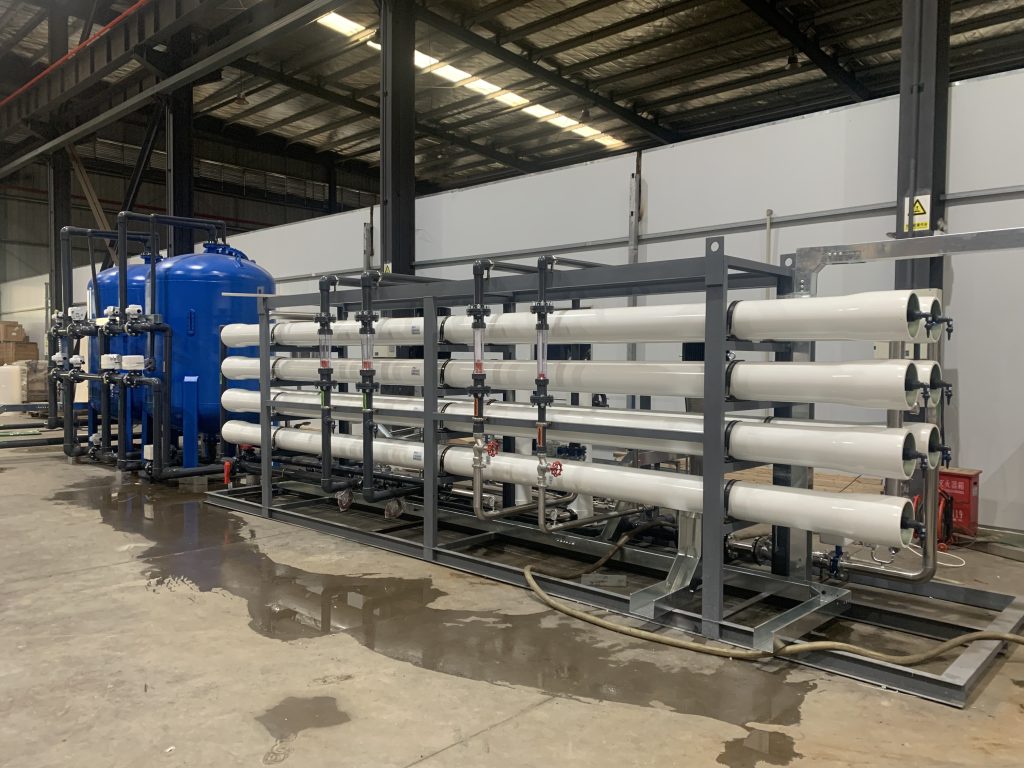
Core processing module: This equipment adopts the “two-stage reverse osmosis process” as the core desalination unit, which can reduce TDS, remove suspended solids and organic matter, and provide a stable water source for subsequent purification.
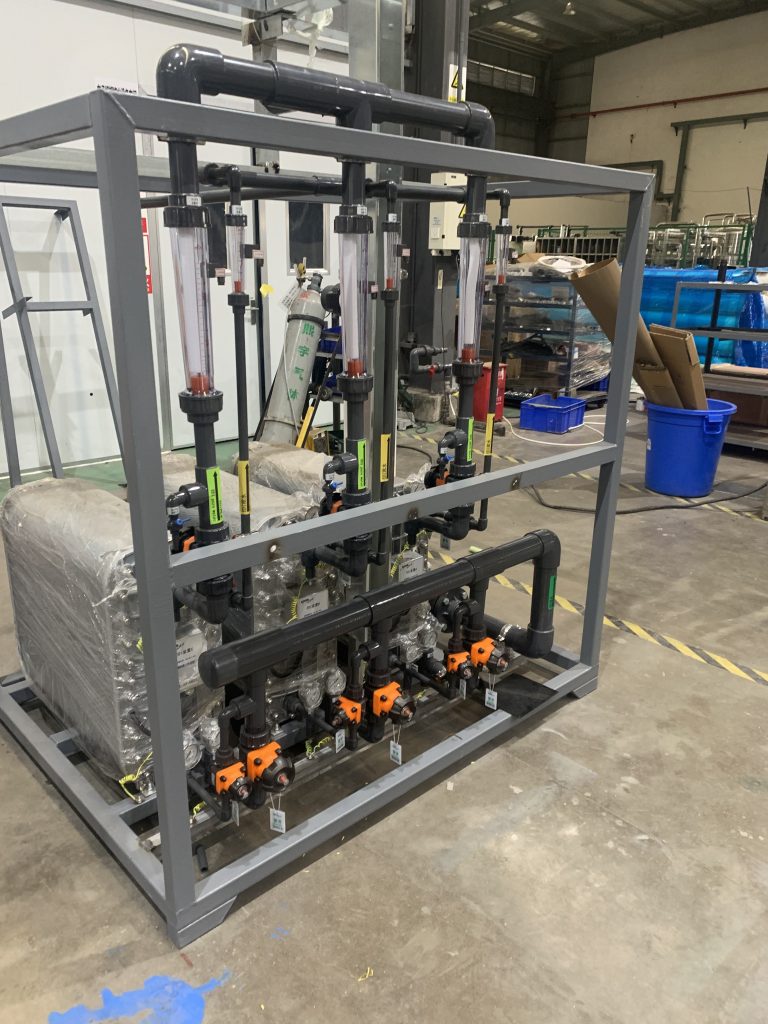
The use of EDI (Electro-deionization) to deeply remove residual ions can achieve continuous production of high-purity water.
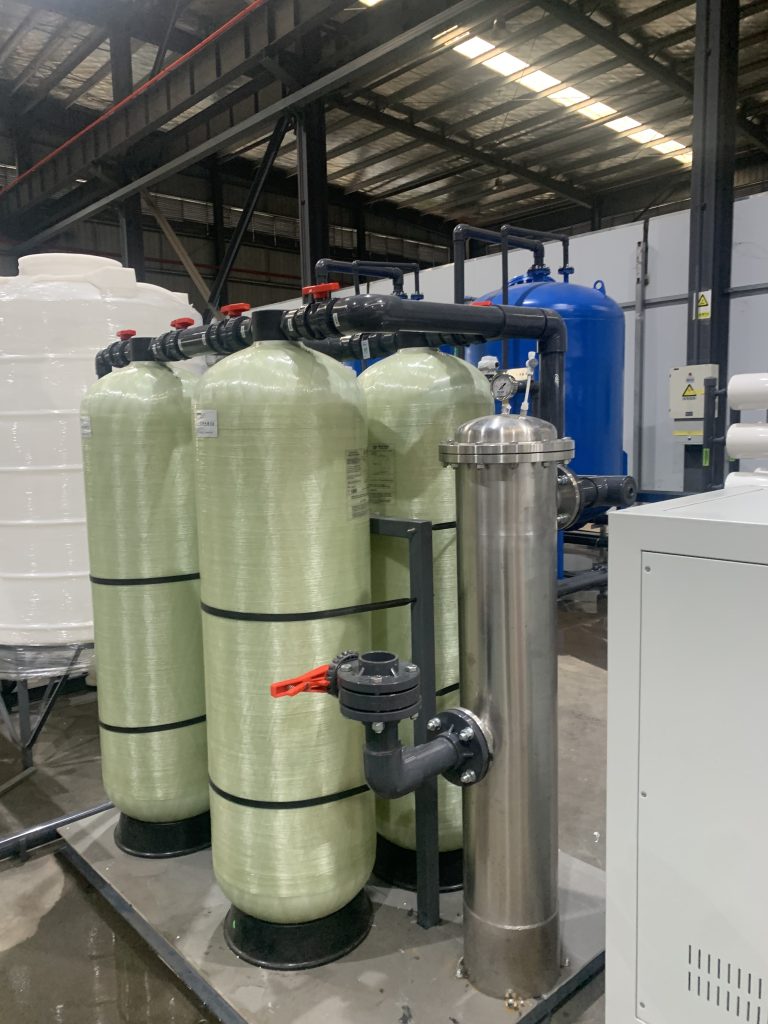
The polishing mixed bed is adopted to precisely adsorb the trace ions remaining from EDI, producing electronic-grade ultrapure water.
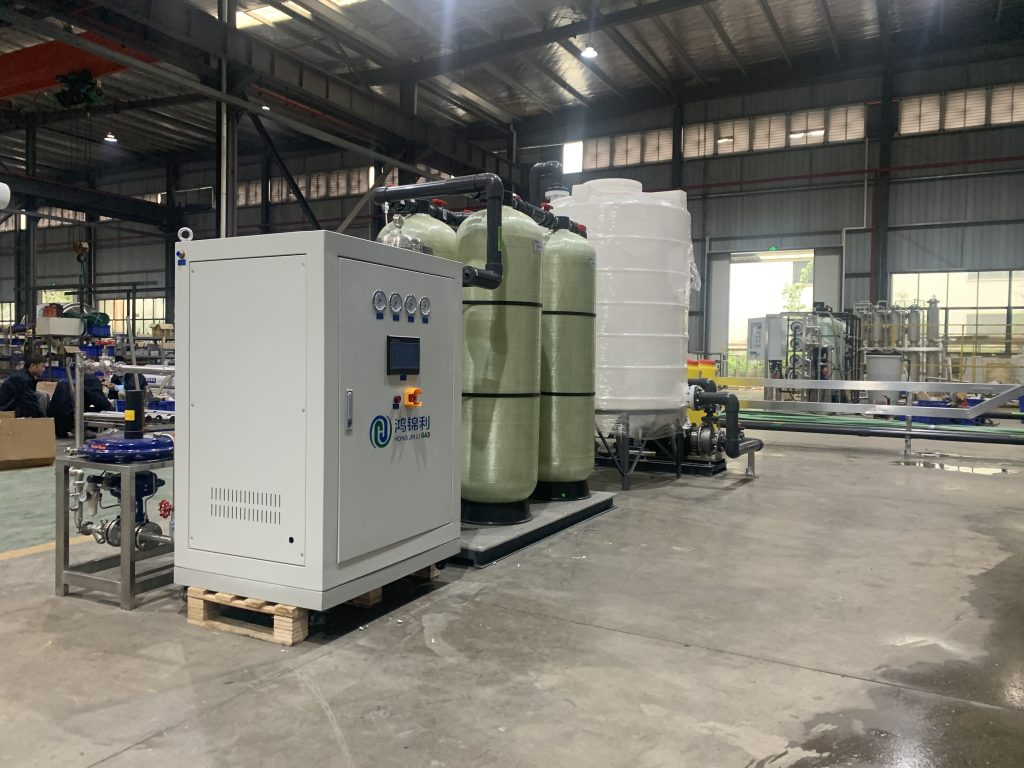
Core technological advantages
- It operates efficiently and stably, with complementary process units (pretreatment + desalination + purification). The antigen water has strong fluctuation capacity, and most systems support fully automatic continuous water production with small water quality fluctuations, which can meet the stable water supply requirements of industrial continuous production.
- The overall cost is lower. EDI can reduce the consumption of chemicals, extend the service life of polishing resins, lower the workload of operation and maintenance and the frequency of equipment replacement, and make the long-term operating cost more controllable.