8,000 LPH Reclaimed Water Reuse System in Inner Mongolia, China
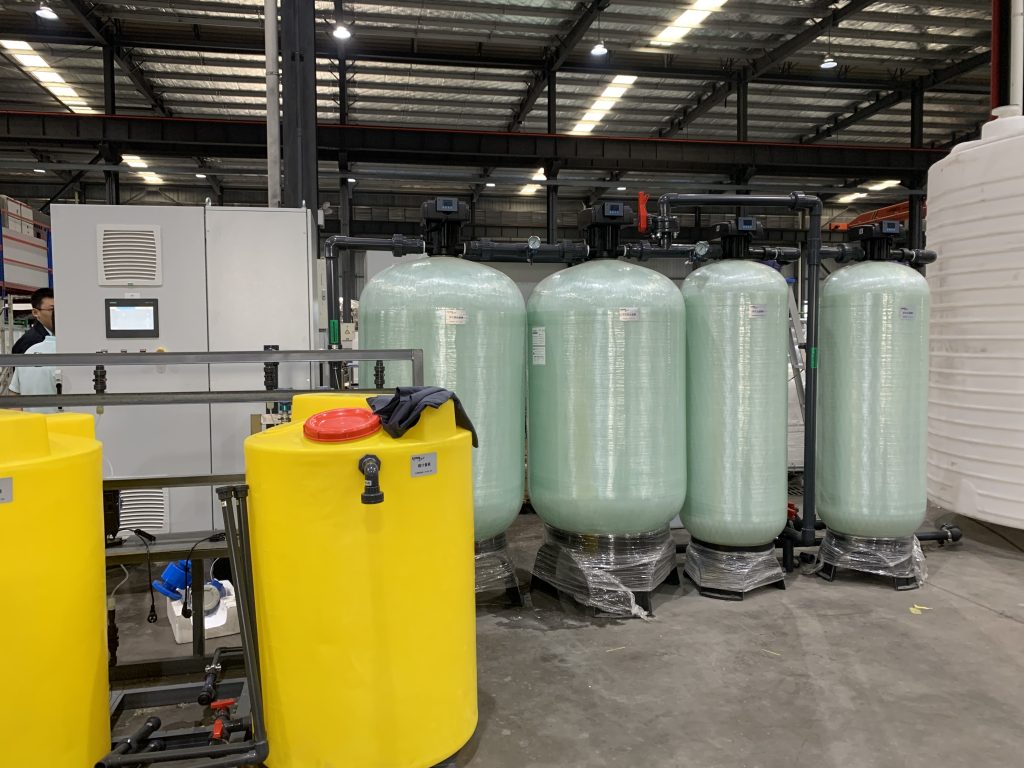
This 8000LPH reclaimed water reuse equipment is a core environmental protection device for a certain enterprise in Inner Mongolia to achieve wastewater resource utilization. It adopts the core process of “raw water dosing + multi-media filtration + activated carbon filter + softening filter”. Strictly adhering to the “Water Quality for Industrial Water Reuse of Urban Sewage” (GB/T 19923-2005) standard, it efficiently removes suspended solids, COD, bacteria and other pollutants in production wastewater. The water quality of the produced water meets the requirements of the original equipment for softening water, helping enterprises reduce the consumption of fresh water and the cost of sewage discharge.
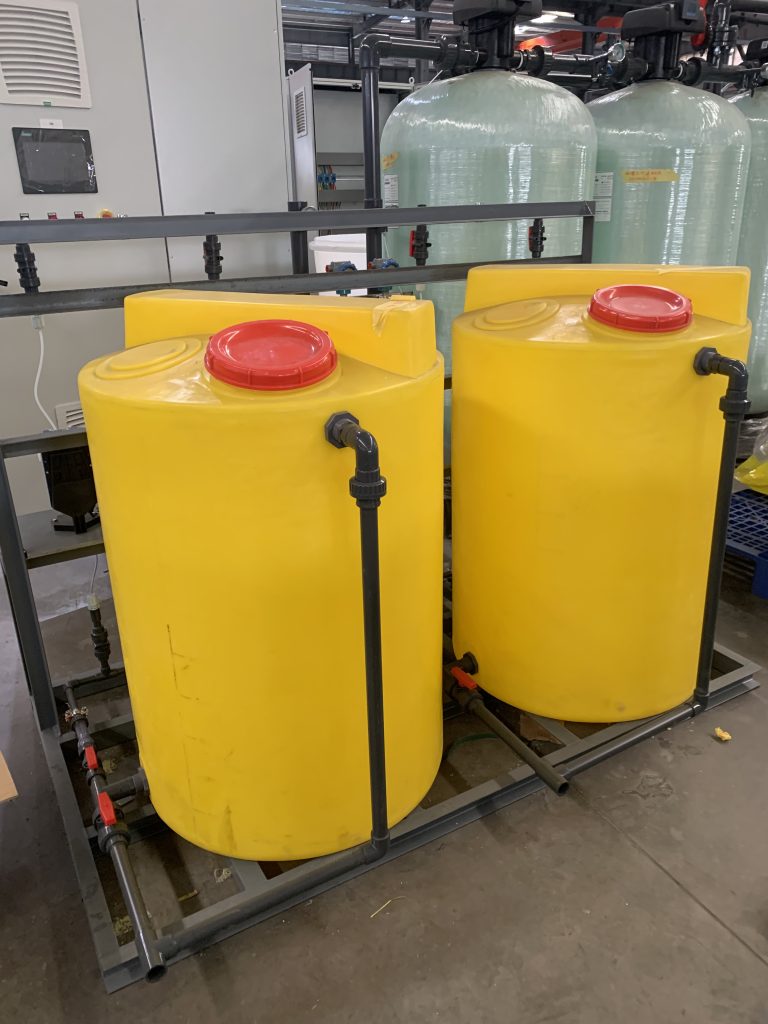
Raw water treatment unit: PE material water tanks are used, and acid and alkali agents are added to adjust the pH value of the raw water.
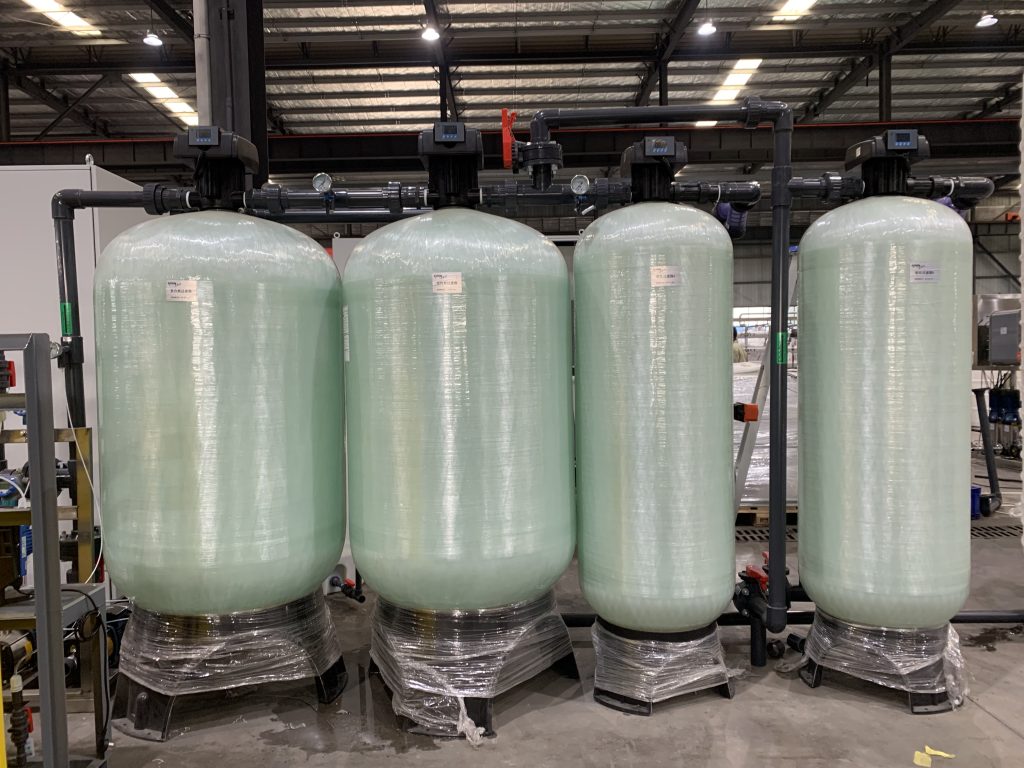
Core processing module: This sewage treatment equipment first employs a multi-media filter, using quartz sand and anthracite to remove suspended solids and impurities such as sand from the water. Secondly, an activated carbon filter is used to adsorb the abnormal color and odor in the water.
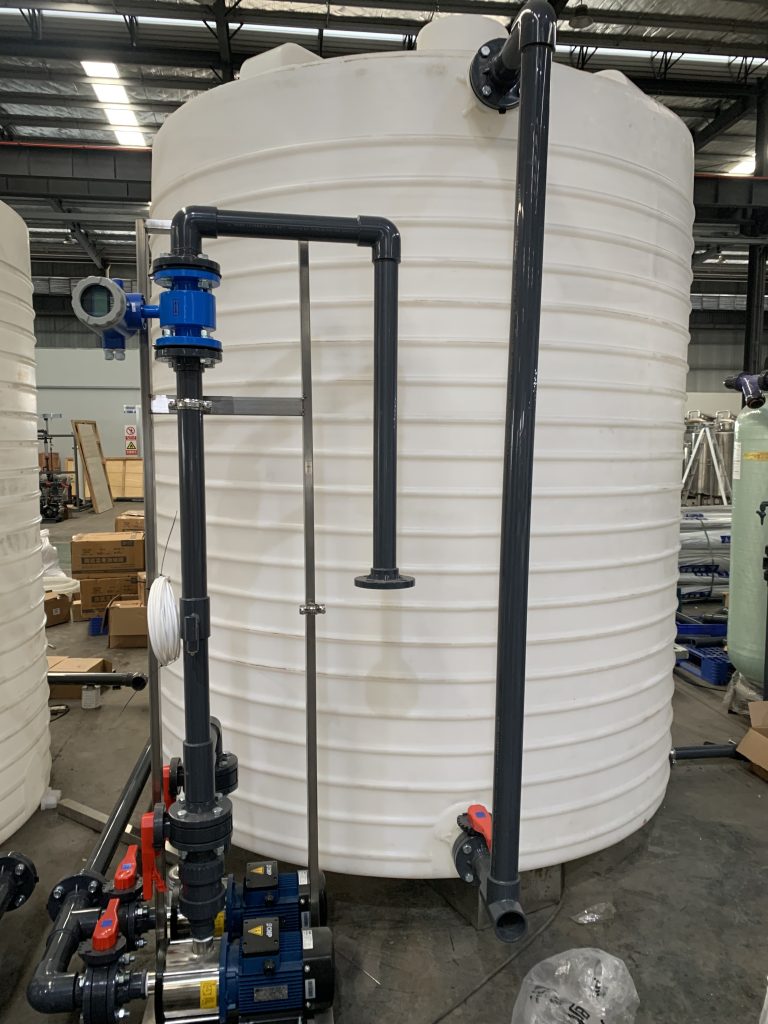
Finally, a softening filter is employed, using resin to reduce the hardness of the water, meeting the standard of reusable soft water, which is then transported to a soft water tank equipped with a liquid level gauge.
Intelligent control cabinet: An explosion-proof stainless steel control cabinet equipped with PLC+HMI touch screen, which can monitor water quality, equipment operation status, etc. in real time online. It supports fault alarm, cloud data storage and remote one-click start and stop operation.
Core technological advantages
- Precise raw water treatment: Add acid and alkali to the raw water to adjust the pH to 7.0-8.5, preventing strong acid/strong alkali from corroding the subsequent filter materials and softening resins, and extending the service life of multi-media, activated carbon adsorption and resin exchange.
- Deeply purify water quality. The full-process pretreatment significantly reduces the pollutant load of the softening system, allowing the resin to focus on the exchange of calcium and magnesium ions, thereby enhancing the softening efficiency and the stability of the effluent quality.
- Reduce enterprise costs. The softened water produced can meet the demands of industrial cooling, boiler feed water and other scenarios, realize the resource utilization of wastewater, and lower the cost of fresh water intake.