
Medical Wastewater Treatment Equipment for a General Hospital in China
Medical wastewater contains pollutants such as pathogens, chemical agents, and radioactive substances generated during the diagnosis and treatment process. Improper treatment can cause water pollution, spread diseases, and threaten public health and safety. A hospital in China generates 800 tons of medical wastewater per day, covering multiple departments such as the operating room, laboratory, and infectious disease department. The original treatment equipment has problems such as “low treatment efficiency, unstable compliance with standards, and large sludge output”, and faces the risk of strict inspection by environmental protection departments. The hospital collaborated with Molewater. After the engineers conducted on – site investigations on the wastewater quality, discharge volume, site constraints, and local environmental protection standards, a set of special medical wastewater treatment systems featuring “efficient purification + intelligent monitoring” was customized and deployed, taking into account both the deep removal of pollutants and the adaptability to hospital operations.
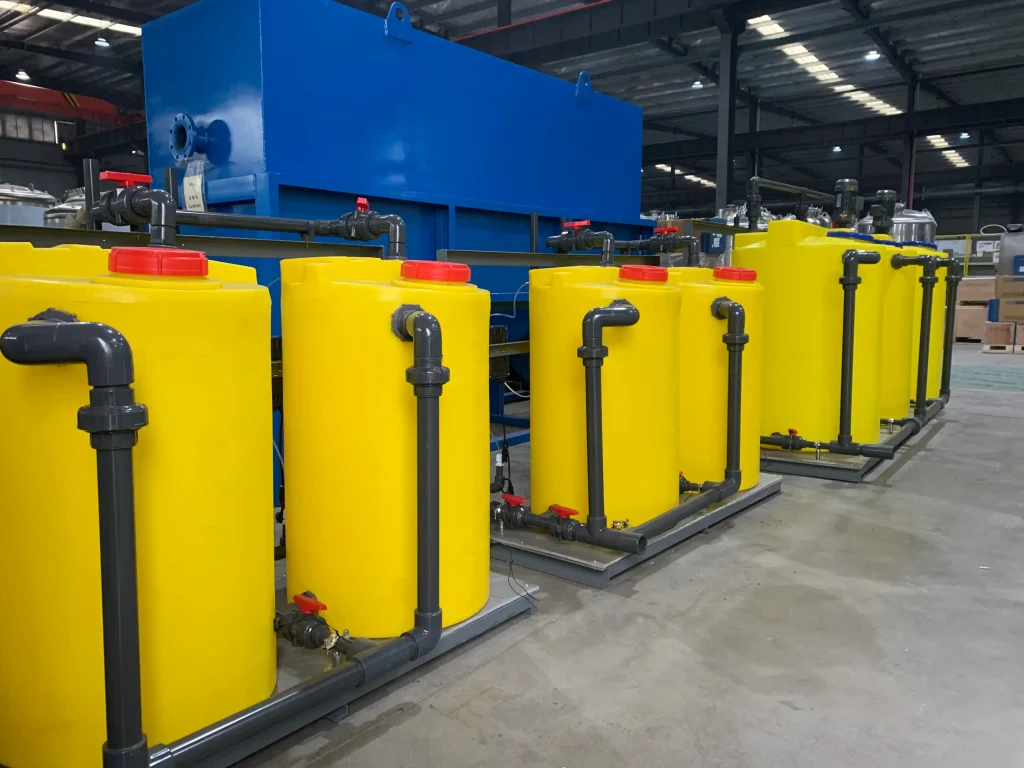
Project Challenges
Complex and Diverse Wastewater Composition: It covers diagnosis and treatment wastewater, laboratory wastewater, surgical wastewater, etc., containing various pollutants such as pathogenic microorganisms, pharmaceutical residues, heavy metals, and organic substances, resulting in high treatment difficulty.
Strict Discharge Requirements: It is necessary to meet the dual requirements of “pretreatment + compliance discharge” in the national standard, and some indicators (such as fecal coliform bacteria and COD) need to meet the first – level discharge standard.
Hospital Operation and Maintenance Requirements: It is necessary to take into account both treatment efficiency and low operation and maintenance intensity, adapt to the operation capabilities of the hospital’s logistics team, and control the operation energy consumption at the same time.
Process Flow
The system adopts the process of “pretreatment + anaerobic biochemical treatment + aerobic biochemical treatment + advanced treatment + sludge disposal” to achieve both harmless treatment and resource utilization:
Front – end Collection and Pretreatment:
Grille + Collection Well: Intercept solid debris such as cotton swabs and gauze in the medical wastewater.
Emergency Pool: Store high – concentration medical wastewater from sudden leaks in an emergency to avoid impacting the system.
Air Flotation + Primary Sedimentation Tank: Remove suspended solids, residual blood clots, and some oil – like pollutants to reduce the load of subsequent treatment.
Biochemical Treatment Unit:
Regulation and Pre – Acidification Tank: Adjust the water quality and quantity of the wastewater, and add nutrients/acids and alkalis to balance the water quality.
AO System: The aerobic + anoxic process works together to further degrade indicators such as COD and ammonia nitrogen, and at the same time remove some pathogenic microorganisms.
Advanced Treatment Unit:
Secondary Sedimentation Tank: Realize the separation of biochemical sludge and water.
Advanced Treatment System: Disinfect the effluent (such as ultraviolet + sodium hypochlorite) to ensure that the water quality meets the discharge standards.
Sludge Treatment Unit: Sludge Concentration Tank + Dewatering System: Concentrate and dewater the sludge generated in the pretreatment and biochemical links, and entrust a professional institution to dispose of the dry sludge in compliance with regulations.
Project Results
Stable Discharge Compliance: The effluent stably meets the first – level discharge standard for medical wastewater.
Safety and Environmental Protection: The whole process of harmless treatment eliminates the environmental and public health risks of medical wastewater. The resource utilization of biogas further reduces the operation energy consumption.