

Yes, some types of water filtration can reduce alkalinity. This is especially true for reverse osmosis and distillation, both of which remove many of the dissolved minerals in water. Calcium and magnesium are among the minerals that can contribute to alkalinity, so removing them may affect the water’s pH and make it slightly more acidic.
However, this does not apply to every type of filter. A basic carbon filter, for example, is mainly used to reduce chlorine, odors, and certain organic compounds. It generally leaves most of the minerals in the water, so its effect on pH and alkalinity is usually small.
The difference comes down to what the filter actually removes. Understanding this makes it easier to see why RO water may have a different pH from filtered tap water and why some systems include a remineralization stage afterward.
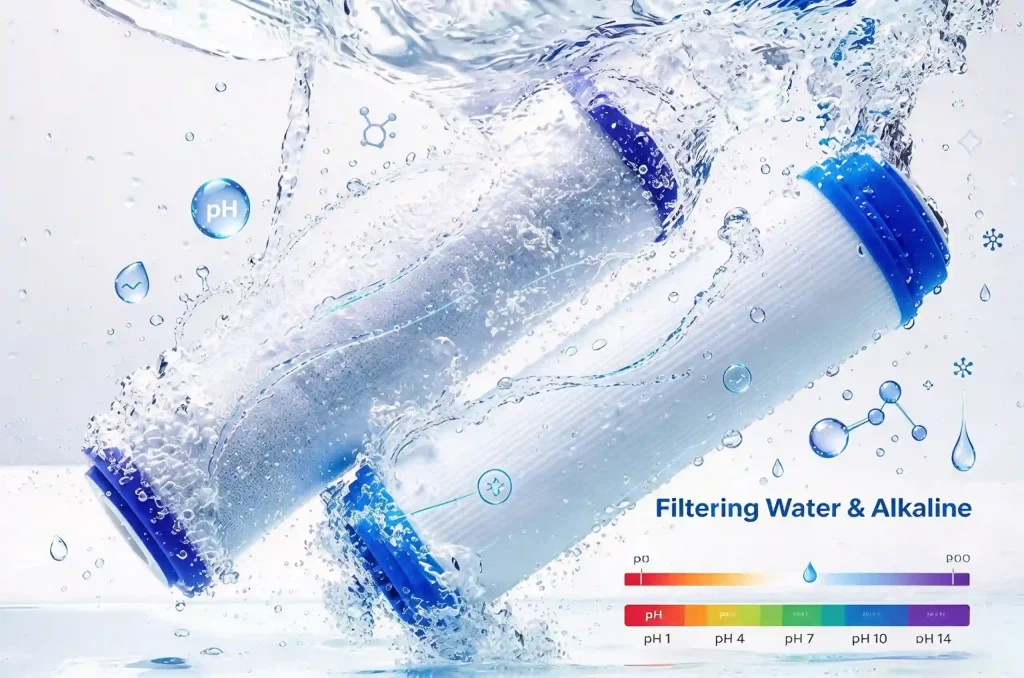
What Does “Alkaline” Really Mean in Water?
The term “alkaline” refers to water that has a pH above 7. The pH scale runs from 0 to 14. A value of 7 is neutral, numbers below 7 indicate acidity, and numbers above 7 indicate alkalinity. Most drinking water falls somewhere between 6.5 and 8.5.
It is also worth separating pH from alkalinity, since the two terms are often used interchangeably. They are not quite the same. pH tells us how acidic or alkaline the water is at a given moment, while alkalinity tells us how well the water can resist a change in pH. Water with higher alkalinity can neutralize a certain amount of acid without its pH changing as quickly.
Dissolved minerals, including calcium and magnesium, can play an important role in this buffering capacity. They help maintain the water’s chemical balance and can contribute to a relatively stable pH. If a filtration process removes a large portion of these minerals, the water may have less buffering capacity and its pH can become more susceptible to change.
How Filtration Affects Water’s Alkalinity
Filtration can affect alkalinity when it removes a significant amount of the minerals that help buffer the water. With less buffering capacity, the water becomes more sensitive to changes in its surroundings, including exposure to carbon dioxide in the air. Some of the dissolved CO₂ reacts with the water and forms carbonic acid, which can cause the pH to gradually decrease.
This is often seen with reverse osmosis and distilled water. Water produced by these processes may initially have a pH around neutral, but the reading can change after the water is exposed to air. In some cases, the pH may fall to around 5.0–6.5. This does not necessarily mean that the water has been contaminated. Rather, it can simply reflect the fact that there are very few dissolved minerals left to buffer the water against changes in pH.
Which Filters Lower Alkalinity the Most?
Reverse osmosis (RO) can remove a large portion of the dissolved solids in water. During the process, water passes through a semi-permeable membrane that holds back minerals such as calcium and magnesium along with many other dissolved substances. With fewer minerals left in the water, its alkalinity and buffering capacity can decrease. This can also change the taste, which some people describe as lighter or flatter than regular tap water.
Distillation removes minerals in a different way. The water is heated until it turns into steam, and the steam is then cooled and collected as liquid water. Most minerals remain behind in the original container. The resulting water has very little mineral content and, once exposed to air, its pH can gradually move below neutral.
Deionization (DI) uses ion-exchange resins to remove dissolved ions from the water. Since the process targets charged substances, it can remove many of the ions involved in the water’s buffering system. As a result, DI water generally has very low mineral content and little buffering capacity.
RO, distillation, and deionization are all designed to reduce dissolved substances rather than preserve the water’s mineral content. A lower alkalinity is therefore an expected result when most of those minerals and ions have been removed.

Filters That Have Little or No Effect on Alkalinity
Many common filters do not remove enough dissolved minerals to make a noticeable difference to water’s alkalinity. Activated carbon filters are a good example. They are mainly used to reduce chlorine, certain organic compounds, and unwanted tastes or odors. Since most of the calcium, magnesium, and other minerals stay in the water, the pH generally remains close to the level of the original water.
Ultrafiltration has a similar effect. Its membrane can remove bacteria, viruses, and other larger particles while allowing most dissolved minerals to pass through. This means it usually has little effect on either mineral content or alkalinity.
Basic sediment filters and UV water treatment work in much the same way when it comes to pH. They are designed to deal with particles or microorganisms rather than dissolved minerals. Unless they are combined with another treatment process, they generally leave the water’s mineral balance—and therefore its alkalinity—largely unchanged.
Can You Make Filtered Water More Alkaline Again?
If filtration has left your water low in minerals, you can add some of them back. A common approach is a remineralization stage after reverse osmosis. These filters add minerals such as calcium and magnesium to the treated water, which can improve its taste and restore some of its buffering capacity. Depending on the system and the starting water, this may also bring the pH back toward neutral or slightly above it.
Mineral cartridges and some alkaline water pitchers work in a similar way. As water passes through the filter, small amounts of minerals are released into it. Baking soda can also raise pH and alkalinity, but it is easy to add too much, so it is not the best choice for casual adjustment of drinking water.
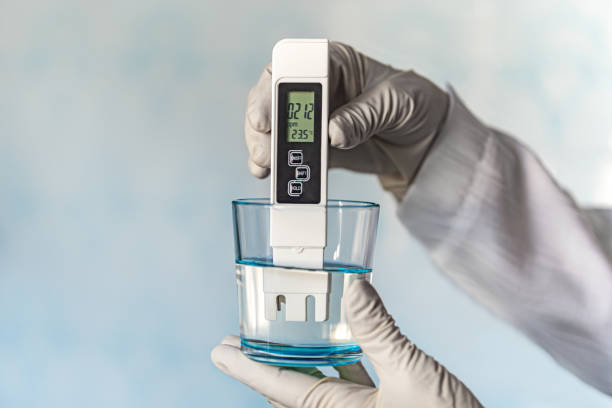
Before changing anything, check the water you already have. A basic pH meter can show where the pH stands, while a TDS meter gives you a rough indication of the amount of dissolved material in the water. These measurements can help you decide whether remineralization is actually needed.
Common Myths About Filtering and Alkaline Water
Myth 1: All water filters make water less alkaline.
Not true. Carbon, sediment, UV, and many UF systems have little effect on dissolved minerals. RO and deionization are much more likely to reduce alkalinity.
Myth 2: Higher-pH water is automatically better for your health.
A higher pH does not by itself make drinking water healthier. Water quality depends on many factors, including microbiological safety, contaminants, mineral composition, and the intended use.
Myth 3: Lower pH after filtration means the water is unhealthy.
Not necessarily. Highly purified water can have a lower measured pH because it has little buffering capacity and can absorb carbon dioxide from the air. pH alone cannot determine whether treated water is suitable for a particular application.
Conclusion
Whether filtering makes water less alkaline depends largely on the filtration technology. Reverse osmosis and distillation can significantly reduce the minerals and dissolved substances that contribute to alkalinity, while carbon filters and other basic filtration methods generally have little effect on the water’s alkalinity.
The right filtration method therefore depends on what you actually need from your water. If your priority is removing dissolved minerals and contaminants, a more advanced treatment process may be appropriate. If you mainly want to improve taste, odor, or certain impurities, a carbon filter may be sufficient without substantially changing the water’s mineral balance.
Want to learn more about how different water treatment technologies affect water quality parameters? Visit Molewater for more information on water purification technologies and professional water treatment solutions.