
Hemodialysis relies on a steady supply of purified water to prepare dialysate. This solution is made by mixing purified water with concentrated acid and bicarbonate solutions. During treatment, it passes through the dialyzer to help remove waste products and excess fluid from the blood. Because water is a major component of dialysate, its chemical and microbiological quality must be carefully controlled to ensure patient safety.
So, how much water is needed for a single hemodialysis session? There is no fixed amount for every treatment. Consumption varies depending on the dialysis machine, dialysate flow rate, treatment duration, and water treatment system. Another important factor is the distinction between the purified water delivered to dialysis machines and the raw water entering the reverse osmosis (RO) system. The RO system also uses water during filtration, and some of the incoming water is discharged as concentrate rather than becoming purified water.
How Many Liters of Water Are Used Per Hemodialysis Water Treatment?
A standard four-hour hemodialysis session can require around 120 liters of water for dialysate preparation when the dialysate flow rate is set at 500 mL/min.
The calculation is relatively straightforward. At a flow rate of 500 mL/min, a four-hour session (240 minutes) produces:
500 mL × 240 minutes = 120,000 mL = 120 liters.
If the flow rate increases to 700 mL/min, the total dialysate volume reaches 168 liters over the same period. Naturally, longer treatment times will also increase the amount of water required.
It is worth noting that dialysate volume and actual RO water consumption are not exactly the same. Dialysate is made by mixing purified water with acid and bicarbonate concentrates, so the amount of RO water needed is lower than the final dialysate volume. Water used for machine preparation, rinsing, and disinfection also needs to be considered when estimating total consumption.
Actual usage can therefore vary from one dialysis unit to another. For example, a hospital-based study published in 2025 reported an average water consumption of approximately 155 liters per treatment session. This figure reflects the equipment and operating conditions at that particular facility, rather than a fixed amount required for every hemodialysis treatment.
For a reliable estimate, dialysis centers should check the technical specifications of their machines and measure actual water use under normal operating conditions.
How Much RO Water Is Needed for One Hemodialysis Session?
The RO system needs more feed water than the volume of purified water it produces. This is because not all incoming water passes through the RO membrane. Some becomes purified water (permeate), while the rest is discharged as concentrate, carrying away rejected salts and other impurities.
Two terms are important when calculating water consumption:
- RO Feed Water: The raw water entering the reverse osmosis system.
- RO Permeate: The purified water produced by the RO membrane for dialysis use.
The amount of feed water required depends largely on the system’s recovery rate. For example, if a dialysis unit needs 1,000 liters of RO permeate and the system has an 85% recovery rate, the feed water requirement is:
1,000 ÷ 0.85 = 1,176.5 liters
In other words, approximately 1,176.5 liters of feed water are needed to produce 1,000 liters of purified water.
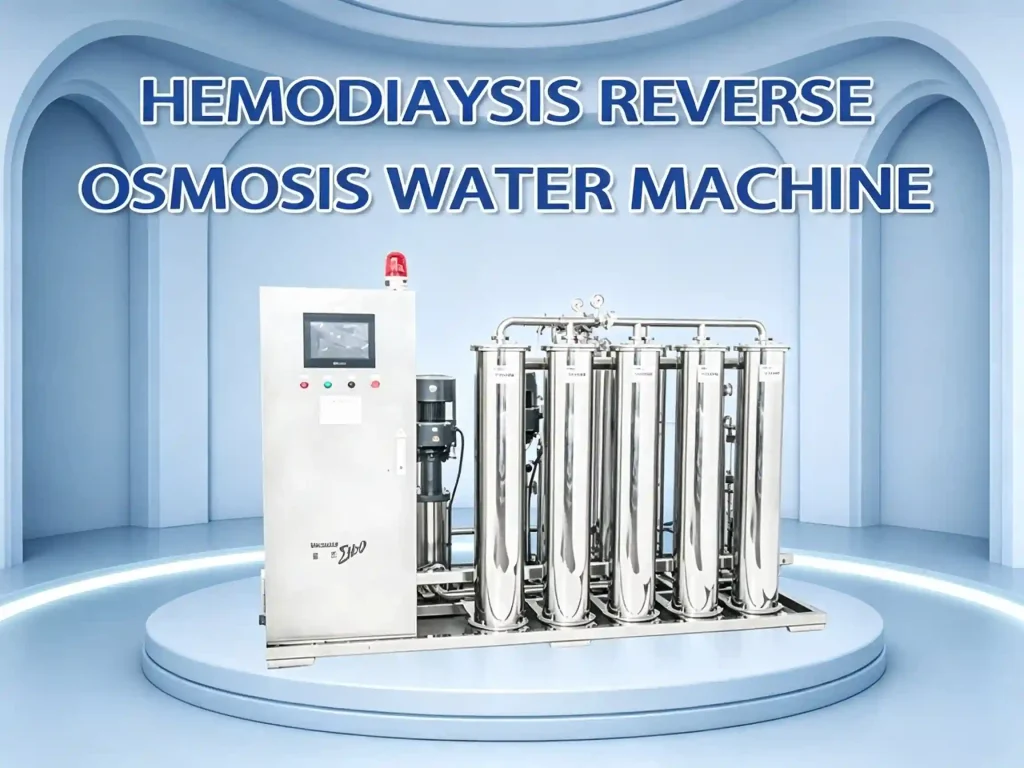
Depending on the incoming water quality and the required water standards, a dialysis facility may use either a single-stage or double-stage RO system. Molewater offers both configurations for hemodialysis water treatment, with the selection based on the facility’s water quality requirements and operating conditions. A double-stage system is not automatically more water-efficient, so the configuration should be determined through water analysis and system design.
How Much Water Does a Dialysis RO System Waste?
Not all feed water entering an RO system becomes purified water. The portion that does not pass through the membrane is called RO reject water or concentrate. It contains the dissolved salts and other substances removed during filtration and is discharged from the system.
The amount of reject water can be estimated using the following formula:
Reject Water = Feed Water − RO Permeate
For example, if an RO system uses 1,176.5 liters of feed water to produce 1,000 liters of permeate, approximately 176.5 liters will be discharged as reject water.
The recovery rate directly affects this volume. A lower recovery rate means more reject water is produced for the same amount of purified water. However, recovery cannot simply be increased without considering feed water quality, temperature, operating pressure, and membrane condition. An excessively high recovery rate can increase the risk of scaling and membrane fouling.
Molewater’s hemodialysis RO system includes a concentrated water recycling design, with a maximum specified water recovery rate of up to 85%. The actual recovery rate depends on local water conditions and system configuration and should be confirmed during project design and commissioning.
Reject water should not be returned directly to the dialysis water supply. If reuse is considered, it should be limited to suitable non-dialysis applications and evaluated separately to ensure patient safety.
What Affects Water Consumption During Hemodialysis?
Water consumption differs between dialysis centers because it depends on both treatment settings and the performance of the water treatment system. The main factors include:
Dialysate Flow Rate
The higher the dialysate flow rate, the more dialysate a machine prepares during treatment. For example, a machine operating at 700 mL/min uses more dialysate over four hours than one running at 500 mL/min.
Treatment Duration
Longer dialysis sessions require more dialysate and, consequently, more purified water. When estimating water demand, centers should consider their actual treatment schedules rather than relying on a standard four-hour session.
Dialysis Machine Model
Water requirements vary between machine models. Some machines also use additional water for automatic rinsing, preparation, and disinfection. Checking the manufacturer’s specifications is the best way to estimate equipment-related consumption.
RO System Recovery Rate
The recovery rate determines how much feed water becomes purified permeate. A higher recovery rate can reduce reject water and overall feed water demand, provided the system operates within the limits set by water quality and membrane conditions.
Water Pretreatment and System Flushing
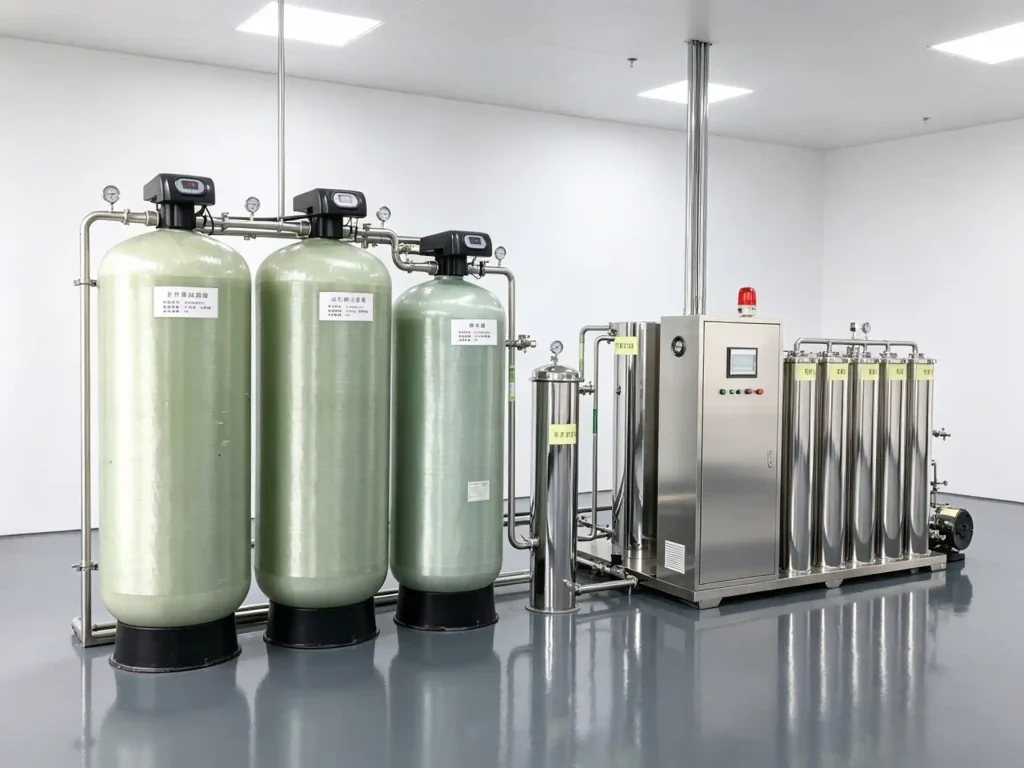
Pretreatment equipment helps protect RO membranes and maintain water quality. However, filter backwashing, softener regeneration, pipeline flushing, and system disinfection also consume water and should be included when calculating the facility’s total demand.
How to Calculate Daily Water Consumption for a Dialysis Center?
For a dialysis center, total water demand depends on the number of dialysis machines, daily treatment schedule, and RO system recovery rate. Peak demand also matters, particularly when several machines are running simultaneously.
For example, consider a center with 10 dialysis machines, each requiring approximately 120 liters of purified water for a four-hour session. The total permeate demand for one treatment round is:
10 × 120 = 1,200 liters
At an RO recovery rate of 85%, the required feed water volume is:
1,200 ÷ 0.85 = 1,411.8 liters
This leaves approximately 211.8 liters of reject water.
This calculation provides a basic estimate rather than the center’s complete water demand. Additional consumption from machine rinsing, pipeline flushing, RO cleaning, and disinfection must also be considered. For centers running multiple shifts, the number of daily treatment rounds and the time available for water production will affect the required RO system capacity.
When planning a dialysis water treatment system, both daily consumption and peak demand should be considered. Molewater provides direct water supply and storage tank recirculation configurations to accommodate different numbers of dialysis stations and operating schedules. Its water distribution system can also use a full-circulation, constant-pressure pipeline to maintain continuous water flow throughout the loop.
How to Reduce Water Consumption in Hemodialysis Water Treatment?
Reducing water consumption in a dialysis center should not come at the expense of water quality. The focus should be on minimizing unnecessary water losses while keeping the purification and distribution system operating reliably.
Several practical measures can help:
Select a suitable RO recovery rate. Set the recovery rate according to feed water quality and membrane operating limits. Pushing it too high can increase scaling and fouling risks.
Match RO capacity to actual demand. The system should be sized according to the number of dialysis machines and their operating schedules. An undersized unit may struggle to meet peak demand, while an oversized system may lead to unnecessary energy and operating costs.
Reduce unnecessary flushing and water discharge. Review system settings and operating procedures to identify avoidable water losses. However, required flushing, cleaning, and disinfection procedures should always be maintained.
Consider reject water reuse. RO concentrate may be reused for suitable non-clinical purposes, provided its water quality is assessed and the intended application is appropriate. It should never be reused directly in the dialysis water supply.
Maintain pretreatment equipment and RO membranes. Regular inspections, filter replacement, and membrane maintenance help keep the system running efficiently and prevent excessive water consumption caused by declining performance.
Online monitoring also helps operators track system performance and identify abnormal changes. Molewater’s hemodialysis water treatment system monitors conductivity, flow rate, and pressure, providing operating data for routine maintenance and system management.
How Molewater Help Your Dialysis Center
Choosing a hemodialysis water treatment system involves more than calculating daily water consumption. The system must meet the required water quality standards, provide a stable water supply during treatment, and fit the facility’s installation conditions and operating needs.
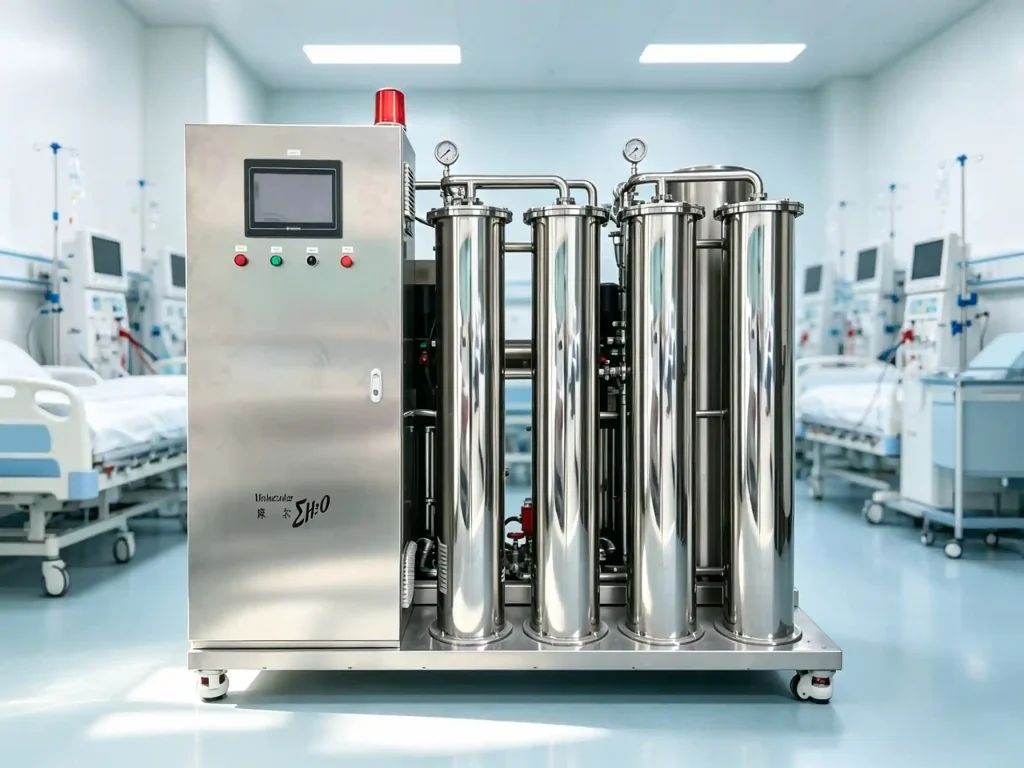
Molewater offers a range of hemodialysis water treatment solutions, including single-stage and double-stage RO systems, concentrated water recycling, direct water supply, storage tank recirculation, and portable hemodialysis water treatment machines. These options support different dialysis facility sizes, installation requirements, and treatment settings.
Whether you are building a new dialysis center, upgrading an existing water treatment system, or need a portable unit for flexible deployment, Molewater can help assess your water quality and capacity requirements to recommend a suitable configuration.