
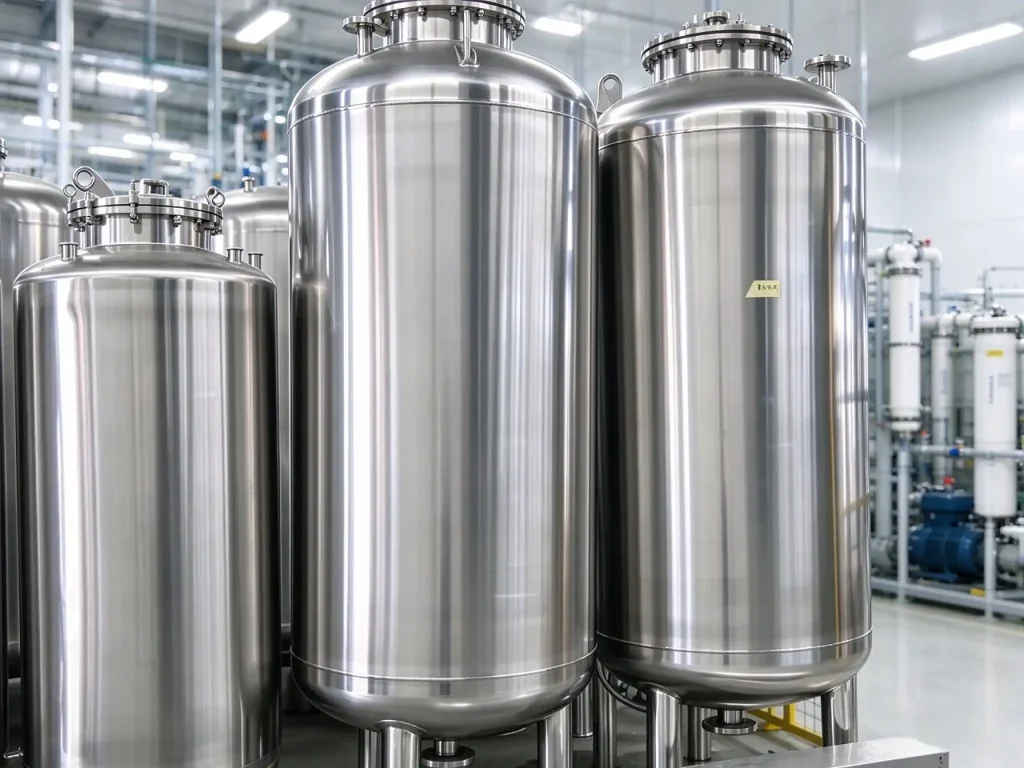
Pure water requires a storage tank that can maintain its quality after treatment. Even when water has passed through reverse osmosis, deionization or other purification processes, its quality can still be affected by the material it comes into contact with during storage. The tank must therefore be resistant to corrosion, easy to clean and suitable for long-term contact with treated water.
Stainless steel is widely used for this purpose, particularly in pharmaceutical, food processing, medical and electronics facilities. But what makes this material suitable for pure water storage?
Why Is Stainless Steel Suitable for Pure Water Storage?
Stainless steel is an alloy mainly composed of iron, with chromium as its key corrosion-resistant element. Most stainless steel grades contain at least 10.5% chromium. Depending on the grade, other elements such as nickel and molybdenum may also be added to improve specific properties.
One important feature of stainless steel is its ability to resist corrosion without relying on a separate protective coating. When chromium in the steel reacts with oxygen, it forms a very thin chromium-rich oxide layer on the metal surface. This layer is known as the passive film.
The passive film separates the underlying metal from the surrounding environment and slows down corrosion. As a result, stainless steel can maintain its surface condition when exposed to water under suitable operating conditions.
This property is particularly useful for pure water storage. The tank material is in direct contact with the stored water, so it should not easily rust, deteriorate or introduce unwanted substances into the water. Stainless steel offers a durable material option while also providing a smooth surface that can be cleaned more easily than many rough or porous materials.
However, stainless steel is not completely corrosion-proof. Its performance depends on the selected grade, water quality, temperature and manufacturing quality. These factors should be considered when choosing a tank for a particular pure water system.
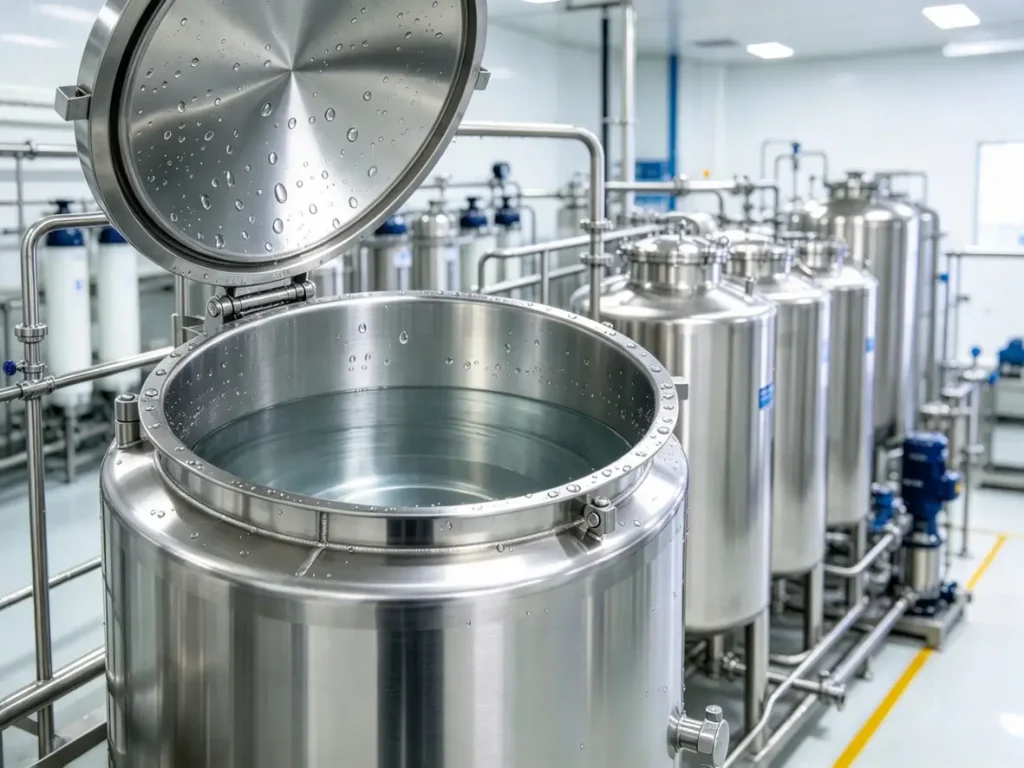
How Does Stainless Steel Resist Corrosion?
Stainless steel is resistant to corrosion mainly because of the chromium in its composition. When exposed to oxygen, chromium reacts with it to form a thin oxide film on the metal surface. This film acts as a barrier, slowing down further oxidation and helping protect the steel from rust. This is one of the main differences between stainless steel and ordinary carbon steel.
The protective film is extremely thin and cannot be seen with the naked eye. However, it has an important role in keeping the metal surface resistant to corrosion.
Another advantage is that this film can repair itself under suitable conditions. When the surface is scratched or slightly damaged, the exposed chromium can react with oxygen and form a new protective layer. This process is known as repassivation and helps stainless steel retain its corrosion resistance during normal use.
However, the protective layer does not prevent all forms of corrosion. Certain environments can weaken it or cause local damage. Chloride ions, commonly found in seawater and some industrial water supplies, can break down the film in specific areas and lead to pitting corrosion. High temperatures, surface deposits and poor cleaning practices may also increase the risk of corrosion.
When selecting stainless steel for a water storage tank, it is important to consider the water quality and operating environment. Different stainless steel grades offer different levels of corrosion resistance. Proper material selection, surface finishing and fabrication all help maintain the tank’s performance over time.
Is Stainless Steel Safe for Pure Water Storage?
Yes. Stainless steel is widely used for pure water storage. It offers good corrosion resistance, and its surface can be finished to make cleaning easier. However, choosing a stainless steel tank does not automatically mean it is suitable for every pure water application. The material grade, tank construction and water conditions all need to be considered.
Pure water contains fewer dissolved minerals and ions than regular tap water. However, this does not necessarily make it more corrosive to stainless steel. Its effect on the tank surface depends on factors such as water chemistry, temperature, dissolved oxygen, chloride levels and surface condition.
When the correct stainless steel grade is used and the tank is properly manufactured, the passive film on the inner surface helps protect the metal from corrosion. This also helps limit the release of metal into the stored water, which is an important consideration when water purity needs to be maintained.
The quality of the tank’s internal surface is worth checking as well. Rough spots, welding defects and poorly finished joints can make cleaning more difficult. Residue may collect in these areas, especially if the tank is not cleaned regularly.
A smooth, well-finished interior makes it easier to remove deposits and reduces areas where contaminants can accumulate. However, a smooth surface alone cannot prevent bacterial growth or biofilm formation. Proper tank design, regular cleaning and suitable storage conditions are also needed to maintain water quality.
One point worth clarifying is that pure water storage is not the same as sterile water storage. Although stainless steel is suitable for many pure water applications, the tank itself does not sterilize the water. Microbiological quality must be maintained through appropriate system design, sanitization and daily operating procedures.
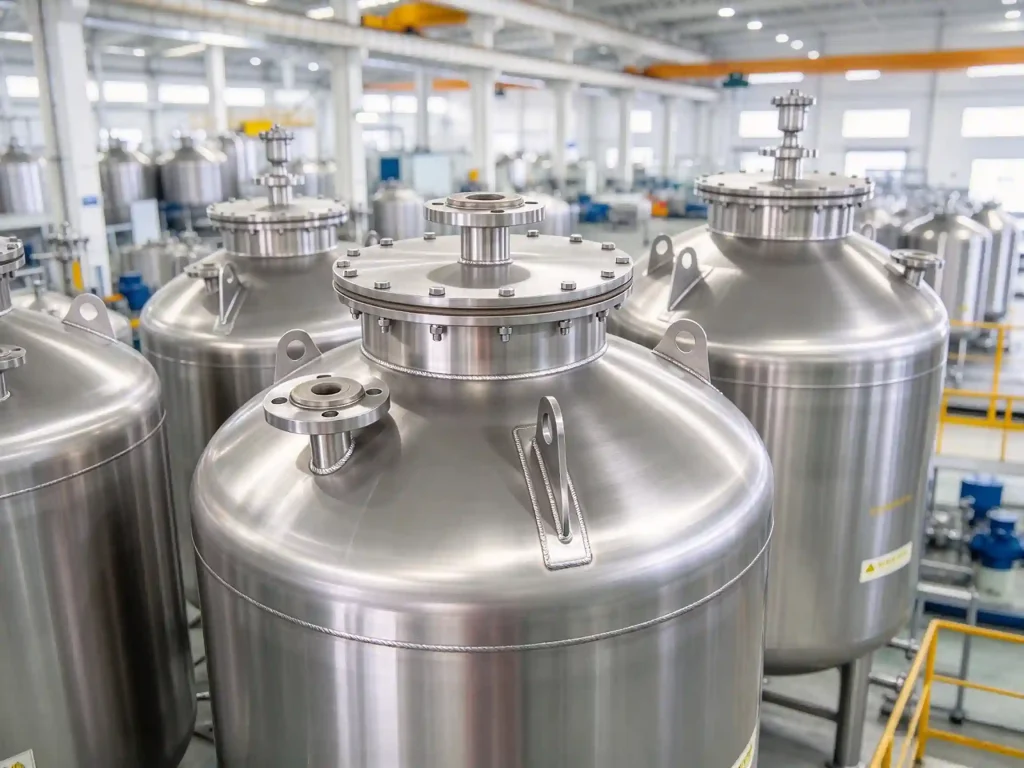
How Does Surface Treatment Affect Stainless Steel Water Tanks?
Stainless steel has good corrosion resistance, but the condition of its surface also affects how well it performs. During tank manufacturing, surface treatment helps improve the internal finish, making the tank easier to clean and maintain. This is particularly important for pure water storage, where surface cleanliness needs to be considered.
Mechanical polishing is often used to smooth the inside of a stainless steel tank. It removes surface irregularities and makes it harder for dirt and deposits to remain on the metal. A properly polished surface also makes routine cleaning easier, especially in tanks used for water storage.
For applications that require a finer surface finish, electropolishing may also be used. This process removes a thin layer of metal through an electrochemical reaction, reducing surface irregularities and improving the overall finish. It is commonly considered when a cleaner, smoother internal surface is required.
Pickling and passivation are also important, particularly after welding and fabrication. Pickling removes oxide scale, heat discoloration and other surface contaminants. Passivation, on the other hand, helps restore the protective chromium-rich oxide film on the stainless steel surface. Although both processes are used to improve surface condition, they serve different purposes and are not interchangeable.
Welding quality should receive the same attention as surface finishing. Heat generated during welding can leave oxide discoloration around joints and affect the protective surface layer. If these areas are not properly cleaned and treated, their resistance to corrosion may be reduced. Well-finished welds also help create a smoother internal surface, making it easier to clean the tank and remove any remaining deposits.
The choice of surface treatment depends on the stainless steel grade, fabrication process and requirements of the application. For pure water storage tanks, both the overall surface finish and the quality of welded areas should be considered during manufacturing.
Which Stainless Steel Grade Is Better for Pure Water Storage: SS304 or SS316L?
SS304 and SS316L are two common stainless steel options for water storage equipment. Both belong to the austenitic stainless steel family, but their chemical compositions give them different corrosion-resistant properties.
SS304 is a widely used stainless steel grade containing chromium and nickel. It provides good general corrosion resistance and is suitable for many water storage applications under normal conditions. Its combination of durability, availability and cost makes it a practical choice for a range of industrial tanks.
SS316L contains molybdenum in addition to chromium and nickel. Molybdenum improves resistance to pitting and crevice corrosion, particularly in environments where chloride exposure is a concern. The “L” indicates a low-carbon version of the alloy. Its lower carbon content helps reduce the risk of sensitization and related intergranular corrosion after welding.
So, is SS316L always better for pure water storage? No. The right choice depends on the water composition, operating temperature, cleaning chemicals and fabrication requirements. For many applications, SS304 may provide sufficient performance. Where chloride exposure or more demanding operating conditions are expected, SS316L may offer an additional level of corrosion resistance.
Choosing a higher-grade material does not replace the need for proper surface treatment and manufacturing control. Both the material and the finished tank should meet the requirements of the intended application.
Choosing the Right Stainless Steel Tank for Pure Water
Stainless steel is a common choice for pure water storage due to its corrosion resistance, durability and easy-to-clean surface. The chromium-rich passive film helps protect the metal, while proper surface finishing and welding contribute to the tank’s service life.
When comparing stainless steel tanks, buyers should consider more than just the material grade, such as SS304 or SS316L. The internal surface finish, weld quality, cleaning requirements and water conditions also affect how well a tank performs in actual use. A suitable material grade is important, but the details of tank manufacturing should not be overlooked.
A stainless steel tank can help protect water quality during storage, provided that its material and construction meet the requirements of the application. It should also be considered alongside the water treatment process, since storage conditions and system design can affect the quality of the finished water.
For buyers looking for a suitable storage solution, Molewater’s pure water storage tank is available in SS304 and SS316L. Different surface treatments can be selected according to application requirements, including mechanical polishing, pickling and sandblasting. According to the product specifications, the internal polishing accuracy is 0.3 μm, while the external finish is 0.6 μm. These specifications provide a clearer reference when evaluating the tank’s surface finish and manufacturing requirements.