
For construction sites, temporary camps, military operations, and emergency response projects, getting safe drinking water can be difficult when there is no municipal water supply nearby. Water trucks may be practical for short-term use, but regular deliveries can become costly and difficult when a site is far from the nearest town or a project continues for several months.
When a suitable local water source is available, the site may be able to treat and disinfect the water on site instead of relying entirely on deliveries. The right setup depends on the water source, treatment process, required capacity, and power supply.
The World Health Organization recommends managing drinking-water safety from the water source through to the point of use. This means the treatment process should be selected based on the quality of the source water and the risks at the site.
Start With an Available Water Source
The first step is to identify a suitable local water source.
In remote areas, there may be no municipal water supply, but rivers, streams, ponds, reservoirs, or other local sources may be available. These sources can provide raw water for treatment, provided they meet local requirements and can be safely accessed.
However, water from a natural source is not necessarily suitable for drinking. Surface water may contain microorganisms, suspended solids, and other contaminants. The WHO notes that untreated water from rivers, lakes, ponds, and streams can carry contamination risks.
The water should therefore be tested before the treatment system is selected. The required treatment will depend on the actual water quality, so a system that works for one source may not be suitable for another.
Treat the Water Before Drinking
Once a suitable source has been identified, the next step is to determine how the water needs to be treated.
A typical process may follow this general route:
Raw Water → Pretreatment → Filtration or Purification → Disinfection → Treated Water
Pretreatment can remove larger particles, sediment, and suspended solids. Further filtration or purification can then address smaller particles and other contaminants. Depending on the source water and the required water quality, technologies such as ultrafiltration or reverse osmosis may also be considered.
Disinfection is another important step when the water is intended for drinking. The exact method depends on the treatment system and water quality requirements.
There is no single treatment process that is suitable for every remote location. A better approach is to test the source water first and then select a treatment process that addresses the actual risks. This is consistent with the WHO approach to drinking-water safety, which emphasizes risk assessment and control throughout the water supply process.
Choose a Water Supply Method That Fits the Site
Without municipal water, there are several ways to provide water to a remote site. The right choice depends on the project duration, water demand, available infrastructure, and local water sources.
Water tanker delivery can be practical for short-term projects or locations where suitable local water is not available for treatment. However, the site remains dependent on regular deliveries. Long transportation distances can also increase operating costs and make supply less convenient.
A fixed water treatment plant can make more sense for a long-term project with a permanent location and sufficient infrastructure. It provides a stable treatment setup but requires space, installation, supporting facilities, and a suitable power supply.
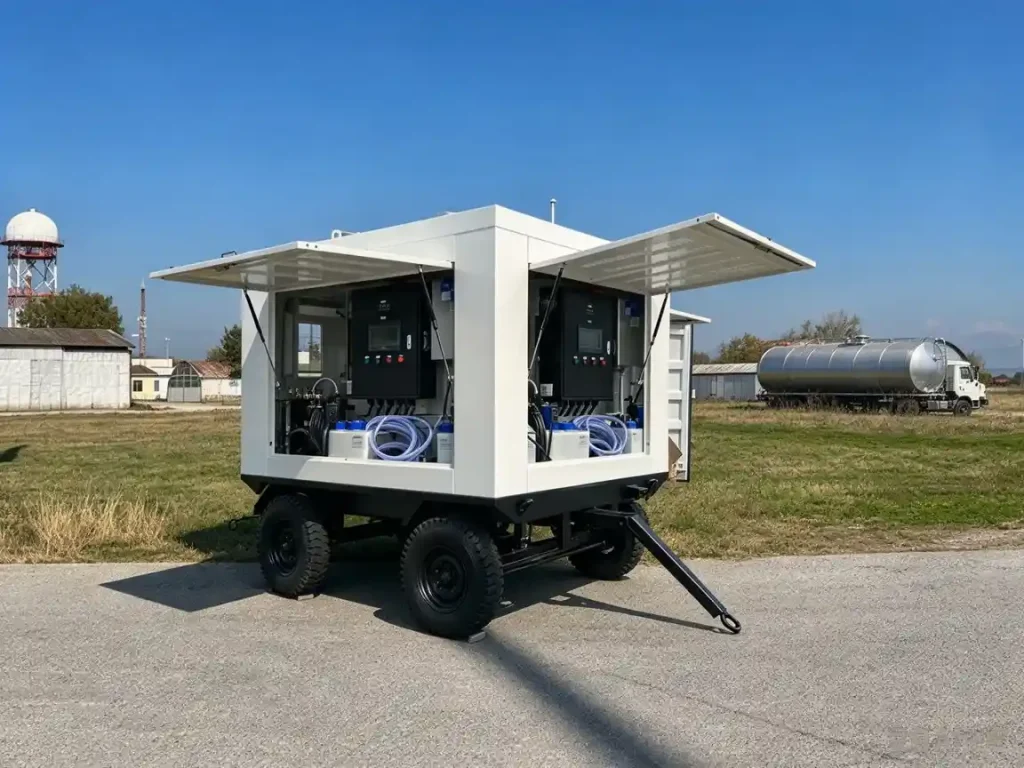
A mobile water treatment system is more suitable when the project needs flexibility. It can be transported to remote construction sites, temporary camps, disaster areas, or field operations and can treat available local water closer to where it is needed.
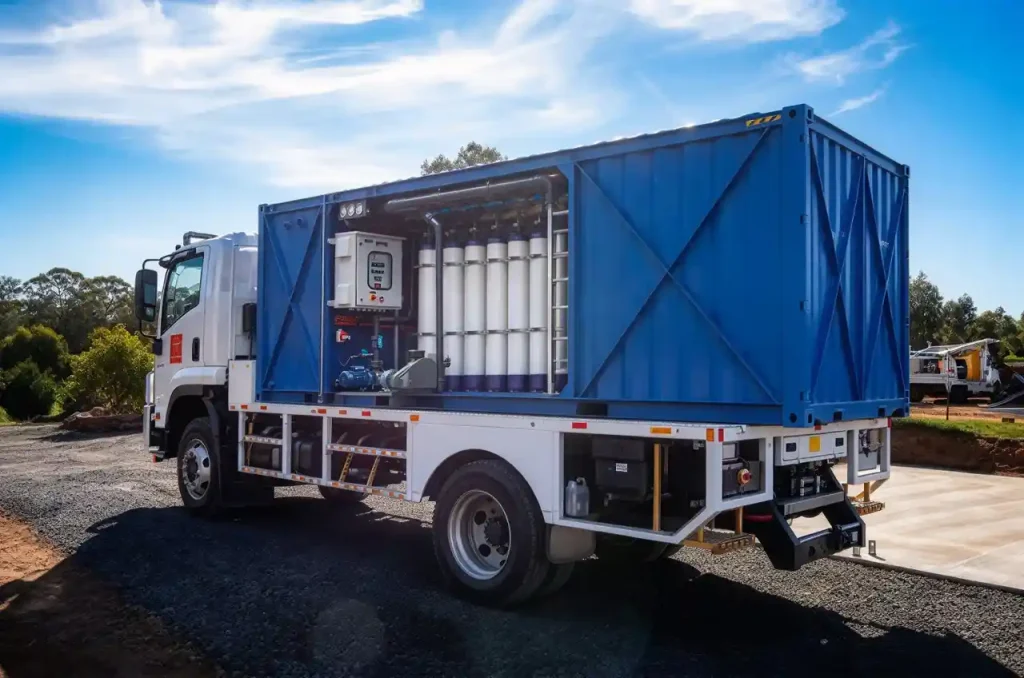
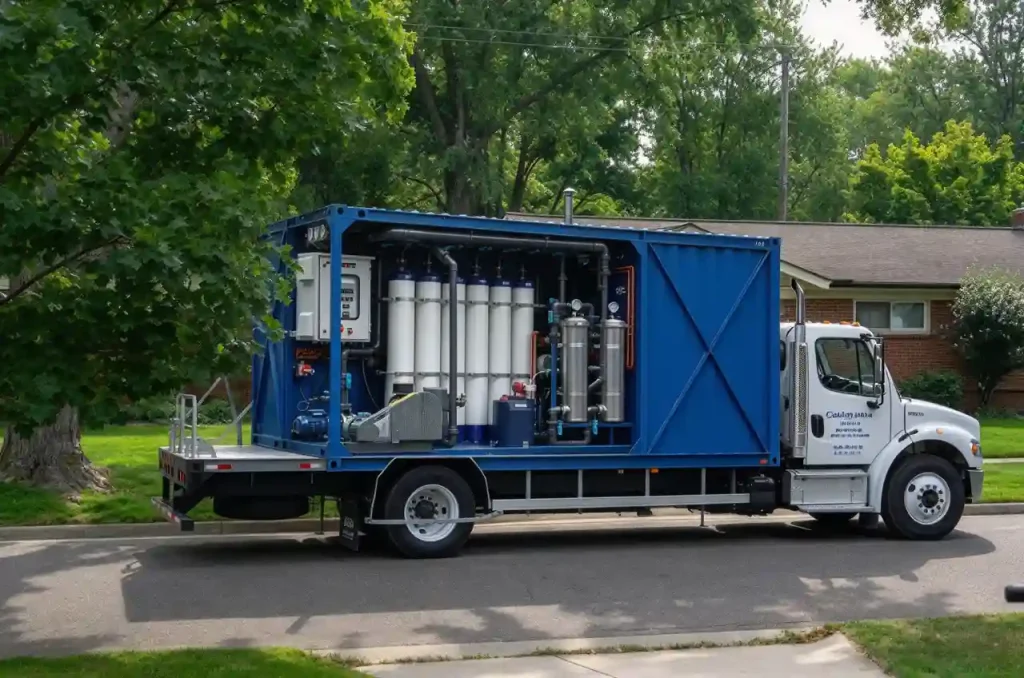
For sites that need both mobility and on-site treatment, a truck-mounted system can combine water intake, treatment, and power supply in one unit. Molewater’s Mobile Truck Mounted Drinking Water System is designed for remote and temporary applications and can draw water from sources such as streams, rivers, ponds, and reservoirs.
Consider Water Capacity and Power Requirements
Finding a treatment system that can process the water is only part of the decision. It also needs to produce enough treated water for the people and activities at the site.
Start by estimating the number of people the system needs to serve and how much water will be required each day. Drinking is the priority, but cooking, cleaning, bathing, and other uses may also need to be considered depending on the project.
For example, Molewater’s truck-mounted system has a stated capacity of 20–50 tons of water per day and a served population of approximately 100–150 people, depending on the system configuration.
Power is another consideration. Remote sites may not have a reliable connection to the electrical grid, so the treatment system needs an appropriate power source. Molewater’s system includes an onboard generator, allowing the equipment to operate without relying on an external power supply.
This can be particularly useful for disaster relief, field operations, and temporary projects where establishing permanent infrastructure is not practical.
When Is a Mobile Drinking Water System a Good Option?
A mobile drinking water system can be useful when a site has no convenient municipal water supply but has access to a suitable local water source.
It may be a good fit when:
The project is far from existing water infrastructure.
- The site is temporary or may move to another location.
- Transporting water over long distances is difficult or costly.
- A river, pond, reservoir, or other local water source is available.
- The site has limited access to external power.
- Drinking water needs to be available soon after the system is installed.
These conditions are common at construction sites, exploration projects, temporary camps, military field operations, and emergency response sites. Molewater offers truck-mounted drinking water systems for these types of applications, providing an option for treating and supplying water closer to where it is needed.
For a permanent site with stable infrastructure, a fixed treatment plant may still be the better choice. The value of a mobile system is its ability to bring the treatment equipment to the water source and the point where water is needed.
FAQ
How can you get drinking water in a remote area without municipal water?
A remote site can use a suitable local water source and treat it with an appropriate water treatment system. Rivers, streams, ponds, and reservoirs may be used as raw water sources when their quality and local conditions are suitable. The water should be tested and treated according to the required drinking-water standards.
Can river or pond water be treated for drinking?
Yes, but the treatment requirements depend on the quality of the source water. River and pond water may contain suspended solids, microorganisms, and other contaminants, so it should not be considered safe for drinking without appropriate treatment and disinfection.
What type of water treatment system is suitable for remote areas?
A mobile water treatment system can be suitable when the site lacks municipal water infrastructure and needs a flexible, deployable solution. Truck-mounted systems are particularly useful for temporary projects, emergency response, construction sites, and field operations.
How much water can a mobile drinking water treatment system produce?
Capacity varies by system and configuration. Molewater’s mobile truck-mounted drinking water system is listed with a capacity of 20–50 tons per day, with a stated served population of 100–150 people. The appropriate capacity should be selected based on the site’s actual daily water demand.