
Many plants install a water softener, see the hardness drop to near zero, and assume the boiler is protected. It’s a reasonable assumption, and for some boilers it holds up. For many others it doesn’t, and the damage tends to show up months later as scale, corrosion, or a tube failure.
This guide explains what softening does and doesn’t do, when softened water for a boiler is enough, and what to add when it isn’t. We’ll also cover how to check whether your boiler feed water treatment is working.
What Does a Water Softener Remove from Boiler Feedwater?
Softeners in common use rely on ion-exchange resin. This substitutes sodium for calcium and magnesium, the two main contributors to hard scale. This is important because even a thin scale layer works as an insulator for the heat transfer surfaces. The boiler uses more fuel to produce the same amount of steam, and metal can get too hot.
So softening is a solid first step in boiler feed water treatment. It just isn’t the whole job, because hardness is only one item on the list of boiler feed water requirements.
Why Softened Water May Still Cause Boiler Problems
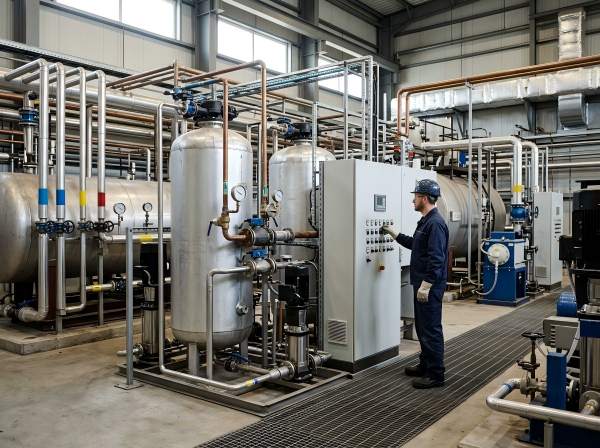
Softening swaps ions. It doesn’t clean the water. Here is what usually gets through:
Dissolved oxygen and carbonic acid. Both are still in solution and attack steel creating pitting of the boiler, feed lines and condensate pipes. These gases have to be removed, usually using a deaerator.
Dissolved salts with high TDS. The softener leaves the salt in the water. As steam is extracted from the boiler, the salts become more concentrated, which can lead to foaming, carryover and greater blowdown.
Particulates, silica and other pollutants. Silica can generate hard deposits and solids get suspended as sludge. Neither will a softener handle reliably.
The table below sums it up.
| Water quality parameter | Effect of conventional softening | Why it matters |
| Calcium and magnesium | Removed through ion exchange | Scale formation |
| Sodium salts | Generally remain | Contribute to TDS |
| Dissolved oxygen | Not removed | Corrosion |
| Silica | Generally remains | Deposits and scale |
| Suspended solids | Not reliably removed | Deposits and fouling |
| Carbon dioxide | Not removed | Corrosion |
When Is Softened Water Enough for a Boiler?
For low-pressure boilers with a high condensate return, softened water can be enough, as long as a few things line up.
Operating pressure comes first. The greater the pressure, the less a boiler can tolerate dissolved solids and silica. A low pressure fire-tube boiler is a lot more forgiving than a high pressure water-tube device.
Then there is the quality of the feedwater the boiler actually needs. Don’t assume your genuine test results are the same, check the limits for hardness, TDS, silica and oxygen.
Makeup water ratio also plays a part. If most of your feedwater is clean condensate and only a small percentage is new makeup, then the pollutants that get in are minimal. If you lose a lot of steam or return little condensate, the water coming in matters much more.
Finally, read your boiler manufacturer’s water quality requirements. They are the baseline, and they often affect warranty coverage too. In practice, many boiler problems start with a plant that never compared its water to that document.
Additional Water Treatment Options for Industrial Boilers
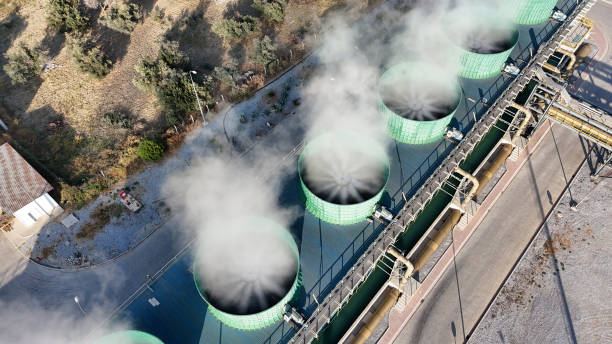
When softening doesn’t do the job, the typical industrial boiler water treatment adds one or more of these:
- Reverse Osmosis (RO): Removes most of the dissolved salts, silica and many other pollutants. It usually reduces TDS enough to make blowdown reduction noticeable.
- Deaeration: Mechanical removal of oxygen and carbon dioxide. Many steam systems have a deaerator as standard equipment.
- Ion Exchange / EDI: Demineralisation resins or electrodeionization produce very high purity water for high pressure boilers.
- Chemical Treatment: The rest is done by oxygen scavengers, scale and sludge conditioners and pH control products. Chemicals function best as a final coating rather than a good pretreatment alternative.
How to Check If Your Boiler Water Treatment Is Working
You don’t need a lab for most of this. A simple routine goes a long way:

Choosing Boiler Water Treatment Based on Water Quality
Softened water is a good start but it only addresses the hardness issue. Whether that is adequate depends on your boiler pressure, makeup water quality, condensate return and what the manufacturer recommends. If your tests show high TDS, silica or oxygen you will likely need RO, deaeration or chemical treatment in addition to that.
If you’re unsure where your system stands, Molewater can help you review your water analysis and match a treatment setup to your boiler. Reach out for a water quality assessment before problems show up in your tubes.