
A mobile water treatment system can produce anywhere from several cubic meters to several hundred cubic meters of treated water per day, depending on the system size and application. Commercial mobile drinking water systems, for example, are available at capacities of 20, 50, 100, 200, and 400 m³/day.
But what do these numbers actually mean at the project site?
For water, 1 m³ is approximately 1,000 liters. This means a 20 m³/day system can produce about 20,000 liters of treated water per day, while a 50 m³/day system can produce about 50,000 liters. Once the capacity is converted into liters, it becomes much easier to judge whether a mobile water treatment system is suitable for a construction camp, emergency response site, or remote project.
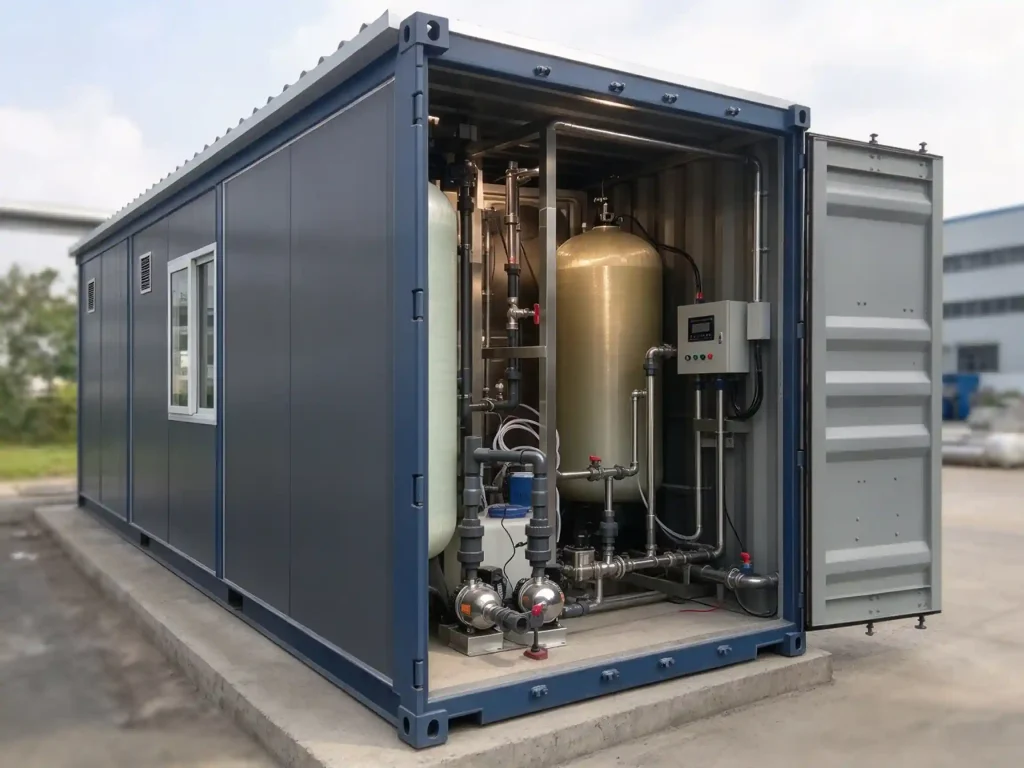
How Much Water Can a Mobile Water Treatment System Produce?
The daily output of a mobile water treatment system is normally expressed in m³/day, or cubic meters of treated water per day.
The capacity can vary considerably between systems. For example, Aquaworks lists mobile drinking water systems with capacities from 20 m³/day to 400 m³/day. Its 20 m³/day model produces about 1 m³ per hour when operated for 20 hours per day, while the 400 m³/day model produces about 20 m³ per hour under the same operating schedule.
Other mobile and containerized systems cover different capacity ranges. Some are designed for around 50–100 m³/day, while larger systems can reach several hundred cubic meters per day or more.
- 10 m³/day = 10,000 liters/day
- 20 m³/day = 20,000 liters/day
- 50 m³/day = 50,000 liters/day
- 100 m³/day = 100,000 liters/day
- 200 m³/day = 200,000 liters/day
- 400 m³/day = 400,000 liters/day
The right capacity depends less on the truck itself and more on how much treated water the site needs each day.
How Many People Can a Mobile Water Treatment System Supply?
Daily production becomes more useful when it is compared with daily water demand.
A simple calculation is:
Number of people = Daily water production ÷ Daily water requirement per person
For example, if a project uses 100 liters of water per person per day:
20 m³/day ÷ 0.1 m³/person/day = 200 people
Under the same assumption:
50 m³/day = about 500 people
100 m³/day = about 1,000 people
These figures are only examples because water requirements vary according to how the treated water will be used. A system supplying drinking water only will have a very different population capacity from one supplying drinking, cooking, bathing, washing, and other domestic uses.
Commercial mobile systems sometimes provide their own population references based on a specific water-use assumption. For example, Aquaworks lists its 20 m³/day system for about 200 people based on 100 liters of domestic water per person per day.
This is why looking at m³/day is usually more useful than relying on a general statement about how many people a mobile water treatment system can serve.
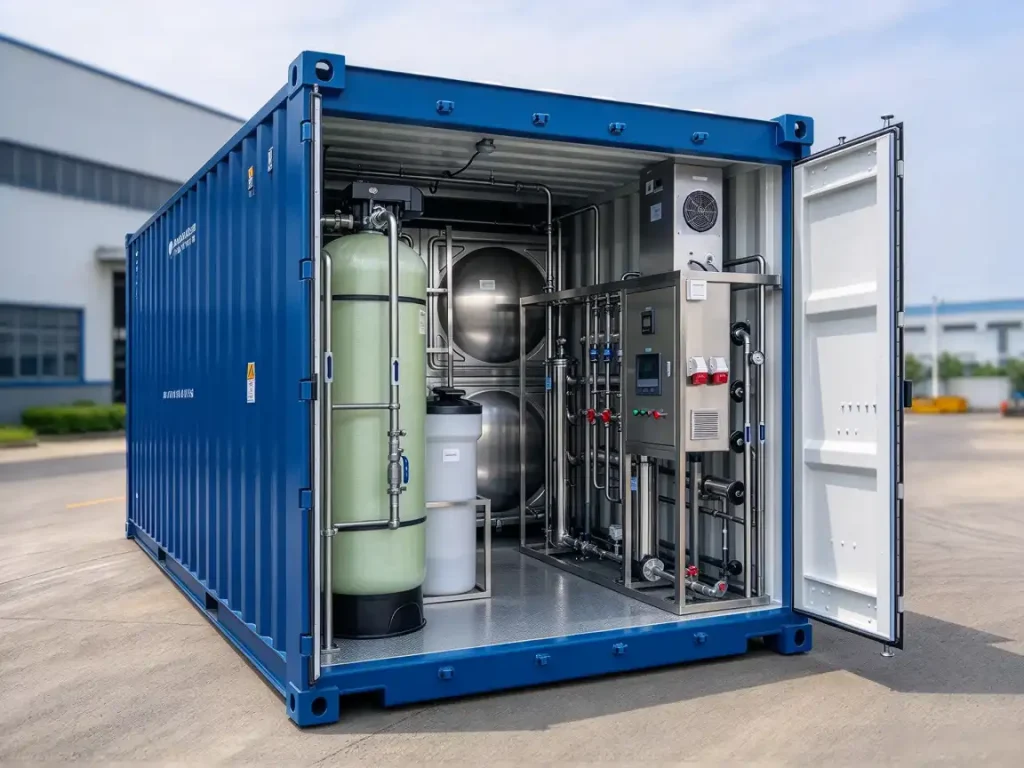
How Much Water Does a Construction Camp Need Per Day?
A construction camp is a good example of where daily treatment capacity needs to be calculated carefully.
Suppose a temporary camp has 150 workers and the project estimates a total water requirement of 100 liters per person per day.
The calculation would be:
150 × 100 liters = 15,000 liters/day
That equals:
15 m³/day
A mobile water treatment system with a rated capacity of 20 m³/day would therefore have enough theoretical production capacity to cover this calculated demand, while a 50 m³/day system would provide considerably more capacity.
The calculation changes if the camp has more workers or higher water consumption. For example, 300 workers using 100 liters each would require approximately 30 m³/day.
This simple calculation can help project managers narrow down the required capacity before discussing the exact treatment equipment.
How Much Water Can a Vehicle-Mounted Emergency Water Treatment System Produce?
A vehicle-mounted emergency water treatment system can also be designed at different production capacities depending on the scale of the emergency and the intended use.
For a smaller emergency site, a system producing 20 m³/day provides approximately 20,000 liters of treated water per day. A 50 m³/day system provides about 50,000 liters, while a 100 m³/day system provides about 100,000 liters.
The number of people supported depends on the amount of water allocated to each person.
For example, if an emergency project calculates a basic requirement of 50 liters per person per day:
20,000 ÷ 50 = 400 people
50,000 ÷ 50 = 1,000 people
These are capacity calculations rather than fixed service-population figures. Emergency projects may have different requirements depending on whether the water is intended for drinking only or also for food preparation, hygiene, and other uses.
Mobile treatment systems are particularly useful in these situations because the treatment equipment can be brought closer to the water source and the affected population. Some systems are built directly into trucks or trailers, while others use mobile containerized equipment.
Does Daily Treatment Capacity Equal Actual Water Output?
No. If a mobile water treatment system is rated at 50 m³/day, this means the system is designed to treat up to approximately 50 cubic meters per day under its specified operating conditions. It does not necessarily mean that the site will collect exactly 50,000 liters of usable treated water every day.
For example, the system may operate for fewer hours than its rated schedule. Treatment, cleaning, maintenance, or other operating requirements can also reduce the amount of water produced during a particular day.
This distinction is important when choosing equipment. A project requiring 20 m³/day should not automatically select a system rated at exactly 20 m³/day without considering how the equipment will actually be operated.
A 20–50 m³/day Mobile Water Treatment System Is Enough?
A capacity of 20–50 m³/day is suitable for looking at relatively small to medium temporary water supply requirements.
For example:
20 m³/day = approximately 20,000 liters/day
50 m³/day = approximately 50,000 liters/day
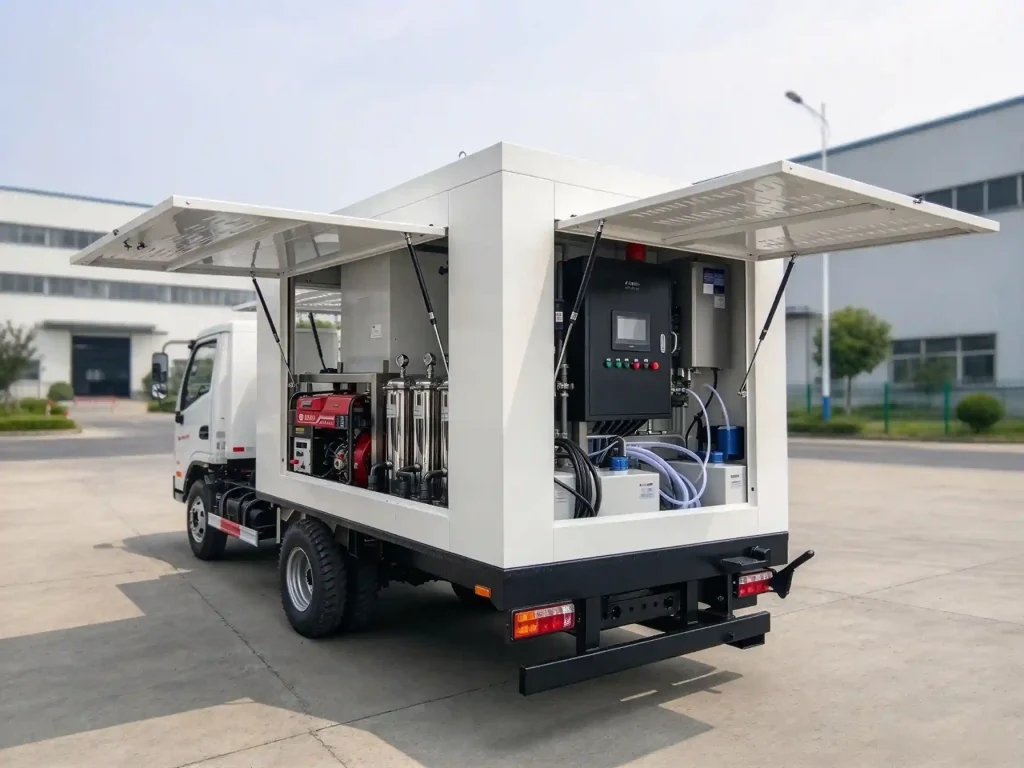
Molewater’s current Mobile Truck Mounted Drinking Water System is rated at 20–50 tons/day, which is approximately 20–50 m³/day for water. The system lists a reference served population of 100–150 people and positions the system for emergency relief, military applications, construction sites, exploration projects, and temporary camps.
The system can draw raw water from sources such as streams, rivers, ponds, and reservoirs and is equipped with an onboard generator for operation where external power may not be available.
Whether this capacity is sufficient for a particular project should still be checked against the site’s actual daily water requirement.
Conclusion
Choosing the right mobile water treatment capacity starts with understanding how much water a site needs each day. For example, 150 people using around 100 liters of water per day would need about 15 m³ of treated water. It is also worth leaving some extra capacity so the system does not have to operate at its maximum output all the time.
If you are considering a mobile water treatment system for a construction camp, remote work site, temporary settlement, or emergency water supply project, start by estimating the site’s daily water demand and then choose a system with enough capacity to meet it. For smaller applications, 20 m³/day may be sufficient, while larger sites may require 50, 100 m³/day, or more. If you need a compact truck-mounted drinking water solution, Molewater’s 20–50 m³/day mobile water treatment systems are worth considering.