A high Total Dissolved Solids (TDS) levels in industrial water systems pose not just a nuisance, they can pose a significant danger to operational efficiency. From pipe and boiler scaling corrosion to a compromised purity of the product high levels of dissolved minerals could cause massive system failures and a rise in maintenance costs. To keep their performance at its peak facilities need to choose the best treatment method depending on their individual requirements. Below we evaluate the leading industrial methods for reducing TDS, providing an engineering-focused comparison to help you optimize your water treatment strategy and protect your long-term capital investment.
What is TDS in Water and Why Does it Matter?
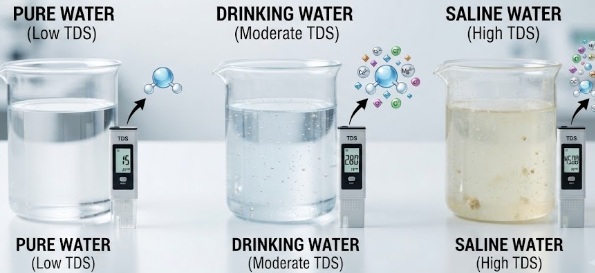
TDS (Total Dissolved Solids) is basically the total amount of all dissolved materials in water, mostly inorganic plus organic stuff. Think minerals, salts, even small metals, all mixed in. It’s usually shown as milligrams per liter (mg/L) or sometimes parts per million (ppm). Either way, it’s a pretty key signal for water quality, not just a random number.
In industrial environments, TDS levels dictate the chemical stability of water. For instance, the presence of high TDS in the boiler feed water causes rapid scaling. This acts as an insulator, decreasing the efficiency of heat transfer and causing the system to use more energy. In the lab or in electronics manufacturing, even tiny amounts of dissolved solids could affect the delicate processes. Knowing your TDS in your water TDS can be the initial step towards avoiding “hidden” operational losses.
Industrial Methods to Reduce TDS in Water
There isn’t a “one-size-fits-all” solution for TDS reduction. The decision is contingent on the quality of the influent water as well as the required purity level and the budget for operation. Here is a list of the four most effective methods.
1. Reverse Osmosis (RO)
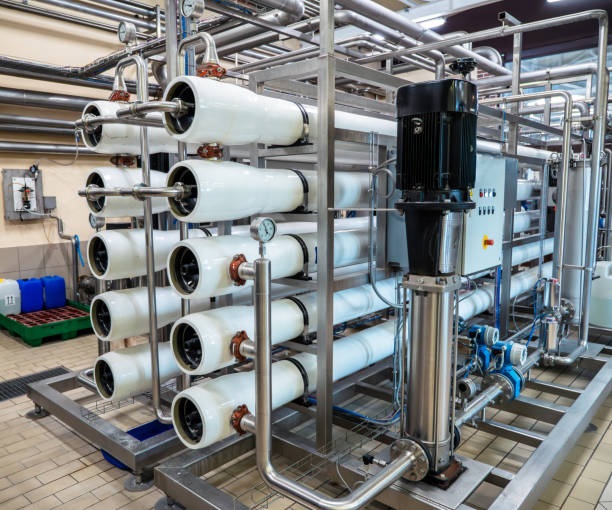
Reverse Osmosis is currently the most effective method for industrial TDS reduction. Through the use of high pressure to push fluid through a semi-permeable membrane RO systems are able to eliminate 95% to 99 %of dissolving Ions.
Ideal for municipal wastewater treatment and boiler feed pretreatment as well as general process water for industrial use.
The main benefit: It is a solid, continuous-duty system which is adept at eliminating the broad range of contaminants such as heavy metals and dissolve salts.
Engineering Notification: RO performance is heavily dependent on the prior treatment (such as sediment removal and dosing of antiscalants) to stop membrane fouling.
2. Ion Exchange (IX)
Ion Exchange systems use resin beads to exchange undesirable Ions (like magnesium and calcium) to beneficial ones (like sodium or hydrogen).
Ideal for High-purity and water polishing that softens when TDS must be decreased to levels that are close to zero.
Benefits: Exceptional performance in getting rid of specific ionic contaminants.
Engineering Notification:Unlike RO, IX systems require periodic chemical regeneration with brines or acids, which adds complexity to operations and discharge management.
3. Electrodeionization, EDI
EDI is one of those continuous process things that mixes ion exchange resins, ion exchange membranes and an electrical current to take out ionized species.
Best For: making high-purity water, in pharmaceutical work, power generation sites, and semiconductor operations.
Key Advantage: it can keep running continuously, without having to use chemical regenerants, so it’s more environmentally friendly, and also highly automated.
Engineering Note: EDI is often treated as a kind of “polishing” step, downstream of an RO system, to land at mega-ohm type water purity.
4. Distillation
Distillation is basically boiling water up, so it turns into steam, then you condense that steam back into liquid again, while the solids are left behind.
Best For: those specific, low volume lab needs, or specialized high purity uses.
Key Advantage: it can make very high purity water even when the incoming mineral mix is kind of all over the place.
Engineering Note: distillation takes a lot of energy, and it tends to have a high carbon footprint, so it s not a great fit for big scale industry now a days, especially in energy conscious facilities.
Technical Comparison Matrix
| Technology | Typical TDS Removal | Energy Consumption | Maintenance Needs | Primary Application |
| RO | 95-99% | Moderate | Low-Moderate | Industrial Processes |
| IX | >99% | Low | High (Regeneration) | Polishing / Softening |
| EDI | >99% | Moderate | Very Low | Ultra-Pure Water |
| Distillation | >99.9% | Very High | Moderate | Specialty Labs |
Selecting the Right Strategy for Your Facility
To identify the most efficient method to reduce TDS within your facility, it’s vital to establish an approach to decision-making based on data that ensures that the technical requirements are balanced with the long-term feasibility of operation. Take a look at these four elements:
Define Precise Quality Targets
Your treatment goals should be determined by the application used for end-use. For example boiler feed water generally requires a substantial TDS reduction in order to prevent scaling and to improve the efficiency of heat transfer. A 90% reduction using RO is usually sufficient. However, precise lab settings, manufacturing of semiconductors or pharmaceutical processes typically require near-zero conductivity, which makes 99.9% removal unaffordable. The clear definition of these thresholds will prevent any system failure and engineering.
Analyze Source Water Chemistry
The composition of the water you use to make your influent is the main factor that determines the lifespan of your equipment. Groundwater with a high amount of silica or boron concentrations or extreme hardness can have a substantial scaling possibilities. Before you install the RO device, it is essential to perform a thorough analysis of the water to determine whether additional pretreatment for antiscalant treatment, like doses or water softening is necessary to avoid fast membrane fouling and irreparable damage.
Evaluate Total Cost of Ownership (TCO)
Go beyond the initial capital expenditure (CAPEX) to evaluate the long-term costs of operation (OPEX). Although RO systems typically require an initial investment, they generally have lower recurring costs when compared to chemical-intensive Ion Exchange (IX) processes. The factors such as energy consumption as well as the frequency of chemical regeneration and the cost of disposal for waste are crucial in determining the actual lifetime value.
Future Scalability
Plan for your facility’s expansion. Modular systems, like RO and EDI can allow for continuous expansion when the demand for water increases. However, traditional systems, such as large-scale distillation units do not have this flexibility and usually require the complete overhaul in order to increase output. Modular technology will ensure that your infrastructure will remain a flexible asset.
Reducing TDS in water is a precision-engineering task that directly impacts your facility’s bottom line. If you’re utilizing the efficacy of Reverse Osmosis or the utmost pureness of EDI The choice of technology must be compatible with your own specific specifications for quality and operational requirements. With a focus on data-driven choice and monitoring of the system’s performance will make sure the water treatment system is an asset that can be used to compete instead of a maintenance burden. Be sure to ensure that the design of your system is supported by a precise analysis of your feed water to ensure the durability and durability of the equipment you use for treatment.