While data centers have always been known for their heavy electricity use, water is emerging as this similarly essential resource. AI workloads and high density computers are pushing out more heat, and so the cooling systems are getting under this unprecedented demand. The water that goes into these cooling systems is also receiving growing attention, even if most people don’t notice it directly.
The challenge is not just volume. It is quality. If the cooling water chemistry is off, you get scale formation, bacterial growth, and corrosion. Those issues quietly reduce heat transfer efficiency long before any alarm shows up. Water must be treated and managed properly to operate cooling loops efficiently. Water treatment is still one of the weakest links for facilities trying to balance sustainability with uptime.
This guide examines actual water quality issues affecting data center cooling reliability, water treatment options to address them, and operational procedures to maintain long-term system stability.
The Hidden Reality of Data Center Water Use and Thermal Demands
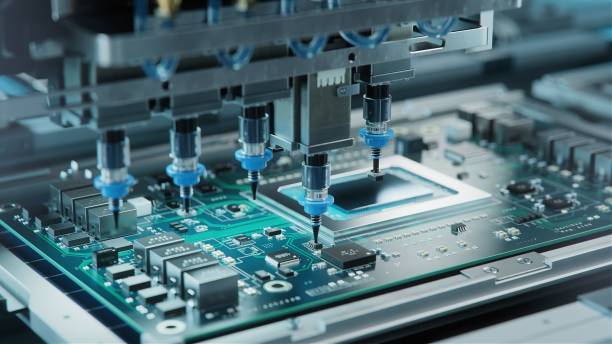
Today’s data centers are fundamentally different from those of a decade ago. All that heat has to go somewhere and the rise of AI training and high-performance computing has pushed rack density well beyond what traditional cooling was built to handle. For most large facilities, a significant portion of it ends up being transferred through water-based cooling systems operating under continuous load.
Water availability is becoming increasingly constrained in many regions. Industry water use is being restricted in drought-stricken, densely populated areas, placing data center operators in a bind.
In many climates, enhancing Power Usage Effectiveness (PUE) sometimes means implementing more evaporative cooling, which if not adequately controlled, can result in higher water use.
This is where Water Usage Effectiveness (WUE) becomes relevant. WUE measures how much water a facility consumes per unit of IT energy used. Improving WUE is not simply about using less water. It is about using water more efficiently, and that depends directly on how well the cooling water is treated.
- Soaring rack densities: AI and HPC workloads generate sustained, concentrated heat that demands continuous, high-capacity data center cooling with little tolerance for degraded performance.
- Regional water scarcity: In areas with consumption restrictions, poor treatment that forces frequent blowdown and high makeup water demand can put a facility in breach of local limits.
- The WUE vs. PUE trade-off: Evaporative cooling improves PUE but increases WUE if Cycles of Concentration (CoC) are not optimized through proper cooling water treatment.
How Water Quality Issues Threaten Cooling Reliability
Early warning signs are often subtle, such as a chiller working harder than usual or a gradual decline in heat exchanger performance. By the time the damage is visible, the damage is done. The four failure modes most common in practice are:
- Mineral scaling on heat exchangers: Calcium, magnesium, and silica that are dissolved in the makeup water can slowly precipitate when temperatures climb, and then they start forming a rough hard insulating coat on the heat transfer surfaces. Even a thin mineral layer still acts as a thermal barrier and cuts down heat transfer efficiency a lot. That also makes chillers draw more energy to do the same job.
- Biological growth and biofilms: Warm cooling tower environments can support microbial growth, including Legionella, if water treatment is not properly maintained. Biofilms coat heat exchange surfaces and reduce thermal conductivity faster than hard scale, while also creating a public health concern that operators cannot afford to ignore.
- Corrosion of piping and chillers: When total dissolved solids (TDS) are high and pH is unstable, metal surfaces can corrode over time. This may show up as pinhole leaks, early pipe failure and expensive chiller damage. Basically, the system just deteriorates in a slow but expensive way.
- Particulate and sediment build-up: Dust from the air, corrosion by-products and suspended solids all build up over time. Suspended solids tend to clog strainers, increase wear on pump impellers and limit flow rates throughout the cooling loop over time.
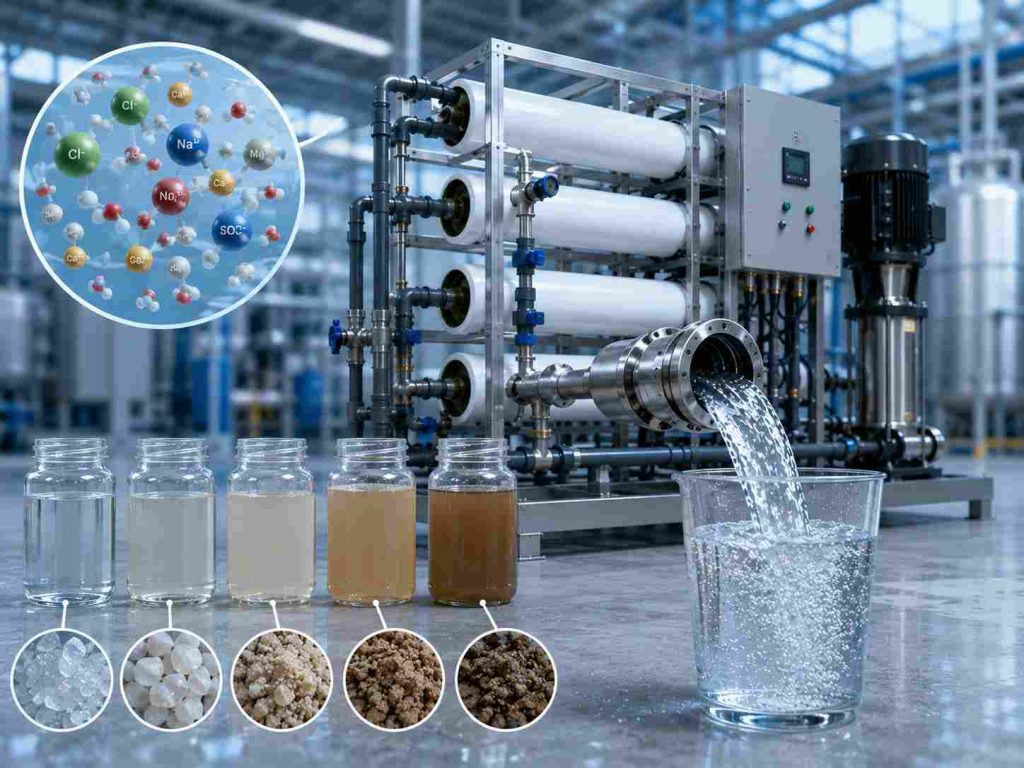
These problems often reinforce one another. Instead of reactive troubleshooting, a proactive treatment approach is necessary to stay ahead of all four.
Building a Water Treatment Strategy for Reliable Cooling
There is no single fix for cooling water quality. Effective data center water treatment relies on combining pre-treatment, filtration, chemical control, and water reuse in a coordinated system.
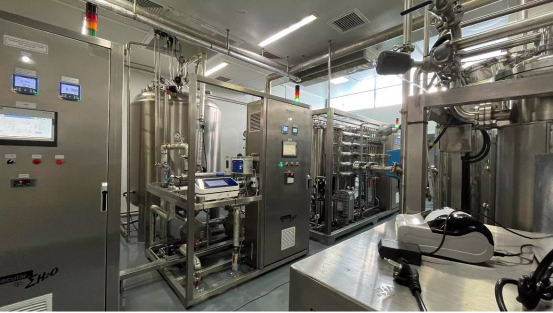
- Improve makeup water quality: Reverse osmosis (RO) eliminates dissolved salts before entering the cooling loop. Higher possible CoC and lower scaling risk are often obtained with cleaner makeup water. Thus, blowdown volume can be minimized, reducing total water use.
- Control suspended solids: Continuous side-stream filtration through media or microsand filters removes fine suspended solids from a portion of the recirculating water. This helps prevent sludge build-up in low flow areas, and decreases abrasive wear on pumps and valves.
- Maintain stable water chemistry: Manual dosing becomes increasingly unreliable in high-density cooling systems. Automated dosing platforms instead use real-time conductivity, pH and ORP readings to fine tune scale inhibitor and biocide feed. This makes chemical usage more effective and keeps protection coverage steady.
- Increase water reuse: Take purified blowdown water, treat greywater, or harvest stormwater and use it as makeup water. That reduces reliance on fresh potable water, while maintaining appropriate water quality.
The table below summarizes how these approaches address specific cooling water challenges:
| Cooling Water Challenge | Recommended Treatment | Primary Benefit |
| Mineral scaling | RO + softening + scale inhibitors | Maintains heat transfer efficiency and supports higher CoC |
| Biological growth | Biocides + automated dosing | Reduces biofilm and microbiological risks |
| Suspended solids | Side-stream filtration | Prevents fouling and maintains stable flow |
| Corrosion | pH and conductivity control | Extends equipment lifespan and reduces leaks |
| High freshwater demand | Water reuse + optimized CoC | Lowers makeup water consumption and improves WUE |
Operational Best Practices for Long-Term Cooling Reliability
Getting the treatment technology right is only part of it. Sustained data center cooling reliability depends on how those systems are operated day to day.
- Optimize Cycles of Concentration (CoC): Increasing CoC can significantly decrease makeup water requirement but the system must have a clean enough feed water to manage the higher mineral load without scaling. This usually means that you have to decide collectively about softening or RO upstream.
- Monitor water quality continuously: Weekly manual testing is not frequent enough to catch the rapid chemistry shifts that can occur during hot weather or changes in municipal supply. Automated sensors tracking conductivity, pH, and ORP give operators the visibility to respond before problems develop into equipment damage.
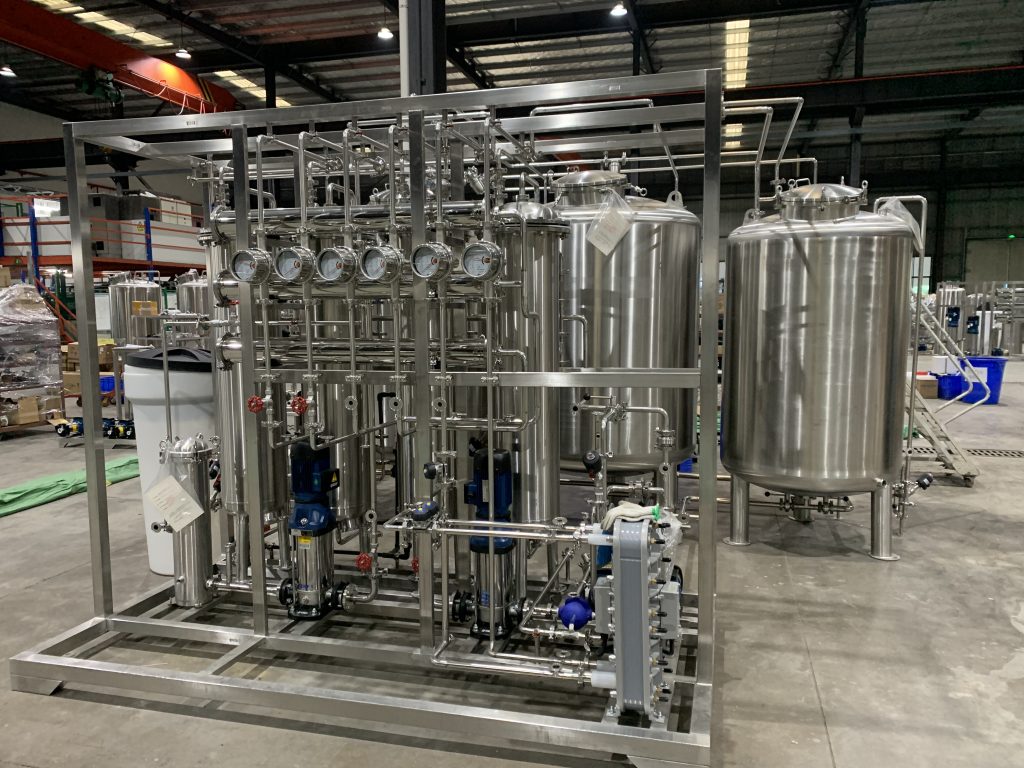
- Design for future capacity growth: Data centers rarely remain the same size for long. Planning in advance for pre-engineered filtration and pure water skids that can be updated or expanded without disturbing active cooling loops is increasingly important, particularly as AI infrastructure demand continues to grow.
- Prepare for seasonal water quality changes: Municipal water chemistry varies seasonally. Hardness, silica levels and organic content may vary greatly from season to season, particularly in areas that switch from surface water to ground water supplies. Review the treatment system setpoints periodically to stay in step with these developments.
Reliable Cooling Starts with Better Water Treatment
Cooling performance and water treatment are no longer separate concerns for data center operators. As rack densities rise and Water Usage Effectiveness becomes a key sustainability metric, the quality of water inside the cooling loop matters just as much as the cooling equipment itself.
Molewater has over 20 years of experience designing and manufacturing industrial water treatment systems. Whether you are dealing with scaling problems inside a current cooling tower set up, or mapping out the water treatment infrastructure for a brand new facility, our team can help you put together a solution. Contact us to talk through your particular needs.