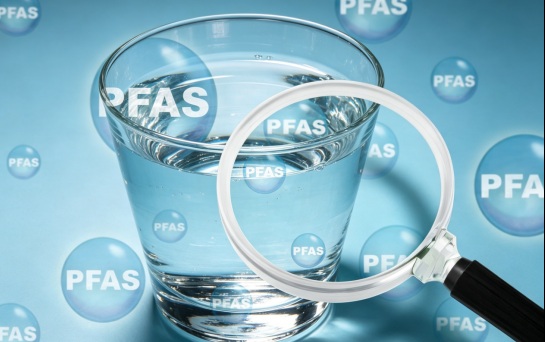
PFAS, they’re commonly called “forever chemicals,” have become a big concern for both industrial and home water safety, mostly because they stick around so long and have real health effects. With rules changing worldwide, people are starting to wonder, can PFAS really be taken out of our water supply? The short answer is YES, if the right technical setup is used. So lets look at the key removal methods,Reverse Osmosis, Ion Exchange, and Activated Carbon, so you can choose a fit solution that supports compliance, stays dependable, and peace of mind.
What Are PFAS and Why Are They Difficult to Remove?
Per- and polyfluoroalkyl substances, or PFAS, are a kind of chemicals that have an unusually strong carbon to fluorine bond. That connection is the reason they shrug off heat, water, and oil, and it also means they can linger in the environment for a long time, almost not breaking down at all.
Since PFAS molecules are so stable and they can show up in super tiny amounts, the usual water cleanup steps—like plain sediment filters, or basic screening—do basically nothing. Real removal usually needs water treatment systems that can catch these compounds at a microscopic scale, so more advanced purification stages are required.
Comparison of Effective PFAS Removal Technologies
Choosing the “best fit” depends a lot on what your water quality goals actually are and also how large the operation is.
| Technology | Best For | Pros | Cons |
| GAC (Activated Carbon) | Long-chain PFAS | Cost-effective, simple | Less effective on short-chain PFAS |
| RO (Reverse Osmosis) | Comprehensive Removal | Superior multi-contaminant removal | Requires high pressure/waste water management |
| IX (Ion Exchange) | High-Capacity/Industrial | Highly selective for PFAS | Higher capital expenditure |
- Granular Activated Carbon (GAC): GAC kinda works by adsorption, PFAS molecules get stuck in the pores within the carbon media. It stays a pretty popular option for municipal, large scale use cases, though you may end up swapping the media more often when the problem is nasty with certain short chain PFAS variants , or just complicated mixtures.
- Reverse Osmosis (RO): RO relies on a semi permeable membrane , so contaminants are physically rejected as water passes through. It is often treated as the gold standard for water that needs very high purity, and it can remove most PFAS isomers, which is why it fits laboratories and production lines where small tolerances really matter .
- Ion Exchange (IX): IX resins act like a chemical magnet , and they’re built to swap ions in order to capture PFAS. This method is very effective for industrial environments where you have huge water flow rates to process, while still needing high precision every time.
How to Choose the Right Technology for Your Needs
Choosing the right PFAS removal approach isn’t just a quick decision—it really needs a strategic review that matches your existing setup and the exact water-quality goals you’re aiming for. Moving from broad awareness into real remediation means you have to pick a method that fits your operating scale, plus your purity expectations.
Residential & Office Use
In homes and office spaces, a multi-stage Reverse Osmosis, or RO system usually delivers the best tradeoff between cost and effectiveness. This arrangement acts like a very solid safeguard; it helps remove PFAS along with a range of other dissolved solids, so you get safer high quality drinking water overall.
Laboratory & Research Environments
In spaces where compliance is basically non-negotiable, systems have to line up with strict expectations like ASTM D1193. To keep the extreme purity levels needed for sensitive analytical work, you end up needing an integrated system, not just a single step.These advanced configurations combine RO technology with specialized polishing resins to eliminate trace contaminants that might otherwise compromise research results.
Industrial Production
For large-scale manufacturing, Ion Exchange (IX) technology is often the superior choice. IX systems provide the high throughput capacity essential for manufacturing processes. Furthermore, these systems are designed to be modular, allowing for scalability to meet the specific flow rate demands and volume requirements of your facility, ensuring consistent and reliable water purification at an industrial scale.
Why Molewater Are the Professional Choice
At Molewater, we get it that PFAS remediation is not some “one-size-fits-all” thing. Our method is based on systems engineering more than simple filtration, and honestly, it needs that deeper view.
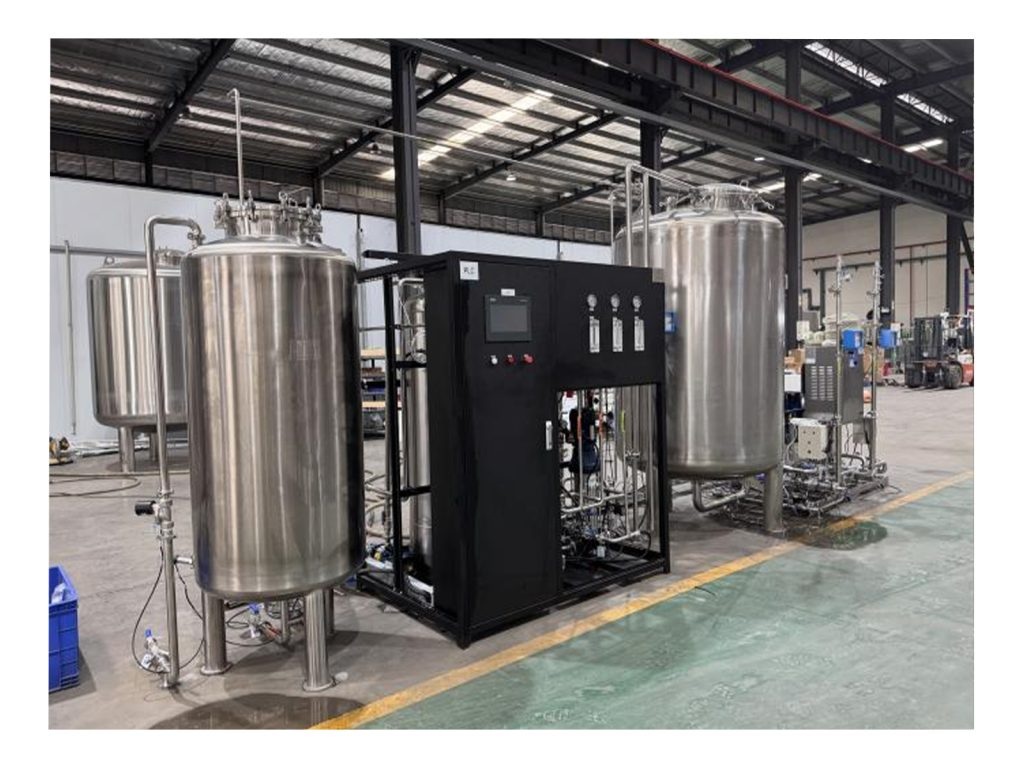
Our drinking water systems are built with Integrated Purification Technology in mind. We combine high-rejection RO membranes with tuned media stages. Together, they form a steady safeguard against PFAS rules that keep changing over time.
The systems also use modular design, so we can set them up for particular situations, like varying incoming water quality. Even with that flexibility, they still stay compact enough for both labs and industrial sites.
Maintenance and Long-Term Reliability
- Preventive Monitoring: We recommend the incorporation of online conductivity as well as pressure sensor to the water systems you have. These tools offer real-time data which allows you to determine the moment when a resin bed is at capacity, before a breakthrough occurs.
- Professional Lifecycle Support: Above and beyond the delivery of equipment, Molewater provides an extensive support service, making sure that replacements of your media and membrane cleans are done in the most efficient time and effectively reduce the overall cost and maximising security.
PFAS elimination is a crucial requirement. It doesn’t matter if you’re protecting an academic facility, manufacturing line for a factory or even a workplace with the appropriate technology, you can ensure that water is a reliable asset instead of an expense. When you move to a non-reactive approach and moving towards an integrated, professional system, you ensure for the long-term future of your business.
Do you require a professional evaluation of your water purification needs? Take a look at our high-performance products in the Molewater Drinking Water System and let our engineering team create an efficient system that will meet your particular standards for purity and compliance.