A cooling tower looks simple enough: water evaporates, heat is eliminated and the system keeps working. But if you’ve had to grapple with tenacious scale on the fill media, a heat exchanger that continues corroding, or a blowdown valve that seems to be constantly open, you already know the reality is more challenging.
Most cooling tower water problems can be traced back to one source: the quality of the makeup water entering the system. We will discuss what makeup water treatment actually is, how concentrated minerals silently destroy your system, the warning indications that your treatment is no longer keeping up, and how to choose the right treatment solution for your case.
Why Cooling Tower Makeup Water Quality Matters
What Is Cooling Tower Makeup Water?
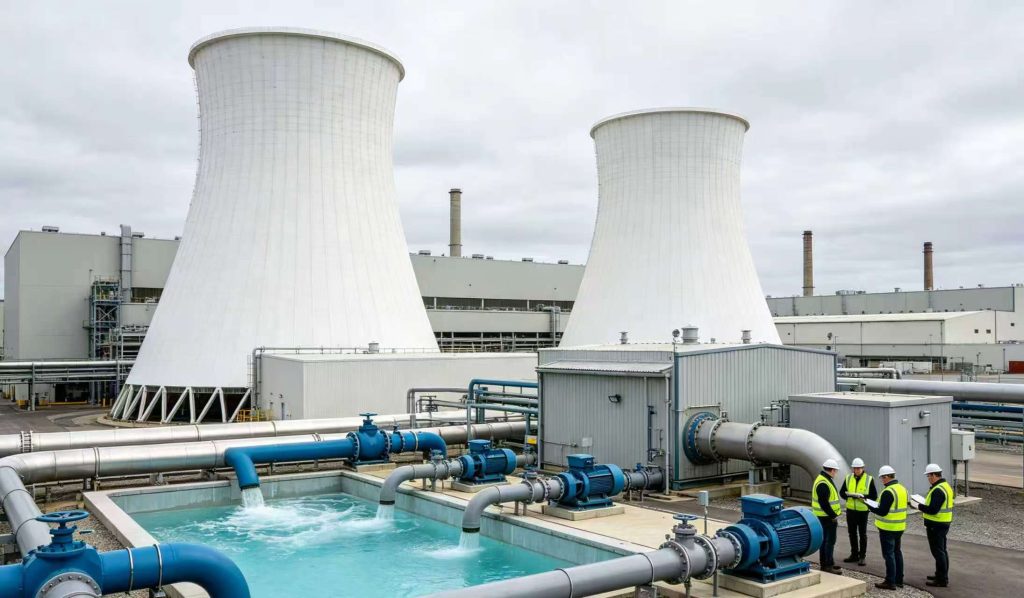
Cooling tower makeup water is basically the fresh water that gets added, to replace the water lost from the system due to evaporation, drift and blowdown. Makeup water for a cooling tower is usually between 1% and 3% of the circulating water volume per hour, depending on the system size and load.
So whether you take it from a municipal supply, a well, or a surface intake, each source has its own mixture of dissolved minerals , and also possible contaminants and those differences start to matter once the water is concentrated inside the system.
Why Water Quality Problems Become Worse Over Time
When water evaporates from a cooling tower, the dissolved minerals it carries do not evaporate with the water. They remain, and over time they start to become more concentrated in the circulating water.
This is described by Cycles of Concentration (CoC), which measures how much more concentrated the circulating water becomes compared with the incoming makeup water.
Once the CoC hits 4, dissolved solids can approach roughly four times the concentration of the makeup water. At that point, a water supply with moderate hardness can quietly turn into a serious scaling problem. High silica levels can significantly boost the chance of stubborn scale, which becomes hard to clean out. Iron fouling may also restrict the flow and help drive blockages. And the higher organic matter content, in turn, tends to encourage microbial growth, plus biofilm formation.
This concentration effect is the fundamental reason why minor cooling tower water quality issues eventually evolve into costly operational failures.
The table below outlines the most common makeup water issues and where they tend to lead:
| Makeup Water Issue | Typical Cause | Impact on Cooling Tower | Possible Treatment Direction |
| High hardness | Calcium & magnesium | Scale buildup | Softening or RO |
| High TDS | High CoC / Mineral accumulation | Frequent blowdown | RO or partial desalination |
| High silica | Groundwater source | Hard-to-remove deposits | RO or silica reduction |
| Iron & manganese | Well water | Fouling and staining | Oxidation + filtration |
| Organic matter | Surface water | Biofouling | Pretreatment + filtration |
4 Signs Your Makeup Water Treatment Needs Improvement
If you’re unsure whether your current treatment strategy is still effective, here are four important signals to pay attention to:
- Persistent scale buildup: If you keep seeing white chalky deposits on heat exchanger surfaces or in fill media, even after chemical dosing, it usually means that the hardness or silica in your makeup water is exceeding the capacity of your treatment. Scale acts as an insulator and lowers the heat transmission efficiency over time.
- Frequent blowdown: Blowdown is normal, but if you are dumping water much more often than your CoC objective would suggest, TDS is probably going up faster than the system can handle. This generally indicates makeup water quality that the existing treatment system simply can’t handle.
- Recurring corrosion: If corrosion keeps showing up even when inhibitors are being used the right way, it could be that the makeup water holds too many chlorides, or that the pH is not staying steady , so the system can’t really maintain stable water chemistry.
- Increasing chemical demand: Constantly increasing dosages to achieve the same results is a red flag. Poor quality makeup water with a high mineral load means the chemical programme has to work harder and increases operating expenses, without addressing the real problem.
Should You Upgrade the Treatment Process or Simply Adjust Chemicals?
This is the question most operations teams eventually face, and the right answer depends on how serious the situation actually is.
When Chemical Treatment Is Still Enough
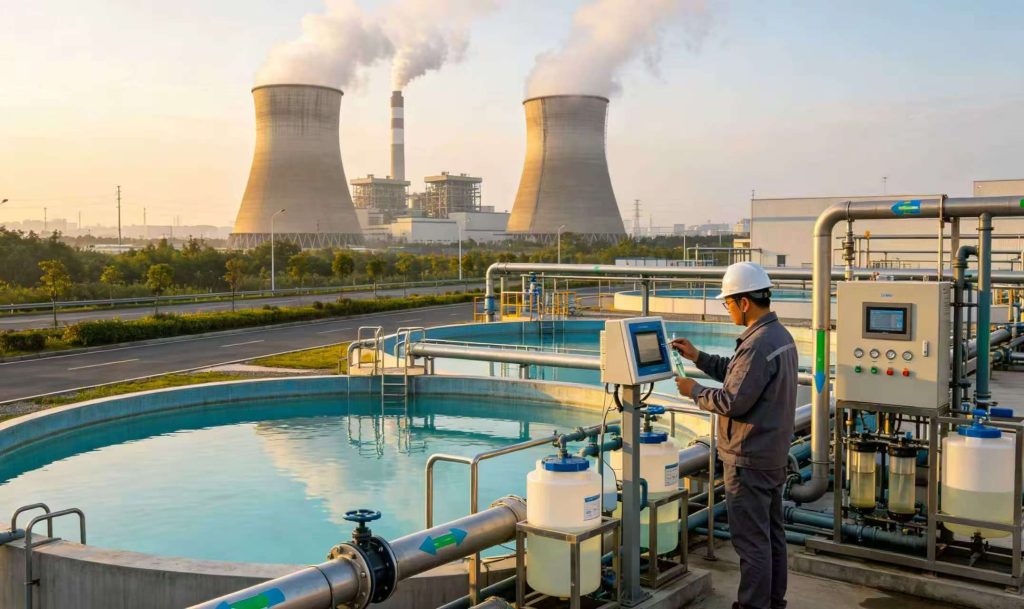
If your source water quality is generally acceptable and problems are mild, refining the chemical program can be the right move. Scale inhibitors, corrosion inhibitors, and biocides work well when the dissolved solids load isn’t excessive. For moderately hard municipal supplies with stable TDS, a well-managed chemical program may be all you need.
When Is It Time to Improve Makeup Water Treatment?
There are situations where chemicals alone become a losing battle. It’s worth considering an upgrade to your makeup water treatment for cooling towers when:
- Scale or corrosion persists despite optimized chemical dosing
- Your water source has changed and quality has noticeably shifted
- The system needs to run at higher cycles of concentration to reduce water consumption
- Silica levels in the source water are consistently elevated
- You’re pulling from a well with significant iron or manganese content
Treating the problem at the source is almost always more cost-effective than continuously compensating with higher chemical spend.
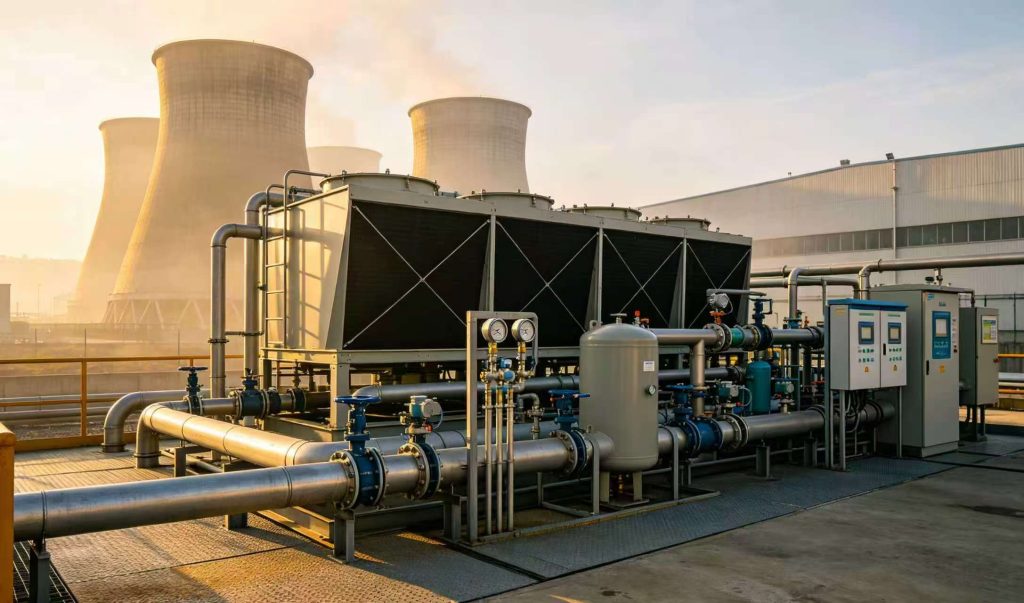
Choosing the Right Makeup Water Treatment for Your Cooling Tower
The right solution depends entirely on what’s in your source water. There is no universal answer, and selecting equipment without a proper water analysis first is one of the most common and costly mistakes in practice.
Choose Based on Your Source Water Quality
Begin with a detailed study for hardness, TDS, silica, iron, manganese, pH and microbial load. This data will guide you to the most appropriate treatment strategy by identifying the substances actually causing your cooling tower water quality concerns.
Common Treatment Technologies
| Technology | Removes | Best For | Limitations |
| Water Softener | Hardness | Scale prevention | Doesn’t remove TDS |
| Reverse Osmosis (RO) | TDS, silica, hardness | High-quality makeup water | Higher upfront investment |
| Multimedia Filtration | Suspended solids | Surface water pretreatment | Doesn’t remove dissolved salts |
| Iron & Manganese Removal | Iron & manganese | Well water | Requires an oxidation stage |
In many cases, combining technologies delivers the best outcome. Multimedia filtration paired with RO works well for surface water sources, while a softener plus a targeted chemical program may be sufficient for moderately hard municipal supplies. The goal is to match the solution to the actual water, not to over-engineer or undershoot.
Better Cooling Starts with Better Makeup Water
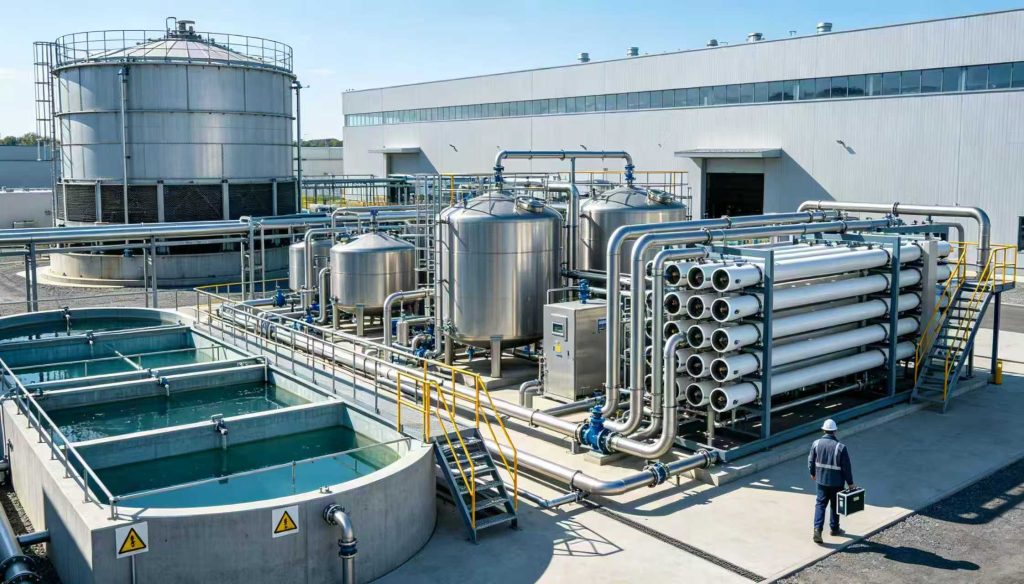
Cooling tower water treatment is not only about which chemicals you add. It really begins with the quality of the water before it enters the system. If makeup water quality is poor, no chemical approach, however well planned, can fully compensate for poor source water quality, leading to higher maintenance costs, unplanned downtime, and unnecessary water consumption.
Getting the makeup water right is the foundation of a stable, efficient system. If you are dealing with persistent water quality problems, contact Molewater to assess your source water and design a treatment solution tailored to your actual setup.