
Ultrafiltration (UF) is used in many industrial processes to remove suspended solids, colloids, macromolecules, emulsified substances, and other larger contaminants from water and liquid streams. Instead of relying on a conventional filter, UF uses a membrane to separate these substances from the treated liquid, providing more consistent filtration. This makes it suitable for applications such as wastewater treatment, process water treatment, and water recovery.
UF is used in a variety of industries, including metal processing, mining, food and beverage, chemical manufacturing, pharmaceuticals, textiles, electronics, and automotive production. Depending on the process, it can be used to treat wastewater, recover usable water, reduce the load on downstream treatment systems, or prepare feed water for reverse osmosis (RO).
The design of an industrial UF system depends largely on the characteristics of the feed water and the required treatment result. For example, a system used to treat oily wastewater may require a different membrane configuration and pretreatment process than a UF system used to prepare water for an RO system.
How Ultrafiltration Works in Industrial Applications
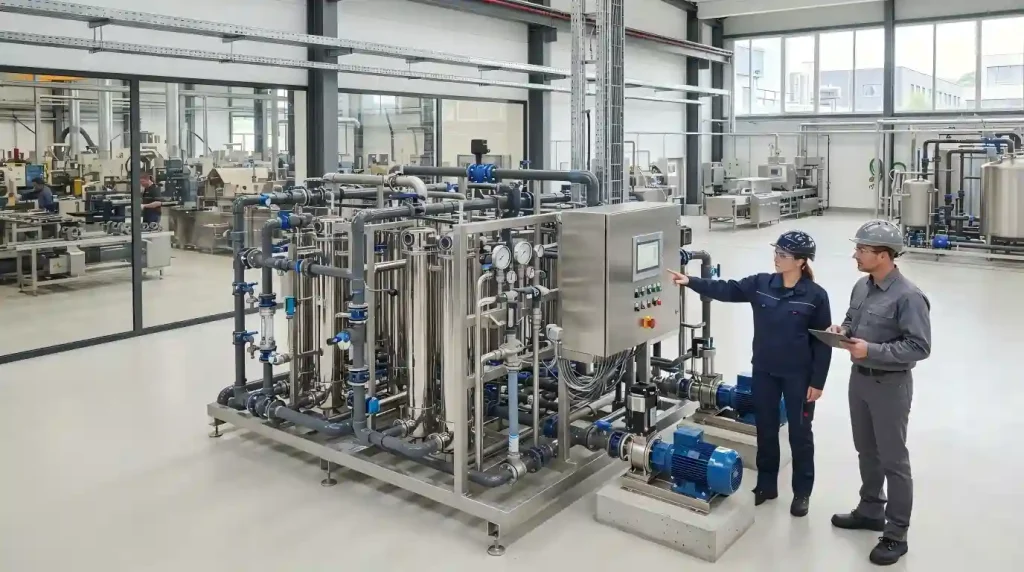
Ultrafiltration is a pressure-driven membrane process. Feed water is pressurized and passed through a membrane. Larger contaminants are retained on the membrane side, while water and smaller dissolved substances pass through as permeate.
UF can remove suspended solids, colloids, emulsions, bacteria, and high-molecular-weight organic matter. However, it is not designed to remove dissolved salts and other small dissolved compounds as effectively as reverse osmosis (RO).
Depending on the application, UF can be used as a primary treatment step or as pretreatment before RO and other downstream processes. System design is based on factors such as feed-water quality, required permeate quality, flow rate, and the intended use of the treated water.
Related Reading:How Does the Ultrafiltration Process Work in Water Treatment?
Ultrafiltration System Components and Key Parameters
An industrial UF system typically consists of membrane modules, feed and circulation pumps, valves, pressure and flow instruments, piping, control components, and a membrane cleaning system. Depending on the feed water, pretreatment may also be needed to reduce solids, oil, and other substances that could cause membrane fouling.
Membrane material and module design are important when selecting a UF system, but they are not the only factors to consider. The system also needs to match the feed-water conditions, operating pressure, cross-flow rate, temperature, membrane pore characteristics or molecular weight cut-off (MWCO), and cleaning requirements.
Flux is commonly expressed in LMH (liters per square meter per hour) and indicates the amount of permeate produced per unit of membrane area over a given period. A higher flux does not always mean better performance. When the feed contains high levels of suspended solids or organic matter, excessive flux can accelerate fouling and increase cleaning frequency.
Recovery is another factor that should be determined according to the application. There is no single recovery rate that works for every UF system, as the practical range depends on the feed-water composition, rejected material, and treatment objective. Where the application is critical, feed-water testing or pilot testing can provide a more reliable basis for setting operating conditions.
Common Industrial Ultrafiltration Applications
Industrial Wastewater Treatment & Water Reuse
Industrial wastewater is a common application for ultrafiltration. Depending on the manufacturing process, wastewater may contain suspended solids, colloids, emulsified oil, metal hydroxides, organic matter, and other contaminants that are difficult to remove with conventional filtration alone.
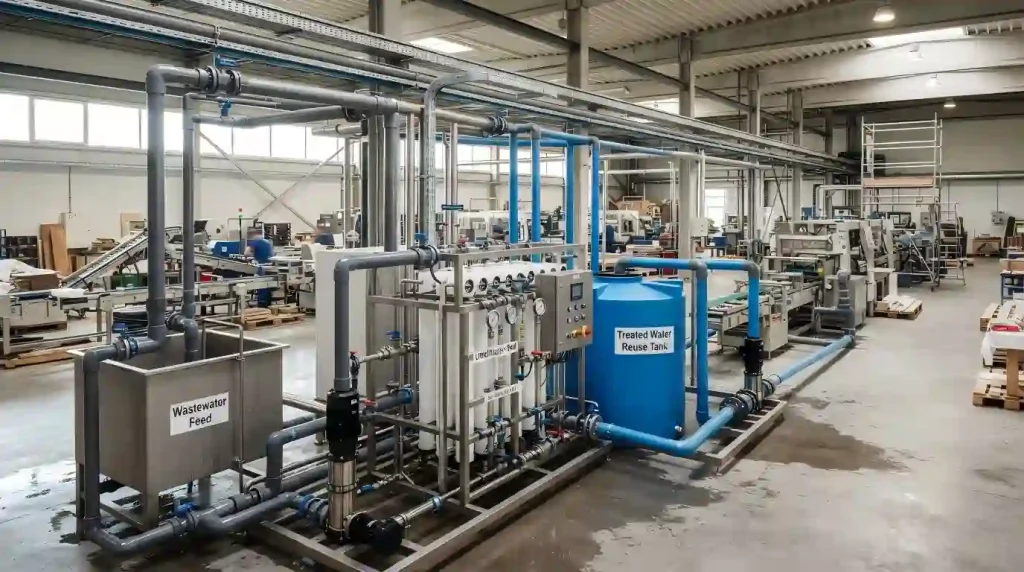
UF is often installed after biological or chemical treatment to further reduce suspended and colloidal contaminants. It can also be part of a water reuse system, with the permeate sent to reverse osmosis (RO) or other downstream treatment when lower dissolved-solids levels are required.
Water reuse is also gaining attention in manufacturing as companies work to reduce freshwater consumption and wastewater discharge. The U.S. EPA lists applications such as manufacturing, cooling systems, microchip production, automotive manufacturing, and oil and gas operations as areas where industrial water reuse can be applied.
UF operating conditions need to match the wastewater being treated. Relatively clean process water may allow for higher flux, while wastewater with high solids or organic loading usually requires lower flux and more effective pretreatment. For this reason, UF system sizing should be based on actual feed-water quality, not flow rate alone.
Metal Processing & Mining
Wastewater from metal processing can contain metal hydroxides, fine particles, emulsified oils, and other contaminants from cutting, washing, plating, and surface treatment. UF can remove many of these suspended and colloidal materials, producing permeate for further treatment or, where suitable, process water reuse.
In mining, membrane filtration may be used when water contains high levels of fine suspended solids and certain metal-containing contaminants. Mine water can vary considerably in composition, however, so membrane selection and pretreatment should be based on actual water analysis rather than a standard system design.
UF has also been studied for mine-water treatment and reuse. The U.S. EPA has documented research using ultrafiltration to treat acid mine water, with high water recovery reported under the tested conditions. These results provide a useful reference, but actual performance will depend on the feed-water chemistry and operating conditions of each site.
In metalworking plants, UF can also be combined with other treatment processes to recover process water or concentrate selected materials for further handling.
Food & Beverage Processing
Food and beverage production uses large amounts of water, and the resulting wastewater can contain proteins, fats, oils, suspended solids, and other organic matter. UF is used in wastewater treatment and process-water recovery, and it can also be applied to certain food-processing streams.
Dairy processing is a common example. Membrane filtration can separate and concentrate proteins while allowing water and smaller components to pass through. The same approach can be used for other liquid food products when clarification or concentration is needed.
In wastewater treatment, UF acts as a physical separation step to reduce suspended and colloidal contaminants before further treatment. If the treated water will be reused, additional processes may be needed to meet the quality requirements of the intended application and local regulations.
Power Generation
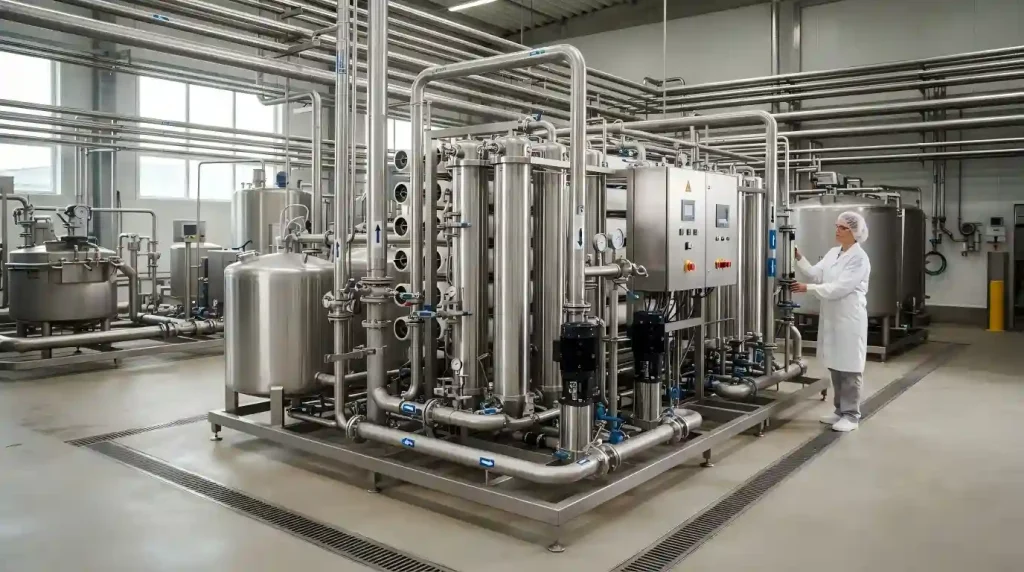
Power plants use water for cooling, boiler feed systems, process operations, and other plant needs. UF can be used to treat surface water, wastewater, and other feed streams before further treatment.
UF is commonly used as pretreatment for reverse osmosis (RO). By reducing suspended solids and colloidal matter, it helps lower the solids load entering the RO system and can provide more consistent feed-water quality for downstream membrane treatment.
Petrochemical Refining
Refinery wastewater can contain oil, suspended solids, organic compounds, and other contaminants, with the composition varying between different process streams. UF can be used to remove emulsified oil and suspended material before further treatment.
The required UF setup depends on the wastewater characteristics. Streams with high oil content or stable emulsions may require more effective pretreatment and operating conditions suited to the specific feed.
Chemical Processing
Chemical manufacturing wastewater can vary widely in composition, depending on the production process and chemicals involved. UF can be used to remove suspended solids, colloids, emulsified materials, and other high-molecular-weight substances from suitable process streams.
Chemical compatibility needs careful consideration when selecting a UF system. The membrane material, seals, and cleaning chemicals should be compatible with the actual feed composition and cleaning conditions used at the plant.
Oil & Gas
Oil and gas operations generate produced water and process wastewater containing oil droplets, suspended solids, organic matter, and other contaminants.
UF can be used in oil-water treatment and water reuse systems to reduce suspended and emulsified contaminants. It is often combined with upstream oil separation and downstream treatment to achieve the water quality required for discharge or reuse.
Pharmaceutical & Healthcare
Pharmaceutical manufacturing and healthcare processes often have strict water-quality requirements. UF can be used to reduce particles and microorganisms and may also serve as pretreatment in a multi-stage water purification system.
For pharmaceutical applications, UF system design needs to account for the required water grade, validation procedures, cleaning methods, and applicable quality standards. Membrane selection should be based on these requirements as well as the feed-water conditions and system capacity.
Municipal Water Treatment
Municipal water treatment plants use UF for surface-water treatment, drinking-water production, and water reuse. It is well suited to applications that require reliable removal of suspended solids and microorganisms.
In advanced water reuse systems, UF or microfiltration can be combined with reverse osmosis (RO) and disinfection. Singapore’s NEWater system is a well-known example, using microfiltration or ultrafiltration, reverse osmosis, and ultraviolet disinfection as part of the treatment process.
Pulp & Paper
Pulp and paper mills produce wastewater containing fibers, suspended solids, color, organic matter, and other contaminants from the production process.
UF can remove suspended and colloidal materials and help recover water for suitable process applications. Depending on the feed-water characteristics and treatment requirements, UF can be integrated with biological treatment, chemical treatment, or reverse osmosis (RO).
Textile & Dyeing
Textile wastewater can contain dyes, fibers, suspended solids, surfactants, and other chemicals from the production process. UF is mainly used to remove larger suspended and colloidal contaminants from suitable wastewater streams.
UF can also be used in water-recycling systems, but dissolved dyes, salts, and other low-molecular-weight substances may pass through the membrane and require further treatment. In dyeing plants, UF is therefore commonly combined with other treatment processes to achieve the required water quality for discharge or reuse.
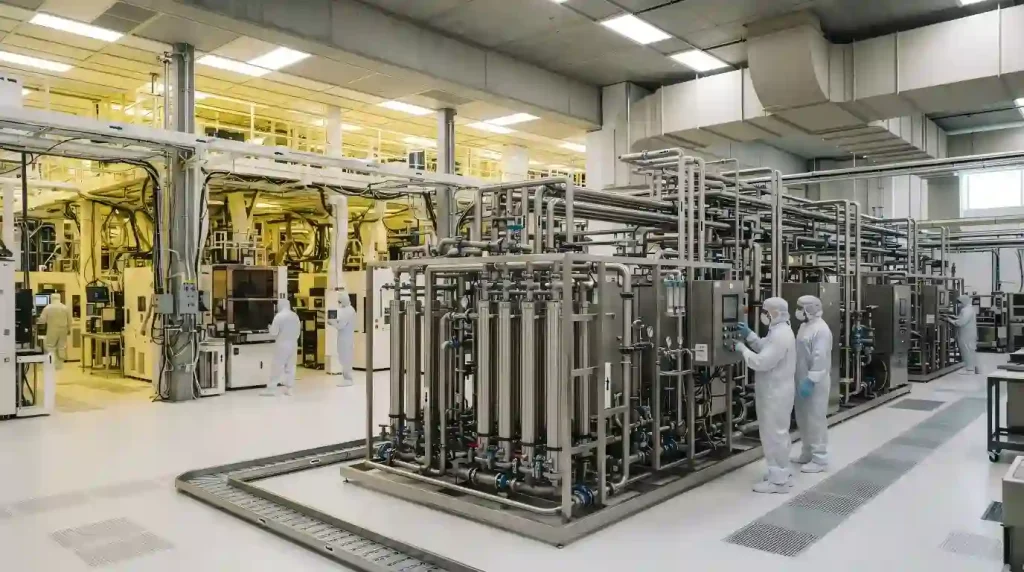
Semiconductor & Electronics
Semiconductor and electronics manufacturing requires high-quality process water, while its wastewater can contain fine particles, chemicals, and residues from production processes.
UF can remove fine suspended particles and is often used as pretreatment before higher-purity water treatment. In water-reuse systems, UF may be combined with reverse osmosis (RO), ion exchange, or other polishing processes to meet the required water quality.
Clean operation is especially important in semiconductor applications, where even small amounts of contamination can affect downstream processes. Membrane materials, system design, and cleaning procedures should be selected with these requirements in mind.
Automotive Manufacturing
Automotive plants use water for machining, painting, washing, surface treatment, cooling, and other production processes. The resulting wastewater can contain oil, metal particles, paint residues, and suspended solids.
UF is commonly used to treat oily wastewater and recover process water. It can remove emulsified oil and suspended contaminants, helping reduce the load on downstream treatment equipment.
For water-reuse projects, UF can be applied to specific process streams based on their water quality and treatment requirements. Separating different wastewater streams can also make pretreatment and membrane operation easier to manage than treating all plant wastewater together.
How to Choose an Ultrafiltration System for Different Applications
Choosing an industrial UF system starts with the feed water, not just the required flow rate. A water analysis should cover suspended solids, turbidity, oil and grease, organic matter, dissolved solids, pH, temperature, and other contaminants that may affect membrane performance.
The treatment goal also needs to be clear. A UF system for wastewater treatment may have different requirements from one used for process-water reuse, RO pretreatment, product concentration, or material recovery. These requirements affect membrane selection, pretreatment, operating flux, recovery, and cleaning frequency.
Flow rate is still important for system sizing, but it should be considered together with feed-water quality. Water with high solids or organic loading may require more membrane area, lower operating flux, or additional pretreatment to control fouling.
For wastewater with complex or changing characteristics, pilot testing can help establish practical operating conditions before a full-scale system is designed. It can provide useful information about membrane fouling, cleaning requirements, achievable flux, recovery, and permeate quality.
Talk to Molewater About Your UF Application
If you are planning a UF system for industrial wastewater treatment, process-water reuse, RO pretreatment, or another application, Molewater can help evaluate the treatment requirements based on your actual feed-water conditions.
Send us your water analysis, required flow rate, and treatment objective to discuss the appropriate UF membrane and system configuration for your project.