Most RO system problems don’t announce what they are. Pressure creeps up, permeate flow drops, and the instinct is to clean the membranes — which makes sense. But how you clean matters just as much as when you clean.
Use an acid-based cleaner on a biofouling problem, and you’ve done almost nothing useful. Run an alkaline or oxidizing clean on a calcium carbonate scaling issue, and you might actually make things worse. The wrong treatment doesn’t just fail to solve the problem — it can accelerate membrane degradation and push you toward an early replacement that shouldn’t have been necessary.
That has a direct cost. Membrane replacement, unplanned downtime, and the labor involved in repeated cleaning cycles add up quickly. In industrial RO systems, misdiagnosis is one of the most common reasons membrane lifespan falls well short of manufacturer expectations.
There’s also a longer-term risk. Fouling and scaling that goes unresolved — or gets repeatedly treated with the wrong chemistry — creates compounding damage. What started as a recoverable situation becomes permanent flux loss.
So before reaching for a cleaning protocol, the more important question is: what’s actually happening inside the system? That’s what this article is about.
What Is Scaling in RO Systems?
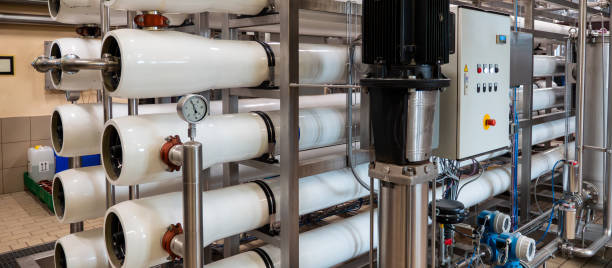
Scaling is what happens when dissolved salts in the feedwater exceed their solubility limits and crystallize onto the membrane surface or within the feed spacer channels.
In an RO system, water is forced through a semi-permeable membrane while dissolved solids are rejected and concentrated on the feed side. As recovery increases, the remaining concentrate becomes progressively more saturated with minerals. When the concentration of certain ions reaches the point where the solution can no longer hold them in dissolved form, they precipitate out as solid deposits.
The most common culprits are:
Calcium carbonate (CaCO₃) is the most frequently encountered scale in RO systems. It forms readily under high pH or high alkalinity conditions, and it’s the reason calcium and total alkalinity are among the first parameters checked in any feedwater analysis.
Calcium sulfate (CaSO₄) is less soluble than calcium carbonate and tends to form at higher recovery rates, particularly in systems processing waters with elevated sulfate concentrations. Unlike carbonate scale, it doesn’t respond as readily to pH adjustment.
Silica (SiO₂) deserves particular attention. Silica scaling is one of the more difficult problems to manage in RO operations because it’s slow to form, hard to remove once it deposits, and largely unaffected by acid cleaning. Systems operating with high-silica feedwater — common in certain groundwater sources — need to carefully manage both recovery rates and pH to avoid crossing the silica saturation threshold. The Water Research Foundation has published useful data on silica scaling behavior in membrane systems.
At its core, scaling is a chemical precipitation problem. It’s driven by concentration and thermodynamics, which means it’s largely predictable and preventable, if the right monitoring and pretreatment are in place.
What Is Fouling in RO Membranes?
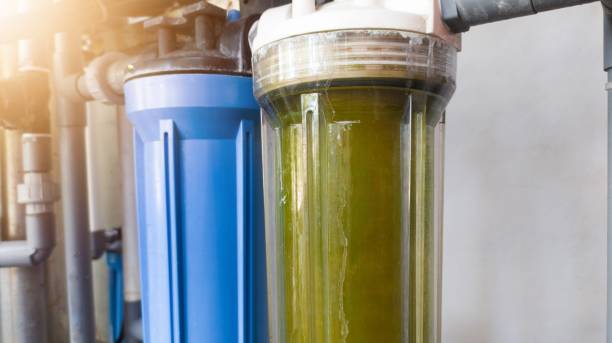
Fouling is a broader category than scaling, and it’s also where diagnosis tends to get more complicated. Rather than a single chemical mechanism, fouling covers several distinct types of deposits, each with different origins and different treatment requirements.
Organic Fouling
Organic fouling occurs when natural organic matter (NOM) — humic acids, fulvic acids, proteins, and other carbon-based compounds — accumulates on the membrane surface. Surface waters and wastewater reuse applications are particularly susceptible.
These materials tend to adsorb onto polyamide membranes and form a gel-like layer that increases hydraulic resistance. The problem compounds when organic foulants interact with divalent cations like calcium, which act as binding agents between organic molecules and the membrane surface. This is one reason why softening or coagulation in pretreatment can help reduce organic fouling potential even in systems where the primary concern isn’t hardness scaling.
Colloidal Fouling
Colloidal fouling involves fine suspended particles — silica colloids, iron hydroxides, aluminum flocs, clay particles — that are too small to be captured by standard filtration but accumulate on the membrane feed surface over time. These particles are typically in the range of 1 nm to 1 μm, which means they pass through cartridge filters but get rejected at the membrane.
Silt density index (SDI) and turbidity are the standard indicators for colloidal fouling potential. Systems with consistently high SDI readings are prone to this type of fouling, especially if upstream coagulation or filtration isn’t performing well.
Biofouling
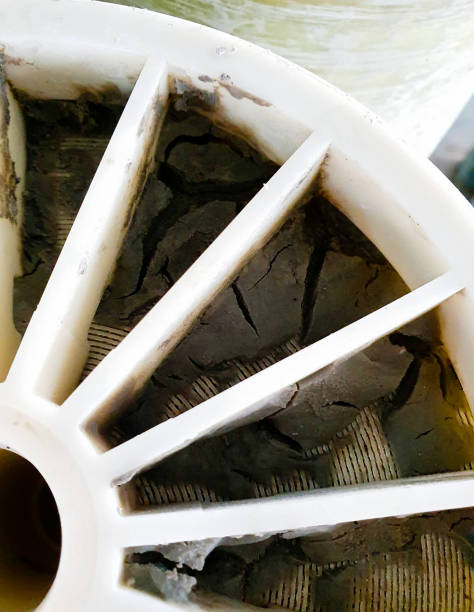
Biofouling is arguably the most persistent and operationally disruptive form of fouling in RO systems. It develops when microorganisms — bacteria, algae, fungi — colonize the membrane surface and establish a biofilm. Once a biofilm is established, it protects the embedded microorganisms from biocides and makes removal significantly harder.
The challenge with biofouling is that it doesn’t require high biological load in the feedwater to develop. Even low concentrations of bacteria can colonize a membrane surface if conditions are favorable — and RO feed spacers, with their complex geometry and relatively stagnant zones, provide a good environment for biofilm growth. AWWA has documented biofouling as one of the leading causes of RO performance decline in water treatment applications.
Biofouling treatment requires a fundamentally different approach than other fouling types: oxidizing or non-oxidizing biocides, alkaline cleaners to break down the biofilm matrix, and often a longer soak time than typical cleaning protocols.
The key point across all three fouling types is that the source differs, the chemistry differs, and the cleaning strategy must differ accordingly.
Difference Between Scaling and Fouling in RO Systems
Formation mechanism. Scaling is a chemical precipitation event — it’s driven by concentration exceeding solubility limits. Fouling is an accumulation process driven by physical deposition or biological colonization. One is thermodynamically driven; the other is largely kinetic and biological.
Location in the system. Scaling tends to concentrate in the tail elements of an RO array — the final pressure vessels where the concentrate is most saturated. Fouling, particularly biofouling and colloidal fouling, more often appears in the lead elements where feedwater first contacts the membrane. Organic fouling can occur throughout the system but tends to be more pronounced in the front end as well.
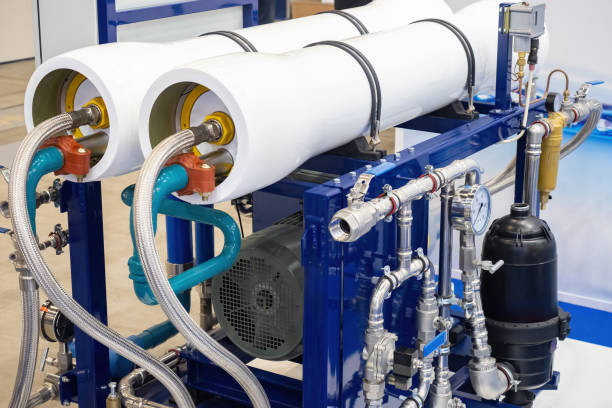
Effect on system performance. Both scaling and fouling increase differential pressure and reduce permeate flow, but they affect salt rejection differently. Scaling that physically blocks feed channels tends to increase differential pressure while salt rejection remains relatively stable — at least initially. Fouling, especially biofouling, can cause more pronounced salt rejection decline because biofilm disrupts the concentration polarization layer and can physically compromise the membrane surface over time.
Reversibility. Early-stage scaling, particularly calcium carbonate, is generally reversible with acid cleaning. Silica scaling is notably harder to reverse. Colloidal and organic fouling can be removed with alkaline and surfactant-based cleaners, though results depend on how advanced the fouling is. Biofouling is the most difficult to fully reverse; mechanical cleaning and chemical treatment can reduce biofilm mass, but complete removal is rarely achieved once a mature biofilm is established.
These distinctions aren’t just academic. They form the basis for every cleaning and prevention decision in RO operation.
How to Identify Scaling vs Fouling in RO Systems
This is where operational knowledge makes the biggest difference. The diagnosis tools available to most operators — normalized performance data, system location, and cleaning response — are enough to make a reliable distinction in most cases.
By Performance Changes
Normalized differential pressure (NDP), normalized permeate flow (NPF), and normalized salt passage (NSP) are the three parameters to watch. Normalization corrects for temperature and feed pressure variations, so changes in these values reflect actual membrane condition rather than operating variable shifts.
A gradual increase in differential pressure across the lead elements, combined with stable or slightly declining permeate flow and relatively stable salt rejection, points more toward colloidal or biological fouling. The feed channels are being progressively blocked by accumulated material.
A differential pressure increase concentrated in the tail elements — particularly if it correlates with higher recovery operation or seasonal changes in source water chemistry — is more consistent with scaling. Salt rejection may remain stable until scaling becomes severe.
A decline in normalized permeate flow with relatively stable differential pressure can indicate surface fouling that’s increasing hydraulic resistance without fully blocking channels. If salt rejection is also declining, biofouling or organic fouling should be suspected.
By Location in the System
Lead elements: colloidal fouling, biofouling, organic fouling. These materials arrive with the feedwater and deposit first where feedwater contact begins.
Tail elements: scaling. This is where concentration has reached its highest point. If tail-element differential pressure is rising disproportionately, check the Langelier Saturation Index (LSI) and Stiff & Davis Stability Index for calcium carbonate, and review saturation levels for other potential scale-forming compounds. This concept is well explained in DuPont’s WAVE design software documentation, which models element-by-element concentration profiles.
By Cleaning Response
This is one of the most diagnostic tests available, and it’s worth documenting systematically. After a cleaning event, record how much performance was recovered and how quickly it declined again.
- Acid cleaning restores performance → scaling (calcium carbonate or calcium sulfate) is the likely cause. The acid dissolves the mineral deposits.
- Alkaline or surfactant-based cleaning restores performance → organic or colloidal fouling. These chemistries break down organic films and disperse colloidal material.
- Biocide treatment followed by alkaline cleaning restores performance → biofouling. Biocide disrupts or kills the biofilm; alkaline cleaning removes the residual matrix.
- No cleaning provides meaningful recovery → the problem is either advanced beyond chemical cleaning effectiveness, or the foulant type doesn’t match the chemistry being used. This is also a sign that the diagnosis needs revisiting.
Treatment Methods for Scaling vs Fouling
How to Treat Scaling
Scaling is typically managed through the use of antiscalants, recovery rate control, and periodic acid cleaning. Proper dosing of antiscalant is critical, as both underdosing and overdosing can lead to operational issues.
Related reading: Antiscalant vs Water Softener: Which Is Better for RO Pretreatment?
How to Treat Fouling
Pretreatment enhancement is the most durable solution for persistent fouling. For colloidal fouling, this means reviewing coagulation, flocculation, and filtration performance. For organic fouling, coagulation chemistry, activated carbon, or UF pretreatment may be needed. Fixing a fouling problem at the membrane without addressing the upstream conditions that caused it usually results in recurrence.
Chemical cleaning (CIP) for fouling typically involves alkaline cleaners (pH 11–12) combined with surfactants to break down organic films and disperse colloidal deposits. The cleaning sequence, temperature, flow rate, and soak time all affect results. A common protocol for organic/colloidal fouling starts with a high-pH alkaline clean, followed by a low-pH acid rinse to remove any mineral content that may have co-deposited.
Biological control for biofouling involves both continuous dosing strategies (maintaining a biocide residual in the feed) and periodic shock treatments. Non-oxidizing biocides such as DBNPA or isothiazolone are commonly used ahead of polyamide membranes, since free chlorine damages the membrane surface. Dosing strategy, contact time, and selection of compatible biocide chemistry all require careful attention. For polyamide membranes specifically, any oxidizing biocide must be dechlorinated before the membrane stage.
How to Prevent Scaling and Fouling in RO Systems?
Prevention is more effective and less expensive — than treatment. The general framework for managing both scaling and fouling involves four elements working together.
Water quality analysis before system design is foundational. A comprehensive feedwater analysis covering major ions, organic content, SDI, biological activity indicators, and silica should inform every design decision. Seasonal variation matters too — a source water that’s acceptable in winter may present significantly different fouling or scaling risk during summer months when biological activity is higher or source blending ratios change.
Pretreatment design needs to match the specific risk profile of the feedwater. Media filtration, cartridge filtration, coagulation, softening, UF — the right combination depends on what’s in the water. A system with good pretreatment for colloidal removal but no biocide control will still develop biofouling. Pretreatment is not a one-size-fits-all category.
Chemical dosing programs — antiscalants, coagulants, biocides, pH adjustment — need to be continuously monitored and adjusted as operating conditions change. Dosing rates set at commissioning may not remain optimal as source water quality shifts or recovery rates are adjusted.
Operational optimization includes recovery rate management, flush protocols, and cleaning frequency. Running an RO system at the limits of its design envelope without monitoring the early warning signs of scaling or fouling is a reliable path to shortened membrane life. Regular normalized performance trending is the most practical early warning tool available.
The practical reality is that most industrial RO systems require a combination of these approaches rather than any single solution. What works for a municipal surface water application may be entirely inappropriate for a high-TDS groundwater system or a wastewater reuse plant with variable feed quality.
If you are dealing with persistent scaling despite using a softener, this article offers additional insight into why that can happen:
Related reading: Why Your RO Membranes Still Scale After Using a Water Softener?
Correct Diagnosis Is the First Step
Different problems require different strategies, and the first step is always an accurate assessment of what the problem actually is.
At Molewater, we work with industrial and municipal operators on RO pretreatment design, ZLD system development, and membrane performance optimization. Our approach starts with feedwater characterization and system-specific risk assessment, because a solution that isn’t built around the actual water chemistry and operating conditions isn’t a solution — it’s a guess. If your system is showing signs of scaling or fouling and the root cause isn’t clear, we’re happy to help work through the diagnosis.