Installing a water softener is often considered a reliable solution for preventing scale formation in reverse osmosis systems. Yet many plant operators face a frustrating reality: membrane scaling continues to occur, pressure drops across the system increase, and cleaning cycles become more frequent.
This isn’t a failure of the softener itself. The issue runs deeper—into the chemistry of your feedwater and the operational limits of ion exchange technology.
This article explains why RO membrane scaling persists even with softened water, what causes it, and how to implement effective RO membrane scale prevention strategies. You’ll also learn how to remove scale from RO membrane elements when prevention measures fall short.
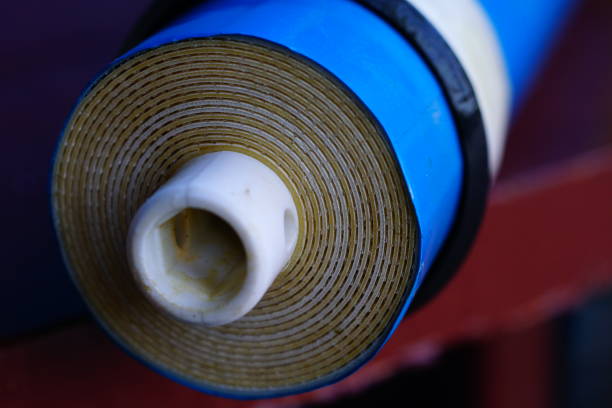
What RO Membrane Scaling Looks Like in Softened Water Systems
Scale doesn’t always announce itself with obvious symptoms. In many cases, it builds gradually until performance degrades noticeably.
Common indicators include:
- Permeate flow decline – Even with stable feed pressure, output decreases over time
- Rising differential pressure – The pressure drop between feed and concentrate increases
- Reduced salt rejection – Permeate conductivity climbs as membrane integrity weakens
- Tail element failure – The last elements in a vessel often scale first due to concentration polarization
- Shortened cleaning intervals – CIP frequency increases from quarterly to monthly or worse
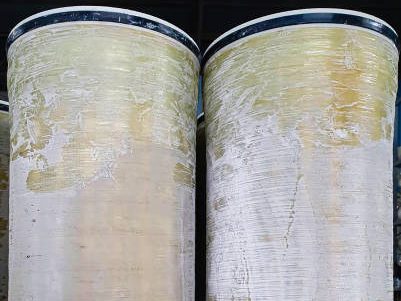
The scaling pattern in softened water systems tends to differ from hard water scaling. Instead of uniform calcium carbonate deposits, you’re more likely to see localized patches of silica, sulfate salts, or biofilm-accelerated scaling on membrane surfaces.
5 Reasons RO Membranes Still Scale After Softening
Understanding why softened water doesn’t eliminate scaling requires looking beyond hardness removal. Here are the primary causes.
1. Softened Water Does Not Remove Silica
Water softeners work through ion exchange, swapping calcium and magnesium ions for sodium. Silica, however, isn’t an ion—it exists as dissolved silicic acid or colloidal particles that pass straight through the resin bed.
When feedwater contains elevated silica (above 30-40 ppm), concentration on the membrane surface can exceed saturation limits, especially at high recovery rates. Silica scaling is particularly difficult to clean because it polymerizes into a glassy, adherent layer that resists conventional acid cleaners.
This is why groundwater sources often cause scaling issues even with softeners in place—silica content can be high while hardness appears well-controlled.
2. Sulfate Scale Can Still Form
Hardness removal doesn’t address sulfate-based scaling. Even in softened water, several problematic scales can develop:
- Calcium sulfate (gypsum) – Forms when concentrate calcium levels combine with sulfate ions
- Barium sulfate – Extremely low solubility; even trace amounts can cause scaling
- Strontium sulfate – Similar behavior to barium sulfate, though less common
These scales form based on saturation indices that aren’t directly related to water hardness. A water source might have low calcium but high sulfate, creating scaling conditions that softening alone won’t prevent. According to Complete Water Solutions, sulfate scaling is one of the most common issues in industrial RO systems with softened feedwater.
3. Excessive RO Recovery Causes Concentration Polarization
Here’s a reality most operators know well: pushing recovery rates too high creates scaling problems regardless of pretreatment quality.
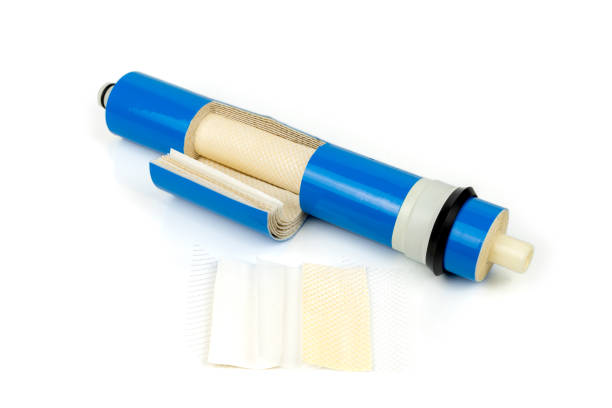
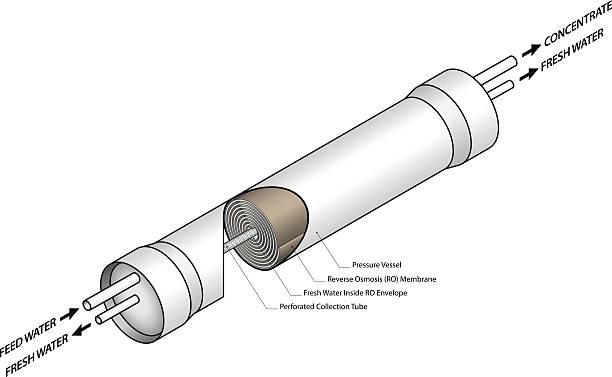
As water passes through the RO system, rejected salts accumulate at the membrane surface. This concentration boundary layer can be 2-3 times higher than the bulk concentrate concentration. When recovery exceeds design limits—often driven by water scarcity or discharge cost pressures—even well-treated feedwater reaches saturation conditions.
The tail elements bear the brunt of this effect. By the time concentrate reaches the last position, scaling precursors have been concentrated 5-10 fold beyond feed levels.
4. Softener Leakage or Poor Regeneration
Softeners aren’t set-and-forget equipment. Performance degrades when:
- Resin exhaustion occurs – Operating beyond the resin’s capacity allows hardness breakthrough
- Salt bridging in the brine tank – Prevents proper regeneration solution preparation
- Valve malfunctions – Service/regeneration cycles don’t complete correctly
- Inadequate rinse cycles – Residual brine enters the RO system, accelerating scaling
A subtle hardness leak of just 2-3 ppm can still cause scaling when concentrated 5-10 times in a high-recovery RO system. Regular hardness testing on softener effluent is essential but often overlooked during routine operations.
5. Incorrect pH or Antiscalant Strategy
Some operators assume softened water eliminates the need for pH adjustment or antiscalant dosing. This assumption leads to scaling issues.
For example:
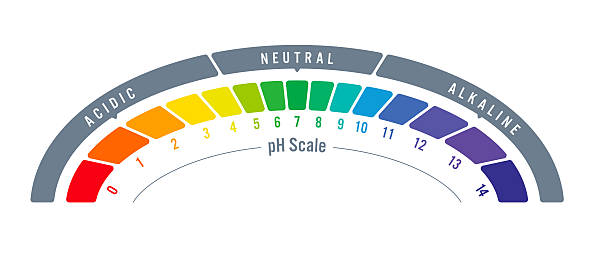
- High pH (above 7.5) increases the solubility of calcium carbonate but reduces silica solubility
- Low pH helps with metal hydroxide control but can accelerate certain sulfate scale formation
- Generic antiscalants designed for hardness control may not address silica or sulfate scaling effectively
Many systems require a softener plus antiscalant approach, particularly when dealing with complex water chemistry or high recovery requirements.
RO Membrane Scale Prevention: How to Stop It Before It Starts
Prevention is always more cost-effective than cleaning. Effective RO membrane scale control requires a systematic approach:
Optimize Recovery Rate
Design recovery based on feedwater analysis and saturation calculations, not just on desired water output. For high-silica waters, recovery may need to stay below 70-75% even with proper pretreatment.
Monitor Silica Continuously
Online analyzers or regular lab testing should track reactive silica levels. This data informs recovery adjustments and antiscalant dosing rates.
Calculate Saturation Indices
Use projection software to model LSI (Langelier Saturation Index), S&DSI (Stiff & Davis), and silica saturation across your operating range. This identifies scaling risks before they occur.
Deploy Appropriate Antiscalant
Select formulations based on your specific scaling risks:
- Silica-specific products for groundwater sources
- Sulfate inhibitors for high-sulfate feeds
- Broad-spectrum formulas for complex chemistry
Dosing rates should be verified through saturation modeling, not just manufacturer guidelines.
Implement Staged RO Design
For high-recovery applications, consider two-stage or split-partial designs that reduce concentration at any single membrane surface.
Control Concentrate Recirculation
Maintaining adequate cross-flow velocity prevents concentration polarization. This becomes especially critical in the final elements of each vessel.
Install Online Monitoring
Track SDI, hardness breakthrough, differential pressure, and normalized permeate flow. Early detection allows intervention before scaling becomes severe.
The U.S. Department of Energy notes that proper pretreatment and monitoring can reduce RO membrane replacement frequency by 30-50%.
How to Remove Scale From RO Membrane
When prevention measures fail or inherited systems come with existing scale, effective cleaning becomes necessary.
Acid Cleaning for Carbonate and Hydroxide Scales
Citric acid or hydrochloric acid solutions (pH 2-3) effectively dissolve:
- Calcium carbonate deposits
- Metal hydroxide precipitates
- Some iron and manganese scales
Circulation time typically ranges from 1-3 hours at controlled temperatures (25-30°C). Multiple passes may be required for heavy scaling.
Specialized Sulfate Scale Cleaners
Gypsum and barium sulfate require different chemistry. EDTA-based or proprietary sulfate cleaners work through chelation rather than simple acid dissolution. These formulations often operate at higher pH (4-6) and require longer contact times.
Success rates vary significantly based on scale thickness and age. Fresh sulfate scale responds better than deposits that have been in place for months.
Silica Scale Removal
This represents the most challenging cleaning scenario. Effective approaches include:
- Alkaline cleaners with dispersants (pH 10-12) to break down polymerized silica
- Fluoride-based formulations that chemically attack silica structures
- Extended circulation times (4-8 hours minimum)
According to research published in ScienceDirect, delayed cleaning of silica scales reduces removal effectiveness significantly. Scale that has aged more than 2-3 months often requires membrane replacement rather than cleaning.
Cleaning Sequence Matters
For mixed-scale conditions, the typical sequence is:
- Acid clean to remove carbonate/hydroxide layers
- Rinse thoroughly
- Alkaline clean to address silica and organic fouling
- Final rinse and return to service
Always verify cleaning effectiveness through normalized performance calculations before returning to production.
When a Water Softener Should Be Combined With Antiscalant
Softening alone suffices for simple hardness removal in low-recovery applications. However, many industrial systems require dual protection:
High Silica Groundwater
When feed silica exceeds 20-30 ppm, softeners only address part of the scaling risk. Silica-specific antiscalants become necessary.
Wastewater Reuse Systems
Complex chemistry with mixed contaminants demands comprehensive scale control beyond simple ion exchange.
Zero Liquid Discharge (ZLD) Pretreatment
Recovery rates above 85-90% create extreme concentration conditions that require both softening and aggressive antiscalant programs.
High Recovery RO Designs
Any system operating above 75% recovery should use combined approaches, even with favorable feed chemistry.
High Sulfate Feedwater
When sulfate exceeds 200-300 ppm, the risk of gypsum or barium sulfate scaling increases regardless of hardness removal.
Related reading: Antiscalant vs Water Softener: Which Is Better for RO Pretreatment?
A water softener reduces hardness scaling risk and serves as effective pretreatment for many RO systems. But it doesn’t address silica, sulfate-based scales, or concentration-driven scaling at high recovery rates.
Effective RO membrane scale control requires understanding your specific feedwater chemistry, operating within appropriate recovery limits, and selecting pretreatment methods that match your scaling risks. In many industrial applications, this means combining softening with targeted antiscalants, monitoring programs, and optimized system design.
When scaling does occur despite prevention efforts, rapid response with appropriate cleaning chemistry minimizes membrane damage and maintains system performance.
The investment in proper scale prevention—through analysis, monitoring, and comprehensive pretreatment—consistently proves less costly than dealing with premature membrane failure, lost production, and emergency cleanings.
FAQs
Can RO membranes scale with soft water?
Yes. Softening removes hardness (calcium and magnesium) but doesn’t address silica, sulfate salts, or concentration-driven scaling. These mechanisms can cause deposits even in fully softened water.
Does a water softener prevent silica scaling?
No. Silica passes through ion exchange resin without being removed. Silica scaling requires dedicated antiscalants, recovery optimization, or alternative pretreatment methods.
What is the best RO membrane scale prevention method?
The most effective approach combines feedwater analysis, appropriate pretreatment (softening and/or antiscalant), recovery optimization, and continuous monitoring. There’s no single “best” method—the right solution depends on your specific water chemistry.
How often should scaled RO membranes be cleaned?
Cleaning frequency depends on scaling severity. Well-designed systems may clean quarterly or semi-annually. If you’re cleaning monthly or more often, the root cause needs to be addressed rather than just treating symptoms.
Can antiscalant replace a water softener?
Sometimes, yes. Modern antiscalants can control hardness scaling up to certain levels, potentially eliminating softener requirements. However, very hard water (>10 gpg) or high-recovery systems typically still benefit from softening. The decision requires case-by-case evaluation.