
Direct-to-chip cooling and immersion cooling are two methods of managing the heat produced by high-performance servers in data centers. Both reduce the reliance on traditional air cooling, but they take different approaches. Direct-to-chip cooling uses cold plates to remove heat from specific server components, while immersion cooling places compatible server hardware directly into a non-conductive liquid. These differences affect not only how heat is removed but also the equipment, facility setup, and maintenance each method requires.
Understanding how the two systems work can help data center operators choose a cooling solution that fits their workloads and infrastructure.
What Is Direct-to-Chip Cooling?
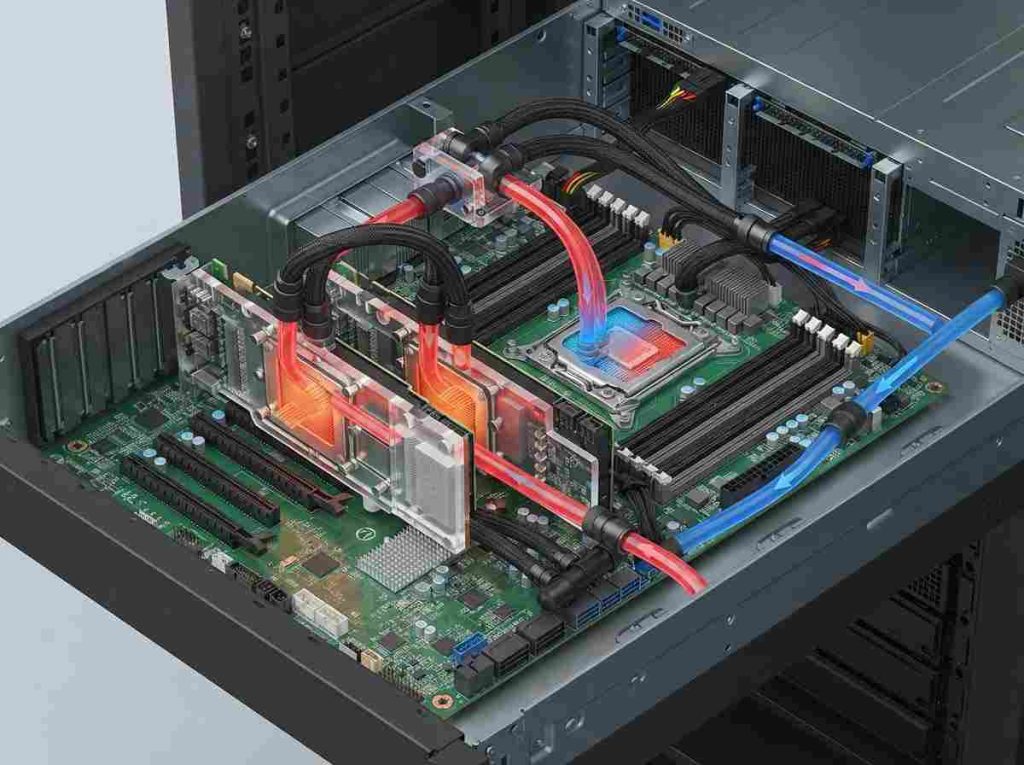
Direct-to-chip cooling removes heat from key server components, mainly CPUs and GPUs, using cold plates attached directly to them. Inside each cold plate are small channels that allow coolant, usually water or a water-glycol mixture, to flow through. As the liquid passes through these channels, it absorbs heat from the chips and carries it away through a closed-loop cooling system.
A coolant distribution unit (CDU) manages the coolant flow and keeps its temperature within the required range. It also transfers heat from the server cooling loop to the facility’s cooling system through a heat exchanger. Since the coolant stays inside the cold plates and pipes, it does not come into direct contact with the electronic components.
However, direct-to-chip cooling does not necessarily eliminate the need for air cooling. It mainly targets the components that generate the most heat, while other server parts, such as memory, storage drives, and power supplies, may still rely on fans for cooling. How much of the server is covered by liquid cooling depends on the hardware configuration and system design.
What Is Immersion Cooling?
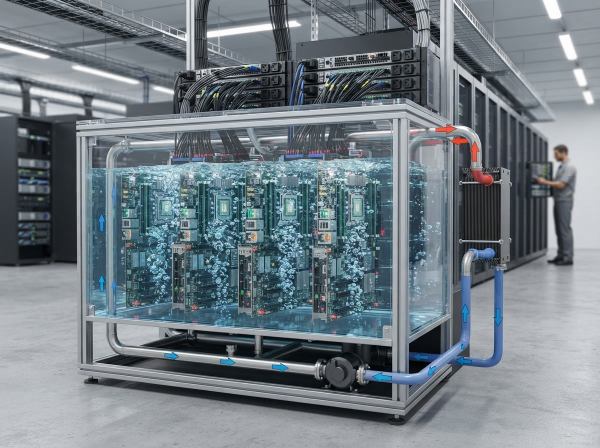
Immersion cooling works differently from direct-to-chip cooling. Rather than using cold plates to cool individual components, it places compatible servers or electronic hardware directly into a tank filled with dielectric fluid. This type of fluid does not conduct electricity, so it can come into direct contact with the submerged components without causing electrical short circuits.
As the hardware generates heat, the dielectric fluid absorbs it from the component surfaces and carries it away to be released through a heat exchanger or another part of the cooling system. Depending on how the fluid handles this heat, immersion cooling can be divided into two main types.
- Single-phase immersion cooling: The dielectric fluid remains in liquid form throughout the process. Pumps move the heated fluid through a heat exchanger, where it releases heat before flowing back into the tank.
- Two-phase immersion cooling: The dielectric fluid boils as it absorbs heat from the hardware. The vapor then rises to a condenser, where it cools and turns back into liquid before returning to the tank.
One advantage of immersion cooling is that it can remove heat from a wider range of components at the same time, rather than focusing mainly on CPUs and GPUs. However, this does not mean any server can be placed directly into an immersion tank. Hardware components and materials must be compatible with the dielectric fluid, so server selection and system design need careful consideration.
Direct-to-Chip vs. Immersion Cooling: Key Differences
1. Cooling Coverage and Heat Removal
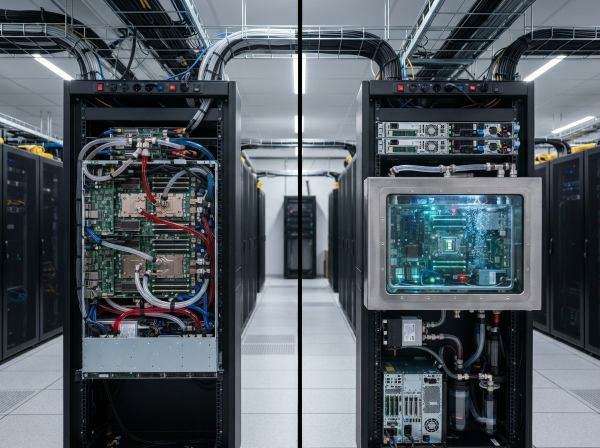
Direct-to-chip cooling focuses on the components that generate the most heat, usually CPUs and GPUs. Cold plates transfer heat from these chips to the circulating coolant, while other components may still rely on server fans and air cooling.
Immersion cooling takes a broader approach. Since the dielectric fluid surrounds the submerged hardware, it can absorb heat from multiple components at once. This reduces the need for traditional server fans and can lower the cooling load on the surrounding room.
This makes immersion cooling a potential fit for high-density computing environments where heat comes from several parts of the server. D2C is more targeted and allows operators to cool high-temperature components without placing entire servers in liquid.
The actual cooling performance of either method depends on the server configuration, cooling system capacity, and facility-level heat rejection.
2. Coolant Type and Hardware Contact
The two systems also differ in the liquids they use and how those liquids come into contact with server hardware.
D2C systems typically use water-based coolants, such as water or water-glycol mixtures. The liquid flows through cold plates and pipes, so it stays separated from the electronic components. Heat passes from the chips through the cold plate into the coolant.
Immersion cooling uses dielectric fluids, including specially formulated hydrocarbon-based and other engineered fluids. These liquids are electrically non-conductive and designed to transfer heat while coming into direct contact with compatible server hardware.
The distinction is important because the two fluids serve different purposes. Water-based coolants are designed for enclosed cooling loops, while immersion systems require fluids specifically formulated for direct contact with electronic equipment. Ordinary water cannot replace dielectric fluid in an immersion tank.
3. System Infrastructure and Installation
D2C cooling can often be added to existing server infrastructure with some modifications. A typical setup includes cold plates, pumps, manifolds, connecting pipes, and a coolant distribution unit (CDU). Since only selected components use liquid cooling, other parts of the server can continue to rely on air cooling. This can make the transition easier for data centers that want to upgrade their cooling systems gradually.
Immersion cooling requires a more substantial change to the server setup. Servers are placed in dedicated tanks filled with dielectric fluid, along with equipment for fluid circulation and heat exchange. Operators also need to consider tank placement, fluid handling, and whether their servers are suitable for immersion.
In general, D2C involves more liquid connections within the server and rack infrastructure, while immersion requires dedicated tanks and space for fluid management. The installation effort depends on the existing facility and the scale of the deployment.
4. Maintenance and Operational Considerations
Both cooling methods require regular monitoring, but the maintenance work is different.
For D2C systems, operators need to check coolant temperature, flow rate, pressure, and pipe connections. Cold plates and fittings also need inspection to detect leaks or blockages. Although the overall server layout remains relatively familiar, technicians must take care when disconnecting liquid lines during hardware replacement or repair.
Immersion cooling has fewer conventional cooling fans to maintain, but fluid management becomes a more important part of daily operations. Operators need to monitor fluid condition, check for contamination, and make sure the dielectric fluid remains compatible with the server materials. When a server needs to be removed for maintenance, technicians must also follow proper procedures to handle the liquid and drain excess fluid.
The main difference is where maintenance attention goes: D2C focuses on coolant circulation and connections, while immersion requires more attention to fluid condition, tank management, and hardware servicing.
Which Cooling Method Is More Suitable for Your Data Center?
Direct-to-chip cooling works well for data centers that mainly need to control heat from CPUs and GPUs. It can be added to existing server setups without replacing the entire cooling system, while fans continue to cool other components. This makes it a practical option for facilities that want to introduce liquid cooling without major changes to their infrastructure.
Immersion cooling is worth considering when heat needs to be removed from more server components. It is particularly useful in high-density computing environments, but requires dedicated tanks, immersion-compatible hardware, and additional work to manage the cooling fluid.
Before choosing either method, consider the types of servers you use, how much heat they generate, and whether your facility can support the required cooling equipment. These factors will have a direct impact on installation costs and day-to-day operation.
Water Quality Considerations in Data Center Liquid Cooling
Water quality also plays a part in keeping a D2C cooling system running properly. Even though the coolant stays inside a closed loop and does not come into direct contact with electronic components, its quality still matters. Poor-quality water used to prepare the coolant or in facility-side cooling systems can lead to scale buildup, corrosion, and blockages. Over time, these issues can reduce heat transfer efficiency and affect equipment performance.
Molewater provides water treatment systems for industrial applications, with solutions designed around different water quality requirements and treatment needs.