

If you’re comparing microfiltration and ultrafiltration for your facility, you already know both are membrane-based processes. What you actually need to figure out is which one fits your water, your treatment goals, and your budget.
The answer comes down to three things: what’s in your feed water, what you’re trying to remove or protect downstream, and how much pressure and energy your system can reasonably handle. Once you work through those three factors, the choice usually becomes clear.
Microfiltration vs Ultrafiltration
Before getting into the details, here’s a quick side-by-side comparison to frame the decision.
| Factor | Microfiltration (MF) | Ultrafiltration (UF) |
| Pore size | 0.1 to 10 microns | 0.01 to 0.1 microns |
| What it removes | Suspended solids, sediment, turbidity, some bacteria | Bacteria, viruses, colloids, large organic molecules |
| Typical operating pressure | 5 to 30 psi | 20 to 100 psi |
| Common applications | Pretreatment, wastewater clarification, RO protection | Drinking water disinfection, protein recovery, high-purity process water |
The general rule is straightforward: the smaller the pore size, the more a membrane can capture, but the more pressure and energy the system requires to push water through it.
Start with Feed Water Quality
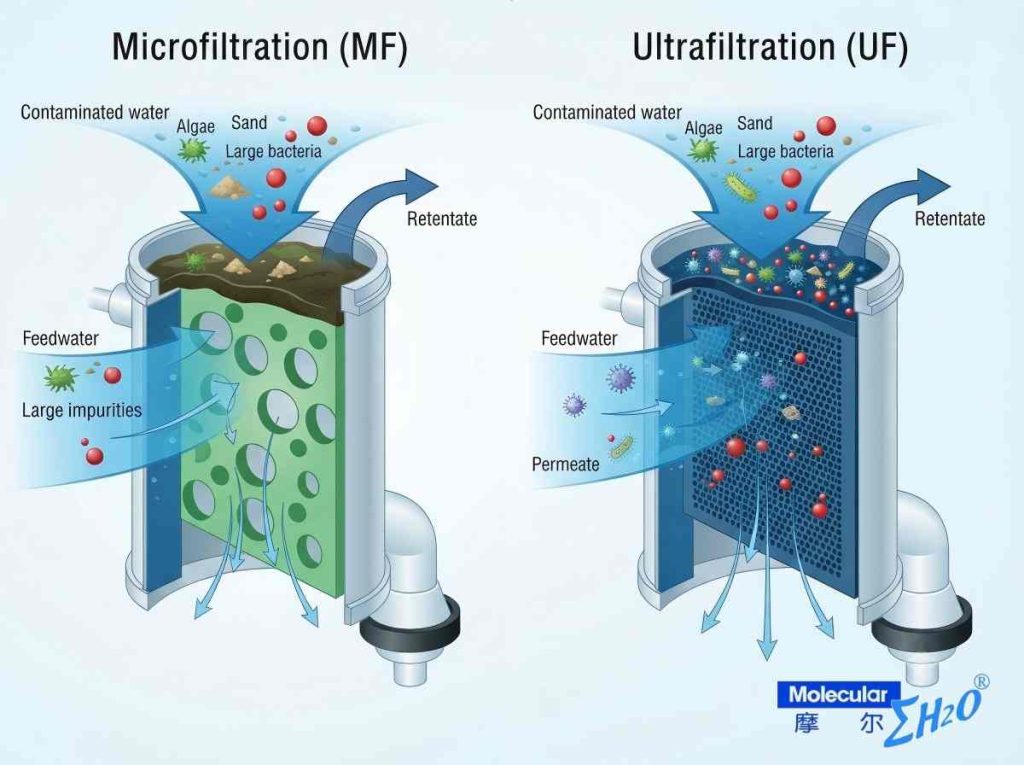
The first question to ask isn’t which membrane sounds more advanced. It’s what your feed water actually contains. If your water carries a heavy load of suspended particles, sediment, or high turbidity, a microfiltration system is often all you need to get it into shape for the next treatment step. MF membranes are built to catch that kind of larger, visible material without demanding excessive pressure or energy.
If your feed water contains finer contaminants that MF simply can’t catch, such as bacteria, viruses, or dissolved organic compounds, that’s when ultrafiltration earns its place. UF membranes work at a smaller pore scale, so they pick up what MF passes through. In many industrial setups, water quality varies enough that neither option works in isolation.
Removal Targets
Feed water quality narrows the field, but it doesn’t make the decision for you. Treatment objective does the rest. Most facilities fall into one of three categories.
Protecting downstream equipment. When the priority is preventing fouling in an RO unit or other sensitive system, both MF and UF can work as pretreatment. Which one fits depends on how much fine material is present in the feed water. The U.S. EPA’s membrane filtration guidance notes that pretreatment selection should be based on the specific fouling potential of the source water rather than a blanket recommendation.
Meeting pathogen removal standards. If bacteria or virus removal is a compliance requirement, ultrafiltration is generally the stronger option. Its smaller pore size gives it a removal capability that MF can’t match when log-reduction targets are involved.
Recovering large molecules. In food and beverage or pharmaceutical production, the objective sometimes isn’t just removing contaminants — it’s holding back specific proteins or macromolecules while letting smaller molecules pass through. UF’s molecular weight cut-off makes it the more suitable tool for that kind of separation.
Operating Costs and Maintenance
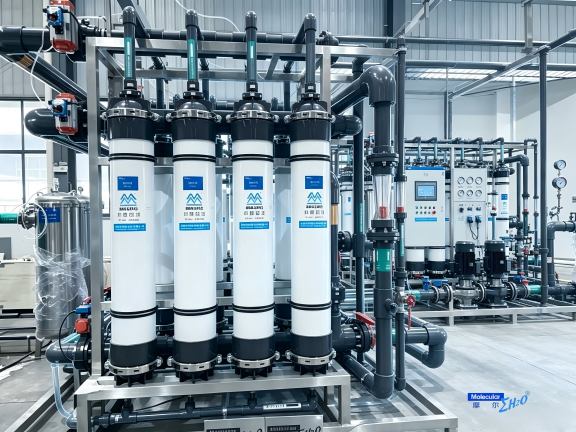
Pore size doesn’t just affect what gets filtered out. It directly shapes how much your system costs to run day to day. Because UF membranes work at a finer scale, they generally require higher transmembrane pressure to push water through, which translates into higher energy consumption over time. MF systems, by comparison, tend to operate at lower pressure and lower energy cost, though they’re also less capable of separating the finest contaminants.
Footprint and maintenance frequency follow a similar pattern. Microfiltration filters are often more compact and require less frequent cleaning cycles, largely because their larger pore size resists fouling more easily than UF membranes do. If your facility has tight space constraints or limited staff for membrane maintenance, that difference is worth weighing alongside treatment performance.
Can Microfiltration and Ultrafiltration Work Together?
MF and UF aren’t necessarily an either-or decision. A lot of industrial water treatment systems actually run both in sequence, using microfiltration as a first-stage pretreatment step to remove larger particles before ultrafiltration handles the finer contaminants. This combination reduces the fouling load on the UF membrane, which extends its service life and lowers long-term maintenance costs.
It’s also worth clearing up a common point of confusion: MF and UF pore size ranges overlap somewhat, and the exact boundary between the two isn’t always sharply defined across manufacturers. What matters more than the precise micron figure is matching the membrane’s practical separation capability to your specific water quality and treatment goal, rather than fixating on where one category technically ends and the other begins.
How to Choose Between Microfiltration and Ultrafiltration for Your Facility
Bringing it all together, the decision usually comes down to three checks:
- What does your feed water actually contain, in terms of particle size and organic load?
- What’s your treatment target, whether that’s protecting downstream equipment, meeting pathogen removal standards, or recovering specific compounds?
- What pressure, energy, and maintenance budget can your facility realistically support?
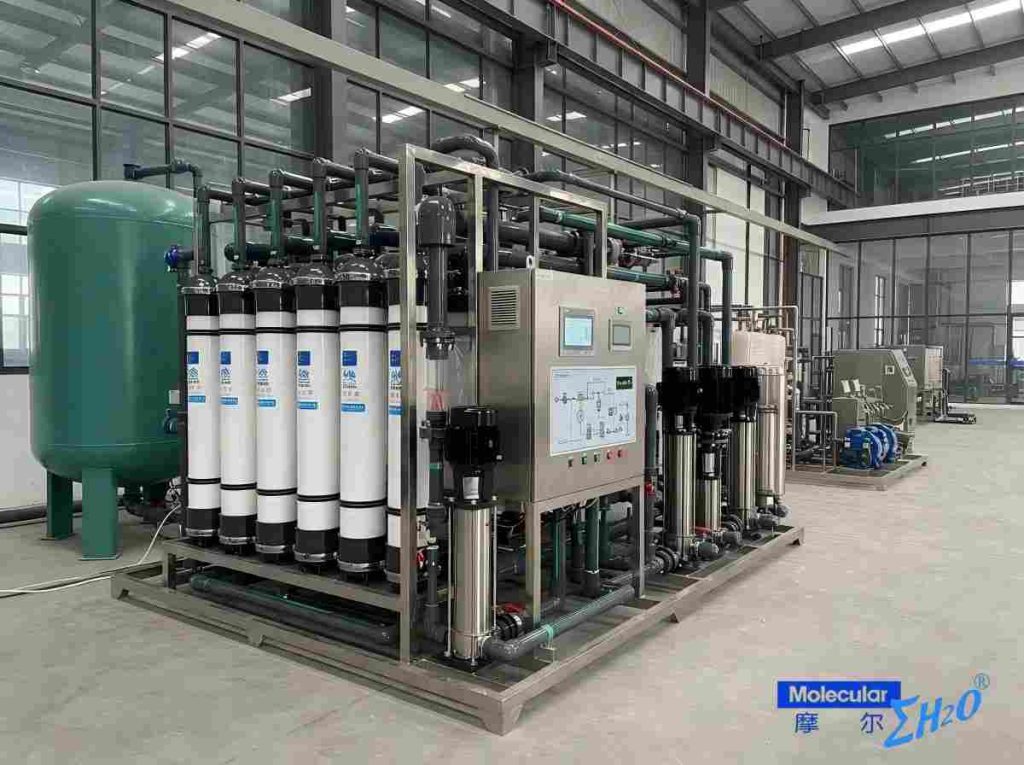
If you’re still not sure which system fits after working through these questions, that’s a normal place to be. Feed water conditions vary enough from site to site that a general guide can only take you so far. Molewater’s engineering team regularly works through this exact evaluation with clients, reviewing water quality data and treatment goals to recommend a system that matches actual site conditions rather than a generic recommendation.
FAQs