Water scarcity is an increasing concern for businesses around the world, and many facilities are asking a practical question: since wastewater has already been treated, why not use it again? It’s not as basic as it looks, and an incorrect choice might lead to equipment damage, process problems or compliance headaches.
This guide covers what is generally left in the treated wastewater after conventional treatment, how water quality needs for industrial reuse vary by application, and what you need to do before putting treated water back to work in your plant.
Why Treated Wastewater May Not Be Ready for Reuse
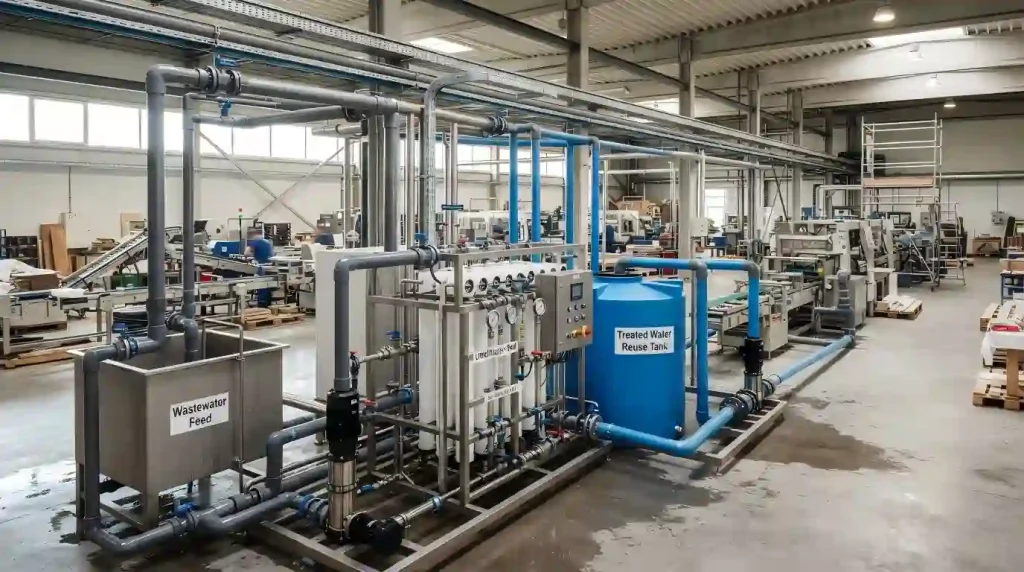
One of the most common misunderstandings around industrial wastewater reuse is assuming that water meeting discharge standards is automatically suitable for reuse. These are two completely different benchmarks.
Discharge rules are established to safeguard the receiving environment such as rivers or municipal sewer systems. They set limits on contaminants that could impair local ecosystems. However, the quality standards for industrial reuse water are dictated by the next application of the water. Cooling towers, boilers, and industrial lines each have their own quality thresholds, and they are typically far more stringent than the discharge laws require.
In short, “treated enough to release” does not mean “treated enough to reuse.”
What May Still Remain in Treated Wastewater
Even after going through conventional treatment processes, treated wastewater can carry a range of contaminants that cause real problems in industrial settings. The most common ones include:
- Suspended solids (TSS): Fine particles that are not completely removed after treatment may clog filters, nozzles and heat exchanger surfaces over time.
- Hardness (calcium and magnesium): These minerals are the major cause of scale formation in pipes, boilers and cooling systems.
- Total dissolved solids (TDS) and salinity: High salt concentration accelerates corrosion and can interfere with several industrial operations.
- Microorganisms: Bacteria and other germs may survive secondary treatment and may pose problems in hygiene-sensitive applications and contribute to biological fouling.
- Residual organics: Compounds that are not completely broken down can react with disinfectants, cause odour problems, or impact the quality of the finished product.
- Specific contaminants: In addition to the general contaminants, it may be that there are heavy metals, trace chemicals or other industry-specific pollutants which are not fully removed by regular treatment.
The nature and concentration of these contaminants will depend on the wastewater source and pre-treatment.
Match Water Quality to the Reuse Application
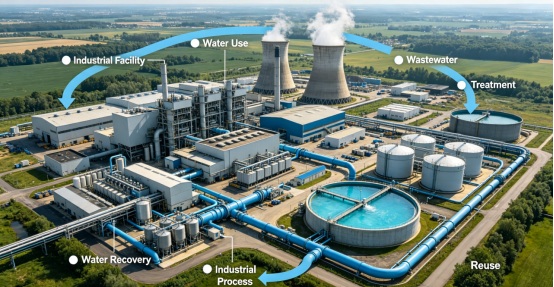
The right way to go about industrial water reuse begins with understanding exactly what quality level is truly needed for each purpose, yet there are very different tolerances for the various end-uses and no single standard covering them all.
Here is a general overview table of common reuse scenarios and the most critical water quality issues associated with each:
| Reuse Application | Main Water Quality Concerns | Why It Matters |
| Cooling water | TSS, hardness, salts, microorganisms | Fouling, scaling, corrosion, biological growth |
| Process water | Application-specific contaminants | May affect product or process quality |
| Washing water | TSS, microorganisms, chemicals | Cleaning performance and hygiene |
| Boiler feed water | Hardness, dissolved solids, silica | Scaling and equipment protection |
Note: Some reuse applications will need much more detailed preparation than others. Always check requirements against your own equipment and procedure specifications.
5 Things to Check Before Reusing Treated Wastewater
Before you commit to a treated wastewater reuse project, there are five critical aspects to assess:
- Required water quality: Specify the exact characteristics your target application requires, such as pH, TSS, TDS, hardness, microbiological limits or any process-specific thresholds.
- Remaining contaminants: Test your treated effluent thoroughly to see what is really in there, not just what “should have been” removed.
- Treatment gap: Identify what still needs to be done before reuse by comparing your existing water quality to target standards.
- Operating conditions: Temperature, pressure, flow rate and seasonal change can all influence the water behaviour in service and should be taken into account.
- Monitoring and reliability: Water quality monitoring should be regular or continuous to identify fluctuations before they cause operational concerns.
When Is Additional Treatment Needed
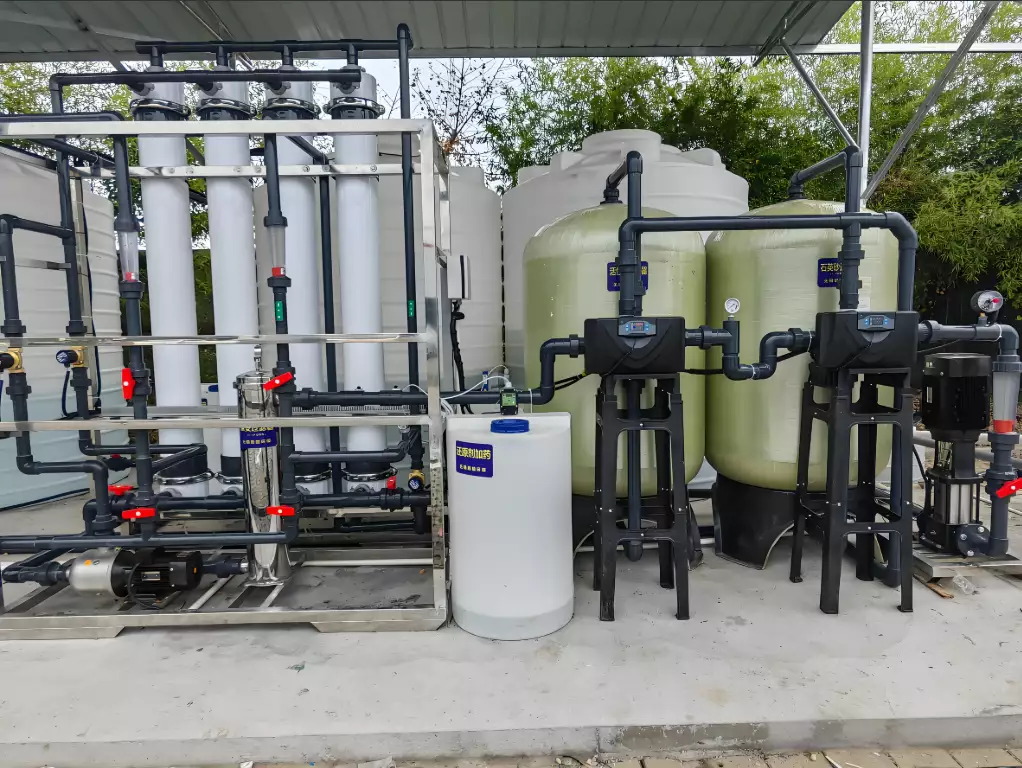
In many cases, additional treatment is needed. Even when treated wastewater meets discharge requirements, it may need one or more polishing steps before it is suitable for a specific industrial reuse application.
Depending on the application, this might include ultrafiltration or multimedia filtration to remove suspended solids, reverse osmosis to reduce TDS and salt levels, softening or antiscalant dosing to control hardness, UV or ozone disinfection for biological safety, or ion exchange for specific contaminant removal.
The U.S. EPA’s water reuse resources can provide useful background on water reuse and treatment approaches, but specific industrial requirements depend on the application, process, equipment and local regulations.
Making Treated Wastewater Work for Reuse
Industrial water reuse is absolutely achievable, but it requires an honest look at what treated wastewater actually contains versus what your process actually needs. Closing that gap is where good treatment system design makes all the difference.
With over 20 years of experience in industrial water treatment, Molewater has built systems that make wastewater reuse both practical and reliable. If you are evaluating industrial wastewater reuse for your facility, get in touch with our team for a free consultation.