If your reverse osmosis membrane lasted less than two years, you’re not alone and the problem is almost never bad luck. Most early failures trace back to a handful of causes that are entirely preventable, and the frustrating part is that they often show up slowly, long before any alarm goes off.
This article breaks down what a realistic membrane lifespan looks like, the most common reasons membranes die early, and what you can actually do about it.
How Long Should an RO Membrane Actually Last?
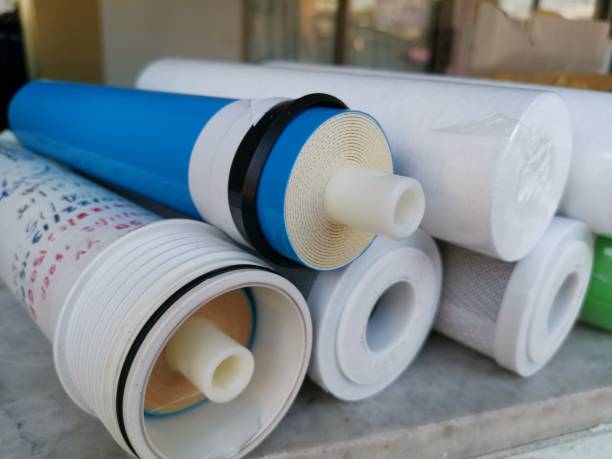
In industrial systems running under proper conditions, a well-maintained RO membrane typically lasts 3 to 7 years. Some facilities report even longer service lives in low-fouling applications with consistent pretreatment.
That said, the range varies depending on your application:
| Application | Typical Lifespan |
| Municipal / drinking water | 5–7 years |
| Industrial ultrapure water | 3–5 years |
| Wastewater reclaim / reuse | 2–4 years |
| High-fouling industrial feed | 1–3 years |
These figures come from manufacturer guidelines published by suppliers like DuPont Water Solutions and Toray Membrane, and they assume normal operating conditions with regular maintenance.
If your membrane is falling well short of these benchmarks, something in the system is working against it. The question is what.
5 Reasons Your RO Membrane Is Dying Early
1. Fouling — The Most Common Culprit
Fouling happens when suspended particles, colloids, organic matter, or biological growth gradually accumulate on the membrane surface. It builds slowly, which is exactly why it gets missed until the damage is significant.
The clearest early signal is a drop in normalized permeate flow typically more than 10–15% from baseline. At that point, the membrane isn’t gone, but it’s telling you it needs attention.
The problem is that most operators wait for a larger drop before acting. By then, the fouling layer has hardened and cleaning becomes much less effective.
2. Scaling — Mineral Deposits That Don’t Clean Easily
Scaling is different from fouling. Instead of particles accumulating on the surface, dissolved minerals including calcium carbonate, barium sulfate, silica, crystallize directly onto or inside the membrane structure. Once scaling sets in, it’s harder to reverse than biological or organic fouling.
The typical signs are a drop in salt rejection paired with a rise in differential pressure. If you’re seeing both at the same time, scaling is a likely suspect.
Scale is a chemistry problem. It usually means the system is running above the saturation limits of certain compounds, often because antiscalant dosing is incorrect or the recovery rate is too high for the feed water composition.
3. Operating Pressure Outside the Recommended Range
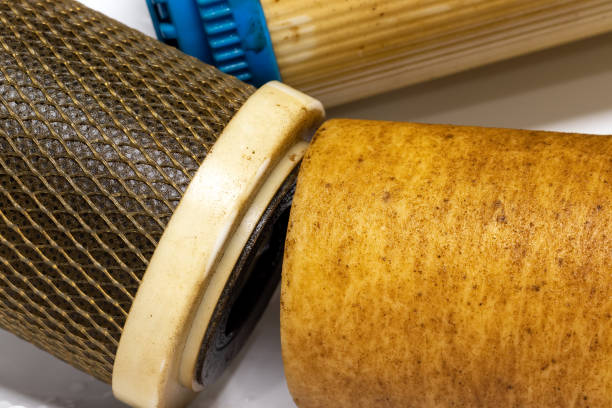
Running a membrane at the wrong pressure does damage in both directions. Consistently over-pressuring accelerates compaction of the membrane structure and can cause physical deformation that reduces permeability permanently. Under-pressuring, on the other hand, reduces crossflow velocity, which makes fouling worse.
Neither failure announces itself immediately. The damage accumulates over months, which is why reviewing your pressure logs periodically matters more than most operators realize.
If pressure curves have been drifting without investigation, it’s worth auditing the data before assuming the membrane is simply aging.
4. Chemical Damage — Often Caused by the Cleaning Process Itself
This one tends to surprise people. Polyamide membranes which make up the vast majority of industrial RO membranes are highly sensitive to oxidizers, particularly free chlorine. Even brief, repeated exposure degrades the active layer and causes irreversible loss of salt rejection.
The damage often shows up as a sudden, steep drop in rejection rather than a gradual decline. And the source is frequently not the feed water — it’s the cleaning procedure. Using tap water to flush the system (which contains residual chlorine), applying the wrong cleaning chemical, or allowing cleaning solution to sit too long are all common contributors.
The EPA’s guidance on membrane treatment systems outlines chemical compatibility considerations that are worth reviewing if you’re managing your own cleaning protocols.
5. Poor Pretreatment — Upstream Problems, Downstream Consequences
The membrane sees whatever pretreatment fails to remove. If the SDI (Silt Density Index) of your feed water is consistently above 5, you’re feeding the membrane water it wasn’t designed to handle. Iron, manganese, and suspended solids that aren’t properly controlled upstream will accelerate fouling, sometimes dramatically.
This is the most expensive cause to diagnose late, because by the time the membrane shows obvious decline, the pretreatment system has often been underperforming for months. The fix requires addressing the root cause upstream not just replacing the membrane.
A properly designed pretreatment train targeting SDI below 3 and free chlorine below 0.1 ppm is the foundation that everything else depends on. More on system design considerations is available at Molewater’s industrial RO resources.
How to Tell If Your Membrane Is Damaged or Just Dirty
Before replacing a membrane, it helps to know whether you’re dealing with recoverable fouling or permanent damage. The distinction matters because cleaning a chemically damaged membrane wastes time and chemical cost without improving performance.
| Symptom | Likely Cause | Recoverable? |
| Permeate flow ↓, rejection normal | Fouling | ✅ Usually yes |
| Rejection ↓, flow relatively normal | Chemical damage or O-ring leak | ❌ Often no |
| Both flow ↓ and rejection ↓ | Severe scaling | ⚠️ Partially |
| Differential pressure rising steadily | Inlet-side fouling | ✅ Yes, if caught early |
A simple test: run a standard cleaning protocol and measure normalized performance before and after. If the membrane recovers to within 90–95% of baseline, the issue was fouling. If performance barely moves, the membrane structure has likely been compromised.
What High-Performing Plants Do Differently (To Get 5+ Years RO Membrane Lifespan)
The facilities that consistently hit 5+ year membrane lifespans aren’t doing anything exotic. They’re following operational disciplines that are straightforward but require consistency.
Pretreatment targets they actually enforce:
- SDI ≤ 5 (ideally ≤ 3)
- Free chlorine < 0.1 ppm
- Iron and manganese below detectable limits
Cleaning triggers they don’t ignore:
- Normalized permeate flow drops 10% → initiate cleaning
- Differential pressure rises 15% → investigate immediately
- Don’t wait for 20–30% before acting
Shutdown procedures they follow:
- Short-term shutdown: low-pressure flush to displace concentrate
- Long-term shutdown (>30 days): biocide preservation solution
Operational data they track daily:
- Net driving pressure (NDP)
- Salt passage rate
- Differential pressure across each vessel
These aren’t difficult practices. The gap between a 1-year membrane and a 5-year membrane is usually a matter of consistency, not access to better equipment.
What the Data Shows
A 2022 operational review published by the International Desalination Association found that the majority of premature membrane replacements in industrial facilities were attributed to inadequate pretreatment and reactive (rather than preventive) maintenance schedules not membrane quality itself.
That aligns with what membrane manufacturers report in their own application data: when systems are operated within design parameters with consistent monitoring, early replacement is the exception rather than the rule.
If you’re currently troubleshooting a system or planning a replacement, working through the five causes above in sequence will usually identify the problem. Fixing the membrane without fixing the root cause is a short-term solution.
For more on RO system design, maintenance, and pretreatment planning, visit Molewater.com.
FAQs
How often should RO membranes be replaced in industrial systems?
Under normal operating conditions with proper maintenance, 3–5 years is a reasonable planning horizon. Systems with stable, low-fouling feed water and disciplined pretreatment have achieved 7+ years.
Can a damaged RO membrane be repaired?
Physical or chemical damage to the active membrane layer cannot be repaired. However, if performance loss is due to fouling or scaling, a proper cleaning protocol can often restore a significant portion of original performance.
What is the most common cause of premature RO membrane failure?
Fouling combined with inadequate pretreatment accounts for the majority of early failures. Chemical damage from oxidizer exposure is the second most common cause and tends to produce more sudden performance drops.
Does high TDS feed water shorten membrane life?
High TDS itself doesn’t directly damage membranes, but it typically correlates with higher scaling potential and increases the required operating pressure, both of which contribute to shorter service life if not managed correctly.