If your RO system is producing less water than it used to or never quite hit the rated output in the first place, you’re not alone. A drop in permeate flow rate is one of the most common issues RO operators report, and it rarely comes down to a single cause.
Quick definition before we get into it: permeate is the clean, treated water that passes through the RO membrane. Everything that doesn’t make it through including dissolved solids, minerals, contaminants exits as concentrate (also called brine or reject water). The speed at which your system produces permeate is what most people refer to as “RO output” or “permeate flow rate.”
So what slows it down? Here are the seven most common factors, along with how to identify which one you’re dealing with.
1. Water Pressure Is Too Low
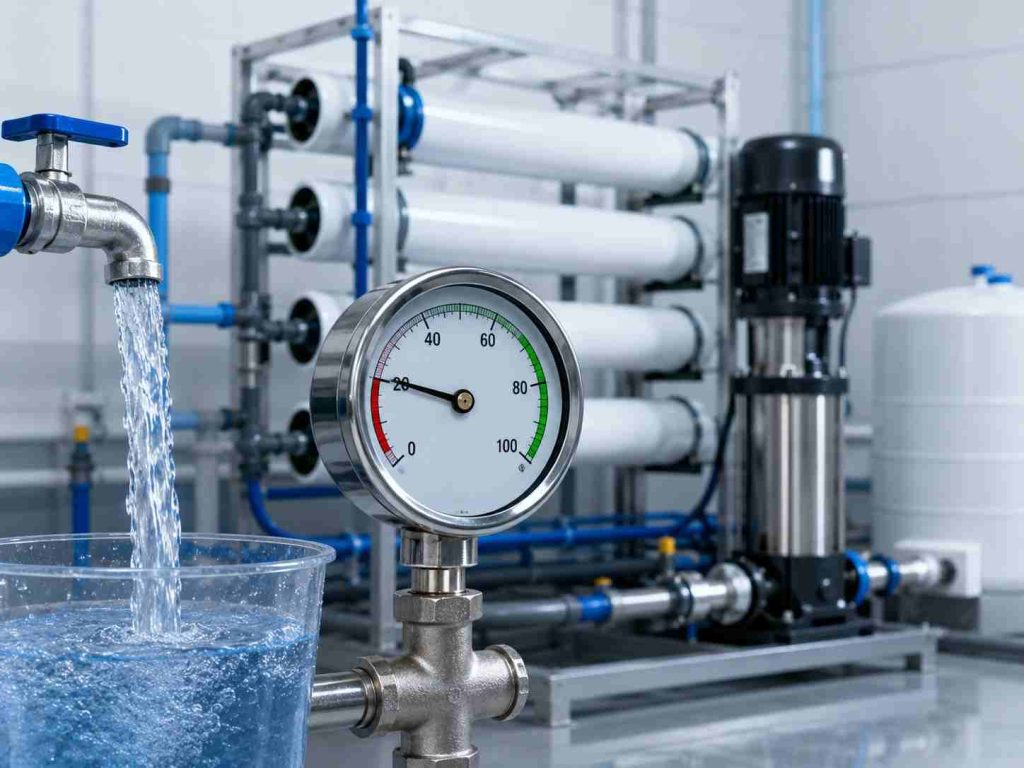
Pressure is what pushes water through the RO membrane. What actually determines permeate output is the net driving pressure (NDP), the difference between the pressure applied on the feed side and the osmotic pressure of the source water. When NDP drops, output drops with it.
Most RO systems require a feed pressure of 40–80 psi to operate properly. Below 40 psi, production slows noticeably. Below 30 psi, some systems produce almost nothing.
How to check: install a pressure gauge on the feed line before the RO unit. If you’re consistently reading below 40 psi, a booster pump is usually the most straightforward fix. Molewater’s RO pure water systems are designed with pressure management built in to maintain stable output across variable feed conditions.
2. Feed Water Temperature
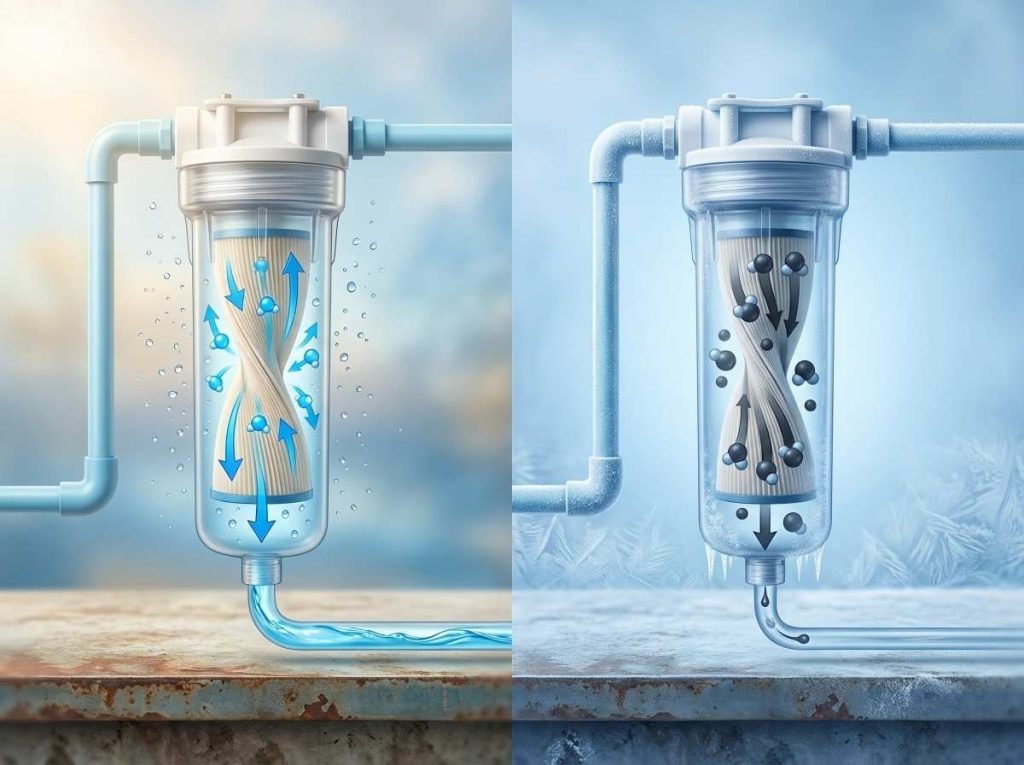
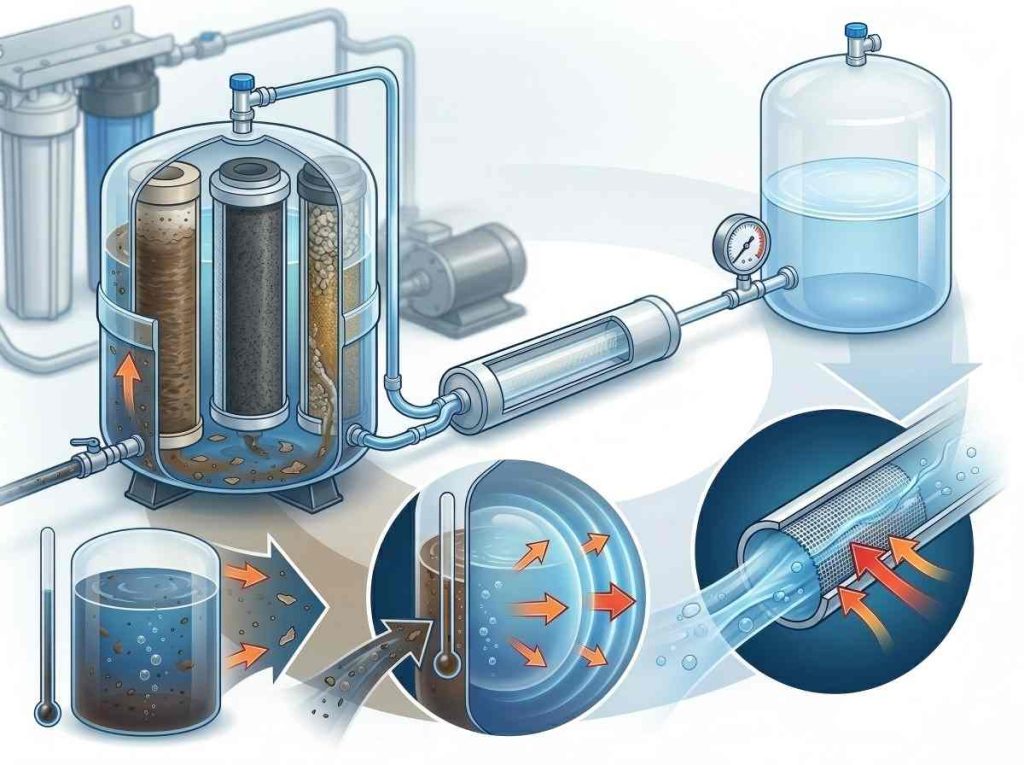
Temperature affects permeate flow in a way that often gets overlooked. When water temperature drops, viscosity increases, making it harder for water molecules to pass through the membrane.
The general rule: for every 1°C drop in feed water temperature, permeate flow decreases by roughly 2–3%. A system running at 10°C can produce 30–40% less water than the same system at 25°C, even with the same pressure and feed water quality.
This is why RO output often dips in winter. In most cases, it’s not a problem with the membrane or filters. That said, if the seasonal drop is larger than expected, it’s worth checking the other factors below before assuming temperature is the only cause.
Membrane manufacturers like DuPont Water Solutions publish temperature correction factors (TCF) in their product datasheets, these let you calculate expected output at different temperatures, which is useful for both system sizing and ongoing performance monitoring.
3. Membrane Fouling and Scaling
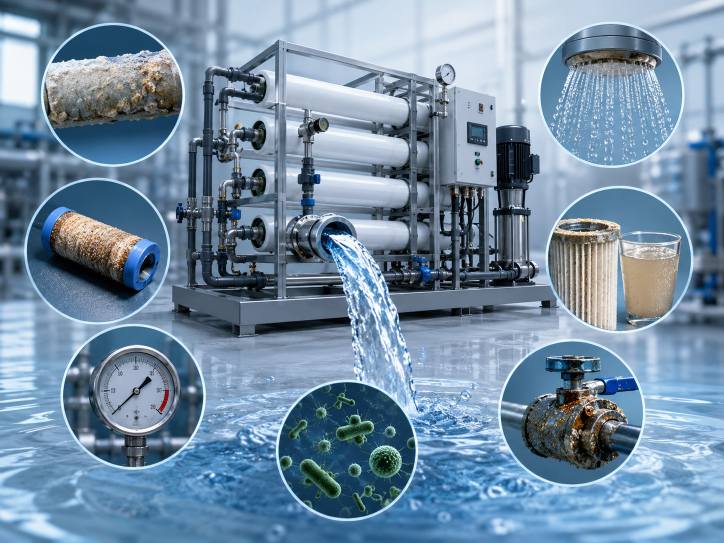
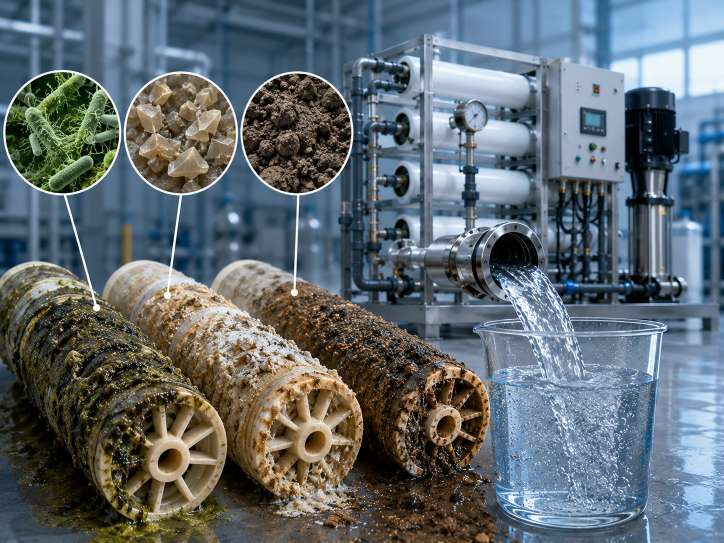
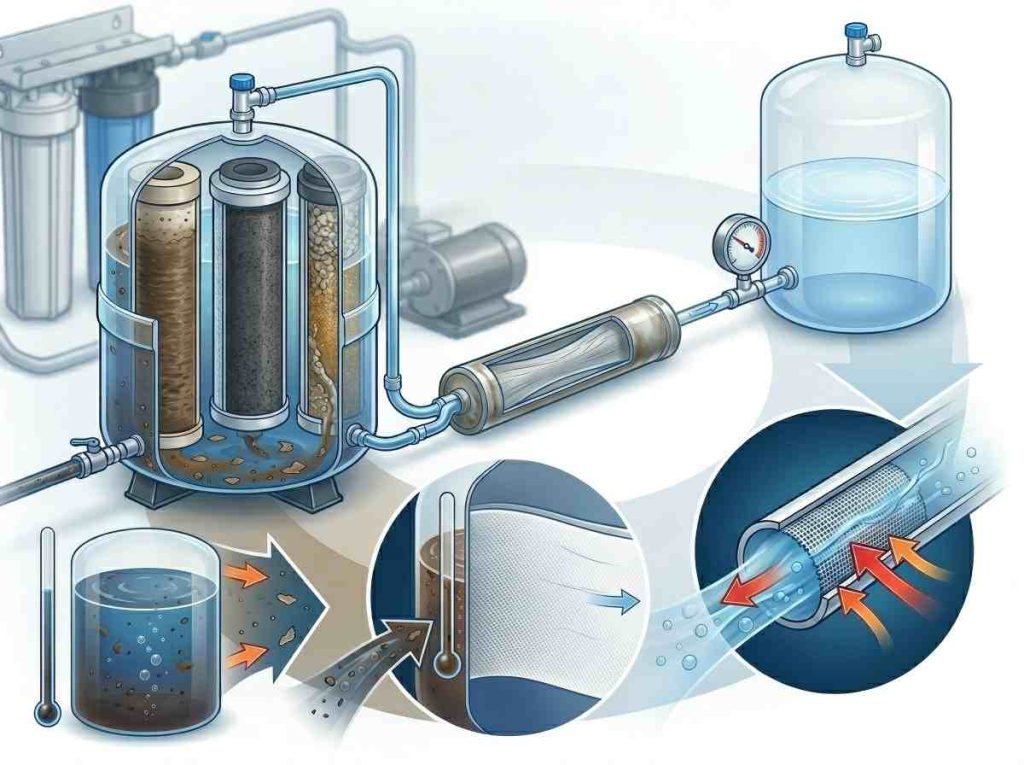
This is the most common and most complex cause of reduced permeate flow. Fouling happens when material accumulates on the membrane surface and restricts water passage. It comes in three main forms:
Biofouling — microbial growth on the membrane. It develops slowly and tends to cause a gradual, steady decline in output over months rather than a sudden drop.
Scaling — mineral deposits (typically calcium carbonate, calcium sulfate, or silica) that form when the concentrate side becomes oversaturated. Hard water increases the risk significantly.
Colloidal fouling — fine suspended particles, silt, or organic matter that block the membrane surface. This is often made worse by inadequate pretreatment upstream.
A useful indicator: if permeate flow has dropped more than 15% from baseline while feed pressure and temperature remain unchanged, fouling is likely the cause. If salt rejection has also dropped by 10% or more at the same time, that usually points to membrane damage rather than fouling alone.
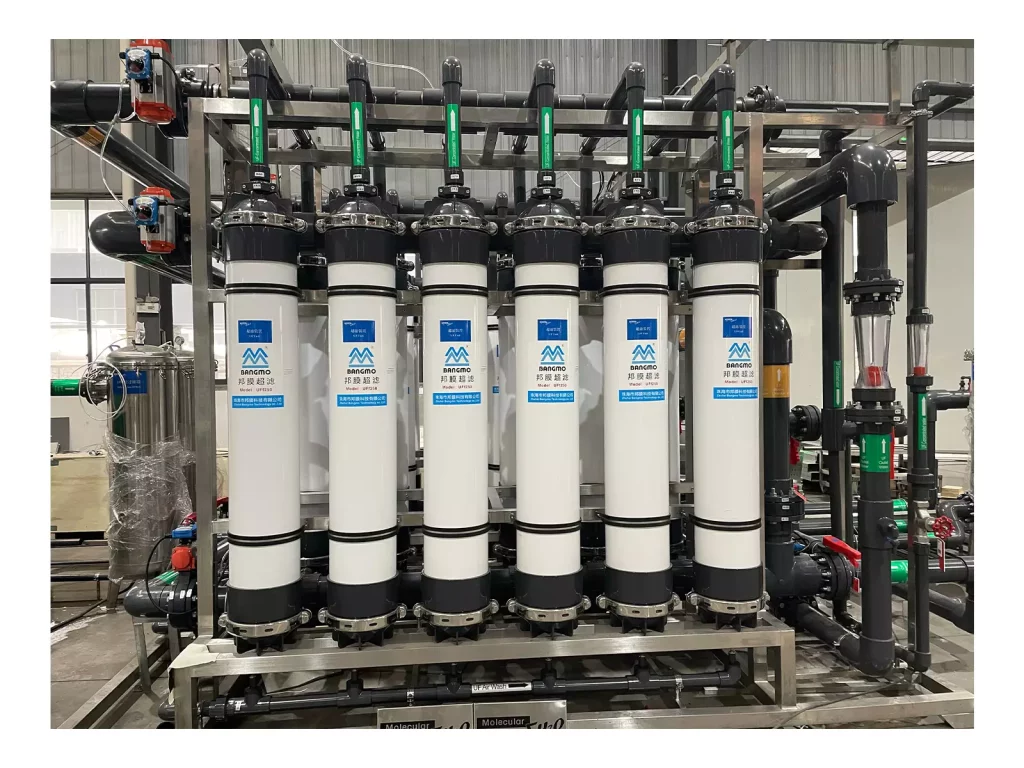
Minor fouling can often be addressed through chemical cleaning (CIP — Clean-In-Place). More severe or long-standing fouling typically means the membrane needs replacement. The most reliable way to prevent fouling is proper pretreatment, removing suspended solids and managing feed water chemistry before it reaches the membrane. Molewater’s pretreatment filtration systems are designed specifically for this purpose.
4. High Feed Water TDS
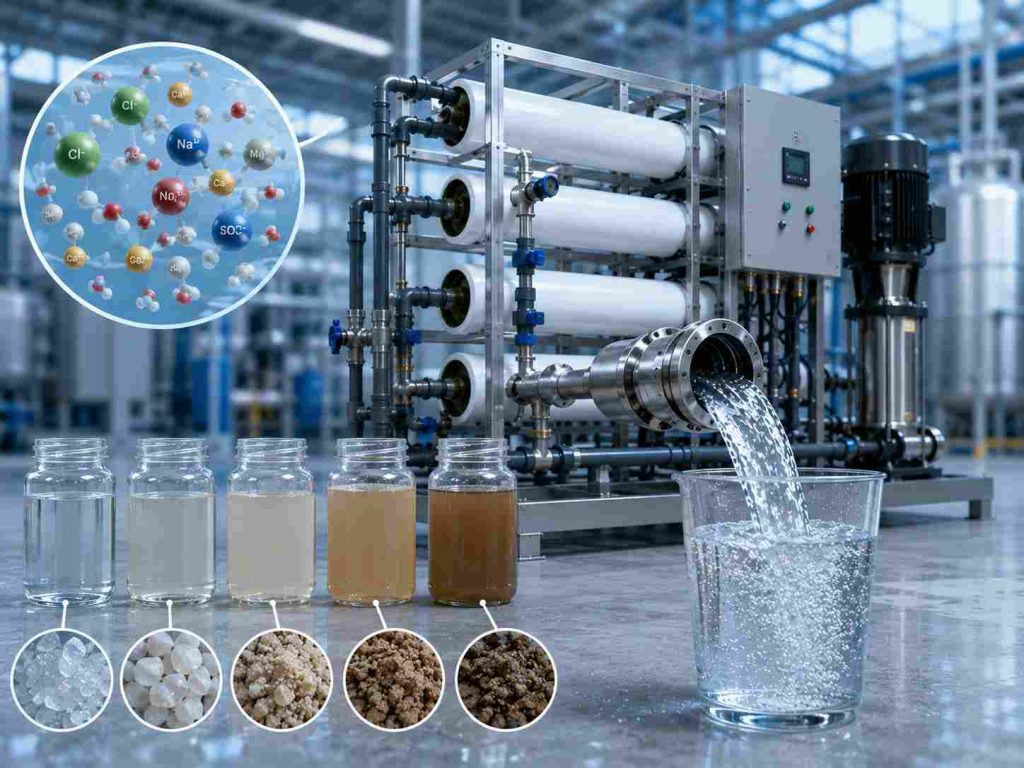
The more dissolved solids in your source water, the more osmotic pressure the RO system has to overcome. This is one of the core principles of how osmosis works: osmotic pressure rises with solute concentration.
At low TDS levels (200–500 ppm), osmotic pressure is manageable and easily overcome with standard operating pressure. At high TDS — seawater runs around 35,000 ppm, for example — the osmotic pressure alone exceeds 350 psi, which is why seawater desalination requires specialized high-pressure equipment.
For most commercial and industrial RO applications, feed TDS above 2,000 ppm requires careful pressure management to maintain target permeate output. If your source water quality has changed recently which happens with well water or certain municipal supplies, it’s worth testing current TDS and comparing it to your system’s design specifications.
5. Storage Tank Back Pressure
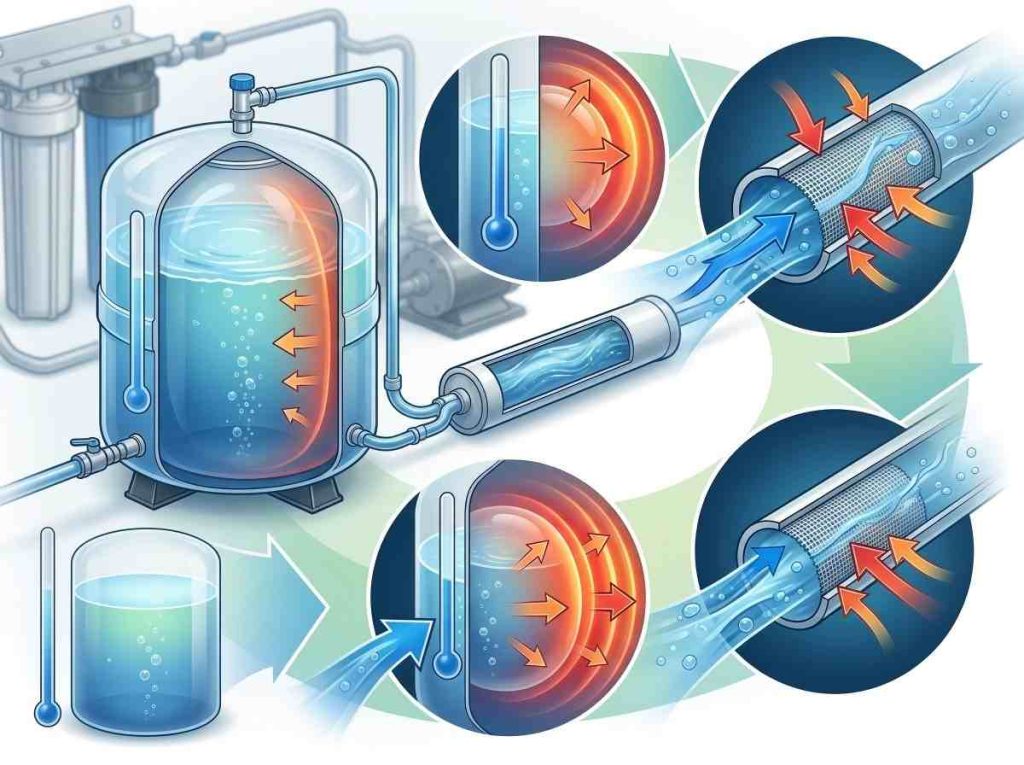
This one surprises a lot of people. As the RO storage tank fills, the water pressure inside it increases. That pressure pushes back against the permeate side of the membrane, reducing the net driving pressure available for filtration.
The result: production slows as the tank fills, and may effectively stop when the tank reaches about two-thirds of capacity, even before the automatic shut-off valve has triggered.
This is normal behavior for standard RO configurations. But if your tank regularly sits near full and your output is consistently below the rated rate, it’s worth addressing. A permeate pump uses the energy from the brine flow to push permeate into the tank against that back pressure, maintaining more consistent production and reducing wastewater at the same time. For larger-scale operations, Molewater’s industrial RO systems incorporate pressure management components that handle this at the system design level.
6. Clogged Pretreatment Filters
The RO membrane almost never fails on its own. Most of the time, the problem starts upstream.
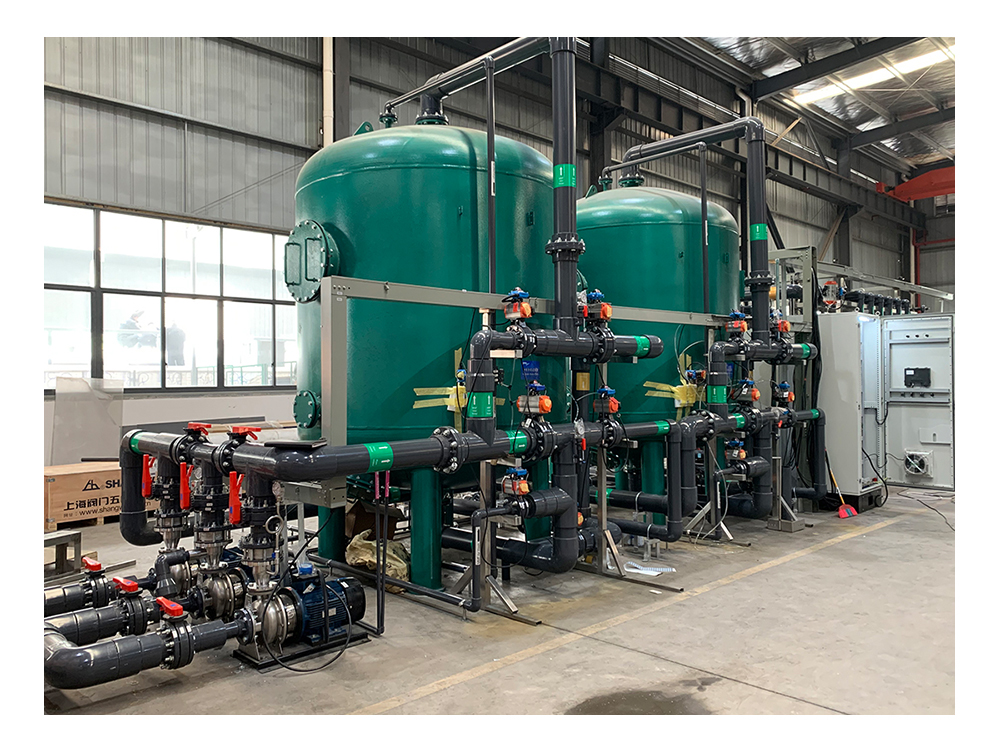
Pretreatment filters like sediment filters, carbon filters, and sometimes softeners protect the RO membrane from particles, chlorine, and scale-forming minerals. When they clog, they restrict feed flow and reduce inlet pressure to the membrane, which directly reduces permeate output.
Sediment (PP) filters typically need replacing every 1–3 months depending on source water quality. Carbon filters: every 3–6 months. If those intervals have passed without a change, this is the lowest-cost place to start.
The U.S. EPA’s guidance on point-of-use water treatment also lists filter maintenance as one of the most critical factors in maintaining consistent RO performance over time.
7. Natural Membrane Aging
Even a well-maintained membrane doesn’t perform at the same level indefinitely. Over time, membrane material undergoes gradual compaction and minor degradation, which progressively reduces permeate flux, the rate of water flow per unit of membrane area.
Under normal operating conditions, most RO membranes lose 5–10% of output per year. This is gradual and predictable, and very different from the sharper decline you’d see with fouling or a pressure problem.
The practical implication: if your system is 3–4 years old and has been maintained properly, some reduction in output is expected. If performance has dropped more than 20–30% from its original baseline, membrane replacement is likely the more cost-effective next step rather than continued troubleshooting.
Quick Diagnosis: Match Your Symptoms
| What you’re seeing | Most likely cause | First step |
| Slow output, TDS rejection still normal | Low pressure or back pressure | Check feed pressure; check tank level |
| Slow output in winter only | Temperature effect | Compare to summer baseline |
| Gradual decline over several months | Membrane fouling | Run CIP cleaning or salt rejection test |
| High TDS in permeate + slow output | Membrane damage | Salt rejection test; consider replacement |
| Sudden drop after filter change | Air lock or installation issue | Re-prime system; check connections |
| Slow output on aging system (3+ years) | Membrane aging | Baseline performance comparison |
FAQ
What is a normal RO permeate flow rate?
It depends on the system and application. Residential units typically produce 50–100 gallons per day. Industrial systems are rated in GPM. The more useful number is how your current output compares to your system’s rated or original baseline performance.
Why is RO flow still slow after replacing filters?
New filters solve upstream restriction, but not pressure or membrane issues. If output stays low after a filter change, check feed pressure, inspect the membrane’s age, and verify storage tank pressure.
Does cold water affect RO output?
Yes, noticeably. A system producing 100 GPD at 25°C may produce only 60–70 GPD at 10°C. This is a normal physical response to temperature, not a malfunction.
How do I know if the RO membrane needs replacement?
Test salt rejection: measure TDS in both feed water and permeate. A healthy membrane should reject 90–99% of dissolved solids. If rejection has dropped below 85%, cleaning or replacement is likely necessary.
Where to Start
If permeate flow has dropped, the most efficient approach is to work through this list in order: pressure first, then temperature, then fouling, and so on. Most issues are diagnosable with a pressure gauge and a TDS meter.For applications where consistent output is non-negotiable — pharmaceutical production, hemodialysis, laboratory purification — the tolerance for performance drift is much narrower. In those cases, a purpose-built industrial reverse osmosis system with integrated monitoring is the more reliable long-term approach rather than reactive troubleshooting after the fact.