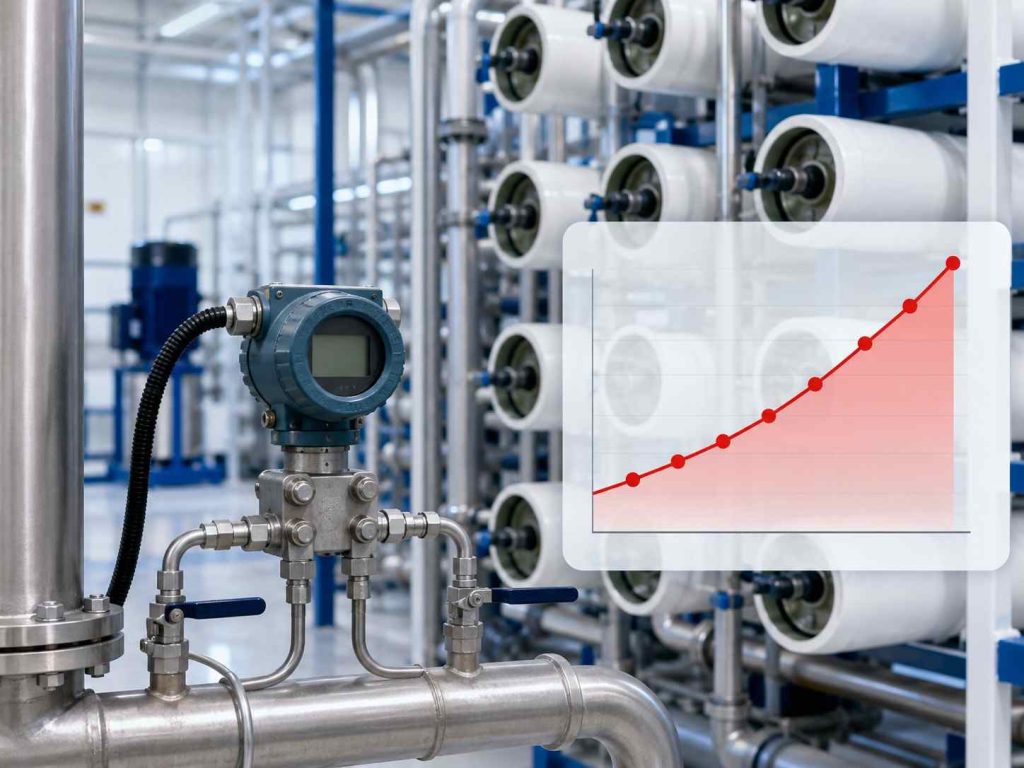
When an RO system starts underperforming, the first instinct is usually to blame the membrane itself. But in most cases, the membrane isn’t the problem, it’s a symptom. And one of the earliest, most reliable indicators that something is wrong is a rising differential pressure.
If you’ve been tracking your system’s DP and noticed it creeping upward, this article breaks down the five most common reasons that happens, how to identify which one you’re dealing with, and what to actually do about it.
What is Normal Differential Pressure in RO System?
Differential pressure (DP) is the pressure drop across the membrane from feed inlet to concentrate outlet. At commissioning, most RO systems establish a baseline DP — typically around 1 bar (14.5 psi) per membrane element, though this varies by system design.
What matters over time is the change relative to that baseline:
| DP Increase from Baseline | What It Means |
| Up to +15% | Normal operating variation |
| +15% to +30% | Monitor closely, plan for cleaning |
| +30% to +50% | Clean soon |
| +50% to +100% | Clean immediately, investigate pretreatment |
| Over +100% or cleaning ineffective | Evaluate replacement |
The American Membrane Technology Association (AMTA) recommends tracking normalized differential pressure (NDP) to account for temperature and flow changes, so you’re always comparing consistent data points. Without normalization, seasonal temperature shifts alone can make your readings misleading.
Cause 1: Particulate Fouling
This is the most common cause of DP rise, and it tends to happen faster than most operators expect.
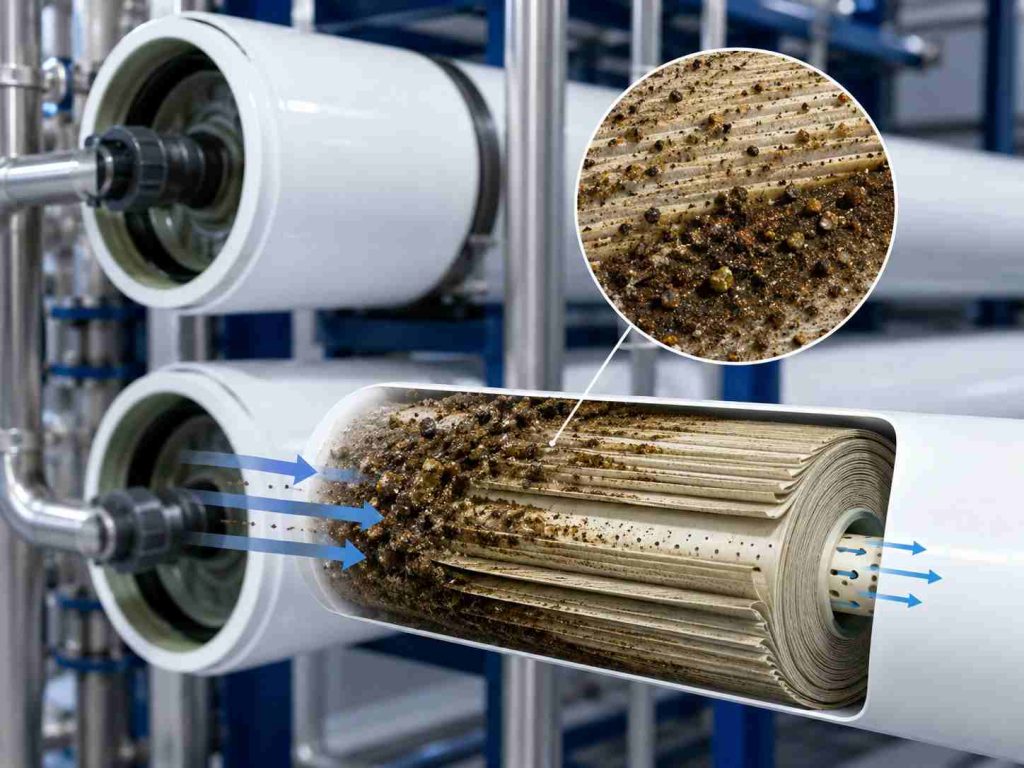
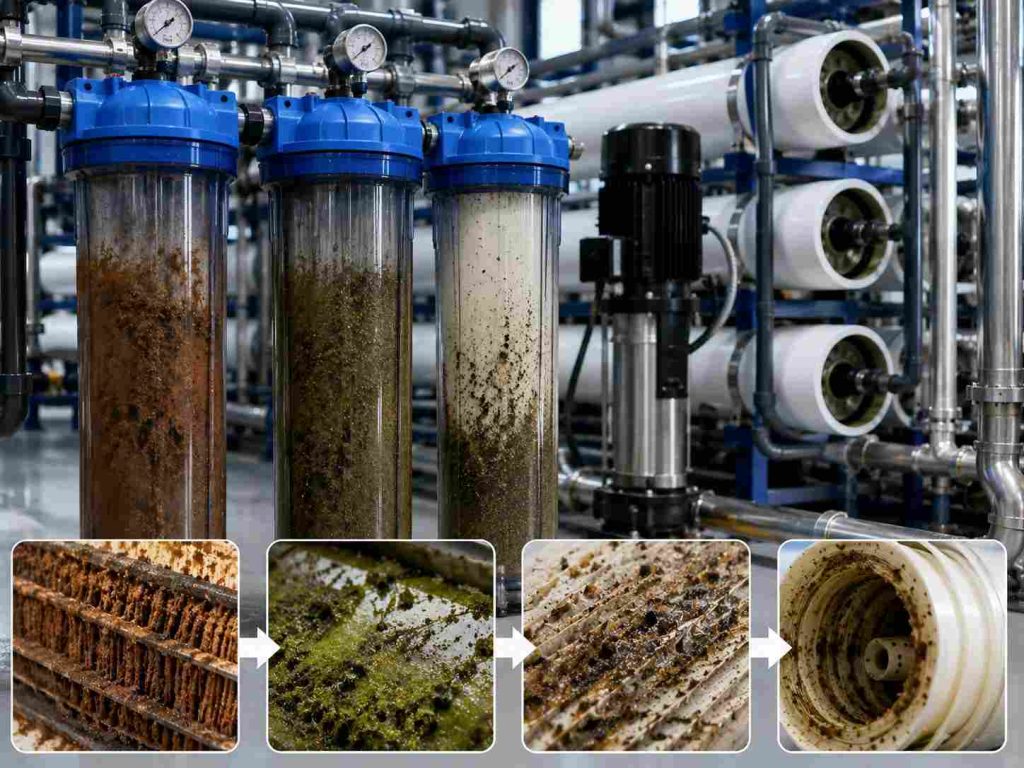
Particulate fouling occurs when suspended solids — sand, silt, colloidal matter — accumulate on the membrane surface and form what’s essentially a resistive layer. Water still passes through, but it has to work against that buildup, which drives the pressure differential up.
How to identify it: DP rises relatively quickly, often within weeks of a pretreatment issue. The problem typically shows up first in the lead elements (the membrane housings closest to the feed inlet). If you measure your feed water’s Silt Density Index (SDI) and find it above 5, particulate fouling is likely at play.
What to do: In the short term, a high-pH alkaline clean with a surfactant-based solution can break up the fouling layer. Long-term, the fix is upstream — check your multimedia filter, verify your cartridge filter is rated for the right micron size, and confirm replacement intervals are being followed. No cleaning protocol will solve a pretreatment problem permanently.
Cause 2: Scaling
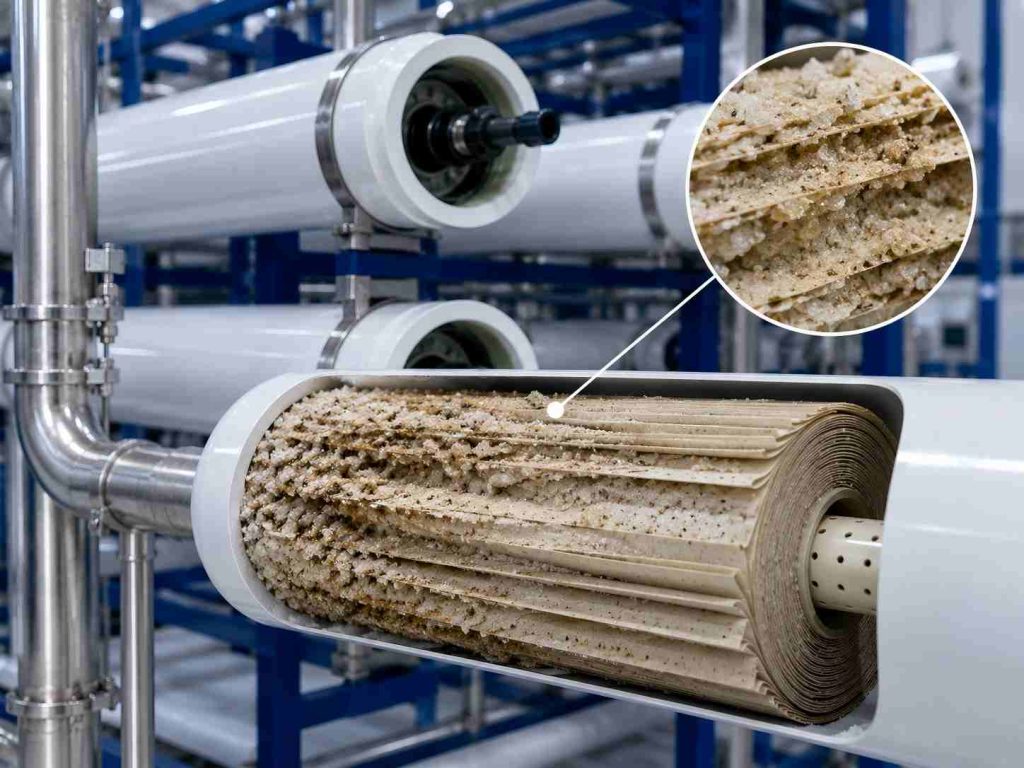
Scaling is subtler than fouling and, in some ways, more damaging. It develops when dissolved minerals in the feed water — calcium carbonate, calcium sulfate, silica — exceed their saturation point and precipitate directly onto the membrane surface.
Unlike particulate fouling, scaling tends to build slowly. You might not notice meaningful DP changes for months, which is exactly why it often goes unaddressed until the membrane is already significantly impacted.
How to identify it: DP rises gradually and steadily, concentrated in the tail elements (the last housings in the array). Salt rejection often remains stable early on, which can create a false sense of security. If your feed water has high hardness or a Langelier Saturation Index (LSI) above zero, scaling is a real risk.
Related reading: Why Your RO Membranes Still Scale After Using a Water Softener?
Cause 3: Biofouling
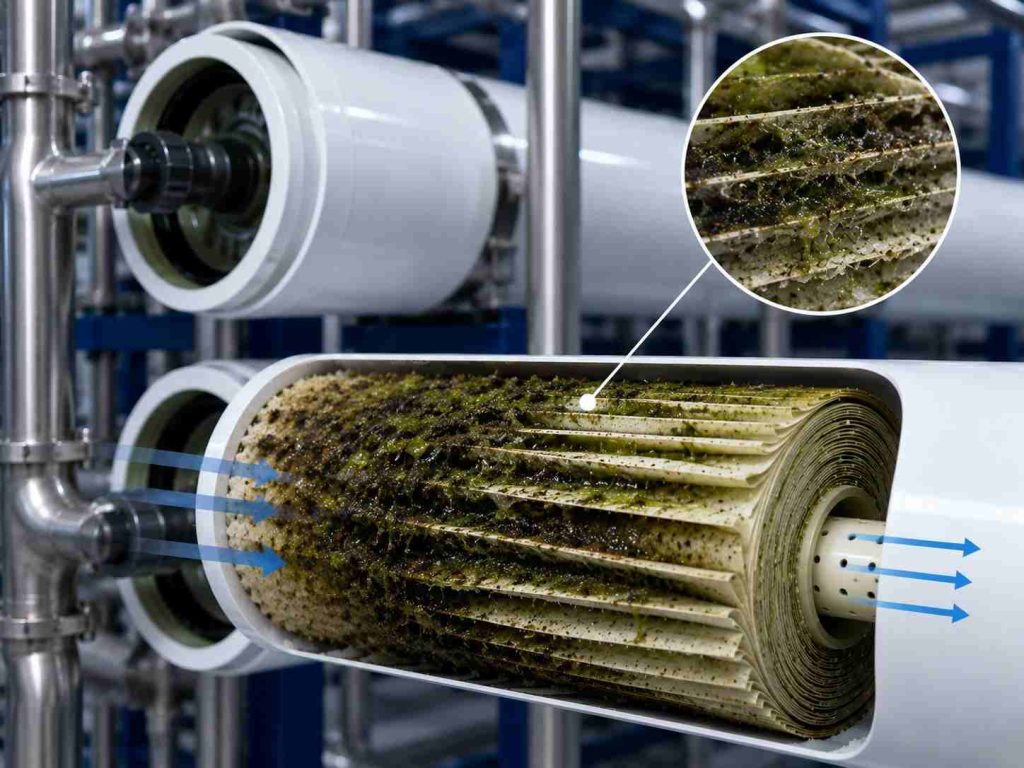
Biofouling is what happens when bacteria colonize the membrane surface and form a biofilm — a structured, self-protective community of microorganisms that resists cleaning far better than loose particulates or mineral deposits.
It’s more common than many operators realize, and it’s particularly tricky because the conditions that allow it to develop aren’t always obvious.
How to identify it: DP rise often comes with a noticeable odor in the concentrate stream. Restarting the system after a shutdown period can cause an immediate DP spike. In severe cases, permeate microbial counts rise. If your system regularly sits idle without proper preservation, or if your feed chlorine residual before dechlorination is inconsistent, biofouling should be on your radar.
What to do: Alkaline cleaning combined with a surfactant is a starting point, but established biofilms often require a non-oxidizing biocide treatment. Before using any biocide, confirm it’s compatible with your membrane material — most thin-film composite membranes are sensitive to oxidizing agents. Long-term control means managing biological activity in your feed water, ensuring complete dechlorination before the membrane (residual chlorine destroys the membrane, but insufficient dechlorination allows biogrowth upstream to carry through), and flushing the system properly during extended shutdowns.
Cause 4: Pretreatment Failure
This one can catch operators off guard because the DP rise happens fast — sometimes within days and the cause isn’t in the membrane system at all.
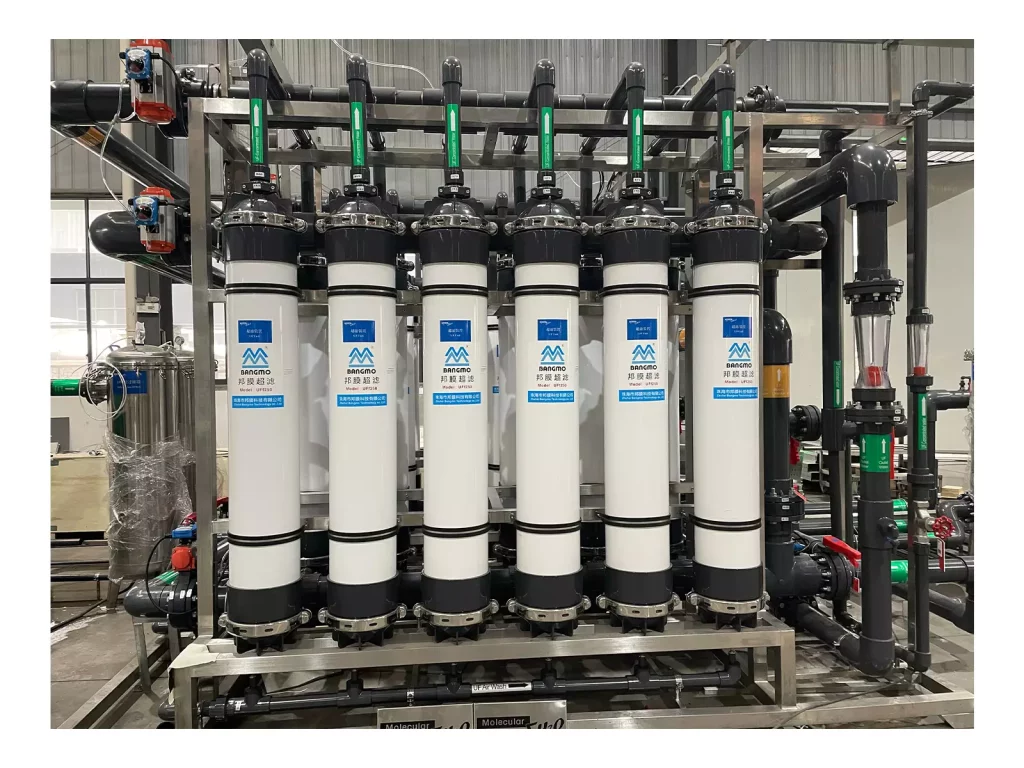
When pretreatment fails, a ruptured cartridge filter, an exhausted carbon block, an ultrafiltration membrane that’s been compromised, the RO membrane suddenly receives feed water far outside its design parameters. The result is accelerated fouling across multiple membrane elements simultaneously.
How to identify it: Rapid, widespread DP increase across the system rather than a gradual rise in select elements. Inspecting the downstream side of your cartridge filter often reveals the issue immediately. Replacing the pretreatment components and monitoring whether DP stabilizes afterward is a reasonable diagnostic approach.
What to do: Replace whatever pretreatment component has failed and establish a documented maintenance schedule going forward. This is also worth emphasizing: pretreatment consumables are a small fraction of membrane replacement costs. A cartridge filter that costs a few dollars, changed on schedule, is the most straightforward protection you have against a membrane replacement that costs considerably more. Don’t rely on visual judgment alone, you should set replacement intervals based on differential pressure across the pretreatment stage, not appearance.
Cause 5: Membrane Aging or Chemical Damage
Sometimes the membrane itself is genuinely the problem — either because it has reached the end of its useful life, or because it was exposed to something that caused irreversible damage.
Chlorine is the most common chemical culprit. Even low, continuous chlorine exposure degrades thin-film composite membranes over time. A single slug dose from a poorly controlled chlorination event can cause significant damage within hours. Extreme pH excursions carry similar risks whether from a chemical dosing malfunction or a pretreatment failure.
How to identify it: The distinguishing factor here is what happens to salt rejection. In fouling and scaling scenarios, DP typically rises while rejection stays relatively stable. With membrane degradation, you’ll often see DP rise and permeate TDS increase. When cleaning no longer restores performance, or when the system has been in operation beyond the manufacturer’s recommended membrane life (usually three to five years for commercial elements), aging or damage is likely.
What to do: Cleaning is generally not worth pursuing at this stage, the structural integrity of the membrane is compromised, and no amount of chemical treatment will reverse that. The right move is replacement, ideally preceded by a membrane autopsy if resources allow. Autopsy analysis identifies the specific damage mechanism, which helps prevent the same outcome with the replacement elements.
How to Stay Ahead of It
Reactive troubleshooting is always more expensive than prevention. A few habits make a real difference over time.
Install pressure gauges at both the inlet and outlet of each membrane housing so you can calculate DP per element rather than relying on system-wide averages. A system average can look acceptable while one element is already significantly fouled. Track readings regularly and maintain a log so trends are visible, daily for commercial systems, monthly for smaller installations. Normalized data tracking through tools like ROSA or IMSDesign makes this more accurate.
Set intervention thresholds before you need them. Knowing in advance that a 30% DP rise triggers a cleaning work order removes the guesswork when you’re in the middle of a production week.
A Few Final Notes
Most differential pressure problems are manageable when caught early. Fouling and scaling, if addressed at the right stage, respond well to cleaning and rarely require immediate membrane replacement. The cases that end up being expensive are usually the ones where warning signs were present for months before anyone acted on them.
The five causes covered here, particulate fouling, scaling, biofouling, pretreatment failure, and membrane aging, account for the large majority of DP issues in real-world RO systems. If you’re specifying or sourcing RO equipment and want systems designed with monitoring and maintenance in mind from the start, Molewater manufactures commercial and industrial reverse osmosis systems with a focus on long-term performance and serviceability, worth a look if you’re building out or upgrading a water treatment setup.