
Rivers, lakes and reservoirs are important sources of water for drinking water systems, but surface water usually requires treatment before it is safe to drink. The essential question is not whether it can be done, it can be, but what proper surface water treatment really involves, and what drives the decisions about the procedure.
This guide describes the treatment of surface water for drinking water purposes, how its composition influences treatment strategies and what factors should be considered when selecting a system.
Can Surface Water Be Used for Drinking Water?
Yes. Safe and reliable drinking water supply can be achieved through processing surface water sources like rivers, lakes and reservoirs. These freshwater sources form part of public water systems across the world.
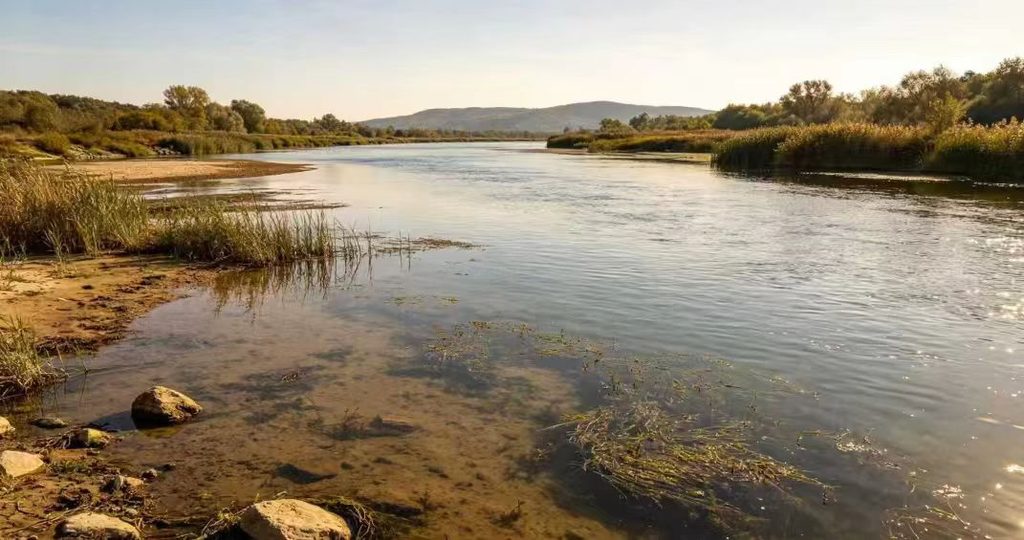
Surface water does not arrive ready for direct consumption; instead it contains silt, microorganisms, organic debris and sometimes agricultural or industrial runoff depending on its source and surrounding environment.
Successful surface water treatment for drinking water requires development of a technique to treat what is present in the raw water to the appropriate output standard. What’s right for one project won’t be right for another.
What Determines How Surface Water Is Treated?
There is no single surface water treatment process that fits every project. What goes into the system depends on several interconnected factors.
- Raw Water Quality: This is the starting point. Water taken from a highland reservoir will behave somewhat differently than water taken from a lowland river in an agricultural area. Turbidity, pH, organic content, microbial load and dissolved minerals change all the time and each one impacts what equipment is required.
- The Contaminants You Need to Remove: Different contaminants call for different treatment steps. High suspended solids require physical separation. Microbial contamination demands reliable disinfection. Dissolved salts or specific chemical compounds may point toward membrane-based processes. There is rarely a single solution.
- Seasonal and Source-Water Changes: Many surface water sources shift significantly throughout the year. A rainy season can spike turbidity almost overnight. Temperature fluctuations affect how well certain treatment steps perform. A well-designed surface water treatment plant accounts for this variability, not just for average conditions.
These factors together shape which treatment options make sense for a given project. The table below outlines how different raw water concerns connect to common treatment approaches. These should be read as general guidance rather than fixed prescriptions — the right combination depends on a proper analysis of your specific source water.
| Raw Water Concern | Why It Matters | Common Treatment Options |
| High turbidity / suspended solids | Can interfere with downstream treatment | Coagulation, flocculation, sedimentation, filtration |
| Microorganisms | Direct drinking-water safety concern | Filtration, disinfection |
| Organic matter | Can affect taste, odor and treatment performance | Coagulation, activated carbon, oxidation |
| Dissolved salts | Affect mineral content and water quality | RO or other appropriate membrane processes |
| Color and odor | Affect water acceptability | Activated carbon, oxidation, targeted treatment |
How Is Surface Water Treated for Drinking?
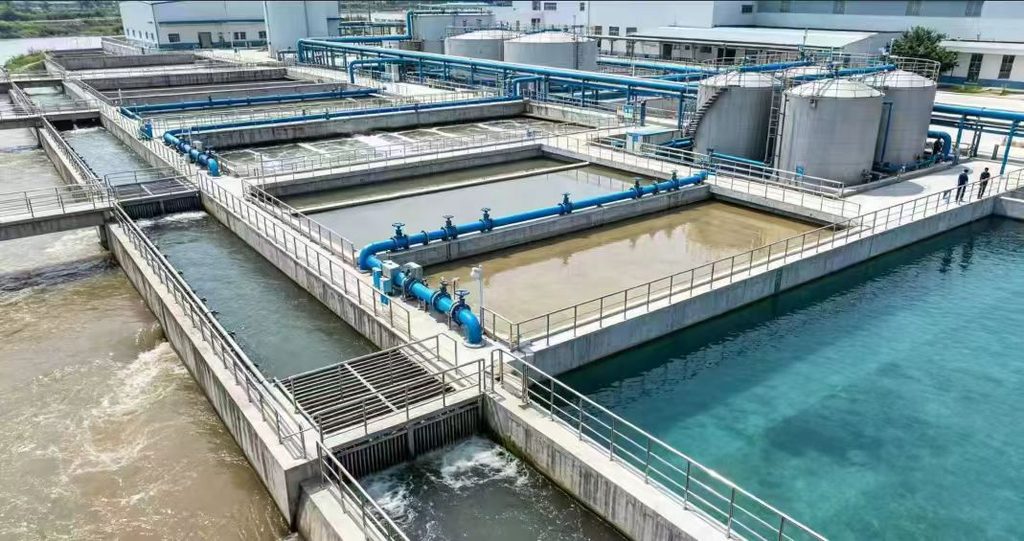
While no specific process applies to every surface water treatment project, most plants follow an orderly progression: pretreatment, solid-liquid separation, filtration and disinfection, which constitute a series of treatment barriers and transform raw water into treated water that can meet the applicable drinking water standards.
1. Screening and Pretreatment
First, leaves, large debris and coarse particles are removed to protect downstream equipment. It may also comprise pH correction, oxidation or other specific procedures depending upon source water conditions.
2. Coagulation and Flocculation
Chemical coagulants can be used to bind together particles and colloids into larger clusters called flocs that will eventually settle out, which is especially crucial in cases of high turbidity.
3. Sedimentation or Clarification
The flocs created in the preceding stage are allowed to settle out under gravity eliminating a large part of the suspended materials before the water passes through the system.
4. Filtration
The other particles are caught as the water flows through the filtration media. Depending on the design, this may include sand filters, multimedia filters or membrane filtration.
5. Disinfection
Chlorine, UV radiation, ozone, or a combination of these treatments inactivate pathogens. This is a necessary step when treating surface water for drinking water purposes because open water sources can contain a range of microorganisms and pathogens.
6. Additional Treatment When Needed
Some projects require steps beyond the conventional sequence. Activated carbon is used for the treatment of taste, odor and certain chemical substances. Ultrafiltration membranes provide an additional barrier to germs and tiny particles.
For dissolved salts or specific contaminants which cannot be properly removed by conventional treatment, reverse osmosis (RO) may be explored, but is not necessary for every surface water project. The specific configuration should always be based on raw water analysis and the finished-water requirements.
Why Do Surface Water Treatment Systems Differ?
This is one of the most practical questions we encounter: two projects are both drawing from surface water sources, yet the equipment setups look completely different. The reason is straightforward — what the raw water contains, and what the treated water needs to achieve, are not the same in any two locations.
| Water Condition | Possible Treatment Approach |
| Relatively low turbidity, limited contamination | Screening → Filtration → Disinfection |
| High suspended solids | Screening → Coagulation/Flocculation → Sedimentation → Filtration → Disinfection |
| High organic matter, taste or odor | Conventional treatment + activated carbon / targeted treatment |
| Microbial contamination concern | Appropriate treatment barriers + reliable disinfection |
| High dissolved salts or certain dissolved contaminants | Appropriate membrane treatment, such as RO, where suitable |
The goal is not to add as many treatment stages as possible, but to build enough treatment barriers for the actual raw water and the required output quality.
What Should You Check Before Choosing a Treatment System?
Before evaluating any equipment, it helps to work through a practical checklist:
- Raw water analysis: Do you possess a recent water quality report detailing turbidity, microbiological indicators, organic content, dissolved ions and pH values in order to make an accurate system recommendation? Without such data any such recommendations are pure guesswork.
- Output requirements: What standards does your treated water need to meet? Drinking water rules differ by country and by application.
- Flow rate and capacity: What volume does the system need to treat in an hour or a day? Does the system need to account for seasonal peaks in demand or variability in source water?
- Site constraints: What footprint, power supply and operator skill level is available on site?
- Source variability: How much does the raw water quality change between dry and wet seasons?
Having clear answers to these questions makes it significantly easier to select a surface water treatment plant that is properly sized and configured for your actual conditions — not just an average scenario.
Finding the Right Treatment Approach
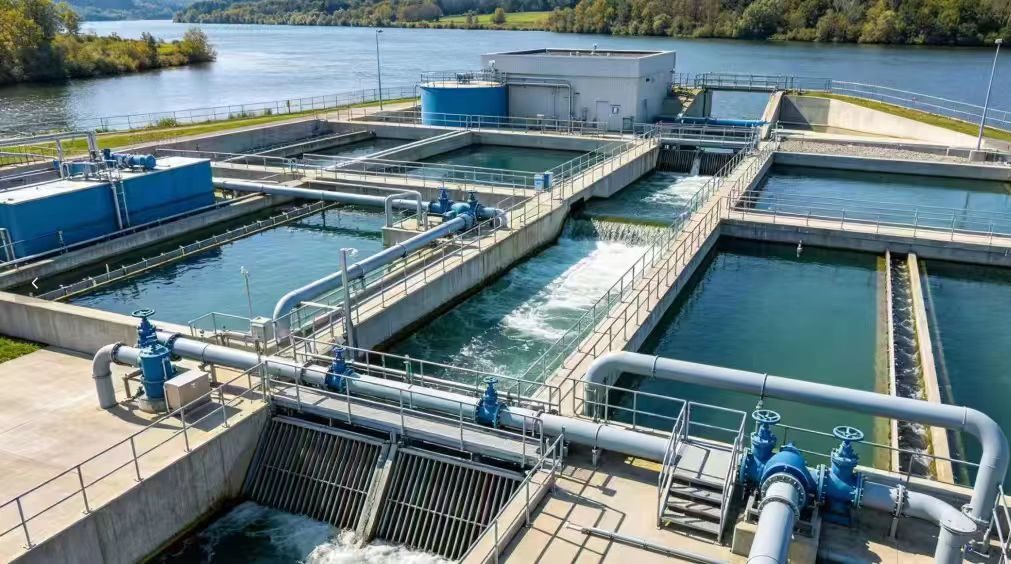
The basic stages of surface water treatment are well established, but selecting and configuring the right treatment process depends heavily on the source water and the required final water quality. Designing a system without proper raw water analysis almost always creates problems further down the line.
At Molewater, we have worked on water treatment projects across a wide range of source conditions and regulatory environments for over 20 years. If you are evaluating a surface water treatment system and want to work through the right configuration for your project, feel free to reach out to our team.