

Zinc is a common contaminant in industrial wastewater, particularly from metal finishing, electroplating, galvanizing, anodizing, and other manufacturing processes. Measuring zinc accurately is important for more than regulatory compliance. It can also help operators understand whether a treatment system is working properly and where zinc may be entering the wastewater stream.
The challenge is that the result can depend heavily on how the sample is collected and which analytical method is used. A dissolved zinc result, for example, does not represent exactly the same thing as total zinc.
For U.S. wastewater monitoring, several established methods are available, including atomic absorption, ICP-OES, ICP-MS, and the Zincon colorimetric method. EPA lists methods such as 200.7 and 200.8 among its approved metals methods, while Standard Methods also provides established procedures for zinc analysis.
This guide explains the main differences and practical considerations so you can choose a method that fits your wastewater and testing requirements.
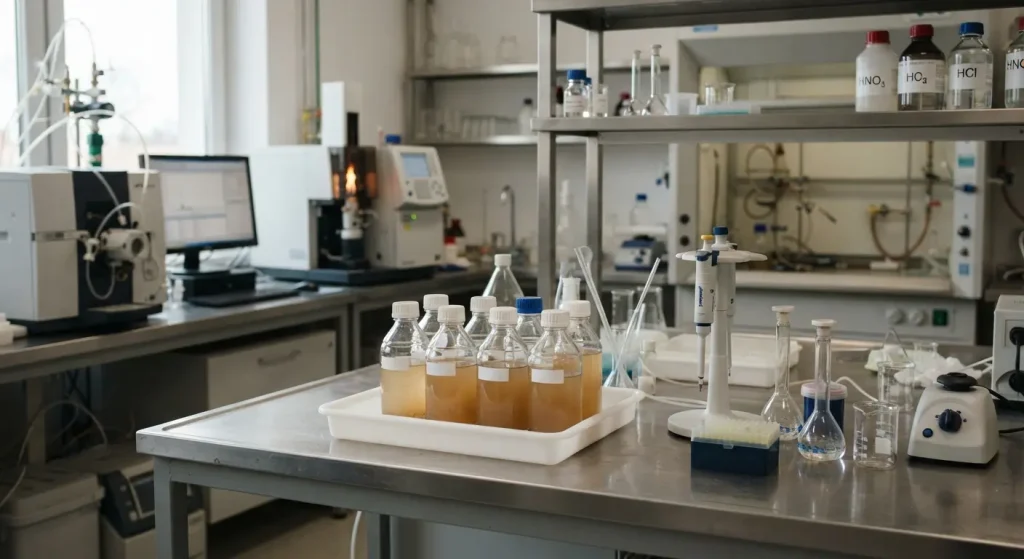
Dissolved Zinc vs. Total Zinc
Before selecting a testing method, first determine which form of zinc needs to be measured.
Dissolved zinc generally refers to the zinc that passes through a 0.45 μm filter before analysis. This measurement is useful for evaluating the dissolved metal remaining after treatment or for tracking how zinc changes during a treatment process.
Total zinc, often reported as total recoverable zinc in regulatory testing, includes both dissolved zinc and zinc associated with suspended solids. Depending on the method, the sample may be preserved with acid and digested before instrumental analysis to bring the zinc into solution.
The difference can be significant. A wastewater sample may have a relatively low dissolved zinc concentration while showing a much higher total zinc concentration because some of the zinc is attached to suspended particles.
For compliance testing, a dissolved zinc result should not be used in place of a total zinc result unless the applicable requirement allows it. Always check the discharge permit and specified analytical method before testing. EPA’s 40 CFR Part 136 includes approved procedures for zinc analysis using techniques such as atomic absorption (AA), ICP-AES, ICP-MS, and colorimetric methods.
Sampling and Sample Preservation
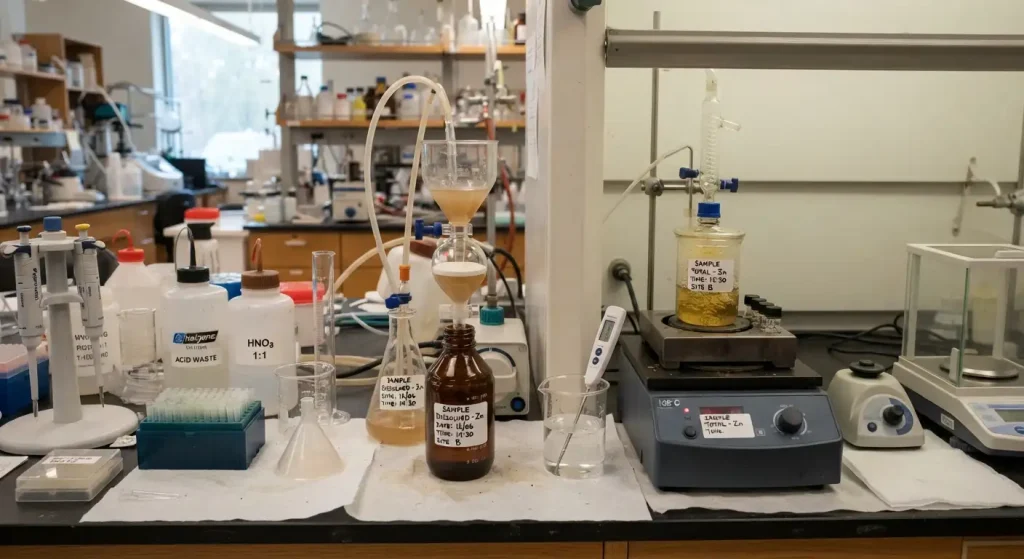
Reliable zinc analysis starts with proper sample collection and preservation. Use clean plastic or glass containers for sampling. Containers should be rinsed with dilute nitric acid and then with the wastewater sample before collection. For preservation, add concentrated nitric acid until the sample reaches a pH below 2. The acidified sample can then be refrigerated and stored for up to six months, following the guidance provided in Standard Methods for the Examination of Water and Wastewater.
Record basic field information, including the sampling location, collection time, sample temperature, and any unusual conditions. High suspended solids, unusual color, or strong odors can provide useful context when interpreting the test results.
Contamination should also be avoided throughout sampling and handling. Residue from sampling equipment, containers, dust, or other external sources can affect the result, particularly when zinc is present at low concentrations.
Main Methods for Measuring Zinc in Wastewater
Several established methods can be used to measure zinc in wastewater. The most suitable option depends on the zinc concentration, the wastewater matrix, the equipment available, and whether the results will be used for regulatory reporting.
Atomic Absorption Spectrometry (AAS)
Atomic absorption spectrometry includes both flame AAS and graphite-furnace AAS. In flame AAS, the sample is introduced into an air-acetylene flame, and the instrument measures the light absorbed by zinc at its characteristic wavelength. Graphite-furnace AAS uses a small sample volume that is heated in a graphite tube, allowing lower concentrations to be measured.
These techniques are described in Standard Methods 3111 B and C and are commonly used for routine metal analysis. They are also accepted for compliance monitoring. One limitation is that AAS generally measures one element at a time, so testing for several metals can require more time.
Inductively Coupled Plasma Methods
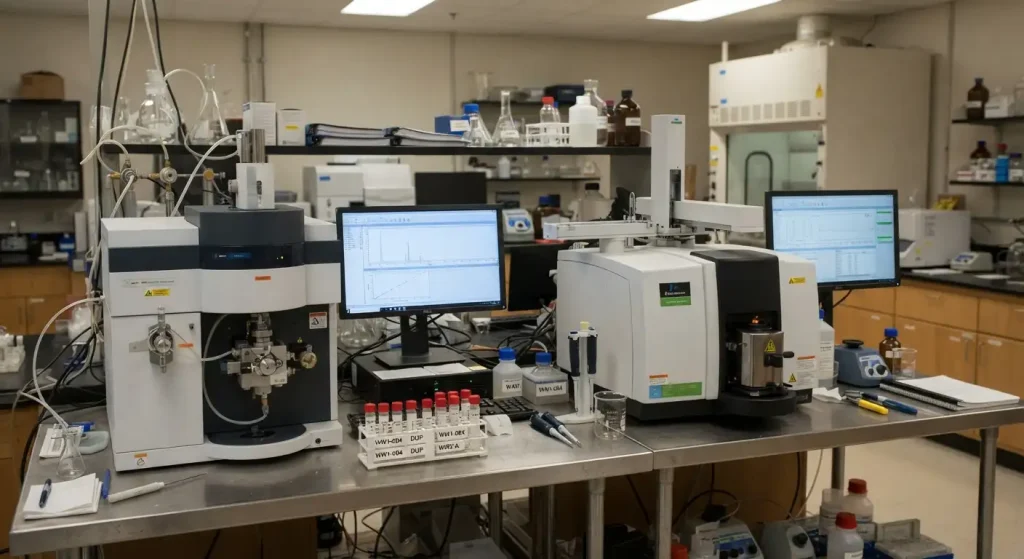
Inductively coupled plasma optical emission spectrometry (ICP-OES) and inductively coupled plasma mass spectrometry (ICP-MS) are useful when zinc needs to be measured together with other metals. EPA Method 200.7 covers ICP-OES, while EPA Method 200.8 covers ICP-MS.
Both techniques can provide low microgram-per-litre detection limits and are suitable for complex wastewater samples when the samples are properly prepared and digested. ICP instruments are more expensive and require trained personnel, but they can analyze multiple elements in a single run. For laboratories that routinely test a range of metals, this can make ICP a more efficient choice.
Colorimetric Zincon Method
The zincon colorimetric method is an option for laboratories that do not have access to advanced instrumental techniques. In this procedure, zinc reacts with the reagent zincon under alkaline conditions to form a blue-colored complex. Interfering metals are controlled through masking and other preparation steps, and the resulting color is measured with a spectrophotometer.
The procedure is described in Standard Methods 3500-Zn B and can be used for wastewater analysis. A typical working range is about 0.01 to 3 mg/L, with dilution used when concentrations are higher. Under suitable conditions, detection limits of around 0.02 mg/L may be possible.
Potential interference from metals such as cadmium, copper, iron, and manganese needs to be considered when testing industrial wastewater. Even so, the method can be a practical choice for routine analysis when the expected zinc concentration falls within its working range.
Commercial test kits using zincon or related colorimetric reagents, such as PAR, are also available. They can be useful for field checks and laboratory screening when a quick indication of zinc concentration is more important than achieving the precision of a full instrumental analysis.
Other Approaches
Electrochemical techniques, including anodic stripping voltammetry, can provide very low detection limits and are used for some specialized applications. Some treatment facilities also use online analyzers based on colorimetric or voltammetric measurements for process monitoring.
Online systems can provide continuous data without requiring manual sampling for every measurement, but they still need regular calibration, verification, and maintenance to keep the results reliable.
How Should You Choose a Zinc Testing Method?
The right zinc testing method depends on what you need the results for, the concentration range, and the equipment available in your laboratory. No single method is suitable for every wastewater application.
For regulatory compliance, use the analytical method specified or accepted by the applicable permit or regulatory authority. EPA’s approved methods for total zinc include atomic absorption, ICP-AES, ICP-MS, and Zincon procedures, subject to the conditions set out in 40 CFR Part 136.
For laboratories that routinely test multiple metals, ICP-OES can be a practical choice. It allows several elements to be measured in a single analysis, which can reduce testing time when zinc is part of a broader metals panel.
When the focus is primarily on zinc and the laboratory already has suitable AAS equipment, atomic absorption remains a reliable option for routine analysis. The choice between flame AAS and graphite-furnace AAS will depend largely on the concentration range and required detection limit.
For routine screening or lower-cost testing, a validated Zincon-based method or commercial test kit may be appropriate. However, the wastewater matrix should be checked for potential interferences before relying on the results for important decisions.
At very low zinc concentrations, ICP-MS or graphite-furnace AAS may be preferable because these techniques generally provide greater sensitivity. The final choice should take into account not only detection limits, but also sample preparation, matrix effects, testing volume, equipment costs, and regulatory requirements.
Final Considerations
Zinc analysis is a routine part of wastewater monitoring, but the quality of the result depends on more than the analytical instrument. Sampling, preservation, sample preparation, and digestion all need to be handled correctly before the sample reaches the final measurement stage.
Atomic absorption and inductively coupled plasma techniques remain widely used for zinc analysis because they offer reliable results and are included in established regulatory methods. For laboratories with more basic equipment, the Zincon colorimetric method can provide a practical alternative when the concentration range and wastewater matrix are suitable.
Choosing the right method also means considering the purpose of the test. A compliance sample may require a specific approved procedure, while process monitoring may allow more flexibility. Using the appropriate method helps facilities obtain more useful data for evaluating treatment performance and managing zinc discharge.
For help with zinc wastewater treatment, testing requirements, or selecting a suitable treatment approach, Molewater can provide guidance based on the characteristics and treatment goals of your wastewater. For related guidance on treatment options, see our earlier article on how to remove zinc from wastewater.