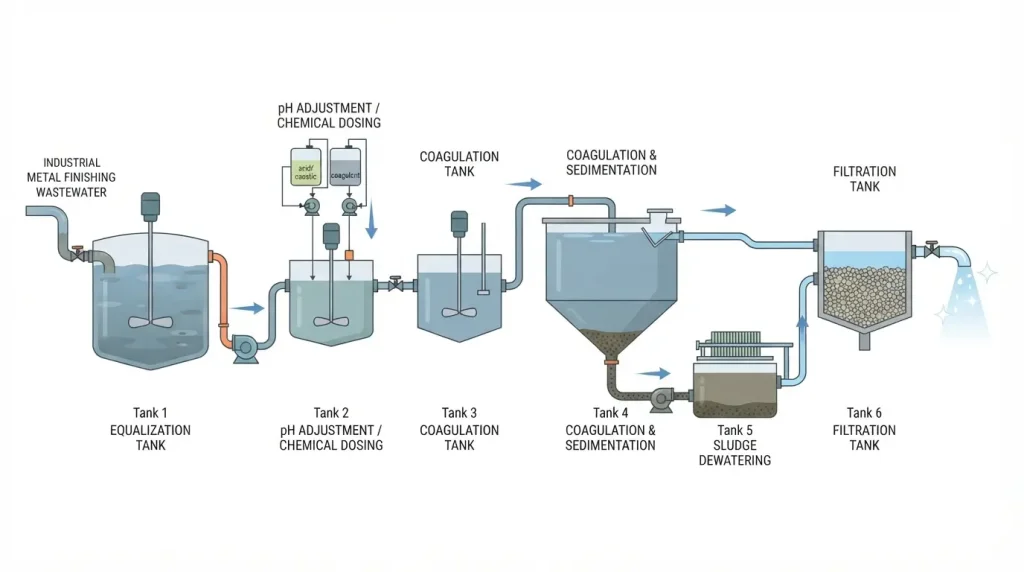
Zinc is used in a wide range of industrial processes, including metal finishing, galvanizing, electroplating, anodizing, battery manufacturing, and mining. Wastewater from these processes can contain significant amounts of zinc, making effective treatment an important part of industrial wastewater management.
Excess zinc can harm aquatic environments, disrupt biological treatment processes, and make it difficult for facilities to meet discharge requirements. In the United States, for example, 40 CFR Part 433 specifies zinc limits of 2.61 mg/L for the daily maximum and 1.48 mg/L for the monthly average for applicable metal-finishing facilities.
The most suitable zinc removal method depends not only on the concentration of zinc but also on its chemical form. Zinc may be present as dissolved Zn²⁺, suspended or precipitated solids, or complexes formed with substances such as EDTA, ammonia, cyanide, and organic compounds. These forms can respond differently to treatment, so identifying the form of zinc in the wastewater is an important step in system selection.
This guide covers the most commonly used methods for zinc removal from wastewater, including chemical precipitation, adsorption, ion exchange, membrane treatment, and other treatment options. It also explains where each method is most effective and the key factors to consider when designing or selecting an industrial zinc wastewater treatment system.
Where Does Zinc in Wastewater Come From?
Common industrial sources include galvanizing lines, electroplating and metal-finishing operations, anodizing, mining and metal processing, battery manufacturing, textile processes, and some chemical industries. A 2023 review of zinc separation technologies also identifies galvanizing, electroplating, tannery, textile, and dye industries among important sources of zinc-containing wastewater.
In relatively simple wastewater, zinc may be present mainly as dissolved Zn²⁺. This form can usually be treated effectively by chemical precipitation, ion exchange, or adsorption.
The situation becomes more complicated when zinc is chemically bound to other compounds. EDTA, cyanide, ammonia, and some organic acids can form stable zinc complexes. In these cases, simply increasing the pH may not provide the expected removal because the zinc remains soluble.
This is why wastewater testing should come before process selection. Total zinc, dissolved zinc, pH, alkalinity, suspended solids, competing metals, and the presence of complexing agents can all influence treatment performance.
How to Remove Zinc from Wastewater
1. Chemical Precipitation
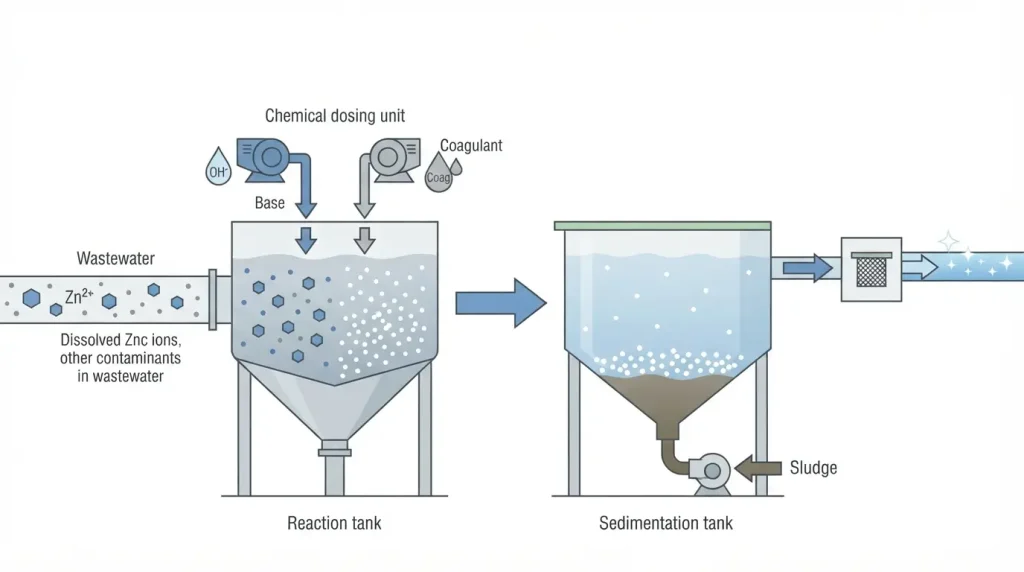
Chemical precipitation is one of the most common methods used to treat zinc-containing industrial wastewater. It is relatively simple to operate, uses well-established equipment, and can be cost-effective when treating wastewater with moderate to high zinc concentrations.
The process works by adding chemicals that convert dissolved zinc into an insoluble compound. The resulting solids can then be separated from the treated water through clarification, filtration, or other solid-liquid separation methods.
For hydroxide precipitation, the wastewater pH is increased to convert dissolved zinc into zinc hydroxide, Zn(OH)₂. A pH range of approximately 9.5–11 is often used as a starting point for zinc precipitation, but the actual optimum depends on the wastewater composition and other operating conditions. Because zinc is amphoteric, excessive pH adjustment can cause zinc hydroxide to become more soluble again, reducing removal efficiency.
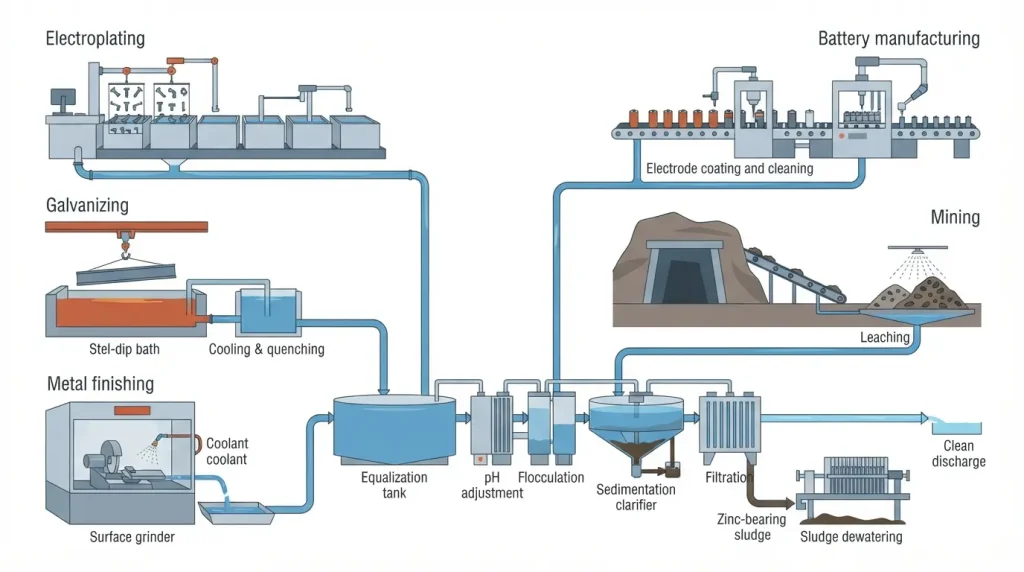
A typical treatment sequence is:
Equalization → pH adjustment → precipitation → coagulation/flocculation → clarification or filtration
Wastewater containing complexed zinc may require additional chemical treatment before precipitation. Complex-breaking agents or other pretreatment methods can be used to release zinc from stable complexes. Sulfide precipitation is another option for some applications, particularly when hydroxide precipitation alone cannot consistently achieve the required zinc concentration.
Chemical precipitation offers several practical benefits, including relatively low chemical and operating costs, straightforward equipment, and good performance at higher zinc concentrations. Its main limitation is the production of zinc-bearing sludge. The sludge normally needs to be thickened and dewatered before disposal, treatment, or potential metal recovery.
High zinc removal efficiencies have been reported in studies using optimized chemical conditions. However, results obtained under controlled laboratory conditions may differ from those achieved in a full-scale treatment system. Factors such as pH control, competing metals, complexing agents, chemical dosage, mixing, and solid-liquid separation can all affect the final zinc concentration.
2. Adsorption
Adsorption is often used as a polishing step after the bulk of the zinc has already been removed. It can help reduce residual dissolved zinc when a lower final concentration is required.
In an adsorption process, dissolved zinc binds to active sites on the surface of an adsorbent. Materials used for zinc removal include activated carbon, zeolite, chitosan, agricultural residues, algae-based materials, and modified industrial by-products. The choice of adsorbent depends on the wastewater characteristics, target zinc concentration, and operating requirements.
Several factors affect adsorption performance, including pH, contact time, adsorbent dosage, initial zinc concentration, and temperature. Among these, pH can have a significant effect because it influences both the surface properties of the adsorbent and the chemical form of zinc in the water.
Laboratory studies have reported effective Zn²⁺ removal using a wide range of low-cost biomass-based adsorbents. However, results from batch experiments may not directly reflect performance in a full-scale treatment system. Adsorbent capacity, regeneration requirements, hydraulic conditions, competing contaminants, and material consistency all need to be considered before scale-up.
In industrial wastewater treatment, adsorption is generally more suitable for relatively low residual zinc concentrations or as a final polishing stage. Once the adsorbent reaches its capacity, it must either be regenerated, replaced, or handled as waste in accordance with applicable requirements.
3. Ion Exchange
Ion exchange removes dissolved zinc by passing the wastewater through a resin that exchanges ions in the water with ions held on the resin. Strong-acid cation resins can remove a range of positively charged ions, while chelating resins can offer greater selectivity for zinc and other target metals.
A typical ion exchange system consists of three main steps: loading the resin, regenerating it once its exchange capacity is reached, and handling the resulting regeneration solution.
The process can produce a low-zinc effluent while concentrating the removed zinc into a much smaller volume of regeneration solution. This is useful in applications where water reuse is required or where recovering the zinc is preferable to treating it as part of a larger sludge stream.
The main limitation is resin fouling. Suspended solids, oils, organic matter, and other contaminants can reduce exchange capacity and shorten resin life. Adequate pretreatment, such as filtration or chemical precipitation, is therefore often required. Compared with conventional precipitation, ion exchange may also involve higher equipment, resin replacement, and regeneration costs.
For metal-finishing facilities with moderate zinc concentrations, ion exchange can be used as a polishing step after precipitation. Where the wastewater is relatively clean and zinc recovery or water reuse is a priority, it may also be incorporated earlier in the treatment process.
4. Membrane Separation
Membrane processes provide another route for zinc removal, particularly when water recovery is an important part of the treatment objective.
Depending on the wastewater, the available options may include ultrafiltration (UF), nanofiltration (NF), reverse osmosis (RO), or complexation-enhanced ultrafiltration.
Standard UF generally does not remove dissolved Zn²⁺ effectively because individual zinc ions are much smaller than the membrane pores. UF becomes more useful when zinc is associated with larger particles or when a complexing agent is used to form larger zinc-containing complexes.
NF and RO can provide much stronger removal of dissolved metals and can produce water suitable for reuse after appropriate pretreatment.
The trade-off is that membranes do not eliminate the contaminant. They concentrate it into a reject stream that still requires management. Fouling, scaling, pressure requirements, and energy consumption also need to be considered.
A 2023 review of zinc separation technologies highlights membrane separation and complexation-enhanced ultrafiltration as potential approaches for zinc separation and recovery.
5. Electrocoagulation and Other Electrochemical Methods
Electrocoagulation uses an electrical current to dissolve sacrificial iron or aluminum electrodes and generate coagulant species directly in the wastewater. These species help destabilize dissolved and suspended contaminants, allowing zinc and other metals to be incorporated into flocs and removed through subsequent solid-liquid separation.
The treatment performance depends on several operating conditions, including current density, treatment time, electrode material, pH, conductivity, and the initial zinc concentration. Wastewater composition also affects electrode consumption and the amount of sludge produced.
Laboratory and pilot-scale studies have achieved high zinc removal under controlled operating conditions. Full-scale performance can be different, particularly when the wastewater contains competing metals, complexing agents, oils, or high levels of suspended solids. Electrode consumption, electricity use, sludge generation, and electrode maintenance should therefore be considered when assessing the overall treatment cost.
Electrocoagulation may be suitable for wastewater streams where conventional chemical coagulation is difficult to control or where reducing the use and storage of chemical coagulants is a priority. Depending on the treatment target, it can be used as a standalone process or combined with other methods such as precipitation, filtration, or adsorption.
6. Biological and Emerging Technologies
Biological methods are still developing for industrial zinc removal. Biosorption using algae, microorganisms, plant materials, and other biomass has received considerable research attention.
Some experimental systems have achieved high zinc removal rates, and biological approaches may eventually support more sustainable metal recovery. However, many reported results are still based on laboratory experiments. Scale-up, process stability, biomass handling, and consistent performance remain important challenges.
For most industrial facilities today, biological or emerging methods are better considered as specialized or supplementary technologies rather than automatic replacements for established treatment processes.
Which Zinc Removal Method Should You Choose?
| Method | Best suited for | Main advantage | Main limitation |
| Chemical precipitation | Medium to high zinc concentrations | Low cost and proven technology | Produces metal-bearing sludge |
| Adsorption | Low concentrations and polishing | Simple and flexible | Adsorbent capacity is limited |
| Ion exchange | Low to medium concentrations | High-quality effluent and possible recovery | Resin fouling and regeneration |
| NF/RO | Water reuse and high removal requirements | High removal and water recovery | Fouling, energy and concentrate |
| Electrocoagulation | Difficult industrial wastewater | Reduced chemical dosing in some cases | Electrode and energy consumption |
| Biological methods | Specialized applications | Potentially sustainable | Limited full-scale experience |
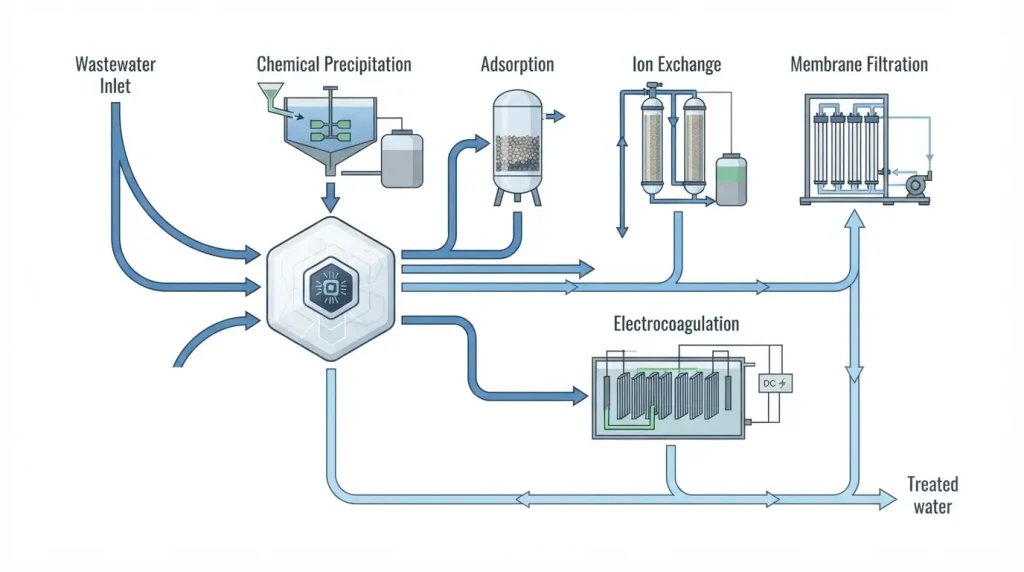
A combined process is often more practical than relying on one technology.
For example, a high-zinc electroplating wastewater may first undergo chemical precipitation, followed by filtration and ion exchange. A facility focused on water reuse may use precipitation as pretreatment before NF or RO.
Best Practices for Industrial Zinc Wastewater Treatment
A typical industrial zinc treatment system may include equalization and pretreatment, followed by the main zinc removal process and, when necessary, a final polishing step.
The treatment sequence should be based on the characteristics of the wastewater. If zinc is present in stable complexes, a chemical treatment step may be required to break those complexes before precipitation. For relatively simple wastewater with higher zinc concentrations, hydroxide precipitation followed by coagulation, clarification, and filtration may provide adequate removal.
pH control is critical during zinc precipitation. The target pH should be established through testing and maintained within the appropriate operating range. Changes in pH can affect zinc solubility as well as the performance of coagulants and other treatment chemicals.
Sludge management also needs to be included in the treatment design. Zinc-containing sludge should be characterized before disposal to determine the appropriate handling and disposal route under local regulations. Where the sludge contains a sufficiently high concentration of zinc, metal recovery may also be worth evaluating.
Before finalizing a chemical treatment system, a jar test should be conducted to determine the appropriate chemical dosage, operating pH, settling behavior, and expected residual zinc concentration. For larger facilities or wastewater with variable or complex chemistry, pilot testing can provide additional operating data and reduce the risk of unexpected performance issues after full-scale installation.
Cost and Compliance Considerations for Zinc Removal
For high-concentration zinc wastewater, chemical precipitation is often the most cost-effective treatment option. Adsorption and ion exchange generally have higher operating costs, but they may be appropriate when a lower residual zinc concentration is required. Membrane systems typically require greater capital investment and energy consumption, especially when high water recovery is part of the treatment objective.
Zinc recovery can also affect the overall treatment economics. When wastewater or treatment sludge contains a relatively high concentration of zinc, recovering the metal may be worth evaluating instead of sending the zinc directly to disposal. The potential value of recovery depends on factors such as zinc concentration, the presence of other metals, sludge composition, recovery method, and local disposal costs.
Discharge requirements should be reviewed for the specific facility and receiving system. In the United States, the metal-finishing standards in 40 CFR Part 433 specify zinc limits of 2.61 mg/L for the daily maximum and 1.48 mg/L for the monthly average for applicable sources. However, individual states, regions, or publicly owned treatment works (POTWs) may impose different or more stringent limits.
Zinc solubility and removal are also affected by pH and other water chemistry parameters. This is consistent with guidance from the WHO and reinforces the need to base treatment decisions on actual wastewater characteristics rather than applying a single treatment condition to every zinc-containing wastewater stream.
Can Molewater help?
Molewater has extensive experience designing and supplying industrial wastewater treatment systems tailored to metal-bearing streams. If you are evaluating options for zinc removal, need support with water quality assessment, or want a realistic cost estimate for a complete solution, please feel free to reach out. You can contact us here or request a call with one of our engineers. We will walk you through the steps to develop a practical treatment approach that meets your discharge limits and operational goals.