
With freshwater reserves shrinking, tighter environmental rules, and infrastructure costs that are basically skyrocketing, industries and municipalities hit a kind of crossroads in water management. The usual wastewater plan is moving into a new paradigm, and now stakeholders are pushed to decide between centralized wastewater treatment systems and decentralized wastewater treatment systems. As much as centralized facilities have traditionally anchored global sanitation, decentralized networks are rapidly outstripping them in terms of efficiency. Selecting the appropriate system doesn’t require selecting an all-inclusive winner; rather, it means carefully matching technical capabilities with geographic and operational limitations to find one which best meets them all.
Defining the Core Differences: Centralized vs. Decentralized
To figure out which setup fits your operations , it is essential to understand how these systems manage their waste, in the middle of it all.
Centralized Wastewater Treatment Systems (CWTS)
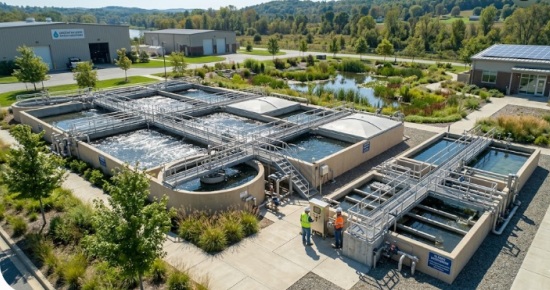
These are sort of massive, public-grade facilities that draw in sewage, plus industrial discharge, from a huge geographic area, using a wide and deep-buried piping web. In other words the wastewater is hauled miles from where it starts to one monolithic processing site. There it goes through several purification steps before it is finally released into big surrounding water bodies, like rivers, lakes , or coastal areas.
Decentralized Wastewater Treatment Systems (DWTS)
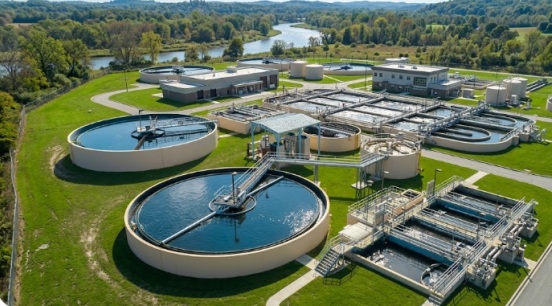
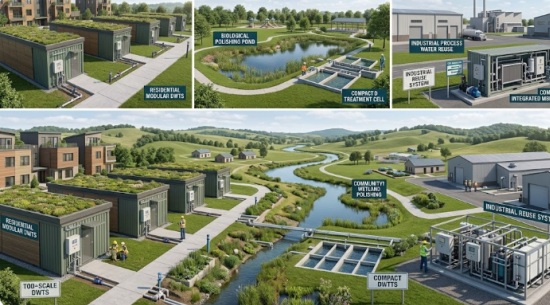
The systems process water at or near the point where it is generated. Utilizing containerized, modular, or compact prefabricated equipment, such as the integrated reverse osmosis (RO) or Ultrafiltration (UF) units – they treat localized waste, without relying on long-distance municipal transportation.
Comparative Overview for CWTS and the DWTS
| Evaluative Dimension | Centralized Systems (CWTS) | Decentralized Systems (DWTS) |
| Piping & Infrastructure | Extremely high dependency needs kilometers of mains for deep collection. | The minimal to none feature directly connects to localized source outputs. |
| Initial CAPEX | The high upfront cost for excavations in public areas, the acquisition of land, as well as heavy equipment. | Initial capital is low to moderate to purchase scalable manufactured equipment. |
| Expansion Agility | Restrictive; modifications take years of planning as well as municipal Zoning approval. | High makes use of plug-and play modular blocks to allow for rapid scaling. |
| Water Reuse Potential | The treated water is discharged into rivers, a distance of miles from the factory that produces it. | High; immediate on-site purification enables immediate industrial recycling. |
Centralized Wastewater Treatment: Pros, Cons, and Best Use Cases
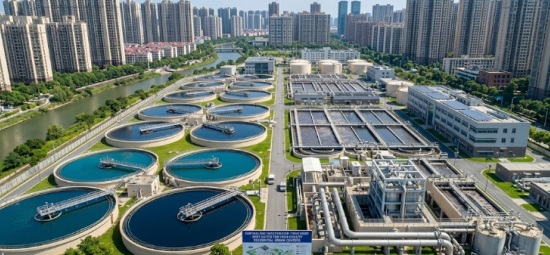
Centralized treatment remains the backbone of urban municipal infrastructure due to decades of engineering optimization. However, its heavy institutional framework carries significant underlying challenges for modern commercial ecosystems.
The Major Advantages
Unparalleled Economies of Scale for metropolitan areas that handle millions of gallons of residential sewage every day The cost per gallon of treatment of a huge central plant decreases significantly because of huge automated vats for processing.
Unified Regulatory Oversight: Since operations are integrated into one location and testing of laboratories along with government-related reporting, are handled by a highly skilled team under the same roof.
The Hidden Drawbacks
Astronomical Civil Engineering Costs: Studies indicate that up to 75% of the total Capital Expenditure (CAPEX) of a centralized infrastructure asset is buried underground in collection piping, lift stations, and pumps rather than the actual treatment technology.
Vulnerability to Systemic Disasters: Centralized models lack structural redundancy. If a primary trunk line ruptures, or if an extreme weather event floods the central facility, an entire city’s or industrial district’s sanitation system face catastrophic, immediate shutdown.
Best Suited For
High-density residential urban centers, established municipal zoning districts, and regions handling predictable, non-toxic domestic blackwater profiles.
Decentralized Wastewater Treatment: Why It’s Gaining Rapid Momentum
As global industries lean heavily into sustainability and smarter supply chains, decentralized configuration has evolved from a niche alternative into a market-leading disruption.
The Game-Changing Benefits
Elimination of Public Pipe Networks: By handling waste directly at the manufacturing site, facility operators completely bypass municipal connection fees and the ongoing Operating Expenditures (OPEX) tied to heavy pumping energy across vast terrains.
In-Demand Scalability (The Modular Benefit): In the event that an industrial facility increases the production lines by 30 percent the facility does not have to wait for an upgrade of a municipal facility. Operators just install a containers for membrane bioreactor (MBR) (also known as RO skid) to increase the capabilities of fluid processing in a matter of weeks, instead of years.
Direct Enabler of Zero Liquid discharge (ZLD): In high-water-use industries such as textile production, electronics manufacturing commercial wash, systems that are decentralized are able to intercept extremely concentrated waste streams instantly. The process of purifying the fluid on-site instantly transforms it into a profit by allowing water with high purity to return to the production line to be recycled as process water.
The Limitations to Consider
Dispersed Management Footprint: Operating multiple localized units means maintenance tracking must be highly organized. Without modern automated PLC systems and remote digital monitoring, supervising decentralized equipment can stretch internal engineering teams thin.
Which System is Better For You?
To cut through the marketing noise, decision-makers must run their facility data against three specific engineering criteria to choose the optimal setup.
1. Population Density and Geographical Layout
If your establishment is in a crowded, long-standing urban area that has wastewater hookups, using the centralized grid is an appropriate choice. But for modern industrial parks or remote chemical processing facilities as well as agricultural sites or areas that are newly zoned, in which grid expansion by municipal utilities is slowing and decentralized systems are far superior.
2. Upfront CAPEX vs. Lifecycle OPEX
Centralized connections demand massive initial investments in land, digging permits, and heavy connection fees. Decentralized setups transfer that budget into tangible equipment assets. While decentralized systems require localized power consumption and periodic filter membrane replacements (OPEX), the complete elimination of raw water procurement costs via on-site recycling typically delivers a superior Return on Investment (ROI) within 24 to 36 months.
3. Effluent Chemistry and Hazardous Loadings
Industrial wastewater is the main aspect. Centralized plants for municipal use are designed mostly for organic, biodegradable municipal waste. If your company produces complex industrial wastewater that contains heavy chemical compounds, heavy metals, active pharmaceutical components (APIs) or even extreme chemicals that demand oxygen (COD) levels the wastewater cannot be disposed into the public system without imposing severe penalties.
The most efficient operations depend on source-specific, decentralized treatment facilities to eliminate specific contaminants prior to their contaminating the ecosystems of the environment.
The Future is Hybrid
The whole debate between centralized and decentralized wastewater treatment, is no longer this strict zero-sum thing. Real progress isn’t only one path or the other , it is a strategic in-between model where centralized public utilities handle the plain urban sewage basics , while advanced decentralized systems step in for harder, source-specific industrial effluent.
For commercial enterprises wrestling with climbing utility rates and tighter regulatory expectations, setting up an independent, localized water loop gives you a kind of business continuity that feels almost unmatched. If you are now auditing your facility’s fluid lifecycles, or thinking about a major infrastructural expansion, designing a tailored modular system helps keep you resilient, on-spec, and cost-efficient for the decades ahead.