Choosing the wrong industrial water treatment system might do more than just cause poor water quality. It could mean frequent shutdowns, quick membrane fouling, failed production audits or a system that just can’t keep up with daily demand. And this nearly always comes down to one core problem. The system was evaluated for capacity, and not much else.
This guide walks through six practical factors that actually determine whether an industrial water treatment system works well for your facility, so you end up with something built around your real operation rather than a generic spec sheet.
1. Know What Is in Your Feed Water
Any sound design for industrial water treatment starts with a comprehensive view of your source water. If you draw from a municipal supply, a private borehole, a surface water source or an on-site reclaim stream, the quality of feed water can vary greatly. Each has its unique mix of pollutants and unpredictability.
First have a recent water analysis made. You want to have values for total dissolved solids (TDS), hardness, iron, silica, turbidity, free chlorine and microbial load at the very least. A recommendation for a system without this data is a guess. The nature of the feed water directly dictates the applicable treatment technologies and the required upstream pretreatment of the primary system.
2. Set the Water Quality You Need
Once you know what you are starting with, the next step is defining what the treated water actually needs to look like. Industrial water treatment requirements vary considerably by end use. Process water for a textile plant operates under very different standards than boiler feed water, and neither resembles what a pharmaceutical process line needs.
Treatment requirements depend on the specific application and target water quality. The table below offers a general reference:
| Industrial Water Use | Main Concern | Possible Treatment Focus |
| Process water | Specific contaminants | Application-specific treatment |
| Boiler feed water | Hardness, dissolved solids | Softening / RO / polishing |
| Cooling water | Scale, corrosion | Filtration / conditioning |
| Water reuse | Variable contaminants | Multi-stage treatment |
Defining your output quality requirements early keeps the system design focused and avoids both over-engineering and under-specifying.
3. Match the System to Your Operating Needs
Capacity is one number. Your actual operating profile is a more complete story. A system that produces the right volume at the right time is far more useful than one with impressive specs that do not reflect how your facility actually runs. When evaluating your operating needs, think through the following:
- Daily water demand: How many cubic meters per day does your facility consume, across all shifts and production stages?
- Peak demand: The system needs to handle consumption spikes reliably, not just the daily average.
- Operating hours and maintenance windows: A system running around the clock has very different servicing needs than one operating a single shift.
- Continuous vs. batch operation: Continuous processes are highly sensitive to supply interruptions, while batch operations may allow for storage buffering between cycles.
- Seasonal demand changes: Design for your highest demand period, not a midpoint estimate.
- Storage and backup capacity: If the system goes offline for maintenance, how long can your facility keep running on stored water?
4. Check the Pretreatment Requirements
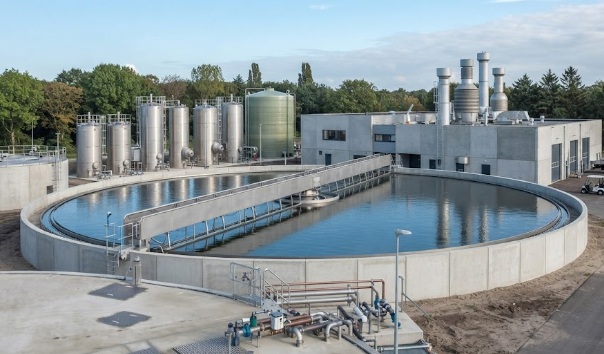
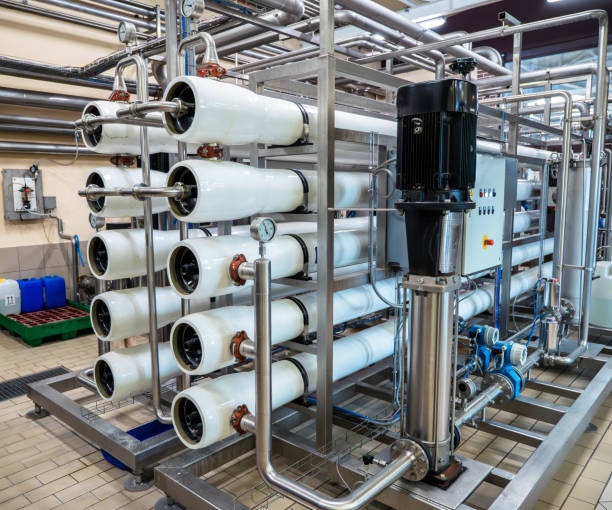
The main treatment unit, whether that is a reverse osmosis membrane, an EDI module, or an ion exchange softener, can only perform reliably when the incoming water falls within a certain quality range. Pretreatment is what gets feed water to that point.
High turbidity water may require multimedia filtration, clarification, or ultrafiltration before it enters the RO system. High free chlorine requires activated carbon treatment to protect the membranes from the oxidative damage.
High iron content needs to be treated early in the treatment chain or it will foul downstream equipment fast. One of the most common reasons industrial water treatment systems don’t perform well in the field is undersizing or skipping pretreatment, and this warrants serious thought during the design phase.
5. Check the Site Before Choosing the System
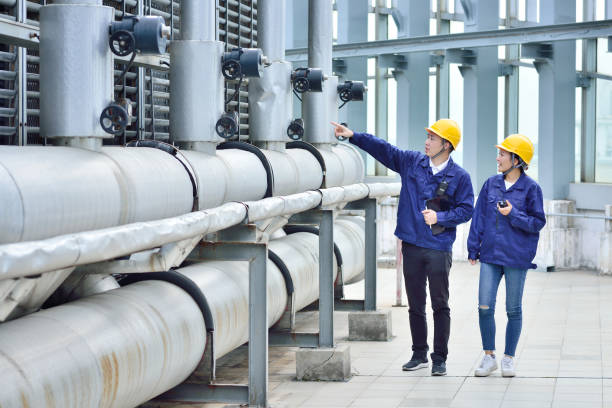
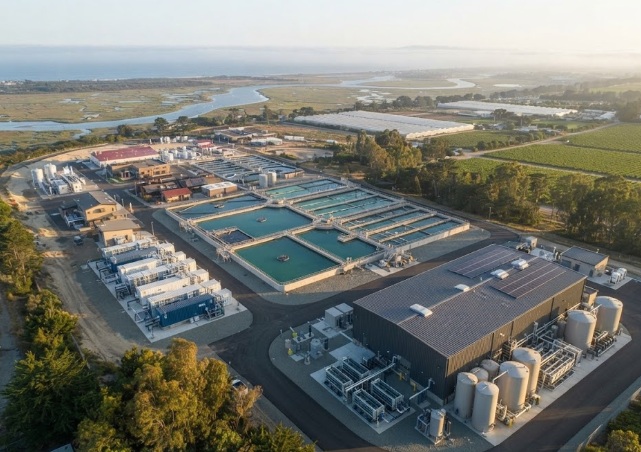
The physical environment at your facility places real constraints on what is actually installable. Before finalizing any system design, walk through the site and assess the following:
- Available space: Check both the footprint and ceiling clearance before committing to a system layout.
- Proximity to supply and discharge points: The further the system sits from your water inlet and drainage connection, the more pipework you are adding.
- Electrical capacity: Confirm that existing supply matches the system’s voltage and load requirements.
- Compressed air availability: Some treatment components require instrument air, which needs to be planned for if not already on-site.
- Drainage and local permitting: Backwash discharge and reject streams may be subject to local regulations, so check requirements before the system is specified.
6. Think About Future Water Demand
Production volumes grow. New lines get added. Regulatory requirements tighten. A system designed only for today’s demand with no capacity buffer is a common and avoidable mistake. When preparing for the future, estimate realistic demand growth over a five- to ten-year horizon and check whether the system, utilities, piping, and available space can support modular expansion. Adding a second treatment train or upgrading a pump is significantly less disruptive than replacing an entire system mid-operation.
A Simple Checklist Before You Request a System Design
Before reaching out to a supplier, make sure you have the following ready:
Having these answers prepared speeds up the design process and leads to more accurate, comparable proposals.
Choose the System Around Your Actual Needs
Selecting an industrial water treatment system is not just a matter of picking the most advanced technology or the highest capacity available on the market. It’s about finding the right system for your source water, your desired output quality, your operation schedule, your site conditions and your long-term ambitions.
At Molewater, we have been doing exactly this for over 20 years, supporting industrial clients across more than 80 countries. If you are in the early planning stage or want a second opinion on an existing setup, describe your requirements and we will help you figure out what actually makes sense for your situation.