
The pH value is more than just a number on a drinking water report; it tells you whether your water is acidic, neutral, or alkaline. But what should the pH of drinking water be? Does the pH of your tap water really affect your health, the taste of your water, or even the condition of your plumbing? The answer is not as simple as choosing water that is as alkaline as possible.
In this guide, we will explain what drinking water pH means, how to test it at home, what major water quality standards recommend, and what you can do if your water falls outside the recommended range.
What Does the pH of Water Mean?
pH measures the concentration of hydrogen ions in water and indicates whether the water is acidic, neutral, or alkaline. The scale runs from 0 to 14 and is logarithmic. This means a difference of one pH unit represents a tenfold difference in hydrogen-ion concentration.
For example, lemon juice is strongly acidic, while seawater is mildly alkaline.
- pH 0–6.9: Acidic, such as lemon juice, coffee, and some rainwater
- pH 7.0: Neutral, as with pure water under standard conditions
- pH 7.1–14: Alkaline, such as seawater and some bicarbonate-rich water
Pure H₂O has a theoretical pH of 7, but drinking water rarely stays exactly at 7. Natural water picks up minerals from rocks and soil and absorbs carbon dioxide from the atmosphere. These substances change the water’s chemistry and can move its pH above or below neutral. WHO notes that the carbon dioxide-bicarbonate-carbonate system is particularly important in controlling the pH of natural waters.
How to Test the pH of Your Drinking Water
If you need to check the pH of drinking water, there are several testing methods to choose from. The best option depends on the level of accuracy you need, from a quick estimate with test strips to a more precise reading with a digital pH meter.
pH Test Strips
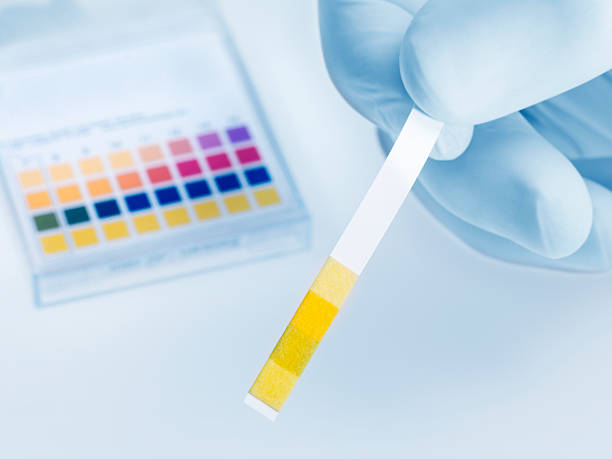
Test strips are inexpensive and convenient for a quick check. Dip a strip into the water, wait for the specified time, and compare the resulting color with the chart provided.
They are useful for spotting obvious differences, but they are not highly precise. Lighting and personal interpretation of colors can also affect the result.
Liquid pH Reagent Drops
Liquid test kits work in a similar way. A small water sample is mixed with several drops of reagent, and the resulting color is compared with a reference chart.
This method can provide a reasonable estimate for household testing, although the accuracy still depends on the quality of the kit and how carefully the color is interpreted.
Digital pH Meter
A digital pH meter is the better option when you want a more precise measurement. Many consumer meters can measure to around 0.01–0.05 pH units, although actual accuracy depends on the instrument and calibration.
Before testing, the meter should be calibrated with appropriate standard buffer solutions, commonly pH 4.00, 7.00, and 10.00. If you are monitoring water regularly, calibration and proper electrode care matter as much as the meter itself.
What Should the pH of Drinking Water Be? Global Standards
There is no single worldwide drinking-water regulation, but several major standards use a similar range.
| Organization | pH range | What it means |
| WHO | 6.5–8.5 | Common target range; the optimum can depend on local conditions |
| U.S. EPA | 6.5–8.5 | Secondary drinking-water standard |
| EU Drinking Water Directive | 6.5–9.5 | Indicator parameter; lower values are permitted for certain bottled waters |
| China GB 5749-2022 | 6.5–8.5 | Current standard for drinking water quality |
WHO’s guidance identifies 6.5–8.5 as a target range while noting that the optimum pH can vary with the circumstances of a water supply. The U.S. EPA lists 6.5–8.5 as a secondary standard, mainly associated with taste, corrosion, and deposits rather than a primary health limit.
The EU takes a slightly wider approach, setting the hydrogen-ion concentration at 6.5–9.5, with specific exceptions for certain bottled and carbonated waters. China’s GB 5749-2022 specifies a pH of 6.5–8.5 for drinking water.
So, if you want a simple reference point, 6.5–8.5 is a reasonable range to keep in mind. A reading around neutral may also provide good taste and reduce the risk of corrosion, but pH should always be considered alongside other water-quality parameters.
How Water pH Affects Your Biological Health
What Happens When Water Is Too Acidic?
Water below pH 6.5 can taste metallic or unpleasant and may be more corrosive to plumbing. The EPA specifically associates low-pH water with bitter or metallic taste and corrosion.
This is important because corrosive water can interact with plumbing materials. Depending on the pipes, fittings, water chemistry, and contact time, it may increase the release of metals such as copper or lead. WHO also identifies pH as an important factor in water corrosivity and notes that lower pH generally increases corrosion, although pH is only one factor involved.
That does not mean acidic water itself is automatically toxic. The greater concern is what the water may pick up from the distribution system. If you find persistently low pH, testing for metals and other relevant contaminants is more useful than looking at pH alone.
What About Water With a High pH?
Highly alkaline water can have a slippery feel or a soda-like taste. The EPA lists high pH as being associated with taste and deposits.
High-pH water can also contribute to mineral deposits when calcium and other minerals are present. This can become a practical problem for pipes, heaters, membranes, and other equipment.
For healthy adults, moderately alkaline drinking water is generally not a concern simply because its pH is above 7. The human body tightly regulates blood pH through the lungs and kidneys, so drinking water does not simply shift blood pH upward or downward.
This is also why claims that alkaline water can substantially “alkalize” the body should be treated carefully. The pH of drinking water and the body’s blood pH are two very different things.
How to Adjust the pH of Your Drinking Water
For acidic well water, a calcite or limestone filter can help raise the pH by adding alkalinity. Remineralizing filters can also increase pH by adding minerals such as calcium and magnesium.
If other dissolved contaminants also need to be removed, RO followed by remineralization may be a better option. RO removes a wide range of dissolved substances, while the post-treatment stage restores selected minerals and helps adjust the final water quality.
For high-pH or hard water, a water softener can reduce calcium and magnesium hardness, while RO provides more extensive removal of dissolved minerals. Since these systems address different water-quality issues, the choice should be based on a complete water analysis rather than pH alone.
For larger applications, such as community water supplies or food-processing facilities, consistent treatment is often more important than simply correcting the pH. Molewater’s drinking water treatment systems can combine RO, nanofiltration, and ultrafiltration based on the source-water quality and required finished-water specifications.