Since the EPA relaunched its Water Reuse Action Plan in April 2026, industrial facility managers have been asking the same question: does WRAP 2.0 mean new mandatory water reuse requirements are coming? The short answer is no — but that doesn’t mean it’s safe to ignore. WRAP 2.0 signals where federal priorities, funding, and industry expectations around water reuse are heading next. We look at the essence of WRAP 2.0 actually is, and what it will mean for the facilities in technology, industry and energy industries.
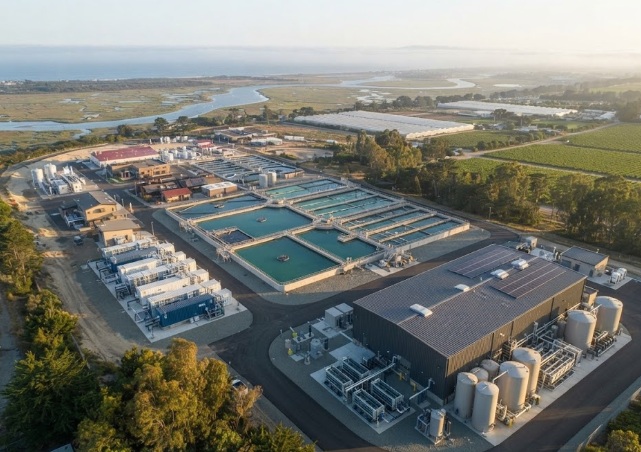
What Is WRAP 2.0?
From WRAP (2020) to WRAP 2.0 (2026): What Changed
WRAP started back in 2020, as a Water Reuse Action Plan that came together with important water sector stakeholders. It kicked off with 37 strategic actions and 86 partners; it reached more than 100 commitments through a public docket. Since then, the effort has grown to include over 96 actions and 215 action leaders and partners, including a federal Interagency Working Group. On April 16, 2026, EPA Administrator Lee Zeldin launched WRAP 2.0, expanding the program to roughly 200 partners now working on 76 actions, with more than 200 resources developed for the water reuse industry.
Who’s Behind It: EPA and Industry Partners
The announcement was made during an event held at EPA Headquarters that featured EPA Director of Water, Assistant Administrator Water Jessica Kramer, alongside members of Congress and other key industry players to show the cross-sector coordination that the plan is built on.
Is WRAP 2.0 a New Regulation? Setting the Record Straight
Why WRAP 2.0 Is a Collaborative Roadmap, Not a Mandate
This is the point most coverage glosses over. WRAP 2.0 is not a federal regulatory mandate — it is a plan that highlights water reuse strategies already underway, introduces new federal commitments, and charts a course for progress over the next decade. It does not require every facility to begin recycling water, does not create one nationwide water reuse standard, and does not automatically change existing wastewater discharge permits.
What It Does NOT Change (Existing Discharge Permits, National Standards)
If your facility currently operates under an established discharge permit, WRAP 2.0 doesn’t override or modify that permit on its own. Instead, it functions as a collaborative roadmap that federal, state, and local partners can draw on as they develop their own reuse strategies — meaning any binding requirements would still come through separate state or local regulatory action, not directly from this plan.oling in data centers and an overall shift towards bio-based treatment chemistries that are carbon-negative that replace the phosphonate-based programs of the past which reflect the increasing security and environmental standards across the entire industry.
The Three Strategic Priorities of WRAP 2.0
Water for U.S. Industry
The latest version of the program is organized around three main areas. One concentrates on water to American industry, putting reuse as a core infrastructure for industrial production instead of a niche sustainability initiative.
Water for the Technology Sector (Data Centers & Semiconductor Manufacturing)
Data centers and semiconductor manufacturing receive particular attention because of the growing water demands associated with artificial intelligence and other advanced computing. WRAP 2.0 explicitly aims to strengthen the connection between the tech sector and the water sector to help position American infrastructure for AI growth.
Water for Energy Development (“Energy Dominance”)
For the energy industry, WRAP 2.0 aligns with an objective of energy dominance, explicitly including oil-and-gas-produced water as a potential reuse source rather than treating it purely as a disposal problem. EPA is exploring regulatory flexibility to allow produced water to be treated for industrial cooling, mineral extraction, and agriculture.
What WRAP 2.0 Means for Industrial Facilities in Practice
New Funding & Financing Opportunities (WIFIA, FEMA BRIC Grants)
FEMA’s BRIC grant program provides funding for infrastructure-focused hazard mitigation activities, including water reuse projects for drought mitigation, while the WIFIA program accelerates investment in water infrastructure by providing long-term, low-cost loans for nationally and regionally significant projects, including water reuse. Facilities evaluating a reuse project should check current eligibility windows before committing capital elsewhere.
Streamlined Technical Resources and Validation Protocols
EPA will accelerate work with partners to establish validation and monitoring protocols for water reuse treatment, ensuring wastewater is cleaned and purified to levels appropriate for specific intended uses. This matters practically: clearer validation standards reduce the guesswork and engineering risk involved in designing a reuse system from scratch.
Positioning Water Reuse as a Business Advantage, Not Just Compliance
For wastewater utilities, WRAP 2.0 essentially reframes them as economic development assets, consistent with an industry increasingly focused on recovering water, biosolids, and energy as resources rather than waste. The same reframing applies to industrial facilities — water reuse capacity is increasingly a competitive and operational asset, not just a discharge-compliance checkbox.
What Industrial Facilities Should Do Now
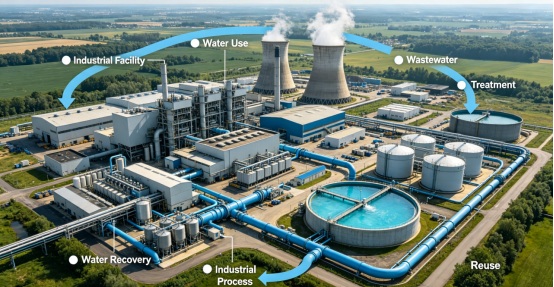
Audit Your Current Water Use and Reuse Potential
Before evaluating technology options, map your facility’s actual water streams — volume, quality, and potential reuse applications — since this determines which treatment approach is realistic and cost-effective.
Explore Available Federal Funding Before Committing Capital
Given the funding pathways WRAP 2.0 highlights, it’s worth checking WIFIA and FEMA BRIC eligibility windows before finalizing a project budget, since financing terms can materially change project economics.
Work with an Experienced Water Treatment Partner to Plan Ahead
As validation protocols and reuse standards continue to develop under WRAP 2.0, working with a treatment partner who tracks these changes closely helps ensure a system is designed to meet where the standards are heading, not just where they stand today.
WRAP 2.0 isn’t a new regulatory mandate, but it is a clear signal of where federal priorities, funding, and industry expectations around water reuse are headed — especially for industrial, technology, and energy facilities. Treating water reuse as a strategic asset now, rather than waiting for it to become a compliance requirement later, positions facilities ahead of where the policy landscape is clearly moving. If you’re evaluating water reuse potential for your facility, Molewater’s engineering team can review your water data and help you plan a system built for where the standards are heading — get in touch for a free consultation and quote.