RO membranes are quite good at eliminating dissolved salts, organics and other pollutants, but they are also very sensitive to what is in front of them. A poor mix of particles, minerals or chemical residues in the feed water can quickly foul or damage membranes, increasing operating costs and shortening membrane life.
This guide walks through the basics of industrial RO pretreatment: why it’s important, how to assess your feedwater quality, what treatment processes are typically utilized, and how the correct mix is highly dependent on where your water comes from.
Why Industrial RO Needs Pretreatment
A reverse osmosis membrane works by applying pressure to force water through a semi-permeable barrier that rejects most dissolved ions and bigger molecules. The RO process separates water from many dissolved salts and other contaminants, leaving the rejected contaminants in the concentrate stream.
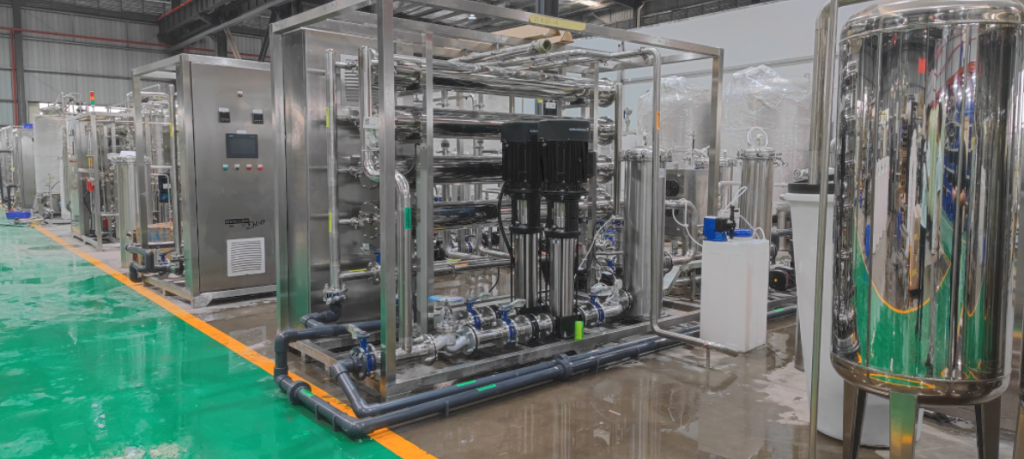
So, what goes into the system is so important. Three types of difficulties tend to occur without sufficient feedwater preparation:
- Fouling: Suspended particles, colloids or biological materials accumulate on membrane surface and reduce flow over time.
- Scaling: When the concentration of minerals such as calcium, magnesium, silica, and others increases on the membrane wall, they may precipitate out and create hard deposits.
- Chemical degradation: Polyamide membranes are oxidized by free chlorine, even in trace concentrations, resulting in a permanent reduction in salt rejection.
These are not rare failure modes. Having worked with industrial reverse osmosis water systems in many sectors and geographies, we find that fouling and scaling are the cause of the bulk of performance difficulties we see. The good news is that most of them are preventable with the correct treatments in place.
What Should You Check in the Feedwater?
Before anything else, you need a water analysis. Without knowing what is actually in the feed water, designing a pretreatment system that holds up over time is very difficult. The parameters below are the ones that most directly affect RO performance and largely determine what your RO pretreatment requirements will look like.
The table below provides a practical overview:
| Feedwater Issue | Why It Matters to RO | Common Pretreatment Option |
| Suspended solids / turbidity | Particulate fouling | Multimedia or cartridge filtration |
| Hardness / scale-forming ions | Membrane scaling | Softener or antiscalant |
| Free chlorine | Membrane oxidation | Activated carbon or chemical dechlorination |
| Iron / manganese | Fouling and deposits | Oxidation + filtration, or other iron/manganese removal treatment |
| Organics / oil | Organic fouling | Activated carbon, coagulation or specialized treatment |
Iron is a parameter that can easily cause problems for RO systems. Low iron concentrations can contribute to fouling, so the feedwater should be checked against the membrane manufacturer’s recommended limits.
For hardness, a full softener is not always necessary—antiscalant dosing can be sufficient depending on the actual concentrations and the system’s recovery rate.
Common Pretreatment Steps for Industrial RO
Pretreatment is not a fixed checklist. It is designed around the feedwater quality and the RO membrane’s operating requirements. That said, a few treatment steps appear across most industrial systems.
1. Filtration Comes First in Many Systems
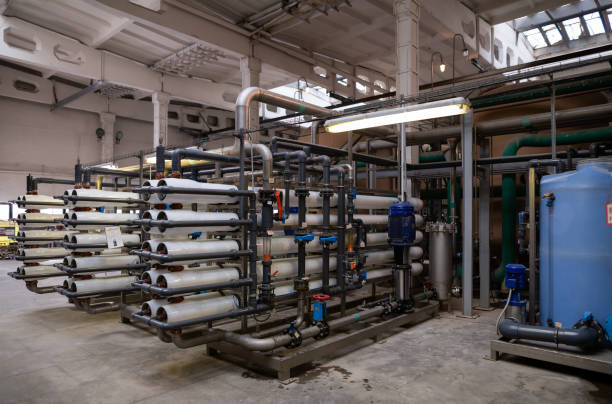
Filtration is one of the most common pretreatment steps, although its position in the treatment train depends on the feedwater quality. Multimedia filtration is used in bigger flow applications to handle increased turbidity and suspended solids and is a first pass ahead of finer stages of treatment. A cartridge filter is also commonly installed immediately upstream of the RO membranes, with the pore rating selected according to the membrane manufacturer’s requirements and the upstream treatment performance.
Ultrafiltration (UF) is a more aggressive alternative, especially with surface water when biological load or turbidity is quite high. It provides more consistent SDI (Silt Density Index) to the RO inlet which is important for long-term membrane stability.
2. Controlling Hardness and Scaling
Two important tools for hardness control are water softeners and antiscalant dosage. Softeners trade calcium and magnesium for sodium, eliminating the scaling risk at the source and making them a natural fit for groundwater or well water with excessive hardness.
Another possibility is antiscalant dosing. This is a chemical inhibitor that is dosed upstream to prevent the minerals from precipitating on the membrane surface. At moderate levels of hardness, antiscalant is often the lower-cost, lower-maintenance option.
3. Removing Chlorine and Other Problem Contaminants
Activated carbon filtration is commonly used before RO to remove free chlorine and reduce certain organic compounds. When chloramines are present, the carbon system must be specifically designed for chloramine removal, or chemical dechlorination can be used. One issue to note here is contact time, undersized carbon beds will not offer sufficient dechlorination and thus getting the sizing right is important.
For larger systems where carbon beds are not practical, chemical dechlorination with sodium bisulfite is a common and effective alternative.
How Pretreatment Changes With the Feedwater
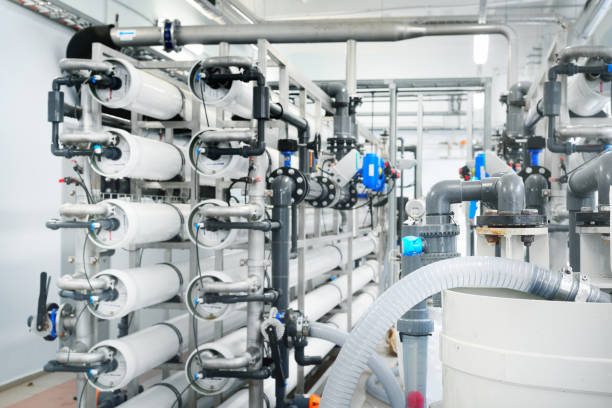
Rather than listing equipment in the abstract, it is more useful to look at actual water source scenarios, since RO pretreatment requirements shift significantly depending on where the water comes from.
- Municipal or relatively clean feedwater: Chlorine removal is usually the main priority. A carbon filter combined with a cartridge filter and antiscalant dosing often covers the basics.
- Well water with high hardness: Softening or antiscalant is important. Iron and manganese also need to be analyzed and treated before the water reaches the RO membranes.
- Surface water (rivers, lakes): Main issues include higher turbidity and biological load. Usually coagulation, sedimentation and UF or multimodal filtration are provided before the RO stage in systems.
- Industrial wastewater: This is the most heterogeneous category. Depending on the source, water may contain oils, heavy metals, high organics, or large changes in pH. Specialized pretreatment trains are frequently needed and pilot testing is often a wise step before finalizing the design.
Choosing Pretreatment for Your RO System
The correct setup for industrial RO pretreatment always begins with understanding the water. The identical RO membrane model might behave significantly differently depending on what is in front of it. That is why bypassing the feedwater analysis rarely saves time and/or money in the long term.
If you are designing a new system, or want to increase the performance of an existing one, contact us and share your feedwater data. We’d be pleased to take a look and help you figure out what your system really requires.