As a manager of an industrial facility ,you are now faced with more stringent regulations for wastewater discharge than you have ever faced. Just meeting the minimum compliance requirements isn’t enough. You’ll need practical methods to convert industrial waste into reuseable resources. With the rising costs of freshwater and increasing pressure to reduce discharge rates and operational costs optimizing the reuse of water is a major concern for modern facilities. Being among the best and effective treatment techniques that are available Membrane Bioreactor (MBR) systems provide outstanding results for treatment.
What is MBR Technology?
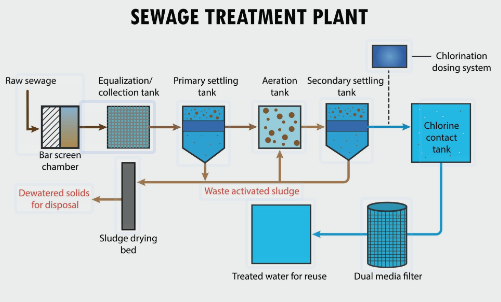
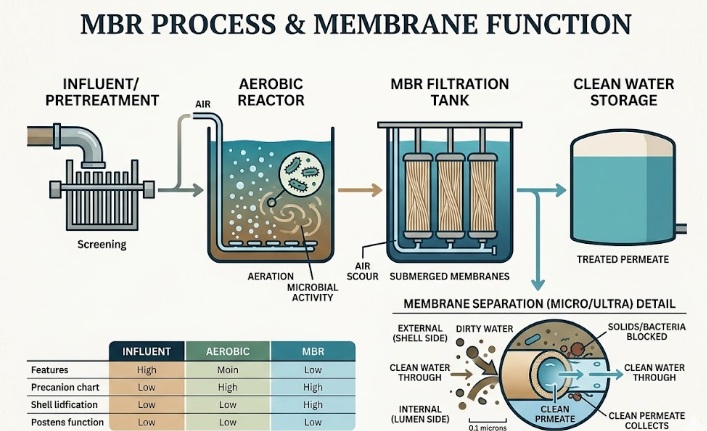
At its heart the MBR system blends conventional biological treatment and the latest membrane filtering. In the traditional activated sludge treatment there is a second clarifier utilized to separate sludge from treated water. But the MBR process replaces the clarifier by a microfiltration or ultrafiltration membrane.
Source: Shutterstock
The simple change in the way things can transform everything. By physically removing solids by the membrane, MBR systems are consistently producing high-clarity clean, pathogen-free water which is typically superior to traditional methods. With an osmotic barrier guarantees the suspended particles, bacteria or even some viruses can be successfully eliminated, resulting in a permeate flow that functions as a superior foundation for further processing or reuse that is not potable.
Traditional Wastewater Treatment vs. MBR Technology
To better understand the reasons why a lot of facilities are upgrading their systems, it’s beneficial to look at the comparison of MBR technology with conventional methods.
| Feature | Conventional Activated Sludge | MBR Technology |
| Effluent Quality | Moderate; sensitive to fluctuations | High; suitable for reuse |
| Footprint | Large (requires clarifiers) | Compact (integrated design) |
| Sludge Production | Higher; disposal is costly | Lower; reduced waste volume |
| Process Stability | Susceptible to sludge bulking | High; provides a physical barrier |
| Reuse Potential | Low; requires post-treatment | High; ready for industrial processes |
As you can see by the above table, MBR technology does not simply a replacement for conventional methods, but is a huge improvement in efficiency and water security in industrial facilities.
MBR Ensures Complete Compliance in Wastewater Standards
The regulatory agencies are tightening the limitations on parameters such as chemical Oxygen Demand (COD), Total Nitrogen (TN) as well as Total Suspended Solids (TSS). MBR systems provide a strong protection against non-compliance. Since the membrane functions in the form of a physical wall MBR systems are less prone to “bulking” sludge issues that commonly cause problems for traditional plants.
This is a highly robust process that allows your facility to comply with – and often over-deliver on the most stringent local and international standards for wastewater. In addition, because MBR is operating at higher mixed-liquor suspended particles (MLSS) levels it can be used to achieve enhanced the process of nitrification as well as biological removal of nutrient. This means that your facility is able to manage peak loading events, which are common in the batch-processing industry–without compromising high quality and efficiency of discharge. By separating HRT from the solids retention period (HRT) in relation to the time for retaining solids (SRT), MBR provides an unmatched level of operational flexibility conventional plants cannot achieve.
From “Discharge” to “Reuse”: Economic and Environmental Impact
The treatment of wastewater to be discharged is an operational expense. Reusing it, but, is an investment in strategic investment.
Direct Cost Savings
Recycling treated water back into your facility to be used for other uses that are not potable, like making up cooling towers and equipment wash-down or industrial irrigation, you can dramatically lower the cost of acquiring freshwater. Additionally, reducing the amount of water that goes through municipal wastewater systems can lead to a decrease in the amount of discharge surcharges. In the long run the savings often reduce the initial capital investment (CAPEX) that is required for membrane construction, leading to an attractive ROI.
ESG and Brand Reputation
Adopting Membrane Bioreactor (MBR) technology demonstrates your dedication to creating a circular economy. Today’s corporate landscape places environmental, social, and governance (ESG) goals directly alongside financial performance – thus positioning you as an environmentally responsible leader. Investors and local communities increasingly demand transparency regarding water stewardship – by adopting an MBR solution, your facility reduces its exposure to scarcity-related shutdowns while building brand resilience against future water crises in global markets.
Key Considerations Before Implementing MBR
The transition to MBR is an important move and the success of this process is contingent on a specific method. Before you install, think about these three pillars
- Influent Characterization: Not every industrial waste is created equal. A high concentration of fats, salts, or other chemical inhibitors need special membranes and pre-treatment processes to ensure their longevity and stop membrane fouling.
- Operational Intelligence: MBR systems are based on advanced automation. Make sure that your service provider offers users-friendly controls as well as remote monitoring features to keep your staff aware and active regarding maintenance alerts.
- Expert Partnership: Selecting the right partner for your technology is just as important as choosing technological capabilities. Choose a partner that offers all-encompassing support, from the initial testing of pilots to ongoing maintenance to ensure that your system operates at maximum performance throughout the duration of its.
Transform Your Waste Into Value
The shift towards sustainable water management in industrial settings is a necessity. No matter if your aim is in order to reduce fines or cut down on cost of utilities, or attain “zero liquid discharge” (ZLD) status, MBR technology provides the high-quality and reliability required by modern industrial. The integration of modern membrane technology with biological treatment enables facilities to reuse water that was previously considered as waste. When you consider your wastewater an asset, you will not just overcome compliance issues however, you also get a substantial competitive advantage in efficiency.
Are you willing to determine whether your business is an ideal potential candidate to be a MBR? Don’t let the issue of wastewater be an obstacle to your expansion. Visit Molewater today to get in touch to our professionals and begin your journey towards more efficient, dependable future.