
For civil and environmental engineers, the Recommended standards for Wastewater Facilities, commonly referred to by the name of The 10 States Standards for Wastewater–is more than an official document. It is the foundation of compliance with regulations and engineering excellence throughout North America. The original purpose of the document was to protect public health and safety as well as environmental security the guidelines serve as the basis for designing operating, approving, and constructing municipal wastewater treatment facilities. Let’s explore the technical complexity, the design requirements and the incorporation of these standards into contemporary high-performance treatment infrastructures aiding you to navigate the complexity that come with regulatory approval.
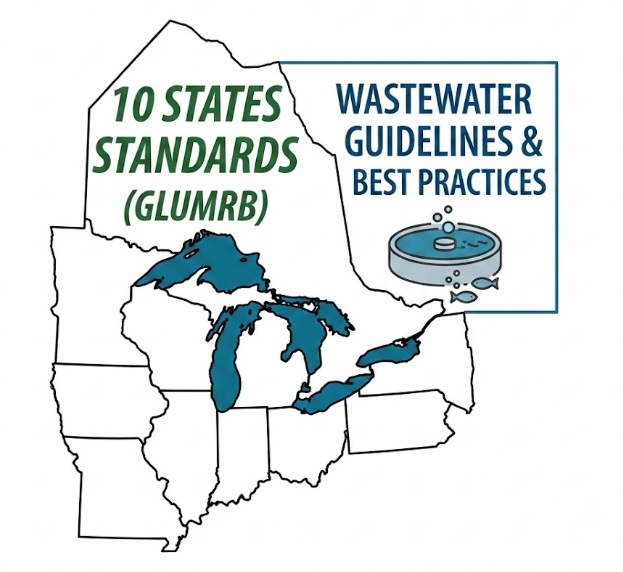
What are the 10 States Standards for Wastewater?
“10 State Standards Wastewater” is an effort of collaboration by the Great Lakes Upper Mississippi River Board Provincial and State Environmental and Public Health Managers. Contrary to federal mandates this document is an established collection of agreed-upon “recommended standards.”
However, in actual practice most states’ regulatory bodies across the U.S. have formally adopted these standards as their basic design requirements. If an engineering firm proposes designs that are not conforming to these standards without a solid argument it is likely to face long-running revision cycles during the process of permitting is very significant. It clearly defines what is thought of as “standard engineering practice” for everything from sewage collection systems all the way to advanced secondary treatment methods.
Why Compliance Matters: The Engineering Perspective
For engineers, 10 State Standards Wastewater provide a cover against professional liability as well as operational failure. It is crucial to comply with the standards for three reasons:
- Streamlined Permitting: Some regulatory institutions (such such as the State Departments of Environmental Quality) employ these standards as their Internal “checklist.” By aligning with these standards aligns your Engineering Report with these guidelines significantly reduces the time it takes from submission to approval.
- Risk mitigation: The standards are designed to avoid systematic failures, including overloaded hydraulic systems, insufficient retention times in basins or insufficient chemical dosing which are the main causes of violations in environmental discharges.
- In the long run, by observing these rigorously-tested standards, you will ensure that the equipment is able to withstand the fluctuations in flow and seasonal loads, thus extending the life of your equipment.
Key Design Elements: A Technical Overview
In order to maintain efficiency and to ensure long-term sustainability, engineers must ensure strict compliance with the quantitative requirements that are outlined by the 10 States Standards. These standards act as a protection for the municipal infrastructure, making sure that even under the most extreme loads the system is functional. The table below highlights the most important points that are the basis for modern design of facilities.
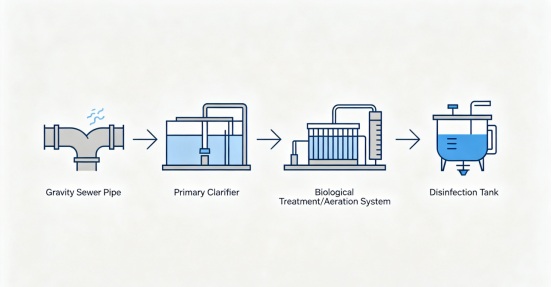
| Design Component | Key Technical Focus |
| Hydraulic Design | Gravity sewers should be constructed to maintain a minimum speed at 2 feet/second in order to keep solids from accumulating. |
| Primary Clarifiers | It is important to consider the rate of surface overflow and weir loading rates in order to ensure that solids are removed from the soil in a sufficient amount. |
| Biological Treatment | Aeration systems have to be designed to meet the demands of peak oxygen and, in most cases, include an element of safety for diurnal peak demand. |
| Disinfection | In the case of chlorine contact the minimum contact time of 15 minutes during high hourly flows is considered to be the ideal reference for a sufficient pathogen’s inactivation. |
Navigating Challenges: Designing for Modern Demands
The industry of wastewater is going through a dramatic technological change.Moving Bed Biofilm Reactors (MBBR) along with Advanced Oxidation Processes (AOP) has greatly improved the quality of effluents however, it also introduces an element of friction that is common in the process of permitting. One of the most frequently asked questions for design engineers is “How does a document based on traditional, 50-year-old engineering wisdom accommodate the rapid adoption of modern, high-intensity membrane technology?”
10 States Standards are by not a long shot stagnant. They are regularly updated to fill the gap between old methods and the latest innovations. However, they are innately traditional. If your design is based on unique technology or advanced process kinetics which aren’t in those “conventional” descriptions, the responsibility for proof of technical accuracy shifts completely to the designer. To obtain approval from the regulatory authorities for designs that aren’t traditional You must submit:
- Empirical data from a Pilot Study: Regulators need proof that your process meets the necessary effluent limits in different load, temperature and diurnal temperatures.
- Built-in Safety Factors and Redundancy: Demonstrate that the system has physical redundancy such as dual-train sets and modular extension capabilities. This will ensure that the facility meets the standards of reliability outlined within the Ten States guidelines even if the initial technology is a new one.
How to Ensure Your Wastewater System Meets Compliance
The process of achieving compliance isn’t an obstacle that must be overcome at the conclusion of the project. It is a process of strategic importance that should begin at the initial stages of preliminary design. To ensure that the project can move smoothly through the regulatory process as well as avoid the expense of rework engineers must adopt the following approach to be proactive:
Determine the foundation of your design Prior to the beginning phase, clearly document within the Facility Plan how your design is in line with certain areas from the 10 States Standards. By anticipating potential deviations and presenting technical reasons that demonstrate your competence before regulatory reviewers and significantly reduces the approval process.
Check Equipment Specifications against Peak Flows: One common error is to design according to “average” conditions. Always make sure that the most important mechanical assets, such as pumps mechanical mixers, pumps, and aeration blowers — are rated according to the conditions for peak flow that are specified in the specifications. The design of the facility to maximize capacity eliminates operating bottlenecks and safeguards the facility from stress due to growth.
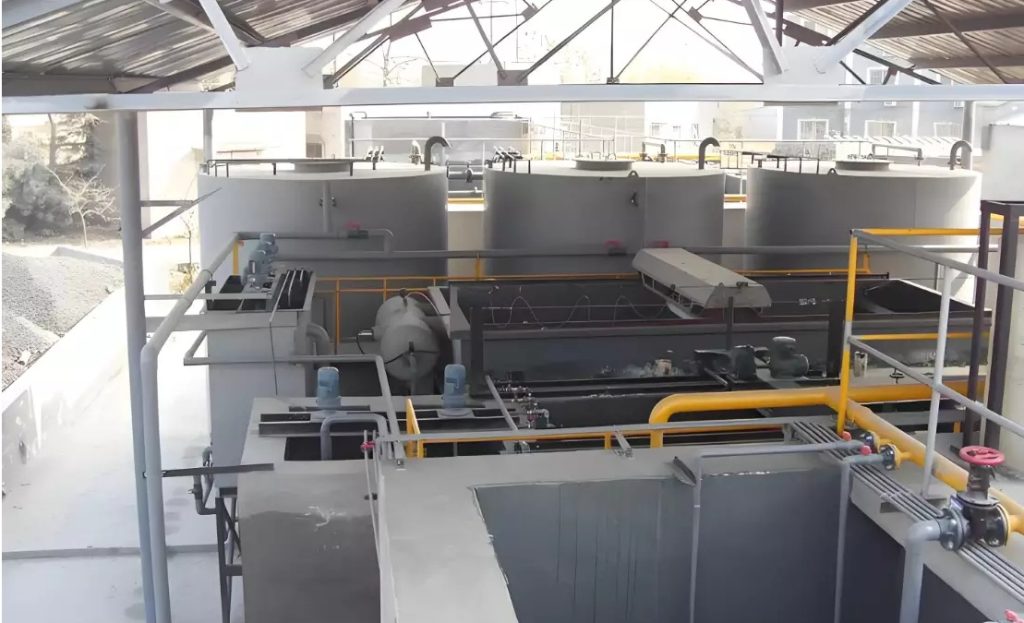
Partner with Expertise in Technical Utilize equipment suppliers that don’t just sell parts however, they are able to comprehend what is known as the “engineering language” of the 10 States Standards. Molewater we understand conformity is the basis to the success of our business. We offer high-efficiency, modular treatment systems designed to meet – and often exceed the strict municipal design requirements. Through the integration of our customized solutions, you can have the confidence that your facility is constructed upon a solid foundation of technical excellence and regulatory compliance.
The 10 States Standards for Wastewater remain the basis of the field. For engineers of the present these standards are not something to overcome and are a solid system that can ensure security for the public as well as sustainability of the environment. When you master these standards, and integrating them with the most advanced water treatment technology and equipment, you can create solutions that are not just conforming but also designed to last.
Are you struggling to align your next water project to the latest standards? Take a look at our expert wastewater treatment solutions and work the engineering experts of our team in order to ensure that your project meets the requirements on the first day.