Before comparing copper removal technologies, two numbers matter more than anything else: how much copper is in the wastewater, and whether that copper needs to be recovered or just removed. These two answers narrow the list of realistic options fast and skipping this step is exactly why some facilities end up with the wrong system.
Five technologies are commonly used for copper removal: chemical precipitation, dissolved air flotation, adsorption, ion exchange, and membrane filtration. Each one is built for a different combination of copper concentration, discharge limits, and budget. Below is how each works, a side-by-side comparison, and why many facilities end up using more than one.
Chemical Precipitation
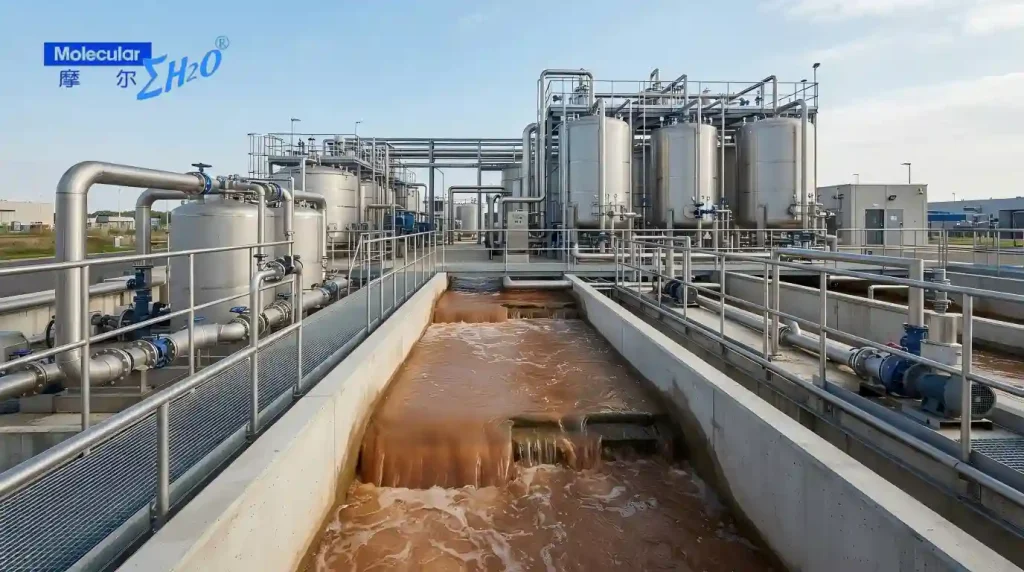
Chemical precipitation tends to be the first technology facilities look at, largely because it’s cheap to run and doesn’t require complicated equipment. A precipitant, usually hydroxide, sulfide, or a chelating agent, is dosed into the wastewater stream, where it reacts with dissolved copper and forms solid particles. Clarification or filtration then pulls those particles out of the water.
This method performs best on streams with higher copper concentrations, generally above 50–100 mg/L, where it can bring levels down significantly before a polishing step is needed. It doesn’t do as well on dilute streams, since the chemistry becomes less efficient once copper concentration drops. Facilities also need to plan for sludge handling, since precipitation generates a byproduct that requires disposal, and depending on local regulations, that sludge may be classified as hazardous waste under standards set by the EPA’s Resource Conservation and Recovery Act.
Dissolved Air Flotation (DAF)
DAF works differently from precipitation, though the two are often paired together. Coagulants are added to the wastewater to bind contaminants into small floc particles, and then fine air bubbles are introduced to carry those particles to the surface, where they’re skimmed off as sludge.
For copper removal, DAF offers a shorter retention time than sedimentation and produces a more concentrated sludge, which can reduce disposal volume and cost. It’s a solid fit when space is limited and throughput needs to stay high. The tradeoff is the upfront investment. DAF systems carry a higher capital cost than precipitation alone, and the equipment requires more regular maintenance to keep bubble generation and skimming mechanisms working properly.
Adsorption
Adsorption relies on the physical attraction between copper ions and a solid media, rather than a chemical reaction. Wastewater passes through a bed of adsorbent material — activated carbon, zeolite, certain clays, or biologically derived media, and copper ions bind to the surface of the media as the water flows through.
This method tends to work best on streams where copper concentration is already low, since adsorption media has a limited capacity and performs less efficiently at higher loads. It’s a relatively low-cost, low-complexity option to operate, but the media eventually reaches saturation and needs to be replaced or regenerated, and not all media types regenerate well. For facilities with modest copper levels and infrequent discharge, though, it can be one of the more economical choices available.
Ion Exchange
Ion exchange (IX) uses a resin bed to swap copper ions in the wastewater for other ions held on the resin, effectively pulling copper out of solution. It’s particularly effective on streams with low to moderate copper concentrations, and it can achieve very low residual levels when the system is properly maintained.
The catch with IX is what happens after the resin becomes loaded with copper, it needs to be regenerated on a schedule, and that regeneration produces a concentrated waste stream that requires its own treatment and disposal plan. IX also becomes less practical at higher copper concentrations, since the resin saturates faster and drives up regeneration frequency and cost. pH sensitivity is another factor worth checking during system design, since IX performance can shift outside a certain pH range.
Membrane Filtration (NF/RO)
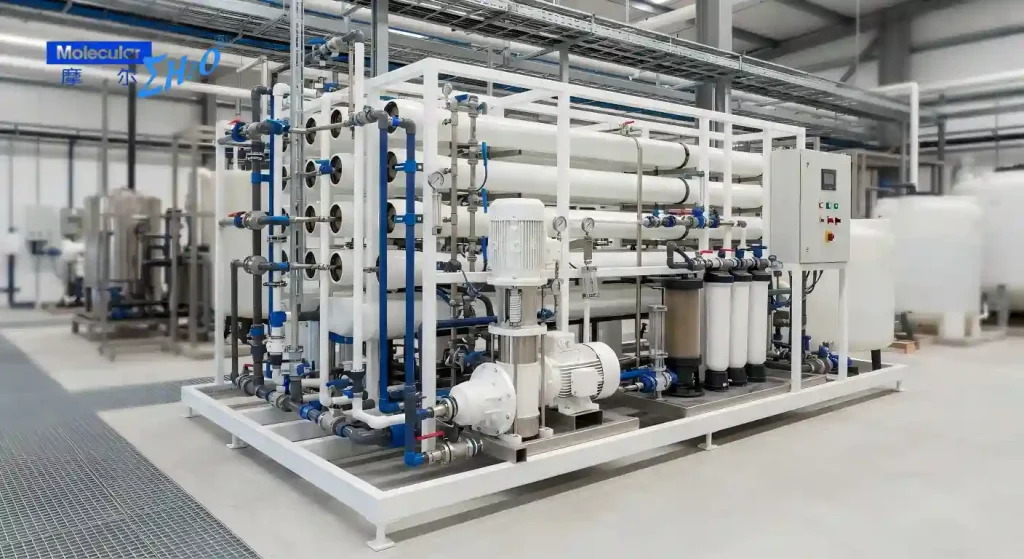
Membrane filtration covers a few different technologies, but nanofiltration (NF) and reverse osmosis (RO) are the two most commonly applied to copper removal. Both work by forcing wastewater through a semi-permeable membrane under pressure, retaining copper ions and other dissolved solids while allowing purified water to pass through. Ultrafiltration alone isn’t tight enough to capture copper ions directly, so it’s typically paired with a finer membrane stage or used as pretreatment.
Where membrane filtration stands out is in situations with strict discharge limits or where recovering copper for reuse is part of the goal, the technology can concentrate copper into a smaller volume that’s more practical to recycle or process further. The downside is cost: membranes require regular cleaning, periodic replacement, and more energy input than the other technologies on this list, and flow rate limitations can be a constraint for larger operations.
Copper Removal Technologies Compared
| Technology | Best Suited For | Typical Removal Efficiency | Capital Cost | Operating Cost | Copper Recovery Possible |
| Chemical Precipitation | High concentration (>50–100 mg/L) | Moderate to high | Low | Moderate (sludge disposal) | No |
| DAF | High concentration, high flow | High | Moderate to high | Moderate | No |
| Adsorption | Low concentration | Moderate | Low | Low to moderate (media replacement) | Limited |
| Ion Exchange | Low to moderate concentration | High | Moderate | Moderate to high (regeneration) | Limited |
| Membrane Filtration (NF/RO) | Strict limits, recovery goals | Very high | High | High (energy, membrane upkeep) | Yes |
Combining Technologies for Better Copper Removal Results
In practice, a lot of facilities don’t rely on a single technology from start to finish. They combine two or more methods across treatment stages instead.
A common setup pairs chemical precipitation or DAF as a first stage to knock down the bulk of the copper load economically, then follows with ion exchange or membrane filtration as a polishing step to meet stricter discharge limits.
The financial logic behind this is straightforward: running an expensive technology like membrane filtration at full capacity makes little sense when a cheaper method can already handle most of the load. There’s a maintenance benefit too. Ion exchange resin and membranes both last longer and need regenerating less often when they’re not absorbing the full concentration of raw wastewater. For facilities weighing membrane systems as part of a multi-stage setup, choosing the right membrane material for the specific waste stream chemistry ends up affecting both performance and long-term maintenance costs.
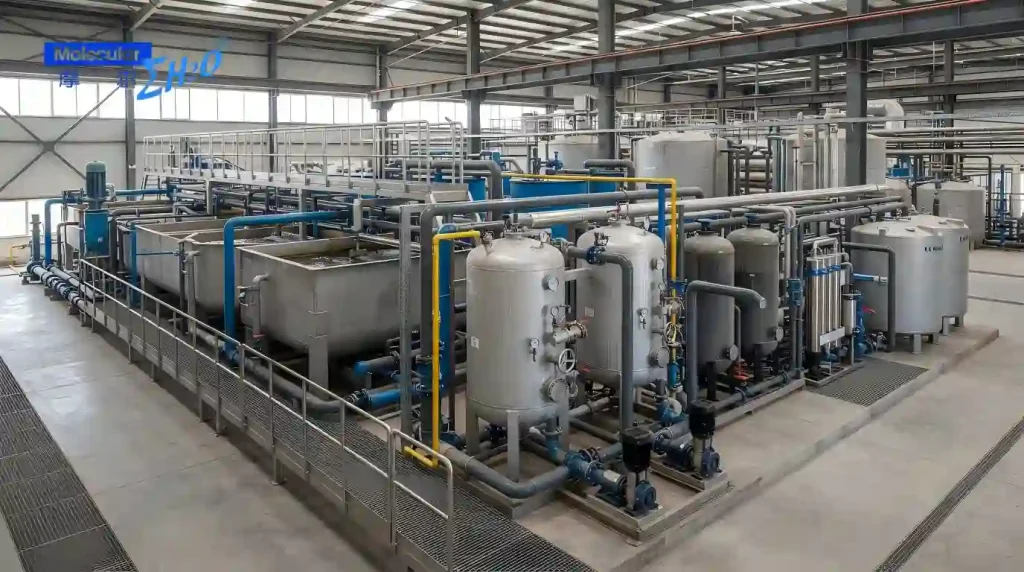
How to Choose the Best Copper Removal System for Your Facility
None of these factors work in isolation, which is part of why a proper wastewater assessment before choosing equipment tends to save money later. A system that looks efficient on paper can still underperform if it wasn’t sized for the actual flow rate and variability of the stream it’s treating.
This is usually where working with an experienced equipment manufacturer makes a real difference. Actual water quality data, discharge requirements, and site constraints get reviewed before any configuration is recommended, instead of defaulting to a generic setup. Molewater works through this kind of assessment with facilities in electroplating, PCB manufacturing, and other copper-intensive industries, matching the treatment technology to the waste stream instead of offering a one-size-fits-all recommendation.
FAQ
Which method removes copper most efficiently?
It depends on concentration and whether recovery matters, but membrane filtration and dissolved air flotation both deliver high removal rates. If the target is very low residual copper, membrane filtration or a well-maintained ion exchange system is usually the better performer.
Can copper be recovered from wastewater instead of just removed?
Yes. Membrane filtration, and in some cases ion exchange, can concentrate copper into a smaller volume, which makes recovery or resale a realistic option, especially in industries where copper content is high enough to offset the processing cost.
What is the typical copper discharge limit for industrial facilities?
This varies depending on jurisdiction and the receiving water body, and it’s typically spelled out in a facility’s discharge permit. The most reliable way to confirm the applicable limit is checking local regulations or the facility’s NPDES permit directly.
Is ion exchange or membrane filtration better for low-concentration copper wastewater?
Both handle low concentrations well. Ion exchange usually costs less for smaller flows, while membrane filtration makes more sense when discharge limits are especially tight or copper recovery is part of the plan.
Can chemical precipitation alone meet strict discharge limits?
Not usually. Precipitation does a good job reducing high copper loads, but a polishing step like ion exchange or membrane filtration is often needed to consistently hit tighter discharge standards.