Membrane material is what separates two membranes with the exact same pore size but completely different real-world performance. One will hold up in a harsh chemical stream for years; the other degrades within months. The difference usually comes down to whether the polymer or ceramic backbone was actually suited to the water chemistry, temperature, and particulates it had to deal with — not the pore rating on the spec sheet.
This guide covers the materials used in commercial and industrial membranes: what each one handles well, where it falls short, and how to match material properties to your actual water conditions rather than defaulting to whatever’s cheapest or most common.
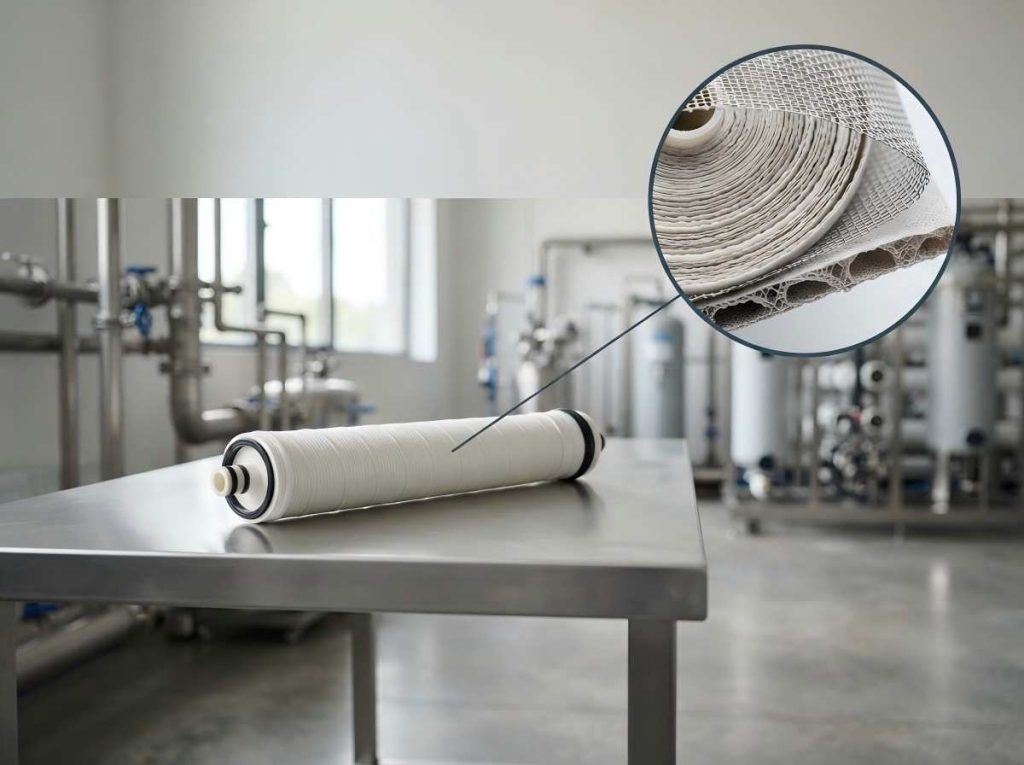
Polymeric Membrane Materials
Most membranes in use today are made from polymers. They’re generally less expensive than ceramic or metal alternatives and cover a wide enough range of properties to handle most municipal and industrial applications. The tradeoff is that polymers have real limits on chemical and thermal tolerance, so picking the right one matters.
Polyamide (PA / TFC)
Polyamide, often used in thin-film composite (TFC) construction, is the dominant material for reverse osmosis and nanofiltration elements. It offers high rejection rates and strong flux performance, which is why it shows up in the majority of commercial RO systems. The main weakness is chlorine sensitivity — even low concentrations of free chlorine will degrade a polyamide membrane over time, so systems using this material typically need dechlorination upstream. Thermal stability sits around 300°F, which is adequate for most water treatment applications but not for hot process streams.
Cellulose Acetate (CA)
Cellulose acetate membranes tolerate chlorine far better than polyamide, which made them the standard choice for early RO applications and still makes them useful where chlorine-based disinfection is part of the process. The downside is a narrower operating window: CA membranes are prone to hydrolysis outside a fairly tight pH range, and they don’t hold up as well to biological growth. Heat tolerance runs a bit higher than polyamide, around 354°F.
Polyvinylidene Fluoride (PVDF)
PVDF is a hydrophobic material commonly used in ultrafiltration and microfiltration elements, particularly where the feed stream includes oils or other non-aqueous components. Its chemical resistance is strong, and it holds up well against abrasive particles like sand or metal fines, making it a solid option for high-TSS streams. It’s worth noting that PVDF’s compatibility can be inconsistent depending on the exact solvent — the material handles cyclohexane fine, for instance, but breaks down with cyclohexanone.
Polytetrafluoroethylene (PTFE)
PTFE offers some of the best chemical and thermal resistance of any polymeric membrane material, which makes it a go-to option for aggressive solvents or elevated temperatures that would degrade PA or CA. That performance comes at a higher price point, so PTFE tends to get reserved for applications where cheaper materials genuinely can’t survive the process conditions rather than as a default choice.
Polysulfone (PSU) and Polyethersulfone (PES)
Both are hydrophilic materials widely used in ultrafiltration, valued for their natural affinity for water, which helps reduce flow resistance in aqueous streams. Chemical compatibility varies more than people expect, though — PES, for example, stands up well to hydrochloric acid but isn’t suitable for nitric or sulfuric acid. PES also has a notably high heat tolerance among polymers, up to around 437°F, and can be chemically modified to shift between hydrophilic and hydrophobic behavior depending on the application.
Inorganic Membranes: Ceramic and Metal
For streams that would chew through any polymer, ceramic and metal membranes are the fallback. Made from materials like aluminum oxide, zirconium oxide, titanium oxide, or silicon carbide, ceramic membranes are chemically inert and mechanically durable in a way polymers simply can’t match. They handle strong acids, strong bases, and aggressive organic solvents without the degradation you’d see in a polymeric element, and they tolerate temperatures exceeding 600°F.
The catch is cost. Ceramic and metal membranes carry a significantly higher upfront price than polymeric options, sometimes several times more. Where they earn that cost back is service life — in harsh chemical or high-temperature environments where polymeric membranes would need frequent replacement, a ceramic membrane’s longer lifespan can bring the total cost of ownership below that of cheaper materials that fail repeatedly.
Comparing Different Membrane Materials
| Material | Hydrophilic/Hydrophobic | Max Temp | Chemical Resistance | Fouling Resistance | Relative Cost |
| Polyamide (PA) | Hydrophilic | ~300°F | Poor chlorine tolerance | Moderate | Low–Moderate |
| Cellulose Acetate (CA) | Hydrophilic | ~354°F | Good chlorine tolerance, narrow pH range | Moderate | Low |
| PVDF | Hydrophobic | ~300°F | Strong, solvent-dependent | Good | Moderate |
| PTFE | Hydrophobic | High | Excellent | Good | High |
| PSU | Hydrophilic | ~300°F | Moderate, acid-dependent | Moderate | Moderate |
| PES | Hydrophilic (modifiable) | ~437°F | Good, acid-dependent | Moderate–Good | Moderate |
| Ceramic (Al₂O₃, ZrO₂, TiO₂, SiC) | Varies | 600°F+ | Excellent | Excellent | High |
*Actual performance will still depend on your specific feed stream.
How Membrane Material Affects Filtration Type
Material choice and filtration type are closely linked, even though they’re often discussed separately. Polyamide’s fine, dense structure is what makes it well suited to reverse osmosis and nanofiltration, where rejecting monovalent ions and small organic molecules matters most. PVDF and PES, by contrast, are more commonly built into ultrafiltration and microfiltration elements, where the goal is separating larger particles, colloids, or proteins rather than dissolved salts.
Ceramic materials show up across the full range, from microfiltration through nanofiltration, but their higher cost usually limits their use to applications where a polymeric membrane wouldn’t survive the chemistry or temperature involved.
Material and Membrane Element Structure
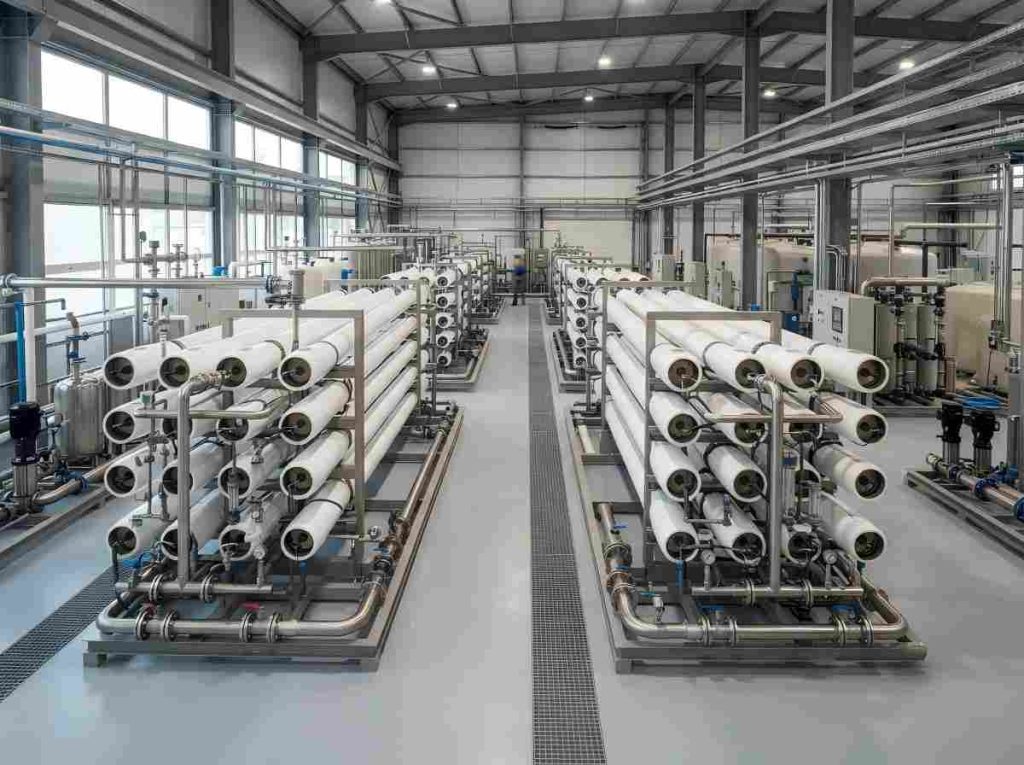
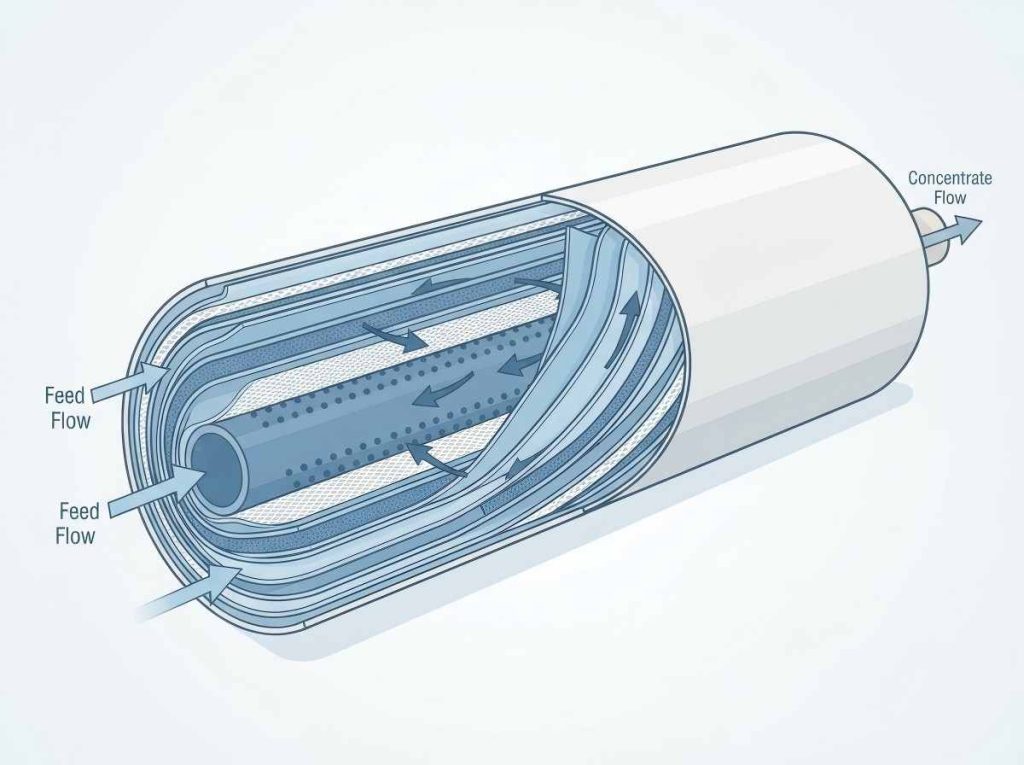
The same material can perform differently depending on how it’s built into an element. Spiral-wound configurations pack the most membrane surface area into a given volume, which makes them efficient but also more prone to clogging with high-solids streams, regardless of the material used. Hollow fiber elements offer similar density with lower feed pressure requirements, but the smaller fiber diameter makes them more susceptible to breakage under aggressive conditions.
Tubular and plate-and-frame designs sacrifice some surface area in exchange for easier cleaning and better resistance to fouling, which is why they’re often paired with more chemically resistant materials like PVDF or ceramic when the feed stream carries high total suspended solids. Matching material and element structure together, rather than choosing one without considering the other, tends to produce more consistent long-term performance.
Choose Filter Membrane Material Based on Your Water Conditions
High suspended solids. Abrasive particles like sand or metal fragments wear down softer polymeric materials over time. CA, PVDF, and ceramic membranes hold up better here, and pairing them with upstream media filtration reduces the load even further.
Aggressive chemicals. Streams with strong acids, bases, or solvents call for materials matched precisely to the chemical in question, since compatibility can vary even between closely related compounds. Ceramic membranes are the safest bet when the chemistry is unpredictable or highly aggressive.
High temperature. For process streams running hot or using heat-based sterilization, thermal stability becomes the deciding factor. PES and CA handle moderate heat better than PA or PVDF, while ceramic and metal membranes are the only reliable option above 500°F.
Viscous or non-aqueous liquids. Oils, solvents, and other non-aqueous streams perform better with hydrophobic materials like PVDF or PTFE, which reduce flow resistance and back pressure compared to hydrophilic alternatives.
Membrane material isn’t something to treat as a secondary detail once filtration type and system design are settled. It’s often the factor that determines how long a system runs before it needs servicing, how well it resists fouling, and whether it survives the specific chemistry of your process at all. Working through material properties alongside ion exchange resin options and other pretreatment considerations early in the design process tends to save both cost and downtime later on.