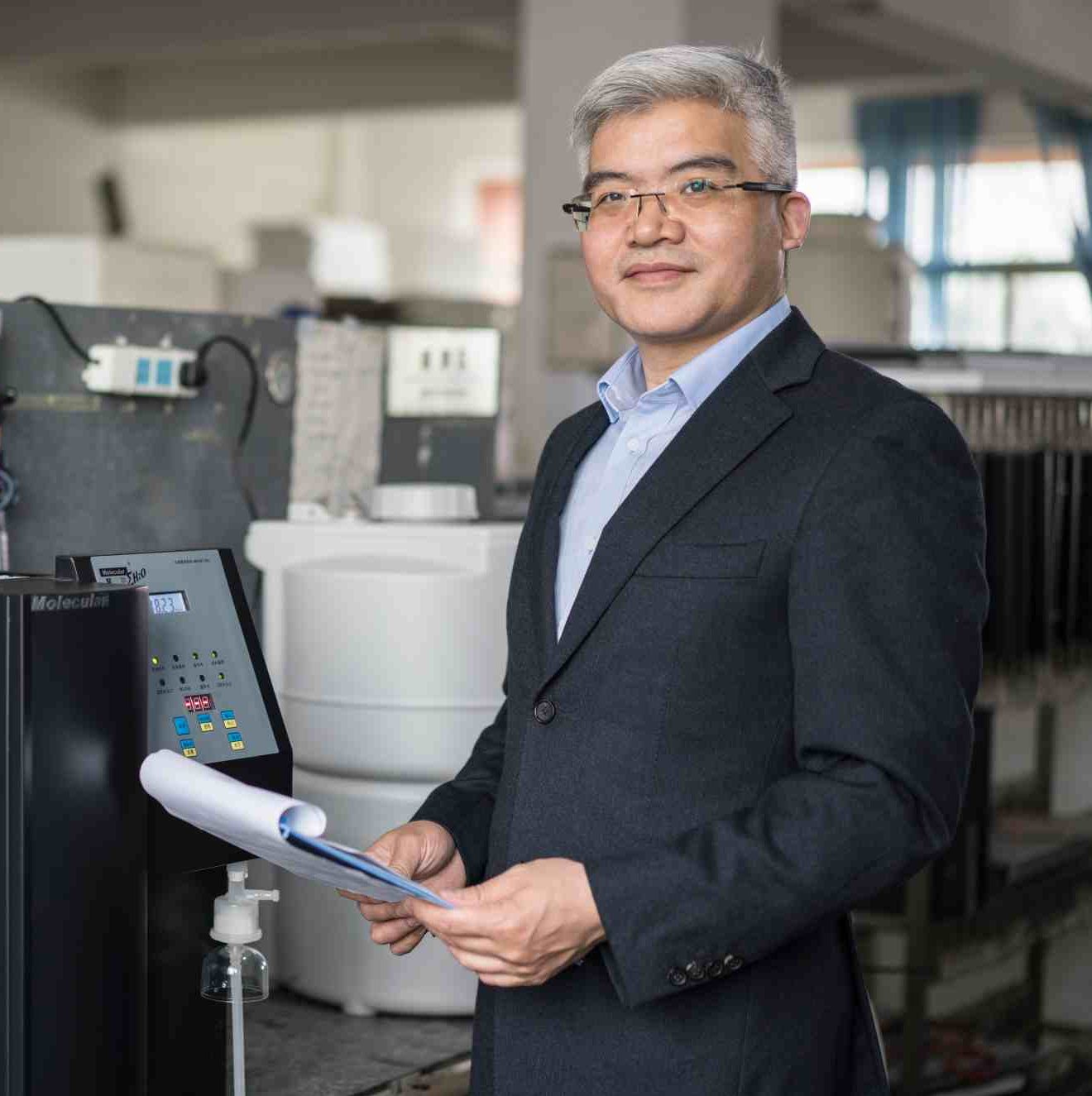
All over Southeast Asia, factories, hotels hospitals, food, and other producers are all hitting the same blockage that is the water flowing from the tap isn’t enough to develop a business on. Rapid growth in industrial production has outpaced investments in infrastructure for water which has exposed many facilities to a variety of issues, including intermittent shortages, and a sporadic water supply. The water shortages aren’t just a health concern, they’re an operating risk. Let’s examine the reasons why this problem is constant, the cost it incurs for companies, and what treatment strategies are actually solving the problem in the real world.
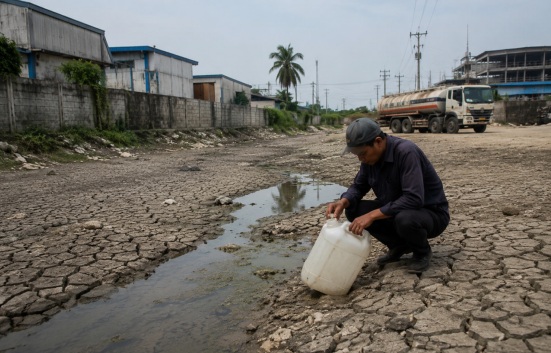
Why Southeast Asia Faces Unique Drinking Water Challenges
A Region Rich in People, Poor in Freshwater
Asia is the home of more than half of the world’s population yet there is less freshwater available per person than any other continent, excluding Antarctica According to an Water and Sanitation Policy overview by IAPMO. This structural imbalance is causing the demand for water that is clean within Southeast Asia is growing faster than the supply, particularly in the industrialized zones.
Uneven Progress Between Cities and the Countryside
The progress in access to water has been steady, but lopsided. Access to safe drinking water throughout East as well as Southeast Asia rose from about 65 to 75% in the period between 2015-2024, however, around one-fourth of residents in the region do not have safe drinking water at home. The biggest gap exists between rural and urban areas with 85 percent of people living in urban areas have access to safe drinking water at home as opposed to just 58% of rural residents. And at the area level it’s just as lopsided too— in places like Hong Kong, Macao, Japan, South Korea, and Singapore, almost everyone had access to safely managed drinking water in 2024 . Meanwhile, in Laos, Cambodia, and Indonesia, under 40% had it.
Contamination and Seasonal Volatility
The quality of water is a constantly changing objective. In 2020, over 60% of the population within Southeast Asia lacked access to well-managed drinking water, and contamination of groundwater – such as arsenic levels that are elevated is a frequent issue in regions in southern Vietnam in Vietnam and Cambodia. Locally, UNICEF estimates that between 68% and 84% of the water sources in the region are affected. Monsoon storms add to this by causing heavy rainfalls to increase Microbial load and turbidity and dry seasons increase the concentration of pollutants and decrease the supply.
Climate Change Is Accelerating the Problem
Climate pressure is now a real defining factor. An estimated 110 million people in Southeast Asia don’t have safe drinking water, and 74% of the population deals with high water stress. Coastal and delta areas are especially exposed, salinity along the Mekong River that about 65 million people rely on is projected to climb by as much as 27% within the next three decades, and saltwater intrusion episodes are already showing up earlier, and with more force than before.
The Investment Gap Behind It All
Underneath all of this is a financing shortfall. The Asian Development Bank‘s 2025 water security outlook found that environmental water security is declining in more than half of Southeast Asian countries, and that the region needs roughly $4 trillion in investment by 2040 to meet water and sanitation needs — while current spending covers less than 40% of that requirement.
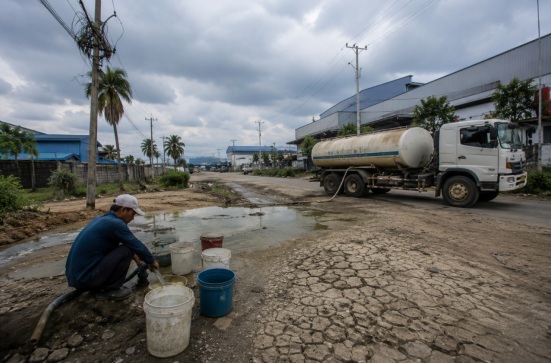
The Business Impact: Why This Matters for Facilities
Operational Risk
For manufacturers, hospitals, and hotels, unreliable water isn’t a background issue — it directly threatens uptime. Contaminated water, or even water with high mineral content, can corrode boilers and the cooling systems , it also disrupts food and beverage output consistency. And in some cases it can halt day to day operations entirely, especially where everything depends on a steady, predictable supply.
Health and Compliance Exposure
Inadequate sanitation and water quality issues are estimated to cost East and Southeast Asian economies 1–1.2% of GDP, a reminder that water problems carry real financial weight, not just reputational risk. Facilities that serve patients, guests, or employees are also seeing increasing scrutiny from local and international regulators around water safety standards, which is frankly getting stricter every year.
The Cost of Relying on Bottled Water
Many facilities default to bottled or trucked-in water as a stopgap. It works short-term, but it’s expensive, logistically fragile, and creates a dependency that scales poorly as a business grows — which is why more industrial and commercial operators are shifting toward on-site treatment.
Common Approaches to Solving Drinking Water Challenges
Reverse Osmosis (RO) Systems
RO remains the workhorse for facilities dealing with high salinity, dissolved solids, or heavy contamination — common in coastal and delta zones affected by saltwater intrusion. It forces water through a semi-permeable membrane, removing the vast majority of dissolved impurities and delivering consistent, safe output regardless of source water quality.
Nanofiltration
If the water source requires selective treatment, removing particular pollutants like hardness and organic matter and preserving beneficial minerals, nanofiltration provides a middle ground between ultrafiltration and RO usually with lower energy costs.
Ultrafiltration
For facilities that deal in suspended solids, waterborne bacteria and turbidity instead of dissolving salts, ultrafiltration offers an efficient and reliable filtering system with less energy requirements, which makes it an ideal choice for water that is biologically unsafe but isn’t heavily mineralized.
Mobile and Modular Treatment Units
Remote job sites, disaster response and temporary activities don’t always are able to afford fixed infrastructure. Mobile modular and truck-mounted treatment systems enable facilities to set up the capacity of clean water quickly anywhere it is needed, without relying on the municipal upgrade.
What Industrial and Commercial Facilities Should Look for in a Water Treatment Partner
In light of the fact that the quality of water is dependent on the location or season and also by industry, a universal system does not work. The facilities that address their drinking water issues the most effectively usually prioritize certain aspects when selecting a treatment partner:
- Customization based on actual water source data — not generic assumptions about what “should” work
- Durability and low maintenance overhead, since downtime for repairs defeats the purpose of on-site treatment
- Responsive local or regional support, particularly important across a region as geographically fragmented as Southeast Asia
- Scalability, so the system can grow alongside expanding operations rather than requiring a full replacement
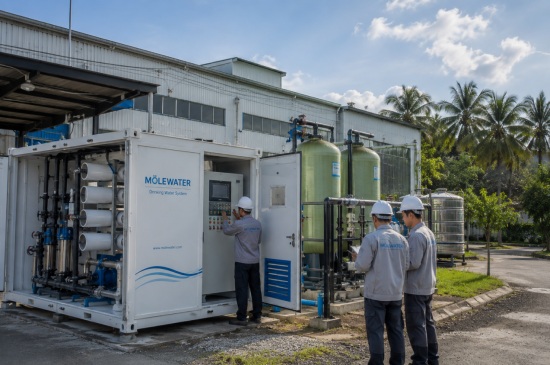
Providers with a track record across diverse industries — healthcare, food and beverage, hospitality, and heavy industry — are generally better positioned to match the right filtration technology to a facility’s specific water profile.
The drinking water issues in Southeast Asia are shaped by geography climate change, and uneven infrastructure investment, and they will not go out on their own. For commercial and industrial facilities, the best way to take isn’t waiting around until municipal infrastructure systems catch up, but instead investing in the right treatment technology that’s matched to the local conditions of water for reverse osmosis, be it for the intrusion of saline, ultrafiltration for biological contaminants and mobile units to run remote operations.
Take a look at Molewater’s Drinking Water Systems to find the right solution for your facility’s water supply scale, size, and location.