Ion Exchange Resin for High-Purity Water
|

Which Ion Exchange Resin Is Best for High-Purity Water?

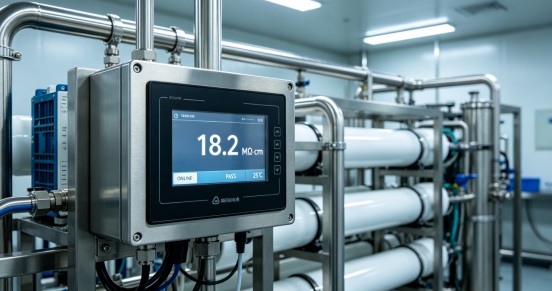
The theoretical limit for water purity – a resistance of 18.25 MΩ·cm at 25°C – is the gold standard for semiconductor, pharmaceutical, and high-tech laboratory environments. While technologies such as Reverse Osmosis (RO) and Electrodeionization (EDI) are able to do the bulk of the lifting, the most essential barrier to pure water is Ion Exchange…

Modular Systems
|

Modular vs. Traditional Water Treatment Systems: Which Is Right for Your Project?

When a facility plans a new water treatment system, most people jump straight to talking about membranes or filtration technology. But the decision that actually shapes the whole project comes earlier: how the system gets built in the first place. A site-built plant and a modular, skid-mounted unit solve the same problem in very different…

Industrial RO System for Electronics Semiconductor
|

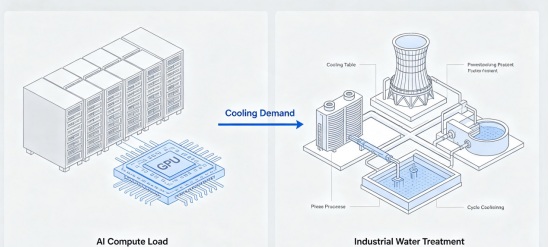
Data Center Water Use Is Under Pressure: How Water Treatment Improves Cooling Reliability

While data centers have always been known for their heavy electricity use, water is emerging as this similarly essential resource. AI workloads and high density computers are pushing out more heat, and so the cooling systems are getting under this unprecedented demand. The water that goes into these cooling systems is also receiving growing attention,…

PFAS in drinking water
|

PFAS in Drinking Water: Best Removal Technologies

PFAS, they’re commonly called “forever chemicals,” have become a big concern for both industrial and home water safety, mostly because they stick around so long and have real health effects. With rules changing worldwide, people are starting to wonder, can PFAS really be taken out of our water supply? The short answer is YES, if…

cooling tower water treatment
|

Cooling Tower Water Problems: When Should You Improve Makeup Water Treatment?

A cooling tower looks simple enough: water evaporates, heat is eliminated and the system keeps working. But if you’ve had to grapple with tenacious scale on the fill media, a heat exchanger that continues corroding, or a blowdown valve that seems to be constantly open, you already know the reality is more challenging. Most cooling…

Multi-Media Filter vs. Activated Carbon Filter in Raw Water Pretreatment
|

Multi-Media Filter vs. Activated Carbon Filter: What’s the Difference in Raw Water Pretreatment?

Anyone specifying raw water pretreatment equipment ends up comparing multi-media filters and activated carbon filters at some point, and often assumes they’re interchangeable options for the same job. They’re not. A multi-media filter removes suspended solids and turbidity through physical filtration — water passes through layered media and particles get trapped. An activated carbon filter…

Brine Water Treatment Plant
|

What Is Brine Water and How Is It Treated for Reuse or Disposal?

Every water treatment system that removes dissolved salts produces a byproduct: brine. It is concentrated, often corrosive, and in most places, you cannot simply drain it away. For industrial facilities running reverse osmosis systems, ion exchangers, or desalination units, brine waste management is an ongoing operational challenge and the cost of getting it wrong goes…

Industrial-Wastewater-Treatment-Technologies
|

Where Should Industrial Water Reuse Start? 5 Wastewater Streams Worth Recovering First

Where Should Industrial Water Reuse Start? 5 Wastewater Streams Worth Recovering First Most factories are sitting on a water reuse opportunity they’ve never mapped. The water that leaves your facility every day through drains and discharge lines isn’t uniformly contaminated. Some of it is genuinely clean enough to recover with relatively straightforward treatment. The question…

Boiler Water Treatment Companies & Systems
|

Top Boiler Feed Water Treatment Companies & Systems: How to Choose the Right Partner

Boiler feed water treatment companies supply the equipment, chemicals, engineering, and monitoring services needed to control scale, corrosion, and dissolved gases in industrial boiler systems. They range from chemical specialists and ongoing service contractors to equipment manufacturers and full-system integrators. Which type of partner makes sense depends on your boiler pressure, feedwater source, and whether…

How much Cost of Industrial Wastewater Treatment System
|

How Much Does an Industrial Wastewater Treatment System Cost?

Industrial wastewater treatment system costs typically range from $200,000 to over $1.5 million, depending on your facility’s flow rate, the type of contaminants in your wastewater, and local discharge regulations. Upgrade projects where existing infrastructure is retained and specific components are improved, generally fall between $65,000 and $200,000. There’s no universal price because wastewater treatment is engineered…

End of content

End of content