Industrial wastewater often contains contaminants that require specialized treatment before discharge or reuse. Among them, cyanide is one of the most closely regulated because even relatively low concentrations can pose serious risks to aquatic ecosystems, biological treatment systems, and regulatory compliance. Although cyanide compounds play an important role in several manufacturing processes, they must be carefully managed once they enter wastewater streams. Understanding where cyanide comes from, how it behaves in water, and which treatment methods are available is the first step toward selecting an effective treatment strategy.
What Is Cyanide and What Is It Used For in Industry?
Cyanide refers to a group of chemical compounds that contain the cyanide ion (CN⁻), consisting of one carbon atom bonded to one nitrogen atom. Depending on the chemical structure, cyanide may exist as free cyanide, hydrogen cyanide gas (HCN), simple cyanide salts, or metal-cyanide complexes.
Although cyanide is widely recognized for its toxicity, it is also an essential industrial chemical. Under controlled conditions, it provides unique chemical properties that make it difficult to replace in several manufacturing processes.
The most common industrial forms include:
| Cyanide Type | Typical Form | Common Applications |
| Hydrogen cyanide (HCN) | Gas | Chemical manufacturing, intermediates |
| Sodium cyanide (NaCN) | Solid | Gold and silver extraction, electroplating |
| Potassium cyanide (KCN) | Solid | Electroplating, metal finishing |
| Metal-cyanide complexes | Dissolved compounds | Electroplating wastewater, mining process water |
What Is Cyanide Used For?
Despite its hazardous nature, cyanide remains an important raw material in modern industry. Its ability to dissolve metals, stabilize metal ions, and participate in chemical reactions makes it valuable across multiple sectors.
Some of the most common industrial applications include:
| Industry | How Cyanide Is Used |
| Electroplating | Improves metal deposition and coating quality |
| Gold and silver mining | Leaches precious metals from ore during cyanidation |
| Metal finishing | Surface treatment and cleaning |
| Chemical manufacturing | Production of intermediates, plastics, pharmaceuticals, and specialty chemicals |
| Steel processing | Certain heat treatment and surface hardening applications |
In most facilities, cyanide is carefully handled within closed production systems. However, rinsing operations, equipment cleaning, and process losses can introduce cyanide into wastewater, making downstream treatment necessary before discharge.
Where Does Cyanide in Industrial Wastewater Come From?
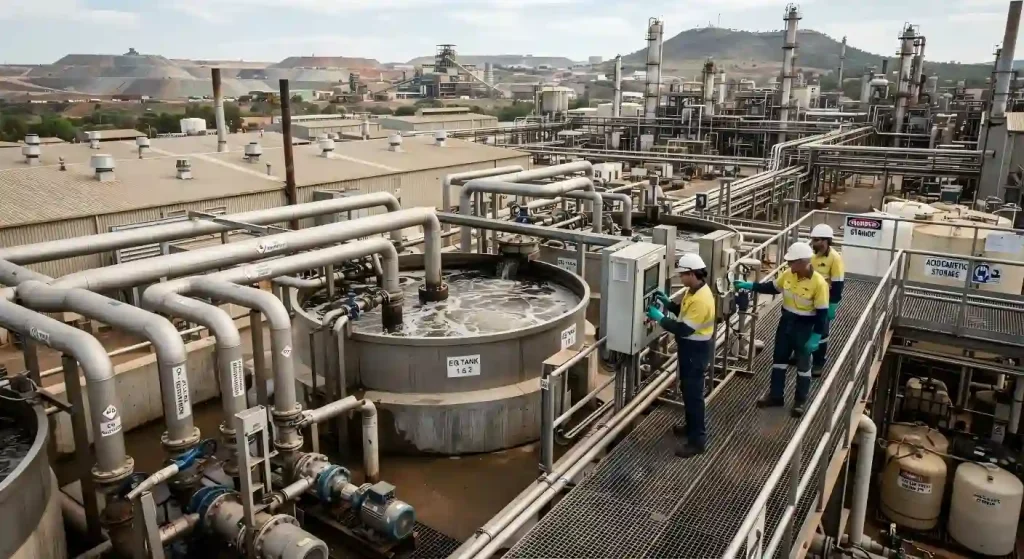
Although small amounts of cyanide occur naturally in certain plants, bacteria, and combustion processes, these sources contribute very little to industrial wastewater. In practice, most cyanide in industrial effluent comes from manufacturing processes where cyanide-containing chemicals are used as raw materials or processing agents.
Some of the most common sources include:
Electroplating Wastewater
Electroplating is one of the largest sources of cyanide-containing wastewater. Cyanide-based plating solutions are widely used for metals such as copper, zinc, silver, and cadmium because they help produce stable plating baths and high-quality surface finishes.
During rinsing, equipment cleaning, and bath replacement, residual cyanide can enter the wastewater stream as free cyanide or metal-cyanide complexes.
Mining and Mineral Processing
Gold and silver mining commonly uses cyanide leaching to separate precious metals from ore. As a result, process water and tailings may contain residual cyanide that must be treated before it can be reused or discharged.
Coke and Steel Production
In coke plants and some steel manufacturing processes, cyanide is formed during the high-temperature treatment of coal. The resulting wastewater often contains cyanide together with contaminants such as ammonia, phenols, and thiocyanate, making treatment more complex.
Chemical Manufacturing
Hydrogen cyanide and cyanide salts are important intermediates in the production of certain chemicals. Depending on the manufacturing process, wastewater may contain different forms and concentrations of cyanide, requiring dedicated treatment before discharge.
Free Cyanide vs. WAD Cyanide vs. Total Cyanide
Before selecting a treatment process, it’s important to identify which form of cyanide is present in the wastewater. Different forms behave differently during treatment, and discharge standards are often based on specific cyanide measurements.
| Type | Description | Treatment Considerations |
| Free Cyanide | Includes dissolved CN⁻ and HCN | Most toxic and generally the easiest to oxidize |
| Weak Acid Dissociable (WAD) Cyanide | Cyanide weakly bound to certain metals | Common in mining wastewater and can release free cyanide under acidic conditions |
| Total Cyanide | Includes free cyanide and strong metal-cyanide complexes | Commonly used for regulatory reporting and compliance monitoring |
Because each form responds differently to treatment, a system designed for free cyanide may not effectively remove metal-cyanide complexes. Identifying the cyanide species at the beginning of a project helps determine the most suitable treatment process.
How Does Cyanide Affect Treatment Systems and the Environment?
Cyanide is strictly regulated because of its high toxicity. In water, free cyanide can interfere with cellular respiration, preventing organisms from using oxygen efficiently even when dissolved oxygen levels appear normal.
Its environmental behavior is influenced by factors such as cyanide concentration, pH, temperature, and the presence of metal complexes. Under acidic conditions, free cyanide may be converted into hydrogen cyanide (HCN) gas, creating additional environmental and workplace safety risks.
Impact on Biological Wastewater Treatment
Cyanide can also affect the wastewater treatment process itself. In biological treatment systems, the microorganisms responsible for breaking down organic pollutants are highly sensitive to cyanide. Excessive concentrations may inhibit microbial activity, reduce treatment performance, or, in severe cases, disrupt activated sludge systems.
For this reason, many industrial facilities lower cyanide concentrations before wastewater enters biological treatment units, helping protect the microbial community and maintain stable system performance.
Impact on Receiving Waters
If cyanide is not adequately removed before discharge, it can harm aquatic ecosystems. Fish and many aquatic invertebrates are especially sensitive to free cyanide, which is why industrial discharge limits are tightly regulated in many countries.
Beyond environmental damage, cyanide releases can lead to higher remediation costs, regulatory penalties, and increased environmental compliance risks for industrial facilities.
Regulatory Requirements and Discharge Limits for Cyanide
Because of its toxicity, cyanide is subject to strict discharge regulations in most countries. However, there is no single global discharge limit. Permit requirements vary depending on the industry, the receiving water body, and whether wastewater is discharged directly to the environment or sent to a publicly owned treatment works (POTW).
In the United States, facilities that discharge directly into surface waters under the National Pollutant Discharge Elimination System (NPDES) must meet permit-specific effluent limits established by the U.S. Environmental Protection Agency (EPA). These limits are intended to protect downstream water quality and aquatic ecosystems.
Facilities that discharge wastewater to municipal treatment plants are generally regulated through local pretreatment programs instead of NPDES permits. Because cyanide can interfere with biological treatment processes, pretreatment is often required before wastewater enters the public sewer system.
The two discharge scenarios typically involve different compliance requirements:
| Discharge Type | Typical Requirement |
| Direct discharge to rivers or lakes | Must comply with NPDES permit limits and applicable water quality standards |
| Indirect discharge to a POTW | Must meet local pretreatment requirements before entering the municipal sewer system |
Most permits also specify which form of cyanide must be monitored, such as total cyanide or other regulated cyanide fractions. Routine sampling and analysis are used to confirm treatment performance and demonstrate regulatory compliance.
Cyanide Wastewater Treatment Methods
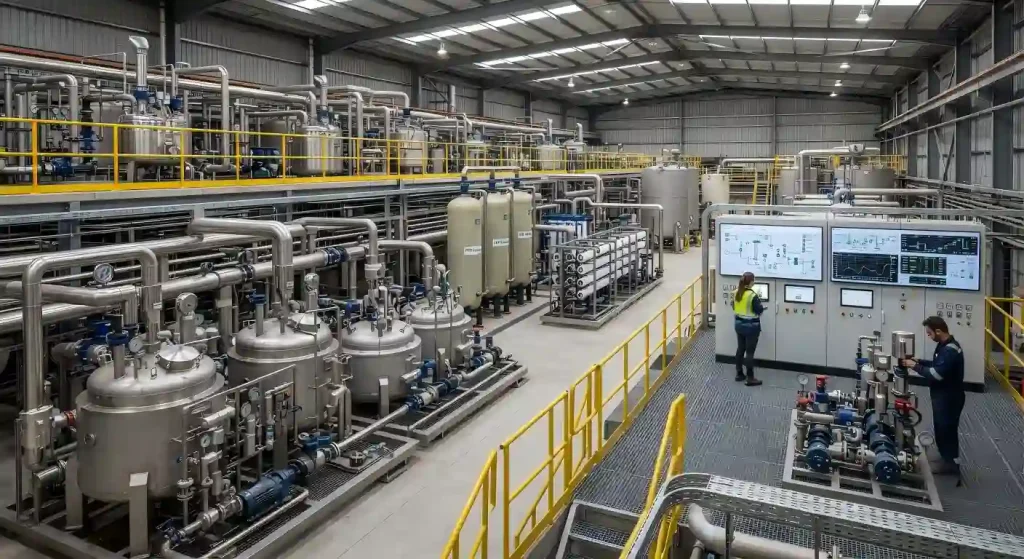
No single treatment technology is suitable for every cyanide wastewater stream. The right solution depends on factors such as cyanide concentration, wastewater composition, the presence of metal-cyanide complexes, discharge requirements, and operating costs. In practice, most industrial systems combine two or more treatment technologies to achieve stable treatment performance and regulatory compliance.
The most commonly used treatment methods include:
Alkaline Chlorination
Alkaline chlorination is one of the most widely used methods for treating cyanide wastewater, particularly in electroplating and metal finishing operations. Chlorine-based oxidants are added under alkaline conditions, where a high pH helps prevent the formation of hydrogen cyanide (HCN) gas while promoting cyanide oxidation.
The process is highly effective for free cyanide and simple cyanide compounds, offering fast reaction rates and proven industrial reliability. However, it consumes relatively large amounts of chemicals and is less effective against stable metal-cyanide complexes, which may require additional treatment.
Ozone Oxidation
Ozone destroys cyanide through strong oxidation without introducing chlorine into the treatment process. It can produce fewer chemical by-products than conventional chlorination, making it suitable for facilities with stricter discharge or water reuse requirements.
Treatment performance depends on wastewater quality, as suspended solids and organic matter can reduce ozone efficiency. In addition, ozone systems generally require higher capital investment, so they are often used alongside other treatment technologies rather than as a standalone solution.
Ion Exchange
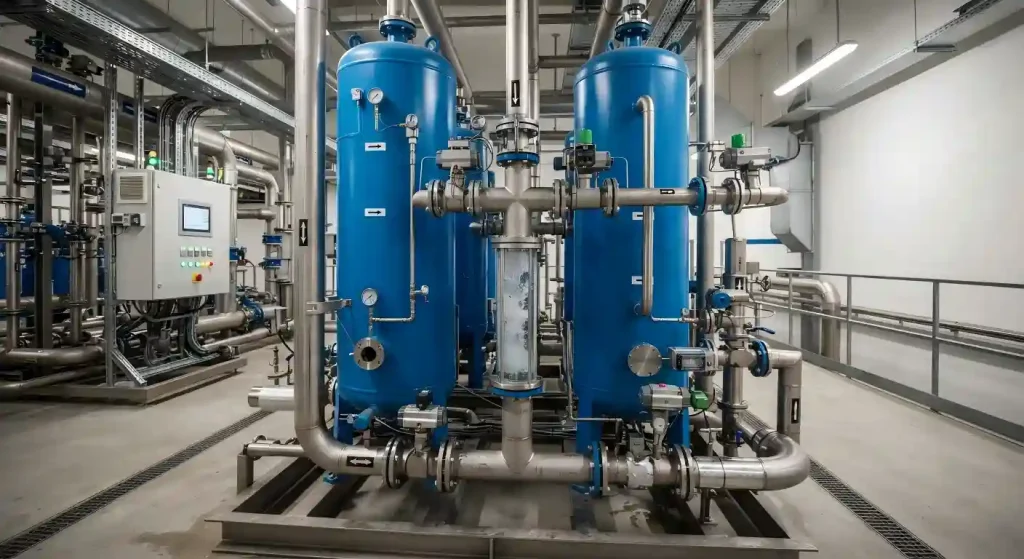
Ion exchange is typically used as a polishing step after primary treatment rather than for high-strength cyanide wastewater. Specially designed resins remove residual cyanide species and other dissolved contaminants, helping facilities achieve lower discharge concentrations.
Because resin performance is affected by suspended solids, oil, and high contaminant loading, pretreatment is usually required.
Membrane Processes
Reverse osmosis (RO) and nanofiltration (NF) are generally applied after cyanide has been chemically treated. Instead of destroying cyanide, these membrane processes remove dissolved salts, trace contaminants, and other remaining impurities.
They are commonly used in industrial water reuse systems where high-quality treated water is required.
Biological Treatment
Biological treatment is most suitable for wastewater with relatively low cyanide concentrations or for streams that have already undergone chemical pretreatment. Certain microorganisms can degrade cyanide compounds, reducing chemical consumption and operating costs.
Because microbial activity is sensitive to sudden changes in cyanide concentration, stable influent conditions are essential. Equalization and pretreatment are therefore often incorporated to improve biological treatment performance.
| Treatment Method | Best For | Typical Advantages | Main Limitations |
| Alkaline Chlorination | High free cyanide concentrations | Mature technology, fast reaction, widely used | Requires chemical dosing and pH control |
| Ozone Oxidation | Advanced treatment and stricter discharge standards | Strong oxidation with fewer chlorine-related by-products | Higher capital and energy costs |
| Ion Exchange | Low residual cyanide polishing | High removal efficiency for specific ions, suitable for polishing | Requires pretreatment and periodic resin regeneration |
| Membrane Processes | Water reuse and advanced polishing | Produces high-quality treated water | Not intended for direct cyanide destruction |
| Biological Treatment | Low cyanide concentrations after pretreatment | Lower operating costs, environmentally friendly | Sensitive to toxic shock loads and operating conditions |
How to Choose the Right Cyanide Treatment System
The same treatment technology may perform well in one application but poorly in another, even when cyanide concentrations are similar. Factors such as wastewater composition, cyanide species, and discharge requirements all influence the final process design.
When evaluating a treatment solution, consider the following:
- Cyanide concentration and species. Free cyanide, WAD cyanide, and metal-cyanide complexes require different treatment strategies.
- Industry and production process. Wastewater from electroplating, mining, chemical manufacturing, and coke production differs significantly in composition.
- Other contaminants. Heavy metals, suspended solids, ammonia, oils, and organic matter can affect treatment efficiency.
- Discharge requirements. Direct discharge usually requires stricter treatment than wastewater sent to a municipal treatment plant.
- Water reuse objectives. If treated water will be recycled, additional polishing technologies such as membrane filtration or ion exchange may be needed.
In many cases, the most effective solution is a combination of treatment technologies rather than a single process. Chemical oxidation is often paired with biological treatment, membrane systems, filtration, or ion exchange to achieve consistent compliance and support long-term operational reliability.
Treat Cyanide Wastewater with a Solution Designed for Your Process
Effective cyanide treatment depends on the characteristics of the wastewater, not just the cyanide concentration. Factors such as cyanide species, pH, coexisting contaminants, flow rate, discharge requirements, and water reuse goals all need to be considered when selecting a treatment process.
With more than 20 years of experience in industrial water and wastewater treatment, Molewater provides customized treatment solutions for a wide range of industries. Our engineering team evaluates wastewater characteristics, treatment objectives, and site conditions to develop systems that meet both operational and regulatory requirements.
If you’re planning a new cyanide wastewater treatment project or upgrading an existing system, we’re here to help. Contact the Molewater team to discuss your application and identify a treatment solution that fits your process and compliance goals.