When evaluating purified water for industrial manufacturing, laboratory experiments, or delicate facility equipment, the terminology can quickly become confusing. You will frequently encounter three primary terms: demineralized water, deionized water, and distilled water.
While they might seem interchangeable at first glance, they are produced through entirely different methods, offer varying levels of purity, and carry distinct cost structures. Choosing the wrong type can result in equipment corrosion, contaminated laboratory results, or unnecessary operating expenses. This guide clarifies these differences to help you make an informed decision for your facility’s needs.
What is Demineralized Water?
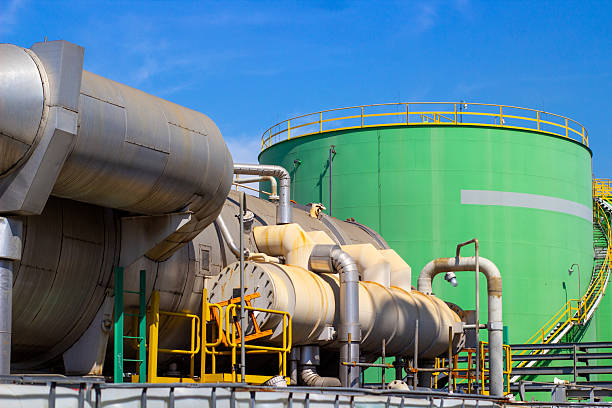
To understand the broader picture, we must begin with the most comprehensive term. Demineralized water is water that has had nearly all of its dissolved mineral ions removed. In natural water sources, minerals exist as dissolved salts, which split into positively charged cations (like calcium, magnesium, and sodium) and negatively charged anions (like chloride, sulfates, and carbonates).
The term “demineralized” describes the final state of the water rather than a specific production process. Any water treatment technology that successfully strips away these mineral loads yields demineralized water.
Engineers achieve this outcome through several modern techniques. The most common methods include reverse osmosis (RO), electrodialysis, and ion exchange. Because it lacks scale-forming minerals, demineralized water serves as the standard baseline for high-pressure boilers, cooling towers, and general industrial rinsing applications where mineral deposits could cause mechanical failure.
Is Demineralized Water the Same as Distilled Water?
A common question among facility managers is whether demineralized water is identical to distilled water. The short answer is no. While both are highly purified forms of water that lack mineral content, the crucial difference lies in how they are made and what else they contain besides minerals.
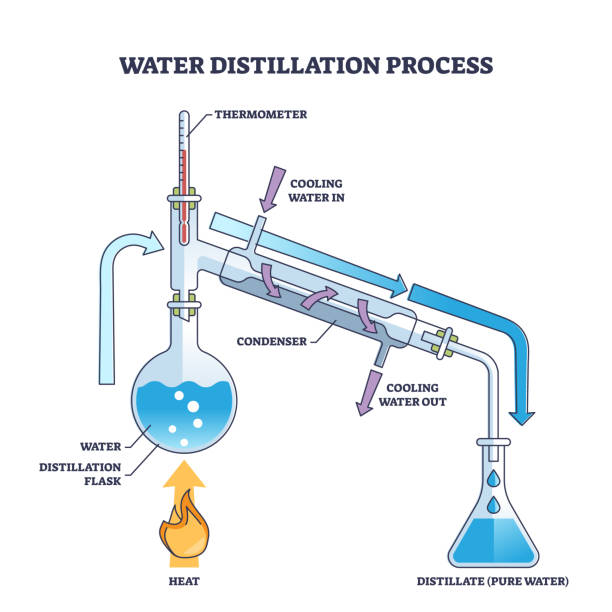
Distilled water is produced through a thermal process known as distillation. Water is heated to its boiling point to create steam, leaving behind heavy impurities, minerals, and complex molecules in the boiling chamber. The rising steam enters a cooling condenser, where it reverts into a liquid state and flows into a sterile collection tank.
This physical phase change introduces a major distinction: distillation removes almost everything. Beyond eliminating minerals, the intense heat kills biological pathogens like bacteria and viruses, while the phase change separates the water from non-volatile organic compounds.
In contrast, typical demineralized water processes such as standard reverse osmosis primarily target dissolved minerals. If the source water contains non-ionic contaminants, volatile organic chemicals (VOCs), or microscopic bacteria, some of these elements can bypass standard filtration membranes or ion exchange beds. Therefore, while distilled water is always demineralized, demineralized water is not necessarily sterile or completely free of organic compounds.
Demineralized Water vs. Deionized Water
Moving deeper into industrial water treatment, the distinction between demineralized water and deionized (DI) water becomes much tighter. In fact, deionized water is actually a highly specialized type of demineralized water.
The term “deionized” specifies a precise production method: ion exchange technology. To produce deionized water, pre-treated water passes through beds of synthetic spherical resins.
- Cation resins are chemically formulated to attract and trap positive mineral ions (like calcium and iron), releasing hydrogen ions (H+) in their place.
- Anion resins attract negative mineral ions (like chloride and silica), exchanging them for hydroxyl ions (OH–).
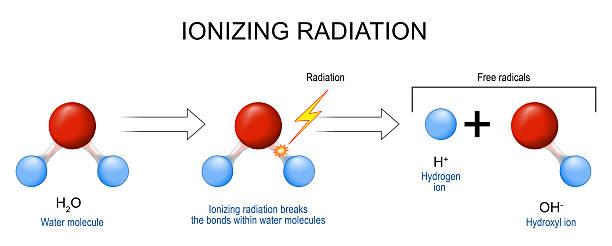
When the released hydrogen and hydroxyl ions combine, they form pure water (H2O).
Cation Exchange: Resin-H + Na+ —> Resin-Na + H+
Anion Exchange: Resin-OH + Cl- —> Resin-Cl + OH-
Neutralization: H+ + OH- —> H2O
Why does this matter? While demineralized water can be produced via physical membrane separation like reverse osmosis, deionized water relies on this chemical exchange. Deionization is highly effective at removing targeted ions, lowering the water’s electrical conductivity to near-zero levels.
However, ion exchange resins do not actively filter out uncharged particles, bacteria, or particulate matter. If raw water is passed directly through a DI system without proper pre-filtration, the resins will foul quickly, and the output water may still contain organic impurities.
Comprehensive Comparison
To help you visualize how these three water types compare across key performance and operational metrics, review the summary table below:
| Feature / Metric | Demineralized Water | Deionized (DI) Water | Distilled Water |
| Primary Production Method | Reverse Osmosis (RO), EDR, or Ion Exchange | Cation/Anion Ion Exchange Resins | Thermal Evaporation & Condensation |
| Targeted Contaminants | Dissolved mineral salts and ions | Specifically charged inorganic ions | Minerals, bacteria, viruses, organics |
| Typical Conductivity | 1.0 to 50 µS/cm | Less than 0.1 to 1.0 µS/cm | 0.5 to 3.0 µS/cm |
| Organic & Biological Purity | Variable (depends on pre-treatment) | Low (unless paired with UV/Ultrafiltration) | High (thermal sterilization effect) |
| Relative Production Cost | Low to Moderate | Moderate (requires resin regeneration) | High (intensive electrical/thermal energy) |
| Common Use Cases | Boiler feed, automotive, cooling loops | Electronics, laboratory reagents, plating | Medical autoclaves, pharmaceutical, cosmetics |
Related reading: Deionized Water VS Distilled Water: What’s The Difference?
Industrial Applications: Which One Does Your Facility Need?
Selecting the right water specification requires balancing the required purity level against your operating budget. Over-specifying your water grade creates unnecessary utility bills, while under-specifying can ruin your end products.
When to Choose Demineralized Water
Standard demineralized water often produced via industrial reverse osmosis systems is the workhorse of large-scale utilities. It is highly cost-effective for applications where the primary goal is preventing scale buildup.
Boiler Feed Water: High-pressure boilers require the removal of calcium and magnesium to prevent scale from coating heat-exchange surfaces, which can lead to localized overheating and catastrophic tube failures.
Cooling Towers: Reducing the total dissolved solids (TDS) allows facilities to run higher cycles of concentration, conserving water and minimizing chemical blowdown frequencies.
Commercial Car Washes: The final spot-free rinse relies on demineralized water so that no mineral rings remain on vehicle paintwork after drying.
When to Choose Deionized Water
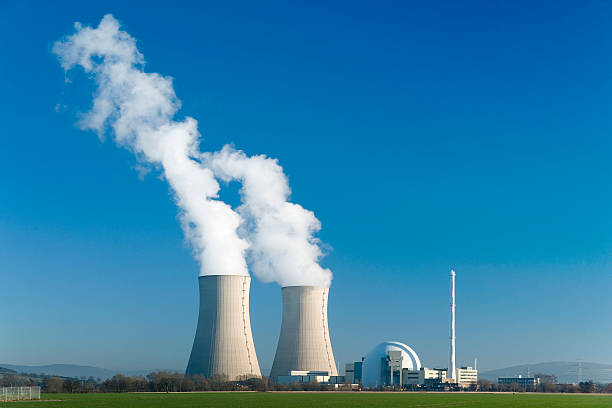
If your facility handles chemical formulations, high-precision manufacturing, or critical laboratory testing, you need the extreme ionic purity of deionization.
Laboratory Reagents: Analytical laboratories require DI water (often polished to Type I standards) to ensure that trace minerals do not interfere with sensitive equipment like chromatography or atomic absorption spectroscopy.
Electronics and Semiconductors: Silicon wafer manufacturing requires ultra-pure water (UPW) with near-zero conductivity to clean circuit paths without leaving micro-conductive mineral residues behind.
Electroplating and Surface Finishing: Bath chemistry must be strictly controlled; underlying mineral ions in the process water can disrupt metal adhesion and alter the final finish.
When to Choose Distilled Water
Because distillation is an energy-intensive process that requires boiling large volumes of water, it is generally reserved for environments where biological sterility and organic purity are non-negotiable.
Pharmaceutical and Medical Production: Medications, inhalation therapies, and water for injection (WFI) demand the absolute absence of endotoxins and microbial life.
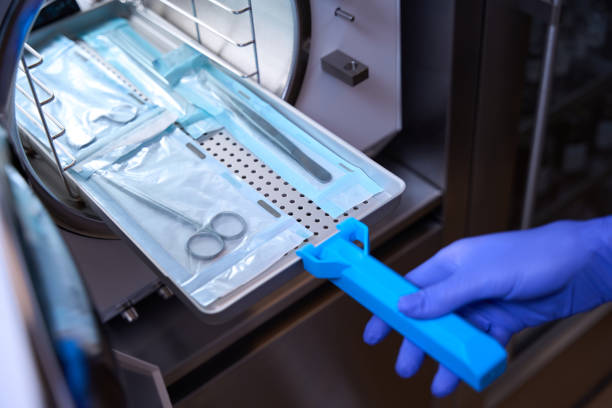
Clinical Autoclaves: Sterilizing medical instruments requires pure steam that will not foul delicate valves or introduce biological contaminants back onto sterile tools.
Cosmetic Formulations: To guarantee a long shelf life, lotions and creams require water completely free of wild bacteria or fungal spores that could degrade the product over time.
How Molewater Help You
In modern industrial facilities, water treatment is rarely restricted to a single technology. Instead of relying solely on expensive thermal distillation or demanding ion exchange systems, engineers frequently design multi-stage purification trains to maximize efficiency and protect equipment.
For example, a facility requiring ultra-pure deionized water will typically install an industrial reverse osmosis system as a pre-treatment step. The RO membranes remove 95% to 99% of the bulk mineral load and organic matter. The water then passes through a mixed-bed deionization polisher to remove the remaining trace ions.
By using this staged approach, the ion exchange resins last significantly longer before requiring chemical regeneration or replacement, lowering overall operational costs while delivering exceptional purity.
Whether you need a compact deionization setup for a commercial laboratory or a large-scale reverse osmosis system for industrial utility plants, matching the specific treatment method to your operational goals is key to maintaining facility health and product consistency.
As a dedicated manufacturer of industrial water purification systems, Molewater designs and builds tailored configurations including advanced Reverse Osmosis plants, Deionization units, and EDI systems to meet precise water quality specifications. If you are looking to optimize your facility’s water treatment efficiency or need assistance selecting the right purification technology, you can consult with the engineering team at Molewater to design a system that balances purity requirements with operational cost-efficiency.