
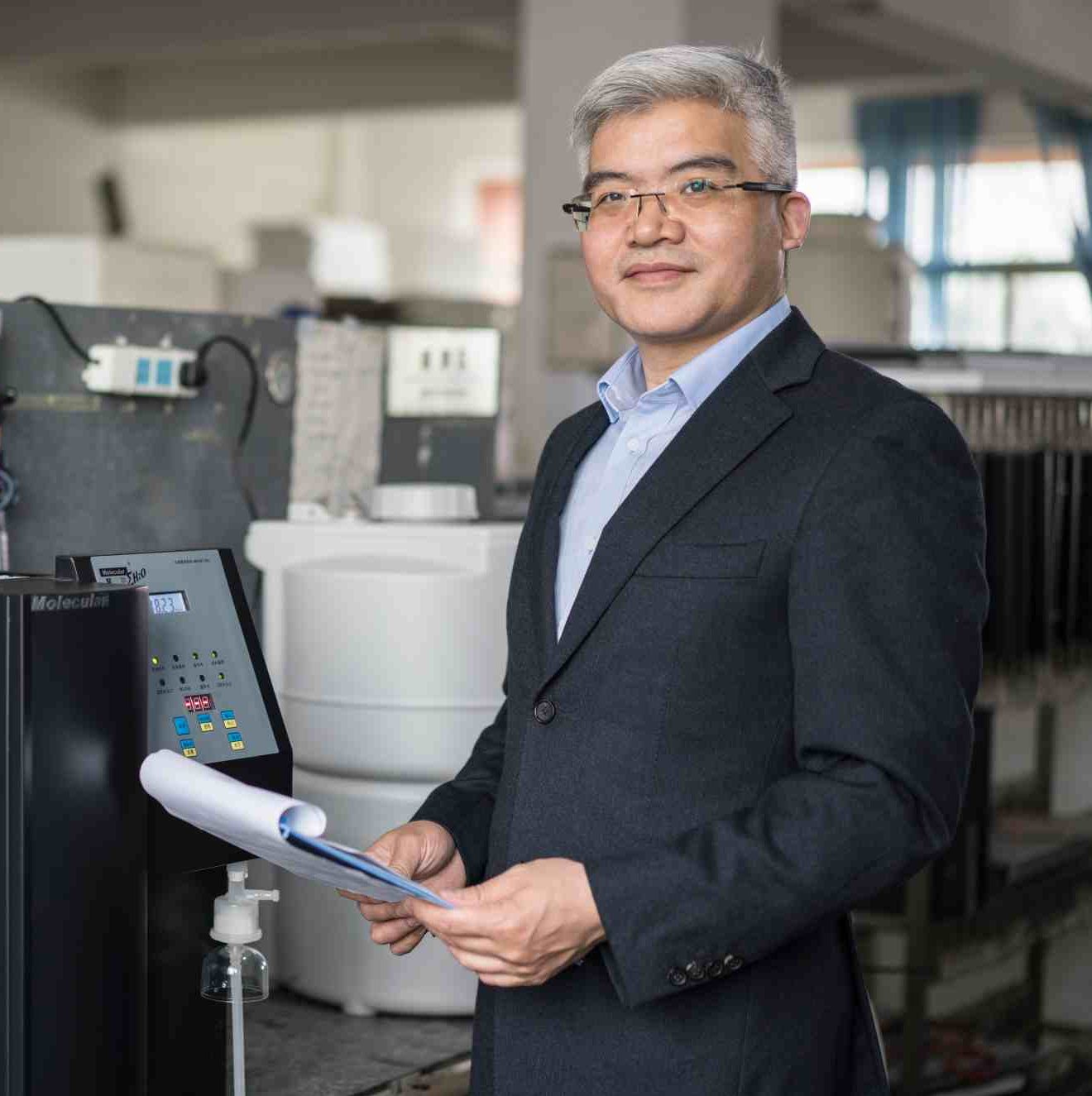
Equipment fouling sooner than anticipated. Products failing the quality inspection. RO membranes degrading faster than they should. These are the kinds of operational headaches plant managers deal with every day, and they often have their roots in a water quality problem that wasn’t solved early enough in the process. Get the pretreatment right and everything downstream is more reliable and more cost effective.
This article looks at what industrial ultrafiltration systems actually do, when they genuinely make sense for your operation, which industries rely on them most, and how to combine UF with other technologies for the results you need.
What Does an Industrial Ultrafiltration System Actually Do?
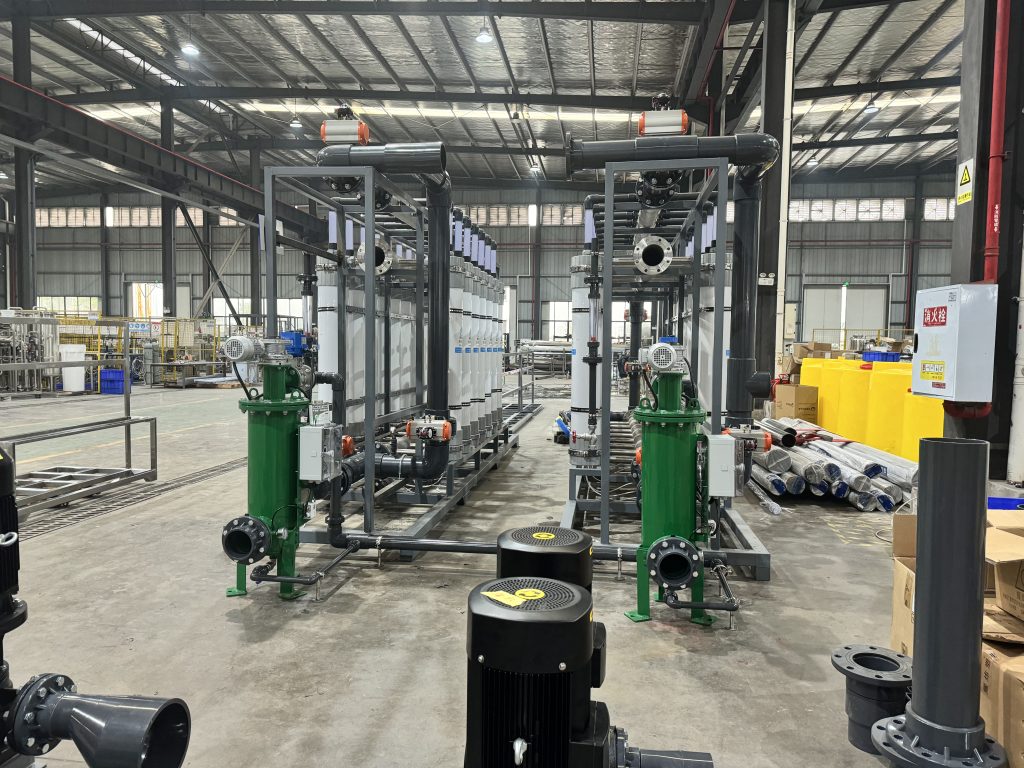
An ultrafiltration system uses a semi-permeable membrane with pore sizes typically between 0.01 and 0.1 microns to physically filter water. At these pore sizes, the membrane removes suspended particles, colloids, bacteria and a large percentage of viruses, but lets water and dissolved salts pass through.
Ultrafiltration (UF) is a pressure-driven membrane process that separates suspended solids, colloids and high molecular weight substances from water.
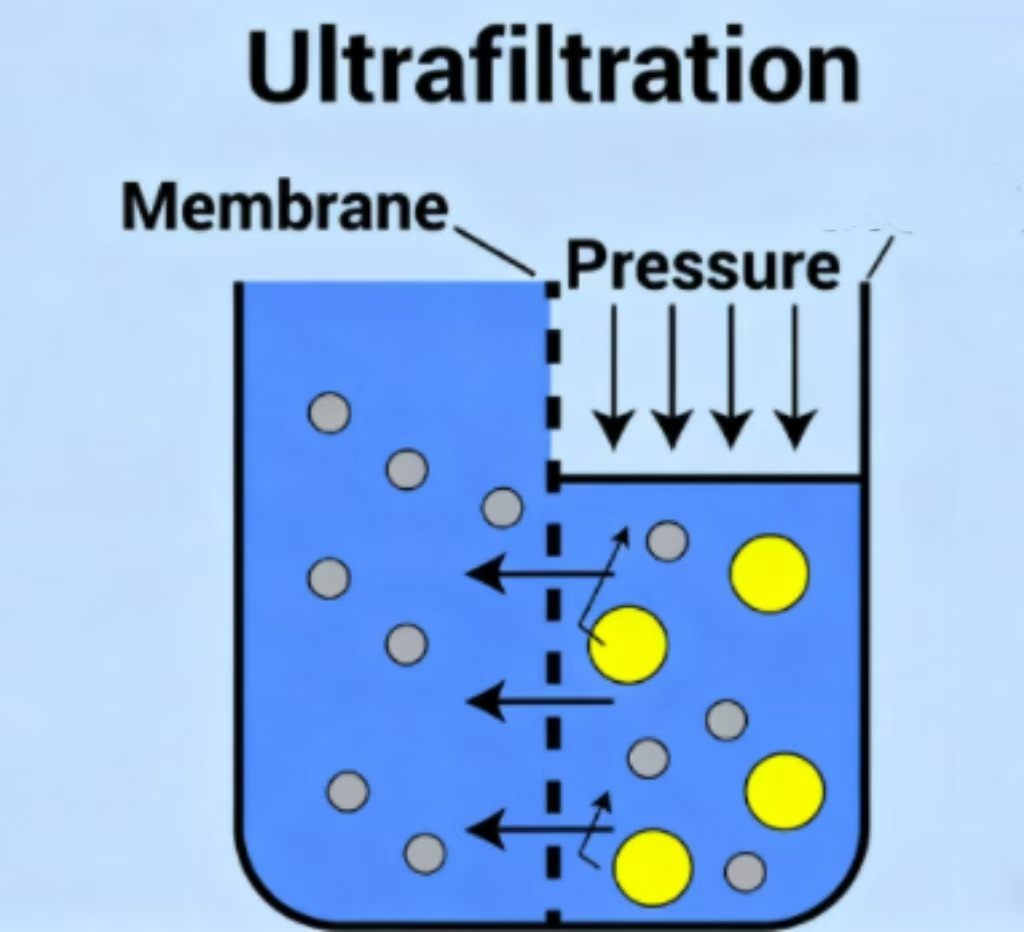
In practice, a UF system acts as a consistent barrier between raw water and downstream treatment processes. Unlike multimedia filters or simple cartridge filters, a well maintained ultrafiltration system will give a predictable output even with changing source water quality. This makes a big difference in industrial situations where process water feeds directly into production.
When Does an Ultrafiltration System Make Sense?
Not every facility needs one, and it’s worth saying that directly. UF is a good fit when your source water quality or your process demands push beyond what simpler filtration can reliably handle. Here are the key scenarios worth thinking through.
Raw water contains suspended solids or high turbidity. Surface water sources such as rivers and lakes can have very different levels depending on rainfall and seasonal variation. A UF system handles these fluctuations well, and it delivers stable water quality despite normal variations in source water quality.
Biological contamination is a concern. Bacteria and most viruses are physically blocked by UF membranes. For processes where microbial content affects product safety or regulatory compliance, UF provides reliable protection that chemical treatment alone cannot always guarantee.
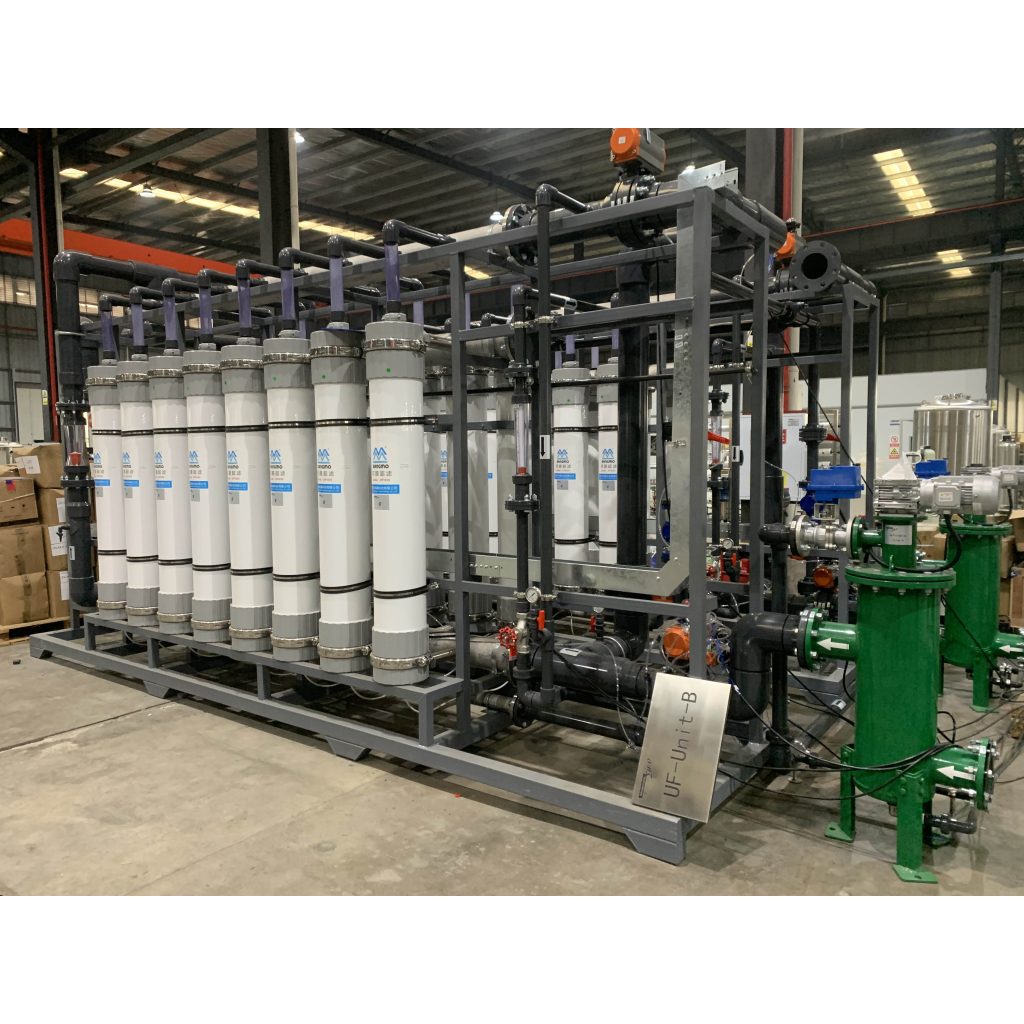
RO membranes require pretreatment. Running turbid or particle-laden water straight into a reverse osmosis system will increase membrane fouling and significantly reduce service life. One of the most successful pretreatment phases is UF due to providing clean and low-turbidity feedwater to the RO stage.
Water reuse requires stable pretreatment. When recycling treated wastewater back into production, quality needs to stay consistent. UF provides the stable baseline that advanced downstream treatment steps depend on.
Consistent process water quality is needed. Some manufacturing processes are sensitive to variation in incoming water. A system that delivers predictable output helps prevent disruptions and quality failures caused by fluctuating feed water.
That said, UF is not the right answer for every situation. The table below summarizes when it makes sense and when it doesn’t.
| Situation | UF Recommended? | Why |
| High turbidity water | ✅ | Removes suspended solids effectively |
| RO pretreatment | ✅ | Protects RO membranes, reduces fouling |
| Water reuse | ✅ | Improves recycled water quality |
| Clean municipal water | Depends | Evaluate actual conditions first |
| Only salt removal needed | ❌ | RO is usually more suitable |
Common Industrial Applications of UF
UF shows up across a wide range of industries. What they tend to share is a need for reliable particle and biological removal as part of a broader ultrafiltration water treatment process.
1. Food and Beverage Processing
In food and beverage manufacturing, the quality of process water has a direct impact on product safety and product consistency. UF helps keep incoming water free of suspended particles and microorganisms, therefore enabling hygiene compliance without depending on chemical treatments alone. It is commonly installed before an RO stage or as a final polishing step before water enters the production line.
2. Pharmaceutical and Biotechnology Manufacturing
Biological contamination is a significant concern in pharmaceutical and biotech procedures. UF is commonly employed as a pretreatment step in pharmaceutical water systems to minimize microbial load before downstream purification, and to remove fine particles and microorganisms before water enters sensitive production processes.
For biologics and injectable drug production especially, the biological barrier UF provides adds a meaningful layer of protection.
3. Electronics and Semiconductor Manufacturing
The process of making semiconductors requires water quality that is exceedingly constant at each step. UF reduces the particle and microbial load entering ultrapure water systems, thereby allowing polishing processes to run more efficiently and with less maintenance pressure.
The result is more stable incoming water quality, which translates directly to fewer process variations and more predictable manufacturing yields.
4. Power Plants and Boiler Feed Water
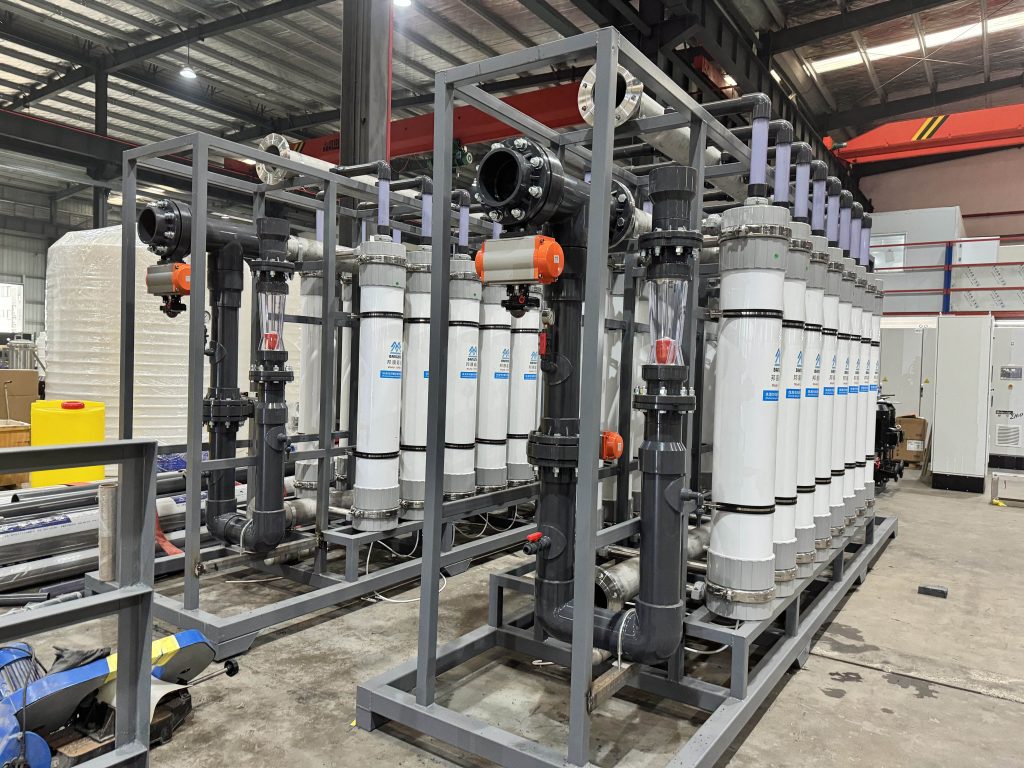
In power generation, tiny particles in the feed water increase the rate of fouling in the RO systems and demineralization units, therefore increasing maintenance costs and reducing equipment life. UF removes these solids upstream, protecting expensive downstream equipment and extending the service life of ion exchange resins and RO membranes.
5. Industrial Wastewater Reuse
So if facilities are going to recycle treated wastewater back into their operations, effective pretreatment is essential for reliable water reuse. UF removes fine suspended solids that are often missed by conventional clarification processes, conditioning water for advanced treatment processes, and providing the consistent feed quality recycling schemes need to operate at scale.
UF Alone or With Other Technologies?
Rarely will you find an industrial ultrafiltration system working alone. For most water treatment applications it is one step of a bigger process and the optimal mix relies on what your application really needs. Choosing the right treatment combination is often where the real engineering work happens.
- UF only: Suitable when the goal is particle and microorganism removal and dissolved salts are not a concern.
- UF + RO: Most widely used combination for production of high-purity water. UF performs the pretreatment; RO handles the desalination and the fine pollutant removal.
- UF + Carbon Filter: Useful when organic compounds or residual chlorine are present in addition to particle and biological removal.
- UF + UV: Adds an extra layer of biological protection, especially relevant where virus reduction is a regulatory or process requirement.
- UF + RO + EDI: The typical combination for the generation of ultrapure water, for semiconductors, pharmaceutical applications and other high-purity conditions.
Below is a comparison of the main capabilities of the most prevalent treatment technologies, to help you see where each one fits.
| Technology | Suspended Solids | Microorganisms | Dissolved Salts | Typical Use |
| UF | ✅ | ✅ | ❌ | Pretreatment, water reuse |
| RO | ✅ | ✅ | ✅ | Desalination, high-purity water |
| Multimedia Filter | ✅ | Limited | ❌ | Primary filtration |
| Activated Carbon | Limited | Limited | ❌ | Organics and chlorine removal |
Questions to Ask Before Investing in an Ultrafiltration System
It is well worth working through a few practical questions before committing to any water treatment equipment, since it can save substantial effort and money later. These are the key questions to answer early in the planning process.
Surface water, groundwater, and municipal water each have different contamination profiles and levels of variability. Often the source will dictate if you really need UF or if simpler filtration would suffice.
If issues trace back to biological contamination or fine particles, UF is worth serious consideration. If dissolved salts are the primary problem, RO should be the starting point.
Matching the treatment system to real quality requirements avoids both under-treating and over-investing.
UF membranes need to be cleaned regularly and replaced. Understand the total cost of ownership before installation to avoid unexpected operating costs later.
Systems designed only for today’s conditions can become bottlenecks as operations grow. Thinking ahead about scalability is time well spent.
Choosing the Right Solution
Industrial water treatment rarely fits a single template. The correct method depends on your source water quality, process requirements, regulatory environment and where your facility is headed in the next few years. Getting these factors right from the start helps reduce operating problems and lowers long-term costs.
At Molewater, we have spent over 20 years designing and manufacturing industrial ultrafiltration systems for industries ranging from pharmaceutical manufacturing to power generation and semiconductors. If you are working out whether UF fits your water treatment process, or how to combine it effectively with other technologies, reach out to our team and we will help you think it through.