Most plant managers don’t think about water quality until something goes wrong—a boiler tube fails, efficiency drops, or an unanticipated stoppage throws the entire production schedule off track. But the fact is, that water going into your boiler is more important to its long-term performance than practically any other single aspect.
Scale, corrosion and excess dissolved solids from untreated or poorly treated supply water silently undermine system efficiency. This means higher priced fuel, more maintenance, and the kind of disruption that is hard to recover from in a short period, in the long run.
This guide discusses the significance of feed water quality, where energy losses in industrial boilers truly come from, and how a properly constructed boiler feed water treatment plant looks in practice.

Why Feed Water Quality Has a Big Impact on Boiler Performance
Before we discuss treatment alternatives, it is crucial to understand why feed water quality has such a dramatic effect on boiler performance. Raw water from municipal supplies, wells or other sources often contains dissolved minerals, suspended solids and gasses which damage performance over time without proper treatment.
Scale Formation on Heat Transfer Surfaces
As water is heated in the boiler, calcium and magnesium deposits from its contents can precipitate out to form hard mineral deposits on boiler tubes and other heat transfer surfaces, creating hard mineral deposits called scale.
A thin coating of scale acts as an insulator between heat transmission surfaces reducing efficiency by forcing more energy out into production for each batch of steam produced.
Corrosion inside Boilers and Pipelines
Dissolved oxygen and carbon dioxide can react with metal surfaces within a boiler system over time, leading to corrosion, pitting, wall thining and damage that could potentially result in leaks or equipment failure.
Dissolved Solids Accumulation
Boiler water can become polluted over time as steam is produced, leaving behind dissolved solids that, left unchecked, will accumulate over time and alter its chemical makeup and create the potential for scaling, carryover and operational instability.
If not managed effectively these solids continue to build up until finally they overwhelm its capacity to produce steam and alter its chemistry significantly, leading to scaling, carryover and operational instability in its wake.
Reduced Steam System Reliability
Scale, corrosion and poor water chemistry make steam production unpredictable, leading to less predictable system performance, an increase in maintenance needs and gradually diminishing equipment reliability.
Where Energy Losses Actually Come From in Industrial Boilers
Poor quality feed water leads to technical issues that translate to significant operating expenses for plants. While its effects may initially go undetected, their effect can eventually cause large efficiency losses or equipment difficulties which lead to substantial operating expense increases.
- Scale Deposits Increase Fuel Consumption: Scale deposits act as an insulating barrier between the heat source and water being heated, decreasing efficiency as heat transfers occur and necessitating more fuel and longer operating cycles to produce steam output at its previous rate. Over time, even small accumulation can accumulate to become significant increases in energy cost.
- Excessive Blowdown Wastes Heat and Water: At higher dissolved solid levels, more frequent boiler blowdown is necessary in order to maintain an acceptable water chemistry. Each blowdown cycle removes hot water that has already done its work heating, leading to not only thermal energy waste but also increased makeup water consumption and treatment expenses.
- Corrosion Leads to Higher Maintenance Expenses: Corrosion can quickly destroy boiler tubes, valves, pumps and pipe systems over time, necessitating additional inspections and maintenance as parts wear out; costs related to such maintenance can quickly balloon under harsh conditions.
- Unplanned Downtime Disrupts Production: Low feed water quality can result in unanticipated downtime that disrupts production. Failures, leaks or other water-related equipment issues with tubes can lead to production interruptions, emergency repairs and missed delivery deadlines—sometimes surpassing even the expense of preventive water treatments.
Building an Effective Boiler Feed Water Treatment Strategy
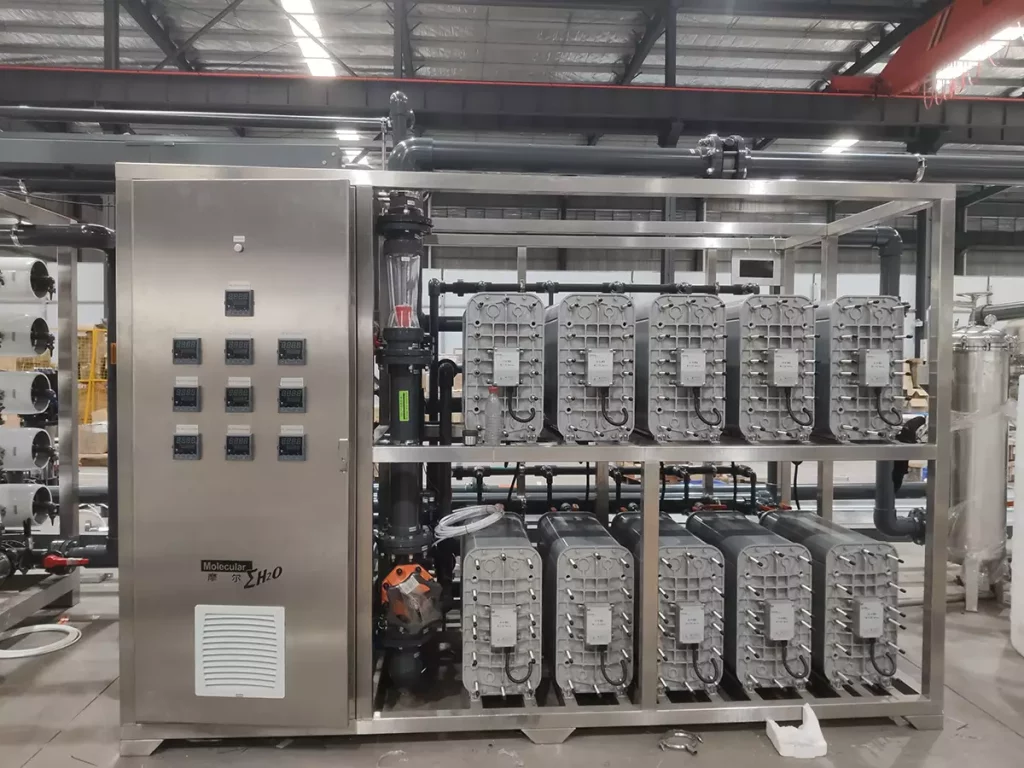
A well built boiler feed water treatment system is made up of several stages. Each stage has a unique contaminant that it targets and a specific portion of the system that it protects.
1. Reverse Osmosis Removes Dissolved Minerals Before They Cause Scale
Reverse osmosis (RO) is a water treatment method that removes dissolved salts and minerals that cause hardness using a semi-permeable membrane.
RO is the first line of defense against scale development by significantly lowering TDS levels and providing reliable water quality upstream and remains one of the most extensively used technologies in boiler water treatment today.
2. Ion Exchange Polishing for High-Purity Applications
After RO a second level of purification is ion exchange, which will remove any remaining calcium, magnesium and silica ions that RO did not completely remove.
This makes it particularly well suited for high pressure boilers with demanding feed water requirements. water quality that is steady and predictable and safeguards sensitive interior components.
In addition to mineral removal, many boiler systems also have deaeration equipment or chemical treatment programs to regulate dissolved oxygen and carbon dioxide. This helps increase the long-term reliability of the system and lower the risk of corrosion.
3. Advanced Filtration for Whole System Protection
Membrane or resin bed treatment is preceded by multimedia filtration (removing suspended particles, turbidity, and other contaminants from raw water) at the beginning of the treatment process.
This results in a reduction in fouling potential throughout the system and prevents physical wear and blockage of downstream equipment.
The role of each treatment stage in the overall system and the operational value it provides is outlined in the table below:
| Treatment Stage | Primary Function | Operational Benefit |
| Multimedia Filtration | Remove suspended solids | Reduce fouling |
| Activated Carbon | Remove chlorine and organics | Reduce membrane damage |
| Reverse Osmosis | Remove dissolved salts | Prevent scale formation |
| Ion Exchange | Remove residual ions | Protect high-pressure boilers |
| Chemical Dosing | Control corrosion and pH | Prevent Equipment deterioration |
How Proper Water Treatment Helps Prevent Unplanned Boiler Downtime
Avoiding boiler downtime is not merely a matter of resolving problems as they emerge. It’s about setting the environment that prevent those problems from emerging. What consistent boiler feed water treatment does is just that.
- Fewer Emergency Repairs: Steady feed water quality puts less stress on boiler tubes and internal components, which directly leads to fewer failures and less corrosion-related damage. It makes maintenance more predictable. Teams can schedule work in advance, rather than hurrying to respond to unplanned outages.
- Longer Equipment Service Life: Good feed water quality decreases daily stress on every component in the loop. Benefit for pumps, valves, boilers, steam distribution systems. These parts simply last longer and perform more consistently when they aren’t constantly fighting against scale build-up and rust.
- More Stable Steam Production: Steady feed water quality results in steady steam production and uninterrupted process operations. Less water quality variations means less troubleshooting, fewer downtime and more assurance that the system will work when it needs to.
A Reliable Boiler Begins with Reliable Feed Water

The quality of the feed water is the basis on which all other boiler performance problems are formed. Scale, rust and unpredictable water conditions aren’t simply about efficiency. They can increase operational expenses, limit equipment life and expose your organization to costly shutdowns.
Molewater designs customized Boiler Feed Water Treatment Plants that integrate RO, ion exchange, and advanced filtration into one reliable system. Contact us to explore what the perfect solution looks like for your setup if you are trying to increase your facility’s boiler efficiency or avoid boiler downtime.