Water is increasingly hard to ignore as a business issue. With stricter discharge rules, rising freshwater costs and increased investor focus on sustainability, the emphasis is on industrial enterprises to reconsider their wastewater management strategies. This is no longer just about compliance—it is about long-term competitiveness.
This is where Zero Liquid Discharge (ZLD) enters the conversation. It’s a technology that’s been around for decades but is getting a lot more serious attention today. Understandably, the question most plant managers ask is: is it really worth the cost?
This guide explains how ZLD systems work, what drives project costs, and how to evaluate the potential return on investment for your facility.
Why Zero Liquid Discharge Is Gaining Attention Across Industries
ZLD is no longer a niche solution. More facilities across sectors from chemicals and textiles to medicines and electricity generation are looking at it. Not only because of regulatory pressure, but also because the economics of water reuse are becoming increasingly attractive.
From Wastewater Compliance to Water Recovery
Several converging factors are making zero liquid discharge wastewater treatment more and more relevant:
- Stricter environmental regulations: In many areas discharge restrictions are becoming tighter and the cost of non-compliance, including fines, shutdowns and reputational harm, is increasing with them.
- Increasing freshwater costs: The cost of procuring clean water for industrial usage has been progressively increasing in water challenged geographies. Process water recovery and reuse is becoming more cost-competitive.
- Water scarcity and supply risks: According to the overview of water scarcity, over two billion people live in countries experiencing high water stress. Supply disruptions are a real operating concern for industrial plants in the water-stressed regions.
- Sustainability and ESG goals: Institutional investors and corporate buyers are demanding higher environmental performance. A credible water management strategy, incorporating ZLD if appropriate, can augment an ESG story in a tangible and measurable way.
What Does a Zero Liquid Discharge System Actually Do?
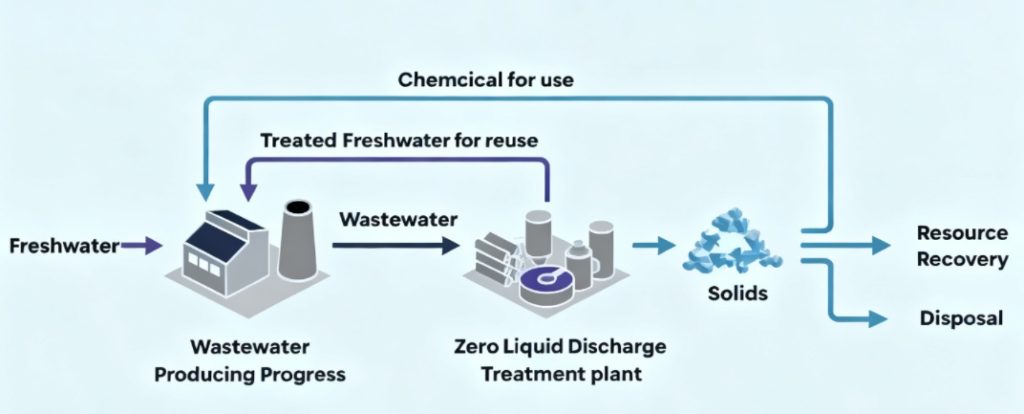
At its most basic level, a ZLD system essentially removes a facility’s liquid waste outflow. That’s how it works in practice:
- Removes liquid discharge from the facility: All waste water is handled on site, no release to the drain or local waterways.
- Maximizes water recovery and reuse: A good design may recover 90-99% of water for reuse in production operations.
- Produces concentrated brine and solid waste: The treatment produces a controllable solid, usually crystallized salts, rather than a liquid effluent.
- Typically combines: Pretreatment → Membrane systems (MF/UF/NF/RO) → Evaporation → Crystallization. Each stage progressively concentrates the wastewater stream before final crystallization. The final stage converts the remaining dissolved solids into a manageable solid waste stream.
Understanding the Real Cost of a ZLD Plant
One of the most common frustrations we hear from facilities investigating ZLD is that the first quotes vary so wildly, and it’s impossible to identify what’s actually driving the number. In reality, the cost of a ZLD plant is strongly dependent on the volume of wastewater, its composition and the extent of water recovery.
The Major Components Behind ZLD Plant Cost
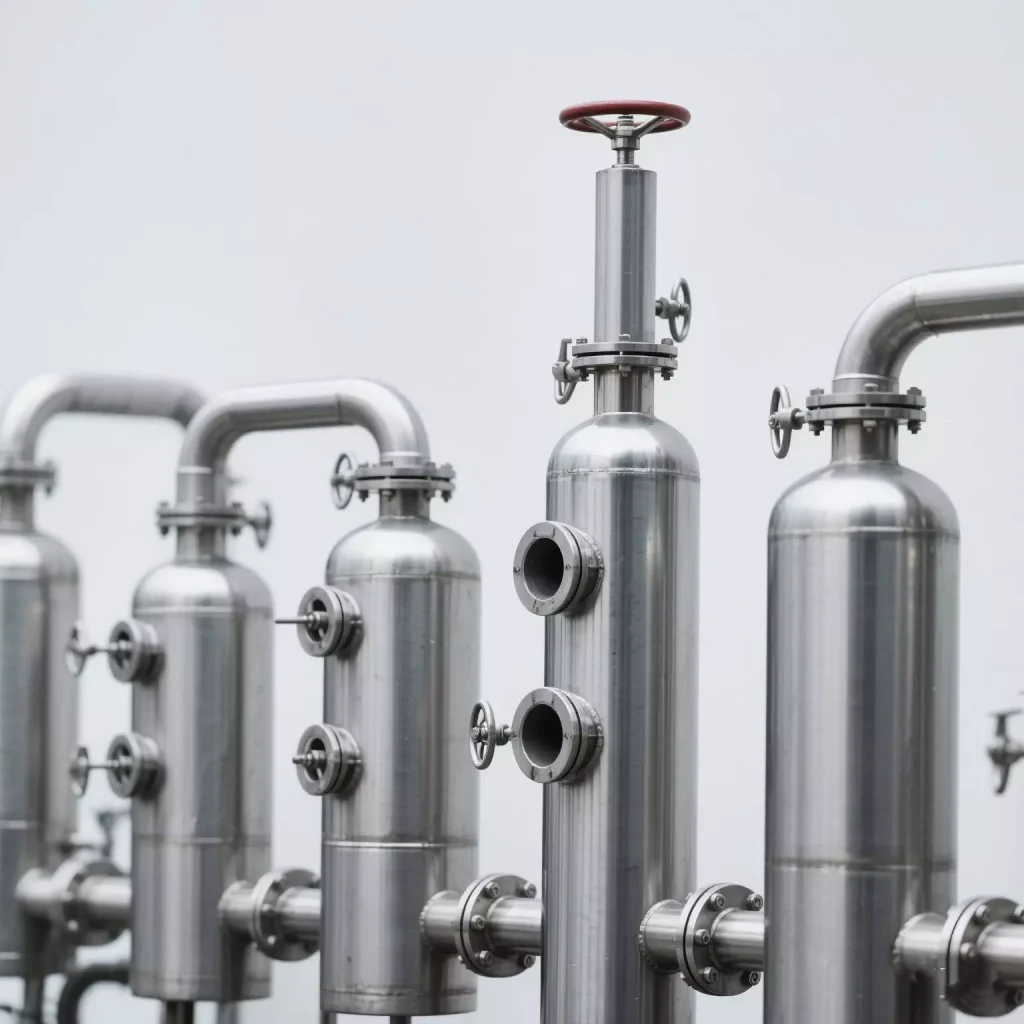
The capital investment of a ZLD plant is divided into five major equipment categories:
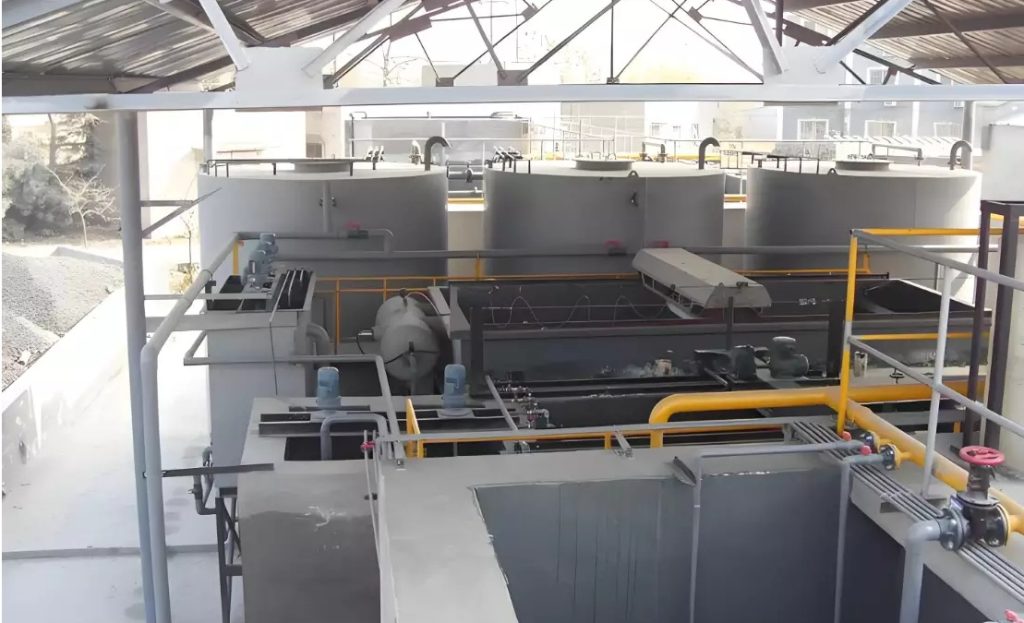
- Pretreatment equipment: Removes suspended particles, organics and scaling precursors before water reaches sensitive membranes.
- Reverse osmosis systems: The workhorse of the concentration phase Efficiency here directly impacts downstream operating costs.
- Evaporators: High capital and energy expenditure, yet necessary to concentrate brine beyond capacity of membranes.
- Crystallizers: The last step to real zero discharge. Necessary for full ZLD compliance.
- Automation and monitoring systems: Not often included in initial quotations, but crucial to good long-term performance.
- Installation and commissioning: Site specific civil works, piping & system integration could escalate equipment cost by 15-30% based on existing infrastructure.
The Hidden Costs Many Buyers Overlook
Apart from the construction expenditure, the zero liquid discharge cost also includes of continuous operational costs, which have a major impact on long term ROI:
- Energy consumption: Evaporation is thermally intensive. Technologies such as MVR (Mechanical Vapour Recompression) can cut energy consumption by 40-60 %. This affects the economics significantly.
- Chemical usage: Antiscalants, pH adjustment chemicals and cleaning agents can mount up over time.
- Maintenance requirements: Membranes foul over time and need to be replaced periodically. Evaporator surfaces develop scale and need to be cleaned regularly.
- Spare parts: Downtime not scheduled and the replacement of components can lead to substantial production losses and increased operational costs.
- Operator training: Automated is not un-manned. Good operators can make equipment less likely to fail and last longer.
- Disposal of residual solids: Crystallized waste has to go somewhere, thus disposal or recovery preparations should be part of the equation from the beginning.
Here’s a practical summary of how these cost categories typically affect the overall budget:
| Cost Category | Typical Budget Impact | Why It Matters |
| Pretreatment | Medium | Protects downstream equipment from fouling and scaling |
| Membrane Systems | Medium-High | Determines water recovery efficiency and brine concentration |
| Evaporation | High | Major capital and energy expense; drives operating cost |
| Crystallization | High | Required for full ZLD compliance; significant capital outlay |
| Energy | High | Ongoing operating cost; technology choice (e.g., MVR) matters |
| Maintenance | Medium | Directly affects long-term system reliability and ROI |
Where the ROI Comes From: The Financial Benefits Behind ZLD
Reducing Water and Discharge Costs
The most immediate financial return is achieved by recovering process water, substituting purchased fresh water, cutting down on discharge costs and dependence on outside sources. That can add up to serious savings for heavy users in places with high water rates.
Avoiding Future Regulatory and Operational Risks
Investing in ZLD today could be a hedge against future regulatory tightening. Facilities already operating at zero discharge are much less exposed to compliance issues, more resilient during droughts or water restrictions, and generally more steady in terms of long-term operational conditions.
Recovering Additional Value from Waste Streams
- Salt recovery opportunities: Crystallized salts can be recovered and sold or used in some applications, to offset operational costs.
- Chemical recovery in selected industries: Some process streams, particularly in chemicals and pharmaceuticals, include recoverable value which is simply thrown away by traditional wastewater treatment.
- Resource efficiency improvements: ZLD promotes a tighter overall process design, often revealing other efficiency gains.
That stated, ZLD is not by default cost-effective for every institution. Actual return depends on local water rates, discharge fees, regulatory constraints and specific operation conditions.
Situations Where ZLD Often Delivers Strong Value
Based on our experience with industrial clients, ZLD tends to make the most economical sense in certain situations:
Facilities with high water demands where freshwater savings alone can justify part of the project cost;
Water-scarcity areas, where the reliability of supplies bears a substantial cost premium;
Tight discharge standards, particularly in places with existing or predicted zero discharge;
Long-term facility expansion planning, where ZLD construction now saves expensive retrofits later;
Questions to Ask Before Evaluating ZLD ROI
Before requesting a system quote, it’s worth grounding the conversation in your own operational data:
Answering these honestly will give you a much clearer sense of whether the potential savings and risk reductions justify a ZLD investment, and will allow suppliers to produce a more accurate and realistic project estimate.
Is ZLD Worth the Investment for Your Facility?
There is no universal answer, but for the suitable facility, ZLD should be viewed as a long-term investment, not a wastewater treatment expense.
The overall return might be substantial when considering the water recovery savings, lower discharge costs, regulatory compliance and operational security all combined. The objective is to make the selection based on a realistic assessment of the water, wastewater and regulatory conditions at your site.
If you are at the point of considering if ZLD makes sense for your operation, Molewater designs and supplies industrial ZLD systems based on your wastewater profile. Contact us to discuss your project.