
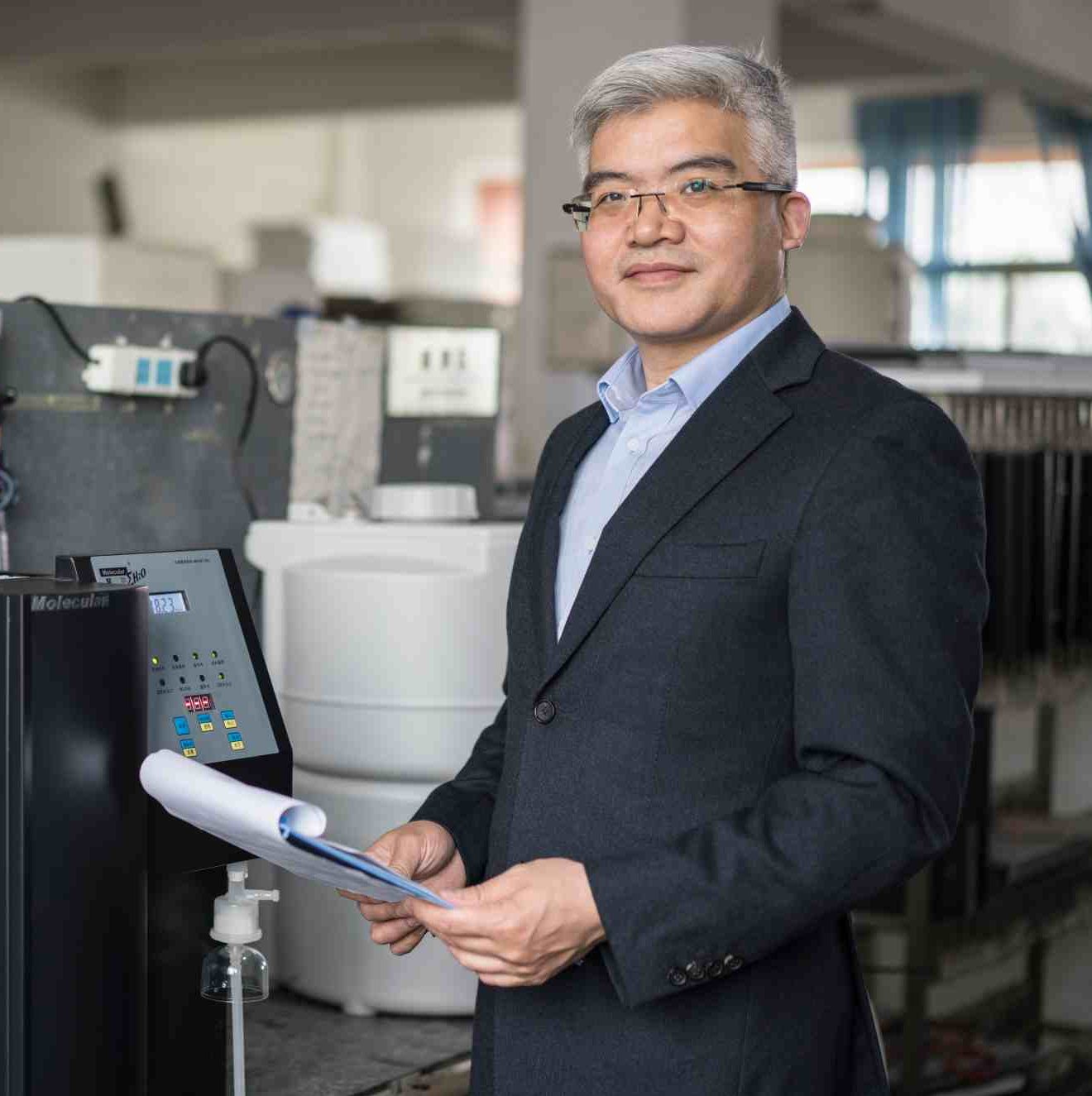
Industrial wastewater treatment system costs typically range from $200,000 to over $1.5 million, depending on your facility’s flow rate, the type of contaminants in your wastewater, and local discharge regulations. Upgrade projects where existing infrastructure is retained and specific components are improved, generally fall between $65,000 and $200,000.
There’s no universal price because wastewater treatment is engineered to each facility’s specific conditions. The two variables that matter most are how much water you need to process per day and how difficult that water is to treat. Everything else builds on top of those two numbers.
This guide breaks down current cost ranges by industry type, explains what’s included in a complete project budget, and covers whether an equipment upgrade might deliver a faster return than a full system replacement.
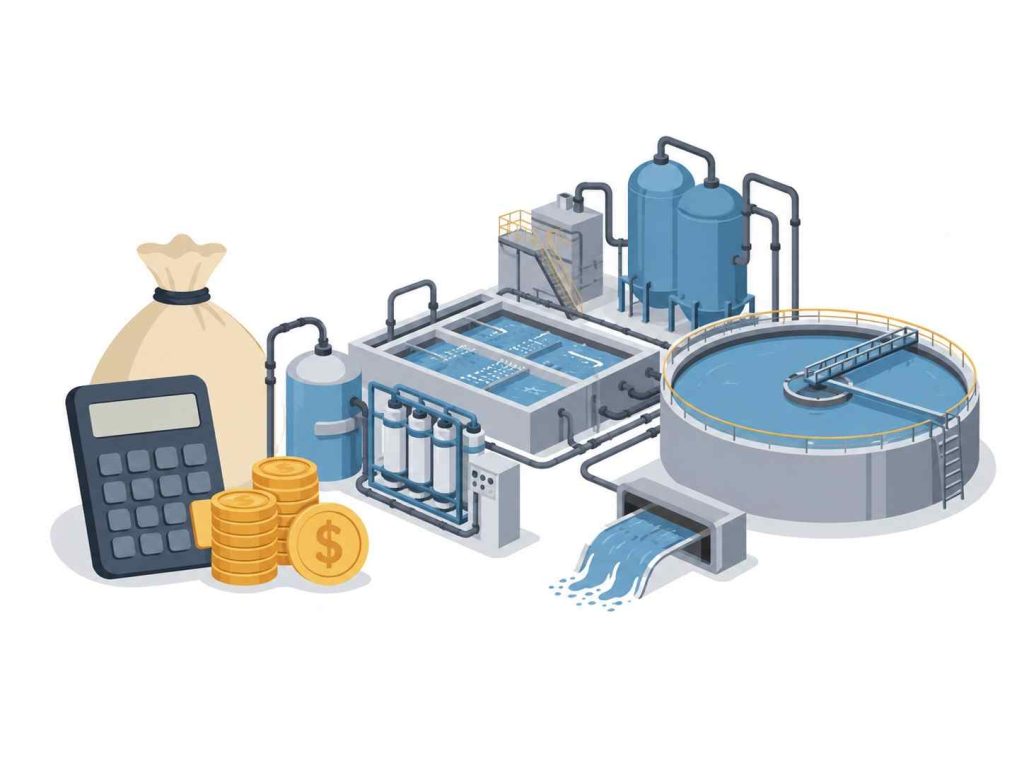
What Factors Affect Wastewater Treatment System Cost?
Before looking at numbers, it helps to understand what actually moves the price up or down.
Flow rate is the biggest one. The more wastewater your facility processes per day, measured in gallons per minute (GPM) or gallons per day (GPD), the larger and more expensive the system needs to be. A facility running at 50 GPM is a very different project from one running at 500 GPM.
Contaminant type and concentration is the second major factor. A system designed to remove suspended solids and adjust pH is considerably less complex than one that also needs to strip heavy metals, reduce biological oxygen demand (BOD), or handle chemical oxygen demand (COD) at high concentrations. The harder your wastewater is to treat, the more equipment stages you’ll need and the higher the cost.
Everything else like automation level, local installation rates, space constraints, discharge regulations sits on top of these two fundamentals.
How Much Does a Wastewater Treatment System Cost by Industry?
Rather than a single number, here’s a breakdown by the industries where treatment needs and therefore costs differ most significantly.
Food and beverage manufacturing
Facilities producing dairy, beverages, or processed foods typically deal with high BOD and oil/grease content. This usually calls for a combination of dissolved air flotation (DAF) and membrane bioreactor (MBR) technology. At around 100 GPM, expect to budget $500,000 to $1.2 million for the equipment alone, depending on BOD levels and local discharge limits.
Metal finishing and plating
These operations generate wastewater heavy in suspended solids, zinc, nickel, and other metals. Treatment typically involves pH adjustment, chemical precipitation, and filtration. At 100–500 GPM, equipment costs generally fall in the $200,000 to $700,000 range, though tighter local discharge standards can push that higher.
Pharmaceutical and chemical manufacturing
More complex waste streams with a mix of organics, solvents, and inorganic contaminants usually require multi-stage treatment trains. Systems in this category frequently exceed $1 million, and in some cases considerably more depending on effluent quality requirements.
High BOD combined with color and chemical loads makes textile wastewater particularly demanding to treat. Biological treatment combined with advanced filtration is typical, with costs often landing in the $400,000 to $900,000 range for mid-sized operations.
These ranges cover equipment. The total project cost runs higher once you factor in engineering, installation, and startup. More on that below.
Sewage Treatment Plant Cost Breakdown: What You’re Actually Paying For
Equipment is only one part of what you’ll spend. Here’s how a complete wastewater treatment project typically breaks down:
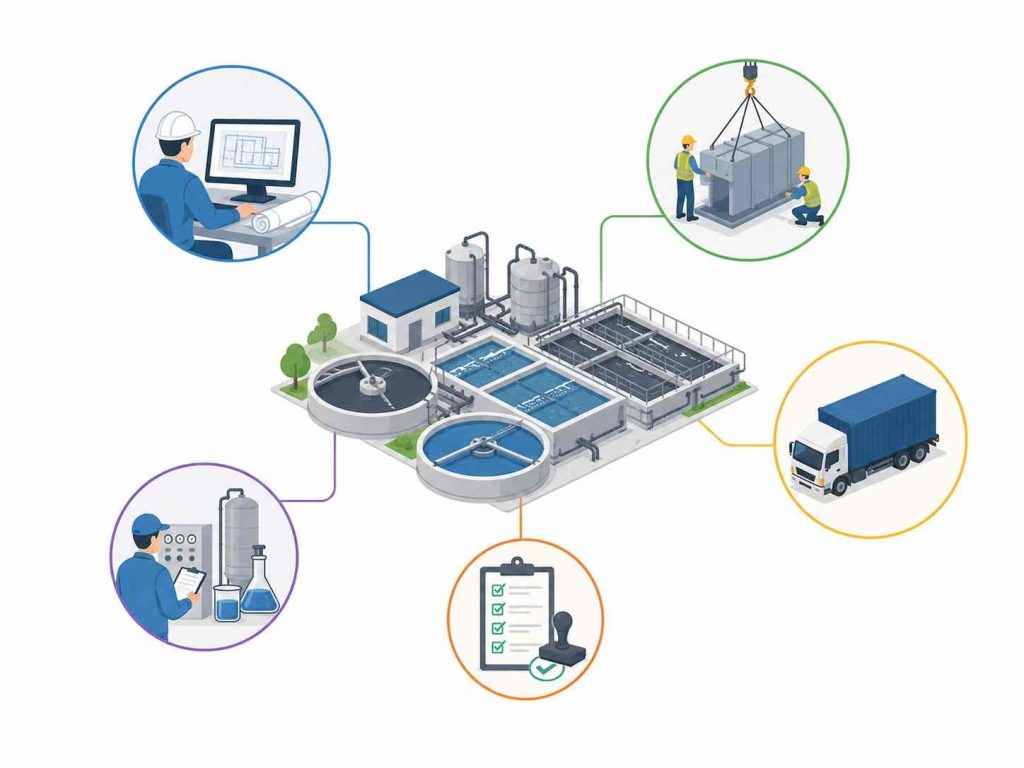
Engineering and design usually accounts for 10–15% of the total project cost. This covers the site assessment, system design, regulatory review, and project management before a single piece of equipment ships.
Installation is where costs can vary the most by location. Depending on whether you go with a prepackaged modular system or a build-in-place facility, installation typically adds 15–40% to the equipment cost. Prepackaged systems often save three or more months in construction time and can reduce labor costs, particularly in areas with high contractor rates.
Freight adds roughly 5–10% of equipment cost, depending on where your facility is located relative to the manufacturing site.
Ongoing operational costs include energy consumption (aeration systems in particular draw significant power), chemical reagents, labor, and sludge removal and disposal. These costs tend to be underestimated during the planning phase but matter considerably over the system’s 20–30 year lifespan.
Permits and compliance fees vary widely by jurisdiction. Connection fees for discharging to a municipal treatment works, ongoing analytical testing, and regulatory permits all add to the long-term cost picture. The EPA’s effluent guidelines are a good starting point for understanding federal discharge requirements, though state and local standards often layer on top of these.
Pulling all of this together, a complete project at 150,000 GPD covering equipment, engineering, installation, and startup typically lands in the $500,000 to $1.5 million range. Larger or more complex systems can go well above that.
Compare Pricing: New Industrial Wastewater Treatment Plant vs. System Upgrade
Not every wastewater problem requires a new system from scratch. If your existing setup is functional but underperforming or if you’re facing tighter discharge limits, an upgrade may be both faster and significantly cheaper.
System upgrades typically involve adding pumps, additional treatment stages, or more sophisticated automation controls. Based on current market pricing, most upgrade projects fall in the $65,000 to $200,000 range, depending on what’s being added and the complexity of integration with existing equipment.
The case for upgrading is strongest when:
- Your current system handles the flow volume adequately but struggles with effluent quality
- You’re responding to a regulatory change rather than a capacity problem
- The core infrastructure (tanks, piping, controls) is in reasonable condition
A full replacement tends to make more financial sense when the existing system is aging, frequently breaking down, or simply undersized for current production volumes. Facilities with outdated equipment often lose more in production downtime and maintenance costs than they realize, one Water Environment Federation analysis found that factories running outdated treatment equipment lose an average of 120 production hours per year to maintenance-related disruptions.
ROI of Upgrading Wastewater Treatment Equipment: Is It Worth the Investment?
This is the section most cost guides skip which is a problem, because ROI is often what actually determines whether a project gets approved internally.
The financial case for investing in proper wastewater treatment (whether new or upgraded) comes from several directions at once.
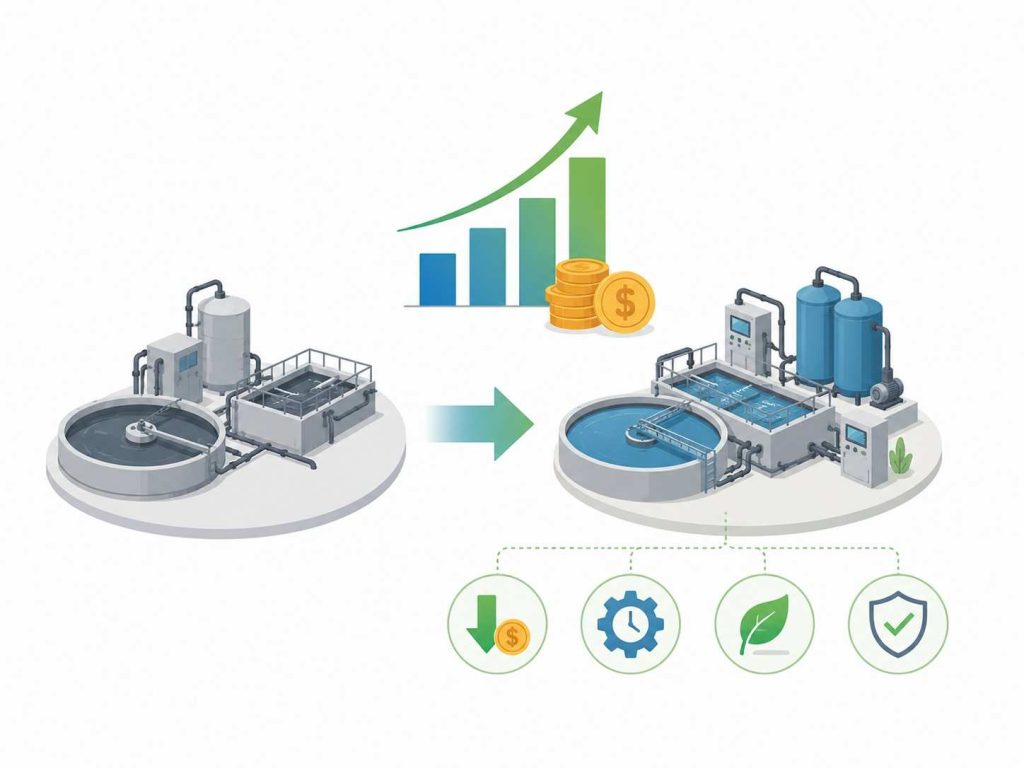
Avoiding fines and penalties is the most obvious one. The EPA can levy penalties up to $55,000 per day for discharge violations, and regulatory standards are generally tightening rather than relaxing. Even a single enforcement action can dwarf the cost of a properly designed system.
Reducing hauling and disposal costs is where many facilities see the fastest return. Companies currently paying to truck wastewater offsite for treatment often find that in-house treatment pays for itself within 1.5 to 4 years, depending on volume and local disposal rates. With hauling costs rising steadily, that math is becoming increasingly favorable.
Water reuse adds another savings layer. Advanced treatment systems can bring wastewater to a quality suitable for reuse in cooling, cleaning, or irrigation, reducing municipal water purchases. Facilities using 500,000 gallons per month can save anywhere from $6,000 to $30,000 annually on freshwater costs alone, depending on local water pricing.
Energy efficiency gains apply specifically to older systems. Upgrading to modern equipment with variable frequency drives, dissolved oxygen sensors, and smart controls can reduce energy consumption by 20–40% compared to legacy aeration systems. Some projects recover the upgrade investment in just over two years through utility savings.
Taken together, the typical ROI window for a well-designed wastewater treatment investment is 2 to 5 years with the payback period shortening considerably when hauling costs, penalty risk, and water reuse savings are all factored in.
How to Get an Accurate Wastewater Treatment Cost Estimate
Cost ranges are useful for budgeting, but the only way to get a real number is to go through a proper quoting process. To get something meaningful rather than a rough ballpark, you’ll typically need to provide:
- Current flow rate and expected peak flow (in GPM or GPD)
- A wastewater characterization report or at minimum, a list of the main contaminants and their concentrations
- Applicable discharge limits for your location (to the environment or to a publicly owned treatment works)
- Space constraints at your facility
- Any preference for prepackaged vs. built-in-place systems
The more precisely you can answer these questions upfront, the more accurate the quote and the fewer surprises during detailed engineering.
Molewater’s team works with facilities across a range of industries to develop treatment solutions matched to actual site conditions. Contact us here to start a conversation or request a system consultation.
Wastewater treatment isn’t a category where it pays to underspecify and fix problems later. The regulatory environment is stricter than it was even five years ago, and the cost of non-compliance consistently outpaces the cost of getting the system right the first time. Whether you’re sizing a new system or evaluating whether an upgrade makes financial sense, the numbers in our guide should give you a reasonable starting point for the conversation.