Lead can enter industrial water and wastewater through processes such as metal finishing, mining, battery manufacturing, electronics production, and pigment or paint manufacturing. Once present, it may occur as dissolved lead, suspended particles, or lead associated with other compounds, so the treatment method cannot always be chosen from lead concentration alone.
For industrial facilities, lead removal is usually about more than simply reducing the concentration. The treatment system may also need to meet a specific discharge limit, handle a continuous flow of wastewater, and deal with other contaminants at the same time.
So, how do you remove lead from industrial water and wastewater? Common options include chemical precipitation, adsorption, ion exchange, and membrane treatment such as reverse osmosis. The right choice depends on the form and concentration of lead, water chemistry, required effluent quality, and overall treatment capacity.
Why Lead Removal Matters for Industrial Facilities
Lead is a regulated heavy-metal contaminant because it can accumulate in the environment and create risks to human health. For industrial facilities, the main concern is often meeting wastewater discharge requirements or maintaining the water quality needed for reuse in production.
The treatment requirements can vary depending on the location, industry, and discharge destination. Facilities need to check the applicable local or national regulations rather than rely on a single lead limit for all applications.
Reducing lead to a lower concentration does not necessarily mean the treated water meets the required standard. Where a very low residual lead concentration is required, a secondary treatment or polishing step may be needed to reach the target level.
Key Factors That Affect Lead Removal
Before choosing a treatment system, it is important to understand the characteristics of the incoming water.
| Factor | Why It Matters |
| Lead concentration | Higher concentrations may require bulk removal before a polishing stage |
| Form of lead | Dissolved and particulate lead may need different treatment approaches |
| pH | Can affect precipitation, adsorption, ion exchange, and membrane performance |
| Other contaminants | Competing ions and suspended solids can reduce treatment efficiency |
| Required effluent quality | Determines the lead concentration the system needs to achieve |
| Flow rate | Affects equipment sizing and operating requirements |
The form of lead in the water is an important consideration. When a significant portion of the lead is attached to suspended solids, removing those solids first can reduce the load on the downstream treatment system. When most of the remaining lead is dissolved, methods such as ion exchange, adsorption, or reverse osmosis may be more appropriate.
Water testing should therefore be carried out before selecting the treatment equipment. The results can help determine which treatment stages are needed and how the system should be sized.
How to Remove Lead from Industrial Water and Wastewater
There is no single treatment method that works for every industrial application. Different technologies are suited to different lead concentrations, water conditions, and treatment stages.
Chemical Precipitation for Lead Removal
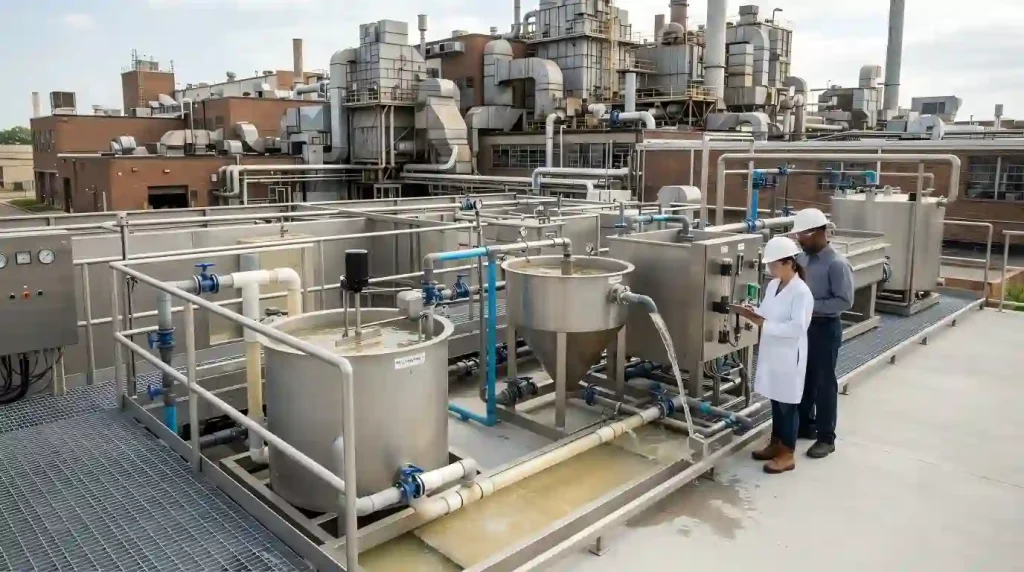
Chemical precipitation is commonly used for wastewater with relatively high lead concentrations. Chemicals are added to convert dissolved lead into less soluble compounds, which form solid particles that can be removed through clarification, filtration, or other solid-liquid separation processes.
Precipitation can handle a relatively high contaminant load at a practical operating cost, making it a common first-stage treatment. However, the process generates sludge that must be dewatered, handled, and disposed of properly. Performance can also vary with pH, chemical dosage, and other substances in the wastewater.
For high lead concentrations, precipitation is often used as pretreatment before a secondary process removes the remaining dissolved lead.
Adsorption and Specialty Media for Lead Removal
Adsorption removes dissolved lead by allowing it to attach to the surface of a treatment medium. Activated carbon can be used in some applications, while specialty adsorbent media are available for wastewater where heavy-metal removal is a primary concern.
Adsorption is generally more suitable for lower lead concentrations or polishing after bulk treatment. Its performance depends on the media type, pH, contact time, lead concentration, and competing contaminants. Once the media reaches its capacity, it may need to be replaced or regenerated.
Ion Exchange for Lead Removal
Ion exchange uses resin to remove dissolved ions from water. As water passes through the resin, lead ions are exchanged with ions already held by the resin. Different cation exchange resins can be selected based on the water chemistry and treatment requirements.
The process can achieve low residual lead concentrations, making it useful for polishing applications. However, other dissolved ions can compete with lead for exchange sites, and pH can affect resin performance. Some systems also require resin regeneration, which produces a regenerant stream that needs to be managed.
Ion exchange is generally considered when lead concentrations are relatively low and a more selective treatment step is needed.
Reverse Osmosis for Lead Removal
Does Reverse Osmosis Remove Lead from Water?
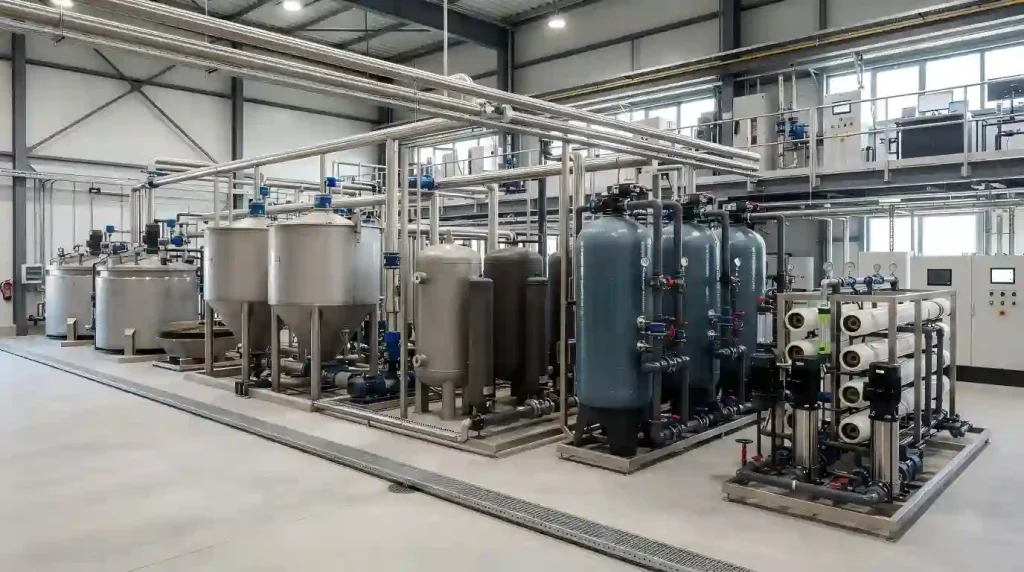
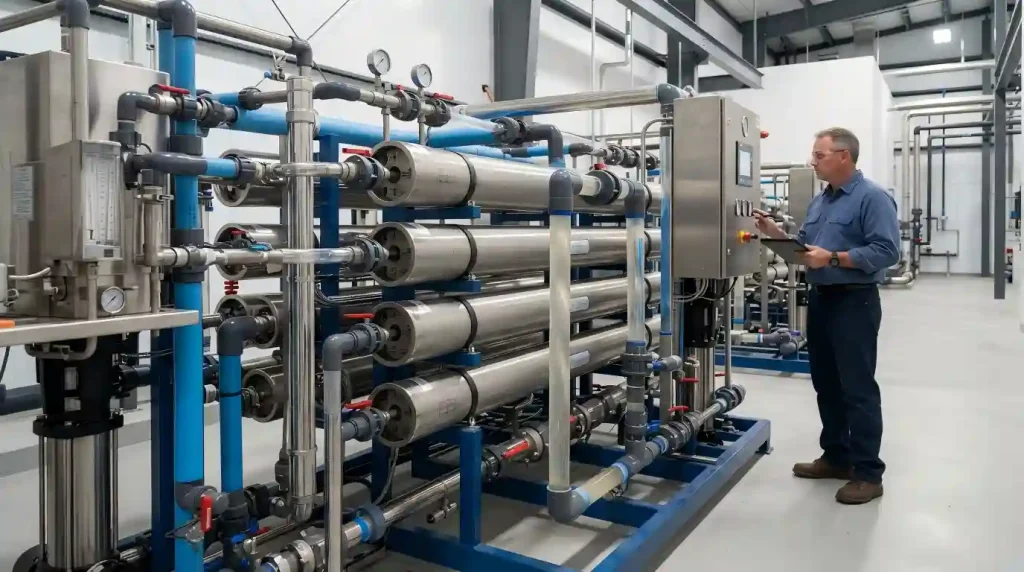
Yes. Reverse osmosis (RO) can reduce dissolved lead in water when the system is properly designed and operated. RO uses pressure to force water through a semipermeable membrane, while many dissolved contaminants are retained in the feed stream.
Unlike precipitation or adsorption, RO does not convert lead into a solid or capture it on a treatment medium. Instead, the membrane separates dissolved contaminants from the treated water.
RO can be useful when lead is only one of several contaminants in the water. Industrial wastewater or process water may also contain dissolved salts, metals, and other substances that need to be reduced. In these cases, RO can provide broader treatment than a process designed specifically for lead removal.
When Is RO a Good Choice for Lead Removal?
RO is worth considering when water contains dissolved lead along with other dissolved contaminants, or when a facility requires a high level of overall water purification.
It can also be integrated into a larger treatment system. For example, pretreatment may first remove suspended solids and reduce a high lead load, followed by RO to further reduce dissolved contaminants.
RO performance depends on factors such as membrane type, operating pressure, feed-water chemistry, membrane condition, and the form of lead in the water. Rather than applying a fixed removal rate to every application, performance should be assessed based on the actual water quality and system conditions.
What Are the Limitations of RO?
RO produces a concentrated reject stream containing contaminants retained by the membrane. This concentrate needs to be managed as part of the overall system design.
The process also requires energy to maintain operating pressure, while appropriate pretreatment is needed to control membrane fouling and scaling. Regular monitoring and maintenance are important for keeping the system operating consistently.
These requirements do not necessarily rule out RO for industrial lead removal. They should simply be considered alongside pretreatment, concentrate handling, operating costs, and the required treated-water quality when evaluating the complete system.
Comparing Lead Removal Technologies at a Glance
| Technology | Best Use | Main Advantage | Main Limitation | Typical Role |
| Chemical precipitation | Higher lead concentrations | Effective bulk removal | Produces sludge | Pretreatment |
| Adsorption | Low to moderate dissolved lead | Useful for polishing | Media capacity is limited | Polishing |
| Ion exchange | Low residual lead | Selective ion removal | Sensitive to water chemistry | Polishing |
| Reverse osmosis | Dissolved lead with other contaminants | Broad dissolved-contaminant removal | Energy and concentrate management | Primary or polishing treatment |
The table is a starting point rather than a replacement for water analysis. In many industrial applications, the most reliable solution is a combination of treatment processes.
How to Choose the Right Lead Removal System
The right treatment approach depends on the lead concentration, the form of lead in the water, other contaminants present, and the quality required for the treated water.
- High lead concentration: Chemical precipitation can be used for bulk lead removal and pretreatment, reducing the contaminant load on downstream equipment.
- Lower levels of dissolved lead: Adsorption or ion exchange may be suitable for polishing, depending on the water chemistry and the required residual lead concentration.
- Lead with dissolved salts and other contaminants: Reverse osmosis may be a better option when broader removal of dissolved substances is needed.
- Very low residual lead requirement: A combination of treatment processes may provide better results than a single method. Pretreatment can remove suspended solids and higher contaminant loads, followed by RO, ion exchange, or adsorption for final polishing.
For industrial applications, treatment selection should be based on feed-water testing, flow rate, target water quality, and applicable discharge or water-reuse requirements. Considering these factors together helps ensure that the system is sized and configured for the actual operating conditions, rather than selected based on lead concentration alone.
How Molewater Can Help With Industrial Lead Removal
Choosing a lead removal system requires more than looking at the removal rate of a single treatment technology. Molewater can help assess your feed-water quality, lead concentration, flow rate, and target water quality to determine which treatment processes are suitable for your application.
Depending on the water conditions, the solution may include pretreatment, chemical treatment, filtration, adsorption, ion exchange, reverse osmosis, or a combination of different processes. Molewater can also help with system sizing and treatment configuration based on your operating requirements.
If you are planning a new industrial water treatment system or upgrading an existing one, contact Molewater to discuss your water quality, treatment goals, and system requirements.